Friday, November 03, 2023
The Pitt Jazz Seminar and Concert - Still Kicking in Year 53
Tuesday, October 24, 2023
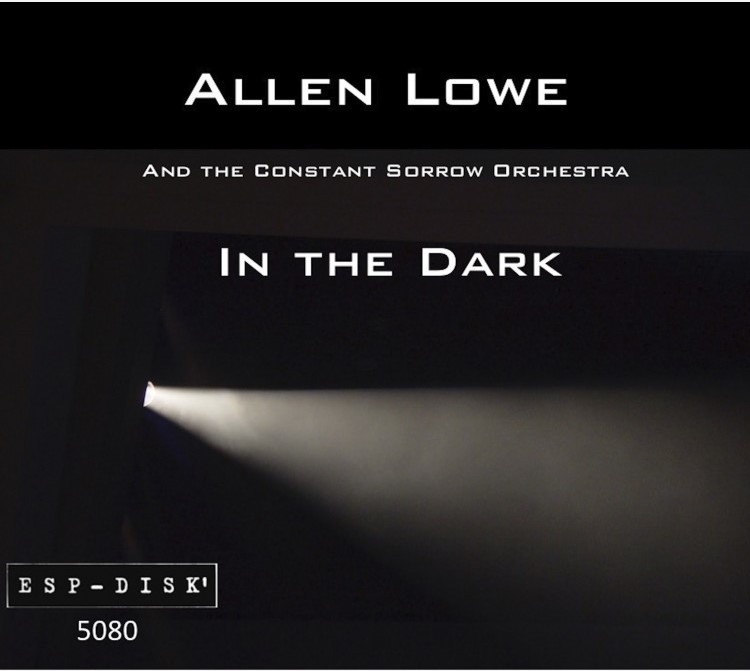
Catching Up With ESP-Disk' - Albums by Painted Faces and Allen Lowe
Wednesday, October 18, 2023
CD/LP Review: James Brandon Lewis/Red Lily Quintet - For Mahalia, With Love
James Brandon Lewis/ Red Lily Quintet
For Mahalia, With Love
It's the time of year when the in-box is flooded with email requests to keep albums "for your consideration" when nominating albums for Grammys. I'm not, nor have I ever been, on any committee that had the (dis)pleasure of picking nominees for such things, but those folks hoping for a nomination don't want to leave any stone unturned, so the missives keep coming.
Sunday, October 08, 2023
CD Review: Steve Lehman & Orchestre National de Jazz - Ex Machina
Friday, October 06, 2023
CD Review: SLUGish Ensemble - In Solitude
Monday, October 02, 2023
Sam Rivers Centennial Concert in Pittsburgh
Before the Rivers set started, Matt Aelmore and Vicky Davide opened the evening with a set of free improvisations. Aelmore started out on trumpet while Davide played flute. The combination of the two started off sounding spare and gentle and built up. At first it was purely acoustic, but after awhile Davide looped a few flute lines which gave the music a little texture and shape. She also used some extended technique like just blowing air through the instrument without hitting pitches. It added an earthy almost sensual feeling to the sound, and avoided turning it into an avant hat trick.
The duo switched it up a bit too, when Aelmore picked up his bass guitar (which he plays with Emily Rodgers Band, among others) and Davide switched to what looked like a penny whistle or a wooden flute. When they were done playing, it felt like they had just warmed up and could've gone on another 15 minutes or so. Maybe next time.
A big question looms at a performance like this - What Sam Rivers tunes will the group play? Will there be discernable compositions or quick ideas, following by unique free blowing? Dare the group try to pull off one continuous piece for a set, like Sam did on album like Streams in the '70s? Well, I was pondering these questions.
Zeh explained during the set that he grew up in Orlando, Florida, where Rivers lived out the last fruitful years of his life, leading bands of various sizes and writing prolifically. This, after many years of living in New York where his RivBea loft was a flagship locale during the loft jazz scene of the '70s and music happened almost non-stop.
Three of the group's pieces came from Rivers' debut, Fuchsia Swing Song. They launched into the set with "Cyclic Episode" which has a strong, forward-pulling melody line. Without a piano to guide with chords (Rivers had Jaki Byard on his recording) the Zeh group was liberated a bit but still kept to the changes. Throughout the set, the blend of Bendel's tenor and Abalos' flute created an otherworldly sound, nearly making the latter instrument sound more like a set of vibes.
Although most of the set featured compositions, Zeh and Bendel played a tenor/bass duet that was built on/inspired by "Cascades" from a 1976 album by Rivers and Dave Holland on IAI Records. (They did at least two for that label, and both had tracks with water-based titles.) Like the rest of the set, the duet proved that these guys have been working on this material in earnest. It didn't go off into rabid free territory, instead carving their own ideas from what Sam and Dave once did. Nor did it drag on. Everything had a sense of economy to it.
Thursday, September 28, 2023
Thinking About the Birthday Party and the "Mutiny In Heaven" Documentary
It occurred to me, in the days leading up to seeing Mutiny In Heaven, that the Birthday Party broke up 40 years ago. I'm not sure which came first, hearing that the band had broken up or the release of the Mutiny EP. But I associate both of them with the fall of 1993, when I was in 11th grade, which is easy for me to track because my son, who is basically 40 years younger than me, is now a junior in high school.
Since it's been so long, and having heard so many wide-ranging Nick Cave & the Bad Seeds album since then, and finally seeing the man himself live a few years ago, I had forgotten how much the Birthday Party's visceral sound was such a big part of my life during those high school years. I tend to look back and think about how the Minutemen and Hüsker Dü were the bands that inspired the music I played because they were active at that time. But those bands were around when I finally started making music seriously. The Birthday Party were gone by then and besides, there was no way I could come close to approximating that sound and feeling, especially when playing with high school kids who routinely thought I was nuts when I went off a little in the music. But few bands rivaled them in my book at that time.
Mutiny In Heaven starts off with a warning about flashing lights appearing in the film. They should have included a warning about thick Australian accents being part of it too. Of course I might be too used to running the subtitles on the screen when I'm watching movies at home, to ensure I don't miss anything. The sound on our home tv really varies with sudden drops and increases at times.
The film screened at the Harris Theater downtown, so there was no chance of getting subtitles, but after awhile, I got used to the accents and leaned in harder to hear the parts that were playing overtime of performances. The only problem was the voiceovers weren't introduced at the start and Mick Harvey, Phill Calvert (the band's original drummer) and Nick Cave and, to some degree Rowland S. Howard were hard to distinguish in the early sequences. As the movie proceeded, Howard was often onscreen in interviews when speaking, so that made it a little easier.
Director Ian White did an impressive job of digging up ancient footage of the band from their late teenage years when the group was known as the Boys Next Door. It's kind of charming to see a very young Nick Cave looking closer to a fresh-faced new wave kid than to the demonic performer that he would become. (For a good example of the former, and one that doesn't appear in the film, click here.)
When making a documentary like this, the director runs the risk of relying on a bunch of talking heads to tell the story, with breaks for live footage, hopefully. Several documentaries (Beware Mr. Baker, Chasing Trane) use animated sequences to break things up. In the case of Mutiny In Heaven, several pen and ink animations creep up throughout the film, depicting Cave's introduction to Howard (I think it was Rowland), heroin use, and bassist Tracy Pew's car theft that landed him in jail briefly while the band was still together. These segments don't exactly camp it up but it came a little close.
The real payoff comes with all the live footage, even if it was often synced up with the studio recordings. (I've heard them enough to know the subtle mixes of a lot of them.) The use of the two didn't detract from the intended effect, however. It kind of plays up how manic - and dangerous - the group could be live. Granted, every band likes to describe themselves as dangerous when they get onstage, but watching the footage of the band - Howard stalking the stage as he made his guitar scream, Cave bopping up and down while singing frantically, Pew grinding his body, eventually laying down in one scene, still gyrating - goes a long way towards proving that a Birthday Party gig could actually be dangerous, for the band and audience.
Despite all of that, the band never comes off as assholes. I'm sure there were people around that time who can probably say otherwise, but unlike the Butthole Surfers, for instance, a band that definitely put their audience at risk and were rather abusive in general, the Birthday Party still seems rather charming. Maybe it's because they seemed a little smarter than most punks. Several times people remember Pew as the kind of guy who could be seen reading both porn magazines and Plato. After the band broke up, he eventually went to college to study literature and philosophy. He died in 1986 of a brain hemorrhage.
It's not a spoiler to mention that the film doesn't attempt to wrap everything up nice and neat in the end, after the band breaks up. In fact, I felt like it left a few details out, such as the name of the drummer who replaced Mick Harvey on the final tour (Des Hefner) and whether or not Blixa Bargeld's appearance on the Mutiny EP served to fill in for a departed Rowland Howard (still not sure). Regardless, it ends without anyone feeling the need to give an overview of the mess the band left behind. Or how crushed we young yanks were when it was over.
Mutiny always felt like an anti-climatic ending to me. Of course nothing could top the insanity of The Bad Seed, the EP that came out earlier that year. Right as that record came out, my 10th grade English teacher Mrs. Kogut had explained what catharsis was. I knew exactly what she was talking about because that's what I felt every time I cued up that record and "Sonny's Burning" came on.
The band had been upping the ante with each release prior to that. When Cave screamed for 14 seconds straight in "Blast Off" (the B-side to "Release the Bats"), he knocked me against the wall. The live version of "King Ink" on Drunk On the Pope's Blood takes it further; he sounds like he's being crucified. (I loved it then but these days I might have preferred he calmed down a little.) After that lung-shredding scream in "Big Jesus Trash Can" where could he go? Everything about "Sonny's Burning" put me on edge, the relentless snare beats, the guitar (even if it sounded a tad like metal), and the way it nearly fell apart after each verse. I wanted to break shit each time it came on. That summer I worked in a record store and when I copy of The Bad Seed came in, you can bet I played it, in hopes of scaring the hell out of the squares who were in the shop at that time.
That being said, Mutiny felt like a retread. "Jennifer's Veil" felt like a simpler "Wild World" with more primitive drumming. Swampland" felt half-baked and even though Howard's "Say A Spell" was a cool, slinky thing, it seemed to leave listeners hanging. Is that it? "Mutiny In Heaven" was great but it closed off the first side.
Turns out, running order can change everything. When both EPs were released together, the Mutiny sessions added two more tunes, the murky "Pleasure Avalanche" and the dirty "Six Strings that Drew Blood" (the latter I knew from a few live tapes), adding a little more bite to that was absent on the four-song record. The disc also flips the original sequence on its head, putting "Say A Spell" after "Jennifer's Veil." "Mutiny In Heaven" comes last, which makes a lot more sense. Instead of the casual swagger exit to stage left, Nick and the boys set the building on fire and walk out through the one open doorway, leaving it to collapse in their wake.
When that song plays during the closing credits (don't call it a spoiler because you saw it coming) I almost got choked up. Not for sentimental reasons but for cathartic reasons.
Incidentally, I listened to "Sonny's Burning" on the way to the theater and it STILL makes me want to break shit.
This entry is dedicated to the memory of Lee Connelly, who was the biggest Birthday Party fanatic in Pittsburgh back in the day.
Sunday, September 24, 2023
Thumbscrew Comes Back to Pittsburgh For Round 5
Monday, September 18, 2023
CD Review: Greenlief/Raskin 2 + 2 With Jen Baker & Liz Allbee
Monday, September 04, 2023
Julian Lage Comes to Pittsburgh, Sept. 6
Labor Day Weekend has always been a time when I think back to where I was on that same day in years gone by. Sitting around the house all day as a kid, watching the Jerry Lewis Labor Day Telethon (no idea why, except that maybe I bought into the hype); times when I felt a sense of renewal with a new school year and, later, usually a new apartment; a sense of regret in high school that, once again, summer came and went and I didn't have a band together yet, or one that could make it all the way through a song that had a change in it.
Among the good memories, there's the Detroit Jazz Festival, which takes place every Labor Day weekend. JazzTimes sent me there to cover it a few times. The most exciting trip was the first time I was flown to the Motor City, in 2009, right when the magazine had come back to life after a few dark months where it looked like the lights weren't going to come on again. I had only traveled for an article once before, and never to an event like this, where strangers seemed excited to meet me - and all this freaking music was mine for the taking. I was leaving my wife and two-year old son for several days, and they were okay with it!
I believe it was the last day of the 2009 festival (which would have been Labor Day) that Gary Burton was playing at one of the bigger stages. (My original article was written on two or three computers back and is long gone, as is my article for the website, so I have no notes from which to refer.) The vibraphonist had Julian Lage playing guitar with him. Lage was clearly much younger than the rest of the band, only 21 at the time. But he was playing with technique and imagination well beyond his years. His ideas seemed really advanced. (Only later did I find out that he was a child prodigy who was the subject of a documentary [Jules at Eight] and played at the Grammys when he was 12.) Despite all that, he lacked any sense of a cocksure young jazz guy who might be stone-faced serious about what he did. To the contrary, when introduced to him, Lage had more of a "gosh, thanks" attitude that made him even more likeable.
A lot of time has passed since that day, with a lot of music flowing out from Mr. Lage. Through legendary jazz guitarist Jim Hall, Lage met Nels Cline, the iconoclastic guitarist who has been a longstanding member of Wilco in addition to releasing numerous albums that draw on uninhibited improvisation, compositions that draw on jazz and rock and a strong sense of tradition. The combination of these two players might seem odd on paper, but on disc (Room), they brought out the best in each other.
When Lage came here to Pittsburgh in 2016, we spoke in advance of the show about musicians have a strong, identifiable voice. "It reminds me of Nels, and also of someone like Roy Haynes who plays with everybody. People who tend to play well with a lot of people, they kind of always do the same thing, in a certain way," he said. "And that’s what’s reliable. If you play with five different bands and play five different ways, you really diffuse your sound. But if you more or less have a similar take on proportions – tension/release, ballads, drama, humor – if you stay true to those principles but adjust the touch of your instrument and also the decision of the people you're playing with. I think you can have your cake and eat it too.
"When the context changes, it’ll shine a different light on you. But if you also change, then the spotlight doesn’t really know where to look."
Following 2022's View With A Room (his second album as a leader on Blue Note Records), Lage released the EP The Layers earlier this year. In addition to his regular rhythm section of Jorge Roeder (bass) and Dave "Bad Plus" King (drums) (who I caught at the Village Vanguard with Lage in 2020), the six tracks include veteran guitarist Bill Frisell as a frontline partner. The tracks are by turns tranquil ("This World"), dreamy and ambient with these two very distinct guitars echoing off one another ("Missing Voices") and sweet with unexpected chromatic changes adding an edge to the theme (the title track).
This week's show in town will be a solo performance but rest assured that Lage excels just as well by himself as he does in the company of his peers.
Julian Lage comes to Carnegie Lecture Hall in Oakland as part of the Andy Warhol Museum's Sound Series. Songwriter Elijah Wolf opens the show. Wednesday, September 6. 8 pm. Click here for more details.
Final Four For Mingus - A Live Report
"The Final Four For Mingus" took place on Thursday, August 31.
The instrumentation was put together to ensure that the group would be able to create the feel for a Mingus score, with a cast of familiar faces and a few surprises. Dr. Johnson lead the group and played trombone and tuba. The saxophone section featured Opek/Thoth Trio leader Ben Opie (on tenor exclusively tonight) and Rick Matt (baritone sax, flute) along with relative newcomer Ini Oguntola, who almost stood out with his alto solos that both acknowledged the Mingus work and blew with passion. Tommy Lehman, who came on a recommendation from Sean Jones, held the trumpet seat, getting a good jagged tone that Mingus liked, especially when his mute was in use. The rhythm section consisted of Mark Michelli (piano), Jeff Grubbs (bass) and James Johnson III (drums).
Material for the evening emphasized Mingus' love for Duke Ellington, directly or indirectly. The group opened with "Love Chant," a relatively deep cut from Pithecanthroput Erectus, which gave everyone a chance to stretch out. Johnson is a good host who offered some good information about the pieces, which also included "Fleurette Africaine (African Flower)," a rhythm section showcase that originated on Money Jungle, the legendary meeting of Ellington, Mingus and Max Roach.
Thursday, August 31, 2023
LP Reissue Review: Cecil Taylor - Unit Structures
Tuesday, August 22, 2023
CD/LP Review: Tyshawn Sorey Trio - Continuing
Saturday, August 12, 2023
Projects In the Works, A Different Blog Post, A Couple Shows This Week
That being said, I've only had one chance to check out the album, but I plan on digging into it further. Along with some other new stuff that I've been randomly pulling on the pile and exploring.


.webp)