![]() |
| Velvet Monkeys. Back: Elaine Barnes. Front: Charles Steck, Don Fleming, Jay "The Rummager" Spiegel |
Monday, August 12, 2024
Talkin' Velvet Monkeys On Another Blog
Wednesday, August 07, 2024
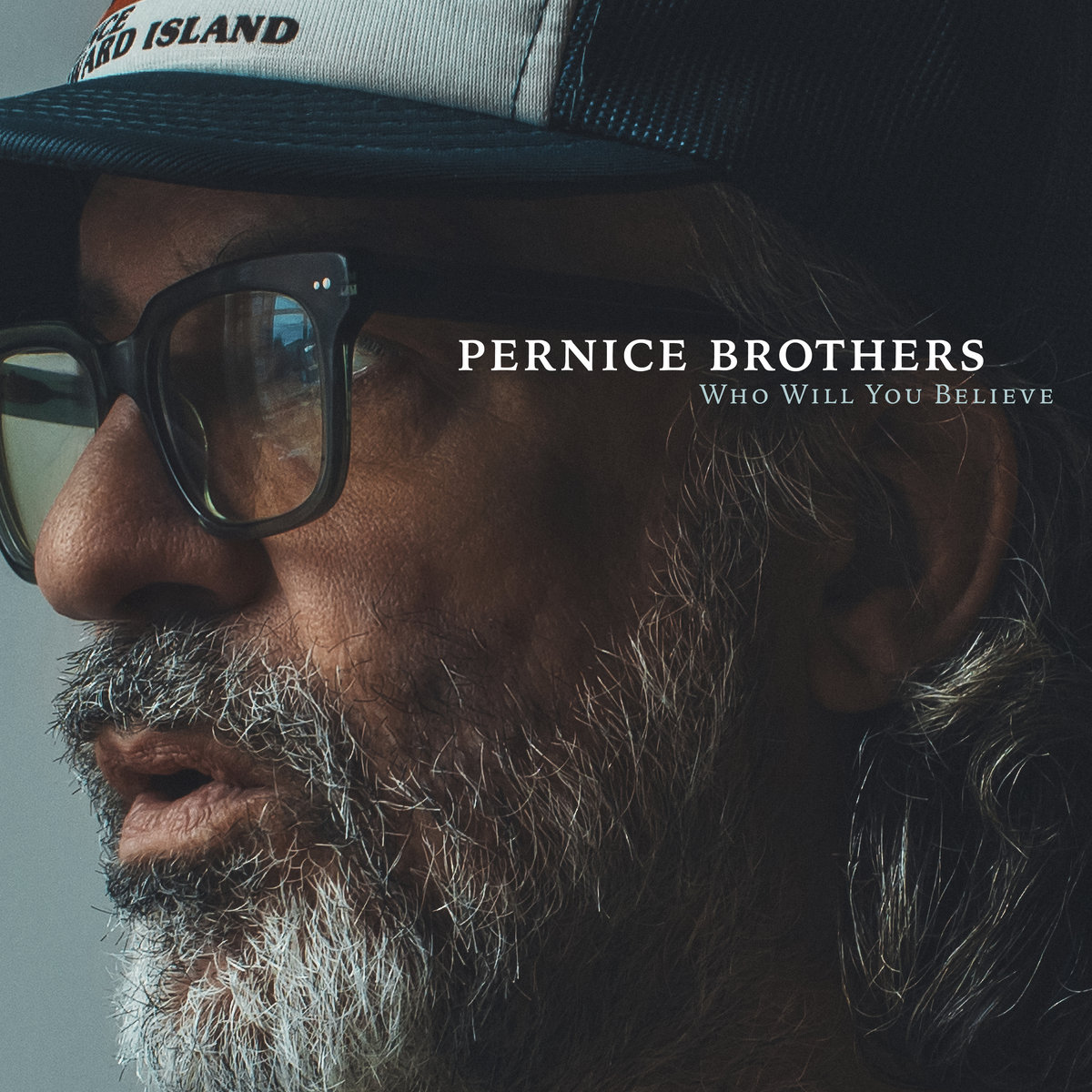
LP Review: Pernice Brothers - Who Will You Believe
Tuesday, July 30, 2024
A Talk With Micky Dolenz
Monkees enthusiasts can likely recall a scene from the episode of the show called "The Monstrous Monkee Mash." While Mike Nesmith, Micky Dolenz and Peter Tork are searching for Davy Jones in a haunted house, Peter disappears. The realization inspires Mike and Micky to break the fourth wall, yelling at the camera in unison, "HE'S GONE!" (It was a recurring joke on the show.)
"Maybe we make it a duet," Micky asks Mike. "If you leave, I'll be a single."
Without missing a beat, Mike imitates the opening thump of their theme song, and Micky sings in a mock-hysterical voice, "Here I come/walking down the street/I get the funniest looks from/ all the people I meet/ Hey, hey, I'm a Monkee!"
The sequence of that hilarious scene probably unfolds quicker than it takes to read about it. But it's become strangely true. With the passing of Mike Nesmith in late December 2021, Micky Dolenz is now the last surviving member of the Monkees. (Davy died in 2012; Peter in 2019.) What started as a television show that brought the zeitgeist of A Hard Day's Night into the living rooms of Middle America became much more than that. Some top shelf composers and the Wrecking Crew session players of Los Angeles helped to launch these four disparate lads into pop stardom. (They proved they could play the instruments and take control of the studio process along the way, but that's another story.) Most of the band's biggest singles had Micky Dolenz singing lead. And damn, could that kid sing!
At 79, he shows no sign of slowing down. Though he could rest on some extremely catchy laurels, Dolenz has continued to be a productive performer with a scope that goes beyond his heyday.
Before his guitar-slinging pal passed away, Micky recorded Dolenz Sings Nesmith, an homage to his longtime pal which took some deep cut Monkees tunes as well as some of his solo material and, with the help of Christian Nesmith (Mike's son), helped to reimagine them in some bold new arrangements. (Incidentally, the original inspiration for the album came from Nilsson Sings Newman, in which singer Harry paid tribute songwriting singer pal Randy.)
Earlier this year, Micky - who had previously done a full-length salute to Carole King - paid tribute again, this time to a band that took some jangly inspiration from him years before. Dolenz Sings REM might only be an EP, but it proves that Micky still pays attention to the modern cats. There's something exhilarating about hearing him sing "Radio Free Europe." Even those of us who might not be too keen on the original "Shiny Happy People" can be won over by his version (thanks in part to the soaring back-up singing of Micky's sister Coco.) With a front cover shot depicting our hero in a car in front of Wuxtry Records (the Athens, GA record store where REM members Michael Stipe and Peter Buck first met), it betrays a genuine love and hat tip to the band. (Hopefully a sequel will follow someday.)
Throughout all of these modern projects, one fact becomes clear: Micky still has a strong set of pipes. When he comes to South Park Amphitheatre this Friday, August 2, the performance has been titled "Micky Dolenz: Songs and Stories." No mere nostalgia trip for the almost octogenarian, he calls the evening "a flat-out rock concert."
Micky and I spoke by phone for 20 minutes about a week ago. For a fellow of his stature and a fellow of my Monkees devotion, that time is a mere drop in the bucket, but any time with this charming guy is worth it. Plus having spoken with each Monkee except Davy Jones, the opportunity was not something I wanted to miss.
When we finally got past some phone issues, I wanted to avoid the tired stories that we all know and kept it to a few leading questions. Micky proved himself to be plenty loquacious, sharp as a tack and a bit humble to boot. He started off talking about his connection to Pittsburgh from the start of his performance career.
Micky: Before we start, I’ve got a little bit of trivia for you.
Lay it on me.
Guess where the first public performance I ever had was as a singer. And I was also playing guitar. It was in 1955. I was 10 or 11 years old. It was my first performance onstage in front on an audience singing a song and playing a guitar.
I think I remember you telling this once at a concert.
Uh oh!
Was it at Kennywood Park?Yes it was!
Did it involve an elephant?
But that was my first performance. And I have it on tape! I came out with a little local three-piece band and sang a few songs. Then the elephant came out and did a bunch of tricks with the elephant’s trainer, of course. Basically, in my first performance as a professional, I opened for an elephant! I love telling that story.
I love Pittsburgh. I think it’s so beautiful. All those beautiful houses overlooking the rivers. Fantastic!
Wow! What was his name?
Rege Cordic. He was the Town Cryer in [the episode] A Fairy Tale and the doctor in the Christmas episode.[Sounding genuinely excited] Wow, how cool! Is he still with us?
No, he passed about 20 years ago. But he had a really rich baritone voice. And that actually leads into what I wanted to ask you too. How do you preserve your vocal pipes after all these years?Funny you should bring that up. I’ll tell you what I’ve done it over the years. But first I have to tell you, I had a bit of laryngitis for four months. I still have a little bit of a croak, nothing as bad as it was. But I had to cancel a couple of shows, it got so bad. We tried to figure out what it was. My EMT specializes in voice. It’s been a real challenge for me. I don’t know where it came from. I don’t know why. It just hit me. I couldn’t talk, I certainly couldn’t sing. For months it’s been going on. I just saw him again yesterday and it was a lot better. I was focusing on the shows this weekend. And it’s going to be fine. They figured it out and it’s gotten incredibly better.
I’ve been asked this question a few times. You know your vocal chords are muscles, right? So if you think of it almost like a sport. In my case, my mother and father were both singers, actors and performers. So part of it is inherited. Part of it is the luck of the draw, inheriting the right musculatures, as we call it. Then of course there’s the training. If they hadn’t been in the business, I might never have utilized my voice. But they were, so over the years, as a child I learned to sing very young. My mom taught my sister and I how to sing. How to sing harmonies. And then, it’s a little bit nature and a little bit nature.
During the Monkees, boy, I was singing a lot. I never had a coach. But I had people, and a bit of advice here and there. I got very, very lucky after the Monkees. Well - luck or design. I never ended up going through that period, post-Monkees, in the '70s and '80s, going around to sing in smoky, dingy nightclubs with no monitors. That wiped out a lot of people, as you can imagine.
That’s okay. The only other person I’ve asked about their voice is Johnny Mathis. And you gave a much more nuanced answer than him.
Johnny Mathis, one of my favorites, ever. He’s the first album I ever bought as a kid. I told him that when I met him.
I don’t know if this is totally accurate but I read that before the Monkees, you had considered going to college for architecture.I did go. Oh yeah. I was in college, studying to be an architect. I had a couple of semesters under my belt. I was doing little day jobs, because I had done that series [Circus Boy], in the summer, on school break. Mainly just to make money. And I would get little bit parts. There was a show called Mr. Novak. Peyton Place. You know, guest star things.
My plan was to be an architect. And if I couldn’t make it as an architect, I could fall back on show business! I’m serious.
Do you ever get existential and think about where we’d all be if you’d blown off that audition?
Oh boy. [Laughs] A lot. Or if they had chosen not to cast me. But I wouldn’t have blown off the audition. Not blown it off, my agent would have said you’ve got an audition for a pilot. I was up for three different pilots that year, all music shows. Because [music] was in the air. Yeah, I often wonder, or if they had chosen to go with someone else. Which would’ve happened, of course.At what point did you realize, wow this thing is really freaking huge?
Yesterday! (Laughs) No, it constantly amazes me. A number of times in my life, like when I came back from England. It happened to be around the time of the MTV thing [in 1986, when the station reran the original episodes, eventually leading to a reunion tour]. That was a huge surprise.No, I remember specifically when that [first] happened. It was in December of ’66. The show went on the air in September. We were in production, 24-7: filming the show eight to ten hours a day. Then, since I was doing most of the lead singing on the songs, I would have to go into the studio until midnight and record [songs]. Back then, of course, without social media and all that other stuff, you really didn’t get a sense of anything. There weren’t fans. There wasn’t paparazzi. There wasn’t anything like that. Because they couldn’t find you if they wanted to, people would try but…
So that Christmas came along and we got a hiatus from filming the show. I was planning to go up to the family home up in San Jose for Christmas. So I made my Christmas shopping list and I jumped into my car and I drove to the neighborhood mall. I was born and raised in LA, so I drove to neighborhood mail.
I just got out of my car to go in and get all my Christmas presents for the family. So I go through the big glass doors at the mall. All of a sudden a bunch people start running at me. I thought it was a fire. So I’m holding the doors opening going, “Don’t run! Don’t run! Don’t panic. Walk carefully!” And then all of a sudden, I realize, “Shit, they’re running at me!” And I was pissed off because I couldn’t do my shopping. I had to send one of the roadies to do my friggin’ shopping!
And that’s when I went, “Oh shit, something’s going on here.”
It looks like I’m at the 20-minute point with you and that’s my limit.
What you can expect is of course, all the big Monkee hits. That goes without saying. I always do them in their entirety because I know a lot of people and a lot of the fans there may not be familiar with all the other Monkees stuff, I know that they want those big hits. So I made a vow years ago that I would make sure that everybody got those hits. But then I discovered over the years of playing, as long as they know they’re going to get the hits, you can go off and do different things. You can do deep album cuts, which I have, or you can even do non-Monkees material because they know they’re going to get those hits.
I’m really looking forward to it.
Oh, hell yeah, man! Me and some friends of mine from work are already looking forward to it.
Saturday, July 20, 2024
CD Review: Jason Stein/Marilyn Crispell/Damon Smith/Adam Shead - spi-ralling horn
Monday, July 08, 2024
CD Review: Travis Reuter - Quintet Music
Quintet Music (self-released)
Friday, June 21, 2024
Dish It Out: Remembering James Chance
![]() |
| The Contortions, on the No New York compilation. Chance is pictured top left. |
Before John Zorn, before Eric Dolphy, before even Charlie Parker, the alto saxophonist that fascinated me was James Chance. I took up the alto in tenth grade and while I was starting to get into jazz, I hadn't bought much jazz other than Bitches Brew and Albert Ayler's Vibrations (which I bought within about a week of each other). Most of my record purchases were punk rock. James Chance bridged the gap between that style and jazz. In fact, he kind of bridged the gap between Bitches Brew and Vibrations.
It all comes rushing through the speakers in opening seconds of "Dish It Out," the opening track by the Contortions on the No New York compilation. Jody Harris bangs out a trebly guitar chord, which gets answered by George Scott's rubbery bass. Then Chance starts wailing in the upper register of his horn. Forget melody or harmony. It almost sounds like James chooses certain fingerings on the horn, rather than the pitch it produces. He certainly feels the groove his band is playing, which eventually includes Pat Place's yowling slide guitar and Adele Bertei's organ, which to my ears has always been a beautiful evocation of thunder and lightening. While Chance's horn sounds "wrong" on purpose, Bertei's keys seem to do something more deliberately against the grain.
Chance's vocals on the track might have been inspired by James Brown but his execution seems more like a pissed off dad. It'd be a few years before Ian MacKaye would front Minor Threat and make this level of hostility into a common vocal style. In 1978, no one sounded this rabid.
Speaking of James Brown, the Contortions final track on No New York was a cover of the Godfather's "I Can't Stand Myself." According to Bertei (I think it's in her memoir but I definitely read it online), the group had never played the song before and ran through it as a soundcheck in the studio. It chugs along on one chord, bolstered by a Harris guitar solo that tries to force a chord change (doesn't happen), climaxing with an abrasive wail from the singer that cues an equally shrill sax solo.
Could he really play, my innocent mind wondered. The only way to find out was to check out everything. Buy by Contortions. Sax Maniac by his later group, James White and the Blacks. Off-White by the same group. Some of them were pretty good. Some felt a little jokey in a dry sort of way. ("Stained Sheets" in which Lydia Lunch moaned over the phone to an incredulous, hostile James.) But what was impressive was the way his band, which at times included trombonist Joseph Bowie (brother of Lester, of the Art Ensemble of Chicago), would sound like they were just riffing away but all of a sudden they'd reach a stop-time like clockwork.
Chance put together a new version of the Contortions in the early '90s, following the re-release of Buy on Henry Rollins' Infinite Zero label. He came to Pittsburgh, playing at Luciano's Coffeehouse, which once existed down the street from Duquesne University. The backing band seemed just a tad slick (the bassist had a six-string bass) but Chance was his usual self, blowing the high F on his horn, shooting down to the low B-flat and then flopping around in the middle. It might have sounded raw or primitive but this was his thing, his sound. Notorious for picking fights with audience members in New York, he claimed at the time he had sworn off that, after one incident damaged his suit. However, a friend who was at that show claimed on Facebook this week that Chance slugged him when he got too close to the stage.
Only today did I discover, through an obit, that the saxophonist studied with the World Saxophone Quartet's David Murray prior to forming the Contortions. Chance spoke to me when I was writing a feature on Joseph Bowie for JazzTimes in 2016, an interview that had been about three decades in the making. Hailing from Milwaukee, Wisconsin, he had a love of both the Stooges and jazz of all stripes and had wanted to combine the two.
Upon arriving in New York in 1975, he immersed himself in the loft scene, playing with the Bowie brothers and drummer Charles "Bobo" Shaw. "One thing I liked about those guys is they had an obvious information of rhythm and blues in their playing," he said in our phone conversation. "Even though they were mostly playing free, a lotta times it would go into funk rhythms, even though… at the La MaMa [Theater, in the East Village], they didn’t even have a bass player usually. Or even any rhythm besides drums." He went on to talk about saxophonist Henry Threadgill and trumpeter Ted Daniel playing in James White and the Blacks.
During the conversation, it started to become clear that Chance's sound on the alto, as raw as it seemed, was a conscious choice to make him distinct in a scene of players. He might not have been playing straight - or even avant garde - jazz, but he knew it was important to have his own sound to set him apart.
Chance's last performance seems to have been pre-pandemic, according to the obit linked in his Instagram page, March 2019 in Utrecht. More recently, a gofundme campaign was started to help him deal with medical bills. When he and I talked in 2016, he mentioned that someone in Pittsburgh had expressed interest in bringing him back to town, but unfortunately it didn't happen. Chance (who was born James Siegfried) died on June 18, 2024, though cause of death was not disclosed at the time.
Thanks, James.
Sunday, May 26, 2024
CD Reviews: Matthew Shipp Trio - New Concepts in Piano Trio Jazz, Rich Halley - Fire Within
Sunday, May 12, 2024
Messthetics & James Brandon Lewis Lift the Bandstand; Thoughts on Steve Albini
The Messthetics feature Joe Lally (bass) and Brandon Canty (drums), the rhythm section of one of the best known punk bands of all time - Fugazi. It's not an exaggeration to say that, since the band set a gold standard for honesty and integrity with their music, which inspired legions of musicians. Guitarist Anthony Pirog straddles all kinds of styles of jazz and rock. James Brandon Lewis is, quite simply, one of the most inventive tenor saxophonists around right now.
With all four of these guys together, it's like a confluence of punk rock and jazz. That's obvious, but when they hit on Monday, suddenly there were no musical boundaries, no need to put a label on what they do, no chance to boil it down into easy to digest categories. If you have to ask, you'll never understand.
Sure, that's not exactly true. But the excitement that these guys delivered was on par with what Fugazi gave us, combined with the rich harmonic ideas that Lewis' Red Lily Quintet plays. There were times when Lewis was honking at the low end of his tenor, but it wasn't like the bar walking tenor players of bygone days, who were simply honking to get a reaction out of inebriated listeners. "The Time Is the Place" had urgency in the tenor solo, like Lewis had a message or an emotion he wanted to unleash. He knew what we needed.
Wednesday, May 01, 2024
GBV in Pittsburgh, April 27
![]() |
| GBV vocalist Robert Pollard, with drummer Kevin March and guitarist Doug Gillard |
While waiting to get through the security check point at Mr. Small's on Saturday, my friend Tim and I met a couple of polite gents from Ottawa who had traveled to our fair town to see Guided By Voices. One of them asked how many times we'd seen them. I rolled my eyes and tried to think of an answer, and one of our new friends took that to mean "too many times to get an accurate number." But that wasn't the case. I just couldn't recall how long it's been since I last saw them.
Checking past blog entries, the only show mentioned is the 2014 appearance, where Death of Samantha opened for them. I know I saw them at least once more before the pandemic. There was the one night I was milling through the crowd, scoop pad in my hand, writing down song titles, and two people asked me, "Are you [Post-Gazette writer] Scott Mervis?" At least they recognized my line of work.
Whenever the last show was, I recall GBV figurehead Robert Pollard seeming really snockered (more so than usual) but being impressed that the set ended after exactly 90 minutes, as he predicted. It was a good night of music, but his rambling between-song patter, coupled with the wall-to-wall GBV bros, made me wonder if I needed to see them again. The last GBV album I bought was....good. But I haven't been compelled to pull it off the shelf for a couple years.
Last Saturday, April 27, peer pressure started to weigh on me. (Though the peers that talked about going are actually much younger than me.) Besides, live shows give you something that you don't get sitting at home, listening while doing something else or nodding off in your easy chair.
Mr. Pollard and the band delivered too. By the time the houselights and the p.a. music came on, approximately 135 minutes had passed since their set began. Pollard definitely had a few in him before he hit the stage (and speaking of hitting, he also took a drag off a joint that was passed to him by an audience member, after talking about the good old days of doing drugs at shows), but the desire to rock hard overpowered the desire to fall into his cups and perform that way. If you're going to sing for that long, even with breaks, it's important to maintain stamina and pace oneself, and Pollard did.
The set, naturally, cut a wide path through the band's songbook. Several Bee Thousand songs were pulled up, along with a few others from their days on Matador Records. If I was a good journalist, I might have kept count of how many songs they played, but it was hard enough maintain a spot in the crowd, amidst all the dudes raising index fingers and beer cans in the air when recognizing a song. (They'd kill me for saying this, but the way the diehard fans reacted to lyrics reminded me of the time I saw the Indigo Girls and members of the audience were acting out the words to songs.)
But I shouldn't disparage some guys who were merely having the time of their lives. No one was slamming into innocent bystanders. And, thankfully, no dudes were groping ladies during the set, at least not what I saw. (I heard reports of that at prevous shows.)
Parts of the set took me back to seeing GBV in late 1993 at the CMJ Music Marathon, just prior to the release of Bee Thousand. There was a lot buzz surrounding the band and hoi polloi like Kim Gordon and Thurston Moore were in the audience. Onstage the music made me think of an indie rock take of A Hard Day's Night. Everything was short, concise and amazing. Last week, it was fascinating to hear so many songs all in a row, all sounding tight and well-written, all of them sequenced in the set so they didn't blend together or sound like "just another GBV song." Running order is crucial in these cases, and GBV takes that seriously.
The evening also reminded me of seeing GBV mainstay Doug Gillard's band Gem a few years later at CMJ, but for another reason. That band's set made me rue the choice to forego earplugs, as Gillard and Tim Tobias played some loud guitar with a healthy dose of high end. Gillard was equally loud last Saturday and as the evening wore on, these ears got a little more sensitive to all those power chords, as well as the roars of the crowd. In my defense, it had been a long day that started early that morning, included a full day of work, dinner with Mum and little less caffeine that I would have preferred prior to getting to the show.
But it was a good time.
Due to the security line, openers the Gotobeds were, quite literally, playing the final chord of their set as I walked in the door. When Eli Kasan, their singer, asked me how that final chord sounded, I couldn't lie: it rocked.
Tuesday, April 30, 2024
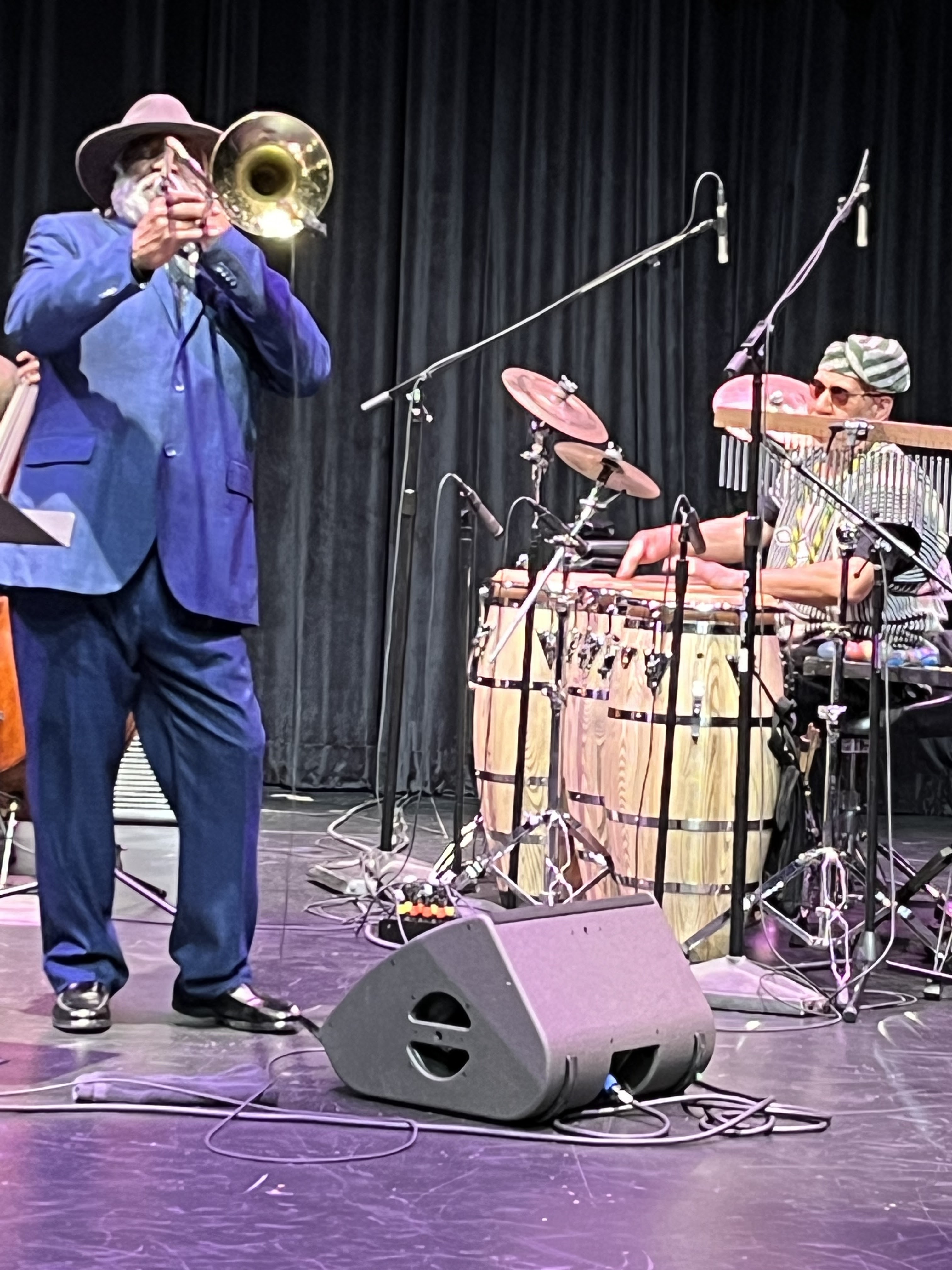
Recap of the African Rhythms Alumni Quintet + Memories of Randy Weston
Friday, April 26, 2024
An Appreciation of Michael Cuscuna
On this morning, before I could get to the papers, I found a thick square box between our two front doors. The box had my name on it. IT had arrived - The Complete Blue Note Recordings of Thelonious Monk, a four-record set that was only available by mail order from the label that put it together: Mosaic. This was a major expense for a teenager, even one with a lucrative paper route. I think it might have cost about $8 per record. (Insert rimshot here.)
There was barely any time to skim the set's detailed booklet over breakfast, let alone listen to any of the records. But when I got home that afternoon, I starting poring over both the music and detailed notes about each session, stopping to even follow along in a book of transcribed Monk piano solos. I had just gotten into Monk over the last few months. Hal Willner's tribute album was my gateway; I wanted to hear it because John Zorn was on it.
After playing That's the Way I Feel Now and scratching my head several times, I purchased a few of Monk's OJC reissues. The compilation's inner sleeve mentioned Mosaic's Monk set and my dad had probably received a catalog from them with details. This almost secret/extra effort way of hearing the music seemed like an important step I needed to take.
I don't think my sentimentality is getting in the way when I say that purchasing that album was a defining moment for me, as both a musician (I still believed I was going to be a saxophonist) and as a writer (that would come later). And this is all due to the efforts of Michael Cuscuna, who started Mosaic with the late Charlie Lourie. Michael passed away last weekend and the world has lost a champion for music preservation and elevation.
Reading through those Mosaic catalogs from the '80s and '90s, it felt like Cuscuna and Lourie were as excited about these releases as listeners would be. If there was a little bit of back-patting going on, they were also quick to expound about the lengths that they would go to find the best sounding master of a session for one of their sets. That devotion made each set feel like a Big Deal. Back in the late '80s, the boxset boom had yet to really catch fire. These guys were ahead of the game and they showed how to do it right.
When CD reissues kicked into full gear in the following decade, Cuscuna became synonymous with jazz rereleases. He had already been instrumental in getting Blue Note back in business around the same time he launched Mosaic. Now he was the one rummaging through old warehouses and storage facilities (perhaps not literally, but they were similar), unearthing those gems again, discovering alternate takes or lost songs and, most importantly, figuring out what they were and from where they came. Most people might have overlooked the fact that Blue Note listed a Tina Brooks album on their inner sleeves that was never released. Cuscuna noticed it, and found the tenor saxophonist's missing session. If you unearthed something like that, you'd be clucking about it in a slick catalog too.
Cuscuna wasn't devoted to just one period of jazz music either. In one of Mosaic's most tremendous releases, he and Lourie curated the entire output of the early jazz label Commodore. Records in three volumes; each box has between 20 and 23 records. He also released Cecil Taylor's complete output for Candid Records. (If the word "complete" sounds repetitive, that's because these guys wanted each set to be comprehensive. When doing a set for the prolific organist Jimmy Smith, they had to limit it to one month.)
I didn't realize it at the time but Cuscuna also shaped my musical scope in another way. When I told my brother that my first encounter with Albert Ayler annoyed me more than moved me, he recommended buying an Ayler album, listening closely and reading what the liner notes said about this wild saxophonist. When I took his advice, the album I found was Vibrations, which had extremely insightful notes about Ayler's background and music - penned by Cuscuna. This cat had a handle on everything.
And he was not jaded or arrogant about it. He was enthusiastic. The University of Pittsburgh brought Cuscuna to town in 2011 for a lecture at the Pitt Jazz Seminar and Concert. In a phone interview prior to his arrival, he was gregarious and very open when speaking to this fanboy about his work. It was quite a confidence boost to hear that a quote from my article wound up in the Washington Post's obituary for Cuscuna. (For the record, here's the quote: "If I put out music that is really unworthy or would embarrass the artist or make an artist unhappy, then I think that’s the worst sin I could commit.")
Another quote from him appeared on the Mosaic website earlier this week, which really hit home too: "It’s the stuff that gets to you between about [ages] 12 and 25 that stays with you for life. You never absorb music in quite the same way after that.” It explains why both Monk piano solos and, heaven forbid, the lyrics to some REO Speedwagon songs are still easily accessible in my head.
Personally, Mosaic always represented the highest level of jazz collecting. Along with the alternate takes, the label made sure you knew all you wanted to know about the artists and the sessions they made. When I became a staff writer at InPgh, I felt like I had really arrived when I was able to snag some promos and write about them for the paper. It took a few years but I even got to review a couple for JazzTimes. (Several other jazz scribes were clamoring for those reviews.)
As the above picture shows, I've been able to amass many of the sets over the years. Having enough Christmas money to afford the Larry Young set made it feel extra special. Getting the Clifford Brown set from my parents for my birthday takes me back to that time. Two years ago, I found the one set I never thought I could afford - the Complete Capitol Recordings of the Nat King Cole Trio, a mind-numbing 18-disc set (the vinyl counterpoint was 27 records!). It was being sold at a chain store for less than half of what it's worth.
In my interview with Cuscuna, he mentioned that the Cole set (which was originally offered to buyers on an installment plan!) was one of the few projects where he never burned out on the artist. Listening to it, it's easy to see why. Nat was that good. Sure it's all about the music, but the presentation certainly adds to the listening pleasure.
If this piece has been more about me than the late, great Michael Cuscuna, that can be attributed to the fact that Michael really shaped the way I approach music, largely as a listener but probably to some degree as a writer. Not just jazz, he opened my ears with everything. Collecting is fun, but it's more rewarding when you can share these discoveries with people, opening them up to new sounds and new ideas that they can explore on their own.
Michael was all about that. And I'm doing my damnedest to pay it forward.
Thank you, Michael.
Friday, April 19, 2024
Jazz For Record Store Day, Part 2
At The Showcase: Live In Chicago 1976-1977
Yusef Lateef