Saturday, September 01, 2012

CD Review: Aram Shelton Quartet - Everything for Somebody


Aram Shelton Quartet
Everything for Somebody
(Singlespeed Music) www.singlespeedmusic.org

Aram Shelton's latest presents another strong set of material from an alto saxophonist who should be getting more recognition for his prolific output and busy schedule. While his release earlier this year of duets with drummer Kjell Nordeson might have been more of a specialized interest, Shelton's quartet presents a full picture of his inventive writing and spunky soloing.

The band includes tenor saxophonist Keefe Jackson - who compliments Shelton so well that it's sometimes hard to tell who's who when their ranges overlap (they're panned towards different channels) - bassist Anton Hatwich and drummer Tim Daisy (who replaces original quartet member Marc Riordan). Shelton cites Ornette Coleman and Charles Mingus as influences on the group but it's more a case of taking inspiration from them rather than trying to copy those particular players. "Anticipation" presents the first such example, beginning with a Coleman-style folky waltz that shifts to a stretched-out rubato feeling for the middle eight, before shifting back to the first section. This structure recurs during parts of the solos too, which adds a good tension when the horns join together. Shelton also delivers a remarkable, frequently vocal solo.

"Joints and Tendons" leans closer to homage with a theme reminiscent of the Art Ensemble of Chicago. It features a very AACM approach of roughly five or six staccato notes followed by brief silence... then a sustained, often dissonant, harmony. Arty (no pun intended) and a little spare, it still offers intrigue for Daisy's brief spastic solo and the fact that Jackson and Shelton on harmonize in crisp tones closer to West Coast cool cats than Chicago revolutionaries.

"Barely Talking" has a simple, catchy melody and a solo from Johnson that sounds free, especially in connection with Daisy, but maintains a focus and direction throughout. Hatwich also gets his moment in the spotlight too. "Deadfall" gives the leader his chance to go it alone for the first two-and-a-half minutes.

After last year's impressive albums on Clean Feed with the groups Cylinder and Arrive, and the most recent Fast Citizens album on Delmark, Shelton is coming at it from all angles with a strong voice and engaging material. Everything for Somebody adds to that, and hopefully he's starting to catch on so that the title won't just refer to a limited set of listeners and appreciators.

Friday, August 31, 2012

Looking Ahead to September

September looks to be a big musical month for Pittsburgh. Or should I say, bigger than usual because there's always stuff going on here. Next weekend, the Harlan Twins release their second album on Friday and the following night veteran alto sax player Sonny Simmons is in town. The weekend after that, Guided by Voice are coming to town, and I think Paul Labrise is releasing his new album the night before. Wye Oak is returning to town that Thursday (the 13th I think). Then, the week after that, Sao Paulo Underground is coming to the Warhol, followed the next night by Roy Haynes' show. Then the week after THAT, the Love Letters are opening for Chain and the Gang, the band that includes Ian Svenonious. Laetitia Sadier (formerly of Stereolab) is also in town, I think the night before. Two nights later, the Pittsburgh Record Convention is happening and I'm going to be selling stuff there.

It all kind of makes my head hurt.

This past Monday, I had back-to-back phone interviews with Laetitia Sadier and Sonny Simmons, both conducted while Donovan was sequestered up in the office watching a DVD of The Electric Company. Laetitia was in England and as much as I would've preferred not making an overseas call, I was excited to talk to her. City Paper is going to run a quick Q&A with her, but I think Blurt wants something too. So I might actually break even with the cost of the call.

We started off the conversation talking about Pittsburgh, which she actually remembered from a Stereolab show close to 10 years ago. She remembered the layout of the late Club Laga, which is pretty impressive considering how she's probably travelled the world several times over. We also talked briefly about the film Diabolique, the remake of which was filmed here at my old church. I was supposed to have 25 minutes with her but we actually went over because she never said anything and the conversation was going to well that I was going to take my chances.

Sonny Simmons' manager warned me that he "isn't very good on the phone, so I'll be on other line," which made me wonder if I was going to get another one of those interviews where the answer to every question was "man, I just want to play." On the contrary, Sonny was pretty animated and chatty, and willing to answer all of my questions. I really really really hope that a lot of people come out of the woodwork for his show here. I just found out that he's here the same night that the Mattress Factory is doing their annual jazz and poetry show with Oliver Lake on the North Side.

On this day a year ago, and two years prior to that, I was getting ready to catch a plane to Detroit for their Jazz Festival. Naturally I'd love to go this year, representing JazzTimes again but I decided that I wanted to be home Labor Day weekend this year, so I didn't volunteer myself this year. Oh well, maybe next year. It's a shame because this year, I actually have business cards made up with this blog's email address on it. Almost professional.

Saturday, August 25, 2012

CD Review: Marco Cappelli's Italian Surf Academy - The American Dream


Marco Cappelli's Italian Surf Academy
The American Dream
(Mode/Avant) www.modrecords.com

In Italy the sound of twangy guitars didn't exactly correspond with images of the beach in the 1960s. It was often the sound that accompanied suspenseful or grisly scenes in films by Sergios Leone or Carbucci, with the score coming from the pens of Luis Bacalov or Ennio Morricone instead of the Ventures. Guitarist Marco Cappelli, an Italian native now living in New York, decided to pay homage to the music of his country. The American Dream comes alive with visual cues which the guitarist blends with the sense of free form experimentation he picked up his new country. But what comes across predominantly is the compositional strength of these pieces and the way Cappelli arranges them.

The guitarist works with a trio setting, joined by bassist Luca Lo Bianco and drummer Francesco Cusa. As quickly as they set the tone, they're just as likely to break it down and reshape it. "Django" begins pensively enough, but it soon goes in a free direction, climaxing with bent surf notes and finally fading out with a wah-wah reggae power chord. Morricone's "The Sundown/S. Antonio Mission" has the pathos for which the composer became famous. From there, though, the trio breaks into free jazz in which the rhythm section almost sounds like free metal, except for the fact that the production cuts down on the low end bombast. "Blood and Black Lace," composed by Carlo Rustichelli, has the minimal accompaniment that leaves the guitar swinging naked in the breeze, with a prime descriptor of this kind of music.

Vocalist Gaia Matteuzzi joins the Academy on two songs with greatly different results. Anyone who heard John Zorn's take on "Erotico (The Burglars)" from his Morricone tribute The Big Gundown remembers Shelley Hirsch's yelping vocals, and might think of it when hearing Matteuzzi on Armando Trovajoli's "Sesso Matto." The difference is Matteuzzi seems to be going for more of a fake orgasm feel - double-tracked at that - while Hirsch seemed to be lampooning that concept. In other words, it's a bit much. (Of course, some, uh, dudes might think it's a good accompaniment to The American Dream's cover.) Better is "Deep Deep Down" which almost sounds like a pop song, with leaping intervals that offer another impressive point in Mr. Morricone's favor.

Closing the album with "Secret Agent Man" brings the album back to our shores, beginning with a shout-out to ol' James Bond. Cappelli gets rid of the syncopation in the melody which make it sound a little square at first. But upon further thought, it feels like the way one of the previous composers might have scored it.


Wednesday, August 22, 2012

CD Reviews: Harris Eisenstadt - Canada Day III & Canada Day Octet


Harris Eisenstadt
Canada Day III
(Songlines) www.songlines.com

Harris Eisenstadt
Canada Day Octet
(482 Music) www.482music.com

The descriptor drummer/composer/bandleader no longer seems that unusual. There are more and more players who lead from behind the trap kit, composing more than just rhythmic outings over the easy changes. But Harris Eisenstadt seems to spend a lot of time working on his compositions. His notes for Canada Day III make several references to first drafts of the music or how a couple pieces began as sections of other compositions that ended up on the cutting room floor. It proves that you should never throw away any ideas. It also proves that Eisenstadt is pretty productive musician. Less than a year ago, I reviewed his September Trio album from Clean Feed, which featured an entirely different personnel than either of these albums.

Canada Day III was recorded by his quintet: Nate Wooley (trumpet), Matt Bauder (tenor saxophone), Chris Dingman (vibes), Garth Stevenson (bass) and Eisenstadt. The pieces are marked by subtle rhythmic tricks and melodic turns that don't loose any impact if you don't read about them in the CD cover. The quintet recorded them following a tour which means they are very familiar with the ins and outs and it sounds natural. "Slow and Steady" has a feel of intrigue and a slight touch of "Misterioso" thanks to Dingman's coloring. Two of the melodic instruments play in four while the other two play is six, both changing sides before the relatively brief (3:45) tune wraps up. Again, without knowing the basis of the structure, it's easy to just get lost in the mood. It's also a good way to open the set.

Upon hearing sustained vibes notes over a walking bass line, it's hard for me to not think of "Hat and Beard," from Eric Dolphy's Out to Lunch. "The Magician of Lublin" really sounds nothing like that tune, but the feeling is there in the opening moments, following some high register bowing from Stevenson and before the horns play the brief melody. Dingman plays remarkably throughout the album with a very astute way of backing the soloists or taking one on his own. Wooley can live up to his name, sounding downright feral ("Nosey Parker") or bright and sharp ("Magician") at will. Bauder also balances no-nonsense blowing with a gruff side, the latter coming in the opening of "Shuttle off This Mortal Coil." That title and several others betray Eisenstadt's influences, which go beyond music to literary sources and account for the unique stylings of his work.

Speaking of which, he added alto (Jason Mears), trombone (Ray Anderson) and tuba (Dan Peck) to the quintet for a performance that lead to the recording of the four part "The Ombudsman" suite on Canada Day Octet. Eisenstadt has recorded no less than four large scale groups in the last 10 years (does this guy ever stop?) so he's no stranger to a group this size. The term ombudsman might be familiar to the NPR-listening crowd since they've had one who serves as a go-between for their staff and listeners. Eisenstadt sees this ombudsman as a mediator between "those for creative music and those who are mystified by it." It begins with free drumming and a rubato theme, with all manner of different shapes coming and going. The three new guys to the fold all get a lot of space, Peck getting some of the more interesting parts. In the 14-minute first part, he sounds like he's humming as he blows. This track also ends with a feeling of group improvisation where everyone minds their p's and q's to make sure things don't sound too busy.

"Ballad for 10.6.7" closes the album, an homage to computer problems that slowed up Eisenstadt's writing. Naturally, such man-made delays didn't keep this good composer down and like the ballad on the previous album that he dedicated to his wife, this one isn't your typical sweet ballad, but something with a bit of bite to it.

Friday, August 10, 2012

The Week's News

Playing right now: Marilyn Crispell/Mark Dresser/Gerry Hemingway - Play Braxton (Tzadik)
Picked this up a couple weeks ago on a whim, mainly because I'm a Crispell fan. I'm not a Braxton buff, but I actually recognize one of the pieces on it!

Filed three reviews with JazzTimes yesterday, which explains why I haven't blogged about any new releases for over a week: I was getting to know the ones I had to write about.

On top of that, the Love Letters played the Rock 'n Bowl night at Arsenal Lanes on Wednesday. We didn't have the best turnout: three friends of mine, plus another three or four bowlers. But the friends made all the difference, and we played a good set. Once again, we had people figuire out our setlist by grabbing song titles from a pile of strips of paper (I forgot to bring the hat I normally put them in.) The evening felt so laid back that it didn't matter that we took forever between songs.

Then yesterday afternoon, I got an email offering us the opening slot for Chain and the Gang's Pittsburgh show on September 26. Ha cha! The Love Letters' first big show opening for an established out of town band! We did play with one touring act at Gooski's, but that was a case of someone wanting to get on our bill since they were on the road. This time, we asked if we could get on and they said yes. I never pursued this in the past with other touring bands because it always seemed like you had to stand on your head, play an audition and then sell two dozen tickets in order to be considered by the promoter as the opening act.

In other news, I also picked up the album by Spectrum Road, the tribute to the Tony Williams Lifetime that includes Vernon Reid, Cindy Blackman Santana, John Medeski and Jack Bruce. I'd read about it and lately I've been getting back into older Lifetime stuff, even though some of it sounds a bit overblown and a little unfocused. Despite that, I think they were an amazing band, the rare jazz band that really played rock with the same focus as the jazz they had played.

It was a sales incentive that the SR album is out on vinyl, and only a dollar more than the CD. It's also encouraging that my favorite Lifetime song kicks off the album, "Vuelta Abajo," which was originally on Turn it Over. I was pretty surprised how faithful this group is to the original and also how the production didn't go for a state of the art cleanliness. It almost sounds as muddy and raw as the original albums.

The rest the album is pretty strong too. I always skipped John McLaughlin's "One Word" on the TWL compilation I have because the vocals (by Bruce) always sounded too flaky and overblown. Here it sounds a lot more solid, and the changes in the middle section are more pronounced. Throughout the album Vernon Reid keeps his metallic indulgences low. He shreds, for sure, but it never gets excessive. These guys could've taught the revamped Return to Forever a thing or two. Of course part of the reason they got together is their belief that, unlike RTF, Williams never got due credit for the ground he broke with Lifetime, for which I agree. They were first and they did it best. Especially Larry Young, who I've always loved.

Thursday, August 02, 2012

CD Review: Devin Gray - Dirigo Rataplan


Devin Gray
Dirigo Rataplan
(Skirl) www.skirlrecords.com

Dear Skirl,
Good to hear from you again. I always look forward to hearing new releases on your label.Those 5X7 soft covers that you use really stick out in a crowd.

Now you might remember that I've groused on this very blog about the artwork on your CD covers. Well, not so much the artwork as the point size of the type. On previous releases, it was usually pretty hard to read the credits, which are important on albums like yours. We have to make sure credit is given to the artists. I never cared for the Wes Wilson-esque idea that the look of the information was more important than the information itself, which had to be dug out of the concert posters he designed in the mid '60s.

I'm not going to conclude that it was my opinion that led to this, but I was glad to see that, on Devin Gray's debut CD, the writing is much bigger. So thanks. And I hate to sound like I'll never be happy, but geez, man - black print on a dark red background that fades into black? It's just as much of a challenge trying to read the song titles. One day after listening to Dirigo Rataplan in the car, I held up the cover in direct sunlight and only then could I see the titles on the back cover (I scanned the front and back above because it's important to see the look of the whole package) but you can't really expect most of you listeners to arrive at such conclusions.

With that out of the way, I have to say drummer Gray has put together a really strong debut as a leader. On the first couple listens, tenor saxophonist Ellery Eskelin and trumpeter Dave Ballou sounded like they were doing a lot of blowing without really connecting. But the more I zoomed in on them, it became clear they interact a lot throughout the album. They're virtually spinning phrases together in "Quadraphonically" first during the theme, and as the tune opens up when Ballou keeps ending Eskelin's thoughts with a high chirp. In the freer "Otaku" they offer dual commentary that  adds to the way Gray stirs up a free direction from his kit.

"Down Time" has a steady 4/4 backbeat and Michael Formanek's bass line almost sounds like "Day Tripper." Ballou plays over the steady groove then it slows down for Eskelin who goes completely solo for a significant portion of his melodic solo. Knowing the saxophonist from his earlier trio recordings, this feels a little subdued but it's still a great work."Thickets," dedicated to Gray's mentor Gerald Cleaver, gives Ballou the chance to briefly play solo. There is a great moment of synchronicity when he enters at 3:15 after a few silent seconds. Gray gets a high pitch on a cymbal right on top of a high trumpet blast, with the result almost sounds like a keyboard blast. Kudos to Formanek for some excellent bowing work in this track too.

Sometimes it was easy to forget that the leader of the group was Gray, which is to say he's not an overbearing player and neither are these eight tracks focused on the drums. He does provide some exciting moments, full of great splatters and crashes. In his homage to Charles Ives, "Prospect Park in the Dark," his use of mallets on the cymbals gives the piece a lot of color.

So Skirl, please excuse the lateness of my reply. And if the format of this review bugs you, forgive me and let's just chalk it up to an early morning experiment based on a crazy idea. I'm not trying to be sanctimonious, just trying a slightly different take on the opinion format.

Love,
Mike

Monday, July 30, 2012

Don't Forget to Write

I still make it out to a few shows on a regular basis, but sometimes I forget to write about them. Unlike some bloggers whose very moves seem to be fodder for their blogs, I don't always get around to posting. But Saturday night, after the Love Letters played at Gooski's, and while City Steps was playing I was prodded by a friend of mine to make sure that I didn't forget to post about that show. It had nothing to do with the fact that it was our show. She was more interested in seeing me write more live reviews of locals gigs. Point well taken.

It's always great to have a large audience come out to see you, but I'd be lying if I thought that the Love Letters were a huge draw at this point. But sometimes it doesn't take a big crowd to make me feel positive about the night. Just seeing new faces in the crowd - friends and acquaintances who've never seen us before, who come to check us out - can get me going. And that's what happened at Gooski's on Saturday night. The bar was really thin, especially for Gooski's standards. There was a lot going on that night - a few other shows, some parties - but a handful of friends from work came out for the first time, which was really encouraging.

Our set went pretty well. I did something I don't usually do before a set: I had a shot of Bullet (to keep the throat loosened up) and it was gone before we even hit the stage so I figured why not get another one. It didn't totally throw me, but it did make my hands a little loose early on. I felt like I sang really well though. We added an old Mystery Date song to our set called "The Mysterious Stranger," and we thought it would be cool to have Erin come out from behind the drums to sing lead. That way Aimee would have a chance to whack away at the drums, like she did when we were in Mystery Date together.

Then City Steps went on. I love that band. Michael is a great songwriter, with a knack for catchy, ear-tugging chord changes, the likes of which remind me of classic British Invasion pop, with a dose of Belle & Sebastian thrown in. With Bill and Kate, late of the Hi-Frequencies, making up half the band, it's very easy to get an authentic '60s vibe from them, since their hearts lie with that stuff. Not to mention the fact that they're great musicians. And Joe the drummer (who's also Joe the bass player in Neighbours) is also a really great listener so he keeps everything in the pocket.

The band has been recording an album. In fact they were a bit late in getting there because they were finishing up some tracking that evening. I can't wait to hear it to see what they decide to do production-wise with their songs.

Michael plays acoustic guitar exclusively and wears it pretty high, which always makes me think of British Invasion players (Gerry & the Pacemakers especially). It made me want to yell out Herman's Hermits songs too because I can see these guys pulling off a good cover of something like "A Must To Avoid," one of HH's more credible songs. Maybe we ought to have a British invasion night somewhere. Neighbours should get involved too. (I can see their drummer Andy as Dave Clark in the Dave Clark Five.)

My friend who reminded me to post this also said City Steps sounded a bit like the '90s band Material Issue. I can't for the life of me remember them, instead getting them mixed up with Material, the revolving door funk-jazz project of Bill Laswell in the '80s. But she sent a link to me so we'll see.

Friday, July 27, 2012

CD Review: Don Cherry - Organic Music


Don Cherry
Organic Music
(Caprice) www.capricerecords.se

When the British punk jazz group Rip Rig and Panic got Don Cherry to join them on their second album I Am Cold it was more than a family favor (the trumpeter's step-daughter Neneh was one of the band's vocalists). Like their debut album, I Am Cold changed moods with virtually every track, from tranquil piano interludes to free funky jazz, with an emphasis throughout on African-inspired grooves.

Thinking back on the number of tracks where members of the band chatter in what sounds like gravelly scat syllables over mellow bass and melodica melodies, I have to wonder if those guys were taking a cue from Cherry's Organic Music album, which was originally released in 1973. It too moves all over the place, although with much less brevity than RR+P would display a decade later. And even when the music wanders away from its direction, the inspiration still carries it.

Long before "world music" became a catch-all phrase forWestern music that incoporated non-Western influences (usually sanitizing it by playing it slickly over 4/4), it could have been defined more by a desire to just play different kinds of music at different times. Rather than putting everything together, Cherry seemed more interested in exploring music of different countries. With that sense of experimentation comes a certain excitement with these recordings.

Cherry had recorded a duet with drummer Ed Blackwell in 1969 called MU which has been considered his watershed moment. Organic Music went all out, with four sides of music, much of recorded outside the confines of the studio, when Cherry was being his inquisitive self. The illustrated cover (the front and back are reproduced at the top of this review since they make one big picture) goes along with this, and it also recalls some ESP albums from a few years prior.

The 12-minute "North Brazilian Ceremonial Hymn" gets the album off to a challenging start. It contains interesting elements though, not the least of which is the time of the recording - 6 a.m. in the morning - and the combination of adults and children chanting over a drone, including a crying baby in the final minutes. Like the new liner notes suggest, the piece sounds like a cross between a Delta blues moan and a Buddhist mantra thanks to the stringed instruments that occasionally punctuate the chant.

Side Two of the original album was taken up by the two-part "Relativity Suite," basically two different grooves created by African and Indian instruments that Cherry uses for vocalizing and chanting. Sometimes he seems to search for inspiration, but he also lays out his philosophy in Part 1, the desire not to be in tune with time or a slave to time to attempt to catch time but "to flow with time. This is the organic way. This is the way of the organic society."  Along with that guidance, the group sustains momentum in the way that the instruments create different rhythms and textures beneath him and his whoops and wails.

The third quarter of the album was recorded in a geodesic dome that was built behind the Museum of Modern Art in Stockholm. There's a little more of Cherry the jazz musician in this part, which includes a brief Terry Riley piece, an impromptu version of "The Creator Has a Master Plan" (with Cherry on piano and vocals) and a piece named for the museum's installation, "Utopia & Visions," which recalls Alice Coltrane's flowing music. The sound quality of these tracks is on the lo-fi side but the music, driven hard by drummer Okay Temiz, is not. The same can be said for two tracks that come from Cherry's brief time teaching at the Bollnas Folk high school. This raw but compelling performance puts Cherry and Temiz together with 50 teenage musicians which tackle Terry Riley and Dollar Brand works.

Sure Organic Music is a bit repetitive and underdeveloped, but that's part of its charm. This is the sound of discoveries being made while tapes just happened to be rolling. This reissue is available both on disc and double-album. Seeing the handwritten credits in a full-size gatefold probably drives home the feeling of the album. But the disc also has a deluxe booklet with new and original liner notes.

Tuesday, July 24, 2012

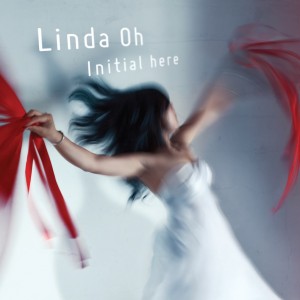
CD Review: Linda Oh - Initial Here


Linda Oh
Initial Here
(Greenleaf Music) www.greenleafmusic.com

Bassist Linda Oh's life has been one of extensive journeys. She was born in Malaysia to Chinese parents, who moved their family to Australia when young Linda was three years old. After spending her teenage years playing in rock bands, she headed to New York to study jazz and eventually appeared with artists like Dave Douglas, JD Allen and Ambrose Akinmusire. The latter played on Oh's 2009 debut Entry.

Initial Here is inspired by the way the journeys have impacted her, but her writing reflects this pensively rather than trying to put across a concept album or by trying go to a different world with each song.  Oh alternates between acoustic and electric basses (with pianist Fabian Almazan doing the same with acoustic and electric pianos). She has a tone on the upright that feels immediately engaging and authoritative, especially on "Mr. M" which pays homage to Charles Mingus both in its solo and in a melody that recalls his more reflective writing.

"Thicker than Water" brings in Oh's other instrument, the bassoon, which duets with the bowed bass behind vocalist Jen Shyu who sings in both Mandarin Chinese and English. With a melody as close to opera as jazz, this track's lyrics address Oh's mother and female forebears. While it includes questionable phrases like "satiate your soul" the overall message and Shyu's strong delivery lend a lot of weight to the message.

Throughout the album Oh shows a knack for turning unusual rhythmic features into strong grooves. "Ultimate Persona" is based on an Indian polyrhythm which keeps changing slightly over four (or maybe eight) repetitions. Drummer Rudy Royston drives this, as well as "Deeper than Happy" which is full of stop-start figures. Along with a strong reading of Duke Ellington's "Come Sunday," the quartet pulls off a brilliant medley of West Side Story's "Something Coming" - playing it in an urgent 4/4 clip - that segues in the climax into Igor Stravinsky's "Les Cinq Doigts," a piece that sounds very similar melodically.

The closing "Deeper Than Sad" ends things on a melancholy note which comes as something of a surprise considering the way the rest of the album seemed to be more on the upswing. But the quartet's performance, which follows a dirge-y figure and builds in dynamics to include some melodica bursts and some haunting backing vocals, ends up feeling uplifting in its own way.  There are a lot of ideas moving around on this album, but none of the tracks feel busy.

Monday, July 23, 2012

CD Review: Ravi Coltrane - Spirit Fiction


Ravi Coltrane
Spirit Fiction
(Blue Note) www.bluenote.com

Ravi Coltrane's first album for Blue Note Records as a leader does not put him in a setting that either relies on the label's golden years nor does it lean on the family name and heritage. While the latter situation is unlikely anyhow, given the saxophonist's weighty discography, some people might have expected the former since Coltrane played with the Blue Note 7, an all-star group that released an album and toured to mark the 70th anniversary of Alfred Lion's creation of the label.

Spirit Fiction has some compositions that come from outside the band, but instead of Horace Silver, Lee Morgan or Coltrane's father (Blue Train might be his only album on the label but it's probably in their Top 10), he tackles Ornette Coleman and Paul Motian, with no less than album producer Joe Lovano joining him on both. The rest of the tunes come from Coltrane or his longtime bandmate Ralph Alessi (trumpet) and while they appear to aim in a straight forward direction, they get more adventurous the deeper that they are investigated.

To be sure, Coltrane hits the ground.... probing. His soprano saxophone enters "Roads Cross" testing the waters before a spirited free improvisation is stirred up by his quartet (pianist Luis Perdomo, bassist Drew Gress, drummer E.J. Strickland). If devotees of Blue Note are meeting Coltrane for the first time, they're getting an audacious opening salvo, albeit one that won't disappoint anyone with open ears.

Just past the album's midpoint, the quartet revisits the scenario with "Cross Roads" which sounds a little more urgent but just as exploratory. It provides an interesting comparison to the title track, which is equally free flowing for another reason: the quartet was split into two duos which recorded separately from the other and was superimposed after the fact. Perhaps they played it safe by limiting themselves to 2:28, but in doing so they arrive at a complete statement with no room for filler.

The quartet plays on six of the albums 11 tracks. The remainder reunites Coltrane with the band that performed on his 2000 album From the Round Box - Alessi, Geri Allen (piano), James Genus (bass) and Eric Harland (drums). This group also sounds so in tune with each other that they can keep it loose at the same time. The two horns begin "Who Wants Ice Cream" unaccompanied, sounding like they're completing one thought. Harland's accents really drive this one too.

The quintet is also the group that interprets "Check Out Time," the Coleman tune that comes from his Love Call album. The idea of adding a piano to the track seems odd but Allen was the first pianist to play with Ornette (on both of his Sound Museum albums in 1996) in over four decades. The two tenors, trumpet and piano create an especially rich sound on the theme and after some far-flung solos, they explode the theme in about four directions before bringing it back home. Motian's "Phantasm" recreates the warm bliss that could be felt when Lovano played with just the composer and Bill Frisell. Here, the two tenors work magic joined only by strong participation from Allen.

Coltrane's last album, 2009's Blending Times, stuck with me because he played with a rather cerebral sense of exploration that gave him a unique voice. That sense continues with Spirit Fiction which features two whole bands that share that are looking for new discoveries. This album has a lot of them.

Wednesday, July 18, 2012

CD Review: Arts and Sciences - New You


Arts & Sciences
New You
(Singlespeed Music) http://www.singlespeedmusic.org/

The members of the Oakland, CA quartet Arts & Sciences all spent time in a conservatory or two. In addition to learning their instruments on campus, nearly all having logged time in the odd pop band tUnE-yArDs. They also all have an affinity for prog-flavord free improv and composition. In particular, they seem to have digested a good bit of Tim Berne's oeuvre. Admittedly they cite the alto saxophonist's Bloodcount band in their bio, but the quartet seems closer to Science Friction, his more electric group. It could attributed to Michael Coleman's electric keyboards which build structures for Jacob Zimmerman (alto) and Matt Nelson (tenor) to develop, or knock down, depending on the situation. Drummer Jordan Glenn completes the band and adds aggresive feeling to the playing, sometimes like Jim Black.

No specific songwriting credits are listed anywhere on the cover, although Coleman's name appears with "ASCAP" next to it. Zimmerman actually penned one of the 10 tracks but by leaving the specifics off the cover, Arts & Sciences comes across like a unit rather than a band led by one particular player.

New You includes a few instances of conservatory geek humor. Case in point: "Baby Boner," a title which the band hopefully will come to regret and re-name. This suite-like episode, like opener "People Really Like Me," also proves that the quartet enjoys abrasive repetition. The latter drifts off with Zimmerman blowing a two-note loop, while one-third of the 10-minute former track gets stuck on an odd-meter lick that only changes in texture and dynamics. Abrasive? Yes. Unlistenable? Not really. Maybe just on the first listen.

Before "Baby Boner" gets to that point, it borrows what I like to call the "scenery changing" solo approach from Berne, where the background changes while a solo happens. The twist comes in who appears to be soloing. In this case, it's Coleman and Glenn, while the two saxmen work and rework the setting. "Scientology" adds guitar and three extra horns (including Singlespeed head honcho Aram Shelton) but the out of tempo piece sticks a little too closely to its slow theme, with just a brief spot for a keyboard/drum break. Better is "Shunting" which starts out free and furious, shapes into a heavy groove and then breaks down again.

The longer tracks are punctuated by shorter pieces that serve like interludes. In fact, the 31-second "Missed Opportunity" feels like the acoustic piano exposition for "Scram,"' which immediately follows and begins with Coleman rapidly spinning a nervy synth cluster. Other times, they hang around long enough to get a choppy melody out there ("Poodle," another tip of hat to Berne angularity), prove that they can play chamber music relatively straightly  ("Step Child") or go through several prog-y shapes in a less than three minutes, including one that sounds like a tripped out quote from Raymond Scott ("Those Lepers").

Clearly Arts & Sciences has a variety of backgrounds and influences to draw on with their work. Sometimes when the ideas get thrown together in a somewhat reckless fashion, the results feel a little scattered. In their case, the uninhibited qualities of these guys work to their advantage.

Saturday, July 14, 2012

Pharoah Sanders addendum & more writings

Playing right now: Josh Berman & His Gang - There Now (Delmark)
More to come on this. Later

After posting the Pharoah Sanders review it occurred to me that I didn't make a fuss over the Pittsburgh contingent on the album. In fact, the Don Cherry session had two Pittsburgh natives in the rhythm section: bassist David Izenzon and drummer J.C. Moses. Izenzon also showed up on the Paul Bley session too. These are two guys you never hear about when locals rattle off the names of musicians who grew up here. Them, and Beaver Harris.

Here are some recent reviews of mine that are on the JazzTimes website: Tomas Fujiwara & the Hook up and Jerome Sabbagh. 

In the current print issue (August), I reviewed albums by Henry Threadgill's Zooid and Ballister, the latter a free improv trio consisting of Fred Lonberg-Holm, Dave Rempis and Paal Nilssen-Love. Look for it and buy it. John Pizzarelli is on the cover. Last week I was working on a piece for the magazine, the first thing bigger than a review I've written for them in a while. With that out of the way, I'm hoping to concentrate more time here in the next week. I hope, I hope.

Tonight is Karl Hendricks' album release at Gooski's. I'm hoping to make it there. The new album's out on vinyl and disc!

Friday, July 06, 2012

CD Review- Pharoah Sanders - In the Beginning 1963-1964


Pharoah Sanders
In the Beginning 1963-1964
(ESP-Disk) www.espdisk.com

Before Mosaic started their three-disc Mosaic Select series, they released a few boxsets that pushed the limits of what belonged in a deluxe set. Combining Lennie Tristano sessions with those by his students Lee Konitz and Warne Marsh kind of made sense, as did the Vee Jay sessions by Lee Morgan and Wayne Shorter (which only intersected on one album). Peggy Lee and June Christie seemed to be a set of convenience: "Two girl singers, both on Capitol!"

ESP's retrospective of pre-Impulse! works by tenor saxophonist Pharoah Sanders contains an interesting batch of music, as well as some interview snippets throughout. But most of the music in the box has been readily available in reissued form for quite some time - mostly by the reactivated label itself. Considering that half the four-disc collection is taken up by performances by the Sun Ra Arkestra (which included Sanders) and that many of the interviews don't deal with this boxset's main subject, it has a rather thrown-together feeling. And while it provides a great introduction to both the saxophonist and the Saturn expatriate for whom he played, a set like this is geared more towards the longtime collectors than the novices.

Sanders is best known for his searing tenor work that came to fruition during his time with John Coltrane's quintet, from 1965 until Coltrane's death two years later. But Sanders was far from one-dimensional as the early sessions with Don Cherry and Paul Bley reveal on the first disc. A brief interview with Sanders (like all the interviews, no date is given) begins the set, setting the scene for his arrival in New York. The Cherry session comes from 1963 (possibly a year later) and includes bassist David Izenzon (who would soon join Cherry's former bandleader Ornette Coleman), drummer J.C. Moses (who played with the cornetist in the New York Contemporary Five) and pianist Joe Scianni.

The music feels loose with simple composed structures, much like Coleman and also like the compositions Cherry recorded with Blue Note (and that have appeared on live discs released after the fact by ESP). Sanders had yet to tap into the frenzy of his later work and favors a tone very much like Coltrane, though his melodic choices don't make him a copycat. Only three different compositions come from this set, two have alternate takes which vary from each other. Another track credited as Thelonious Monk medley finds Cherry nooldling at the piano on four Monk melodies. Considering that Izenzon rambles softly on top of them, it's likely this track came from during downtime between takes while the tape was rolling.

The session is followed by four minutes of an interview with Don Cherry talking about... Ornette Coleman. Pianist Paul Bley follows with a few minutes of discussion of his instrument's changing role as the avant garde movement took root. Yes, these are both interesting interviews but this has nothing to do with Pharoah Sanders or his work with either of these musicians.

The 1964 Bley session also features just three compositions (all by Carla Bley), again with two alternate takes. With Paul Motian on drums and Izenzon in the bass chair again, it presents an interesting take on this music, Sanders virtually predicting a direction that his future leader would be taking over the next year. It would have been interesting if this quartet had released a whole album. Instead, Bley would re-record two of these a few months later in a session that included Marshall Allen from the Sun Ra Arkestra.

Pharoah's First, Sanders' debut and sole release on ESP during their original run, makes up the bulk of disc two. The two 20-plus minute tracks have been maligned for placing the wild tenor in a more straightforward setting, but the saxophonist doesn't exactly sound confined. If anything he might have been better off skimming a few minutes of solos off both tracks. Still, this album can be found in the ESP catalog on its own.

Three years ago, ESP released Sun Ra featuring Pharoah Sanders and Black Harold, a recording from the Four Days in December concert series staged by the Jazz Composers Orchestra in the final days of 1964 which featured many of the musicians moving in a newer, freer direction. Half the album had been released by Ra's Saturn label, while the first five tracks were new to the public on that release. In the Beginning clarifies that the unreleased tracks actually came from the December 30 performance, while the remainder were recorded the next day, along with an additional 25 minutes of outer space wildness.

The sound quality on both discs is on the quiet side - which is not the case with the 2009 release - and not just because one set is mono and the other stereo. While there are numerous live recordings of the Arkestra, this one might not have much appeal beyond the diehard collector. Sanders, who supposedly made the transition from birthname Farrell to "Pharoah" courtesy of Sun Ra, can be heard blowing his trademark overtones but he doesn't get a lot of solo space.

Disc four is bookended by more interviews, this time with Sun Ra himself as well as Sanders. The latter begins that disc with a dissertation about how major labels neglected him, which may be more entertaining than accurate. He later adds a recollection of John Coltrane, though nothing about Sanders. The saxophonist closes his disc, sounding relaxed and willing to talk about meeting Coltrane, which draws a chuckle from the normally staid Sanders. Here, as he has in the various interview segments, he speaks about his music not as a revolutionary but as someone who would interesting in expressing beauty and art in his work.

Considering how much of this music is in print in other formats, it might have been more interesting to release the music on disc one in tandem with the unedited interviews. As it stands In the Beginning loses some focus and comes off as a bit of a shoddy collection.

Sunday, July 01, 2012

Love Letters, Will Simmons & the Bundt Cake Bunch, Paul Labrise

Last night the Love Letters played at Hambone's, along with Paul Labrise and Will Simmons & the Bundt Cake Bunch (who were listed incorrectly as "the Bundt Cake Gang" on the flyer; my bad). Things got off to an auspicious start because the Bundt Cake Dudes actually showed up with real bundt cakes. Two in fact: one chocolate and one carrot cake. The latter was the winner in my book with a great consistancy and that delicious cream cheese icing that could've been a tad thicker but really was just fine as it was. The chocolate was equally good, but a bit rich and a bit heavy for that heat. Jo, the angel that books the shows there, set me up with a cup of coffee which was the perfect compliment to the pre-gig snacks. (When we play last I really try to go light on the booze, since gin kills what little vocal range I have.)

Paul was originally going to play with a bass player but said four-string guy was unable to make it so it was just Mr. Labrise and his acoustic guitar. He's a really great guitarist and a pretty clever songwriter so he put on a solid set of his own - catchy, pithy, good blend of chords that were picked and strummed with a few little lead-y things in there.

The audience size was fairly thin at that point and I felt it starting to bother me towards the end of Paul's set. One of my friends from work showed up, although she showed up in part because she's friends with Bill from the BCB. And two other friends texted that they wouldn't be able to make it.

But Will & the Gang snapped the mood into a postive groove from song one. He, bassist Greg and trombonist Bill used to play together in the Hope-Harveys and now they're bolstered by the addition of Red Bob, my former bandmate in Amoeba Knievel (with whom he still plays). Will was playing a Telecaster through a Fender twin, which really took me back to LA circa 1968 (key psychedelic era is what I was thinking of). But when they did one of his instrumentals that has a polka kind of feel, it took me to Redlands, CA circa '85, i.e. Camper Van Beethoven territory. Light-hearted and good timey but definitely not joke rock. Plus, they covered the great Al Hirt/New Orleans chestnut "Java."

Then us Love Letters took the stage. I felt like it was a good night. By then the lack of a larger audience didn't bother me too much. I was there to play. And we were pretty together from the start. Sandwiched between Aimee and Buck, I was getting a good dose of both organ and guitar. I was actually having a hard time hearing the snare drum, though. So there was one song where I think the tempo was a little slippery at first - but that's because there aren't any drums in it just yet. The show centerpiece, again, was "As We Go Along," the Monkees deep cut from Head sung by our drummer Erin. It was pretty exciting. Then I had to follow that, since I was singing the next song. In a move that could never have been planned for real, Erin lost a drum stick and it hit my leg during the next song. Luckily things didn't fall apart.

We have another show coming up on July 28, this time at Gooski's. Hopefully we'll get a better turnout for that.

Saturday, June 30, 2012

Read these articles, too.

Whenever I end up getting some writing assignments, my posted output slows down. Last week I had the cover story in City Paper on the Beagle Brothers, my first ever cover for them. Then on Tuesday, Blurt posted my Man Forever piece. I also got an assignment from JazzTimes to write about the band Positive Catastrophe, which includes Taylor Ho Bynum, who I spoke with last week.

After finally publishing the Alexander Tucker piece (right below this post), I'm feeling really productive and wish I had a couple more hours, because I'd happily bang out another review. But today's a work day. And the dishes are staring me down in the kitchen. Maybe tomorrow morning.

Oh wait - the Love Letters have a show tonight so I should probably sleep that off in the a.m.

In the meantime, check out the links above, if you haven't already.

CD Review: Alexander Tucker - Third Mouth


Alexander Tucker
Third Mouth
(Thrill Jockey) www.thrilljockey.com

When I reviewed Alexander Tucker's album Dorwytch nearly a year ago (see post on July 6, 2011), it struck me not only because I was expecting something a little more along the lines of, uh, traditional warped pop, but also because what he actually created was a very dense, churning sound often built around simple vamps. That latter point ultimately created some interesting textures but often brought the music down because too many of the songs sounded undeveloped, with instruments just piled onto a spare framework. (Tucker has been doing this rather prolifically since the early '00s, but this was my first introduction to him.)

On Third Mouth this English bard for the new millenium sounds more focused. Things are as spacey as ever, but there's more direction to these tracks. As a vocalist, Tucker evokes Robert Wyatt, with a high tenor that has a lot of impact even if the words aren't immediately discernable. Acoustic guitars provide the foundation of many tracks with cellos and keyboards filling things out, with backwards electric guitars and other effects added for finishing touches.

The combination makes a song like "The Glass Axe" sound like a subdued prog rock, playing for the first few minutes on a haunting droney riff, only to shift midway into a different section where guitar, keys and vocals move together on the melody. "Window Sill" also has a lot of  strings and accented acoustic guitar picking, before it collapses into a sound collage of droning keyboards and found sounds that might be clocks, dripping water and chimes. Later on "Amon Hen," he branches out into territory that recalls Tom Waits, courtesy of some scraping guitar noise and saxophones that don't comfortably fit with the surroundings but still manage to complement them.

"Andromeon" follows "Window Sill," turning up the volume a bit to make things a bit more dynamic. Like a couple previous tracks, Tucker begins playing a slow waltz, this time with wall of droning guitars (electric, this time) and cellos. The vocals get doubled with two voices singing within an octave of each other, again sounding like Wyatt in his prime prog era. Rather than giving in to the temptation to let the music rise like tidal wave and slowly ebb, the song lasts just over three minutes, hitting hard and stopping before it can wear out its welcome.

That is probably the strongest qualities on Third Mouth. Tucker never lets things carry on too long. "Amon Hen" and "Sitting on a Bardo Pond" (the latter a tongue-in-cheek homage to that band) are under two minutes, acting more as interludes. Most of the songs last somewhere between three and four minutes and when "The Glass Axe" does push seven, it's with good reason as it has two distinct parts. The closing "Rh" also lasts as long but it's going for a loopy, trance feel anyway so it serves its purpose. This sense of economy departs from Dorwytch which seems to take its time getting to where it wanted to go. Dreamscapes can be cool but it feels like Tucker realized that he doesn't need to stop and survey everything as he rolls along, and the album is all the better for it.

Tuesday, June 26, 2012

Make it Look Like a Tux

This morning, my wife banged on the bathroom door pretty urgently and when I opened up, she was holding the section of the paper with the obits in it. "I thought you should see this." My beloved godfather/piano teacher and bandmate of my Dad, Teddy Zee as he was known professionally, died on Sunday. He was 87.

Teddy had a larger than life personality that impacted our whole family. I'm not sure exactly when Pop met him, but by the time I came around, they were playing gigs on what seemed like every weekend, usually at Churchill Valley Country Club, or just "Churchill," as we called it in our house. It was just part of the family life - Pop was "going to play," and often me or one of my brothers shined his shoes for him and/or loaded his bass and amp into the car while he was getting ready. If the band's suits had to look especially spiffy, the order from Teddy was to "make it look like tux."

At the club, they'd play a continuous set, seguing one song into another. I mentioned this once to a sax player I met who had played with Teddy and he referred to the band's groove as "the businessman's bounce," where the tempo stayed the same but the melodies would change. It's a tradition that dates back to the lavish clubs in New York, like the El Morroco. (We have an album where the band does just this - going from one song to the next.) Years later it occurred to me how there's a skill that the band needs to keep this music swinging and not make it just bland background music. These cats had it going on.

One of the things that kept it lively was Teddy. My dad has tapes from the gigs and you can hear Teddy makes cracks mid-song, keeping the music lively, cheering on dancers and simply creating a festive atmosphere. He was like that offstage, too, lighting up a room when he came in. His laugh became part of the repetoire with me and my brother Tom, a two-syllable "huh-HUH!" that was sort of like an Ed Norton chuckle.

Because of that spirit, I remember always feeling like I should be cutting up when I had piano lessons with him. I was always looking for a joke and feeling hyper - something I see in Donovan when he takes forever between songs as he practices the piano. Teddy once recorded a piano lesson (there was always a tape recorder around) where I was especially wound up, and Tom and I listened to it a lot. We were especially amused with a section where I stood up and pointed at the metronome. "SIT DOWN," Teddy barked. "You're not going to use the metronome for quite a bit." [It's all in the delivery. I can still hear it in my head.]

He later bought me a metronome. He also gave me a lot of albums, including a Mongo Santamaria album and a Gerry Mulligan 10" which I still own.

When one of my cousins got married in 1998, the reception was at Churchill and Teddy played solo during the dinner. He was walked through the room before his set started, Pop stopped him and I talked to him. It was the first time I had seen him in over a decade, and the band with Pop had broken up about that long ago.  Later we made eye contact as I walked past the piano and he stopped the tune he was playing and launched into "The Way We Were" with a big smile on his face.

I later asked him if he could play "La Vie en Rose," which had been one of the songs at my wedding. "How'zat go," he asked. After I hummed about six notes, he said, "oh yeah," and launched into it.

His wife, who our family always referred to as "Chip" back in the day, passed away about two months ago and I stopped by the funeral home to pay respects. He seemed pretty lost without her and he wasn't in the best of health. But the thing that I took away from that was that he still encouraged me to sit down and the piano and run scales to keep my chops up. A few days later I did, and I'm glad because it wasn't as easy as I thought.

That's how I'll remember him.

Tuesday, June 19, 2012

Another Hit from the Folks' Record Cabinet


On Sunday, we went to my folks' house for Father's Day and I asked to borrow the Four Freshman album In a Class by Themselves. This is another one of those albums that played a big roll in my childhood. There was a period of time, probably only about a week or two but it felt like longer, when I needed to hear this album every night before bed, as my sister and I had our glass of Quik.

My folks were both very big Four Freshman fans, to the point that I wonder if I would be here right now typing about this if the group hadn't been around. Once, when they came to town, Mum met them after the show and invited them to a party at her house (she still lived at home, but there were always parties there) and two of them showed up. A few years ago, she retold the story and said that it was only years later that she wondered if they showed up hoping to get lucky. (They didn't, by the way.)

Anyhow, this album came out at a time when the vocal group was attempting to remain current amidst the pop music boom of the '60s. Their vocal arrangements were really unique and were a huge influence on the Beach Boys, who were now supplanting them. So this album includes standards like "Canadian Sunset" and "Girl Talk," as well as dubious choices like Donovan's "Hurdy Gurdy Man" and the New Vaudeville Band's "Winchester Cathedral." It was the latter two songs that really stood out to my ears as a kid, especially "Winchester Cathedral," because Ross Barbour delivers it in what was known as his "Leroy" voice, something akin to Donald Duck. And ironically the delivery makes it pretty impossible to make out the words.

That song comes at the end of side one, and follows an absolutely eerie take on Paul Simon's "Old Friends." The latter number is done fairly rubato with a lot of a cappella sequences, interspersed with some sawing strings, similar to Psycho though not as shrill. In short, it really goes a long way towards capturing the song's underlying messasge about the fear of growing old, especially when one of the guys, with a lower voice, practically whispers, "How terribly strange to be 70." (In what seems like a connection, the liner notes mention the fact that the band was 40 years old at the time of the recording). I'm sure someone at Liberty Records insisted they needed to really lighten things up following that song.

The cover of the album always puzzled me. A dame in feather boas, laying on a table next to a pile of grapes and a bucket of champagne. At the top of the hill behind her sat a Mercedes. How is she going to get to her car, I used to wonder. Where are the steps?

Yes, I looked at this cover a lot. It's a miracle the record still plays. Along with the Fifth Dimension's Greatest Hits, Equinox by Sergio Mendes and a couple Herb Alpert albums, this was probably one of the albums that gave me ideas about how melodies and harmonies should sound - prior to discovering and being smitten by the Beatles and Alice Cooper.

Saturday, June 09, 2012

The Latest

Playing right now: Aram Shelton Quartet - Everything for Somebody (Singlespeed)
I don't think it's out yet, so maybe I shouldn't say anything about it. Except that I'm digging it and it might get in the way of writing because I'd rather pay attention to it.

It was a good week for CD arrivals. A good 10 days actually. I got two Singlespeed CDs, a Pharoah Sanders set on ESP, three other ESP releases which I have to review for JazzTimes (which I hadn't realized were sitting here), another Don Cherry reissue, plus the Beagle Brothers CD. The latter isn't jazz but a local country-type band that I have to write about for City Paper, which leads me to what else has been going this week. And why I haven't been able to completely delve into all this music...

I interviewed the Beagle Brothers on Wednesday night for the upcoming article. I called them "country-type" in the previous paragraph because they don't comfortably fit in that genre. They're not "new country" like the tripe you see on that country music video channel. Nor are they ironic punks playing country.

So I went there straight from work, talked to the boys for about an hour, then ran home for what we still call baby duty at the house, even though the baby in this case is a five-year-old. To everyone else this might be called "bed-time duty."

Then it was off to Gooski's, where Man Forever was playing. You remember Man Forever, right? I wrote about them in this very space a few months ago, after I saw them in the very same venue where they played on Wednesday. This time, I'm approaching it as a guy who's writing a story about the band, or actually about their leader/driving force/one solid member among hired guys - Kid Millions (aka John Colpitts). Also, I knew what to expect this time out.

The performance consisted of the same "piece," "Surface Patterns" (FYI, I guessed incorrectly at the title in the previous piece). This time it was just Kid and one other drummer both playing on one snare drum instead of four drummers. Single stroke rolls (pronounced "budda budda budda budda" in quick succesion) for 30 minutes while the rest of the band slowly came in and played slowly. It was kind of cool hearing the vibrations in the sound slow down and speed up. I timed it, in part to take notes that I'd consult for the article.

When I discovered that they were 29 minutes into it, I knew the end was coming and I also knew how he cued the rest of the band to stop. So when he raised his sticks briefly and making them crash down on the snare, I was so into it that I screamed.

But now I have to write about him and write about the Beagle Brothers, and I haven't even transcribed their interview yet. I have the next two days off of work, so there will be sometime in there. Although tomorrow I might be reunited with my long lost first friend, after not seeing him for 30 years.

Tuesday, June 05, 2012

CD Review: Mike Reed's People, Places & Things - Clean on the Corner


Mike Reed's People, Places & Things
Clean on the Corner
(482 Music) www.482music.com

I have often said that I allow myself one or two moments a year to get hyperbolic in print. Consider this one of them because Clean on the Corner should be considered 2012's album of the year. Mike Reed is a busy guy that leads two ensembles (Loose Assembly being the other) plays with a handful of others (including Jason Adasiewicz's Sun Rooms to name but one) and still finds to time to organize events in Chicago like the Hungry Brain's Sunday Transmission Series, which he co-hosts with cornetist Josh Berman. He's also a director of the Pitchfork Music Festival.

With all those irons in the fire, he still finds time to compose creatively and lead a group that, like many others from Chicago, is not afraid of the musical past but still insists on being firmly rooted in the now. With alto saxophonist Greg Ward, tenor saxophonist Tim Haldeman and bassist Jason Roebke - and two guest spots each by Berman and pianist Craig Taborn - PP&T plays in a forceful manner that at times creates a feeling of elation, due to their rapport and their individual power.

"The Lady Has a Bomb" begins with a rubato theme that has sort of a playful Ornette Coleman quality to the theme, which Reed punctuates with press rolls. Once they make the opening statement though, he kicks them into a 4/4 tempo that swings fiercely. Ward's alto solo is especially compelling in the way he plays behind and around the beat. He and Haldeman both rasp and tweet comments during Roebke's solo in "Old," a Roscoe Mitchell tune that has the feeling of a Monk blues.

Reed also writes compelling ballads. The brief "December?" sounds like a free ballad, save for some scraping noises from Roebke. It's followed by the slow, long-toned "Where the Story Ends," which seems to earn its title from the way it never settles down in one place. "House of Three Smiles" touches on Ellington richness thanks to the way the two saxes get a rich sound with the addition of Berman's cornet. The latter plays a solo that manages to start buttery and conclude with a more plucky tone. Reed wrote the piece based on a solo his other bandmate Adasiewicz takes in one of the vibe maestro's own pieces.

PP&T's 2010 album Stories and Negotiations paid tribute to unsung Chicago composers while bringing a few surviving Windy City vets into the fold (look for a review on this blog from early 2011). Here, they again revisit the work of the late alto saxophonist John Jenkins with "Sharon." Taborn joins in and the group takes off in a way that could potentially start a Jenkins revival. The piece is an odd slab of bop that switches from minor to major, never settling into a predictable head-solo-head format. By the end, as they're trading fours, it has the aggressive quality of the Sun Ra Arkestra or Charles Mingus' similar excursions that pushed the bop envelope.

When some musicians spread themselves over different efforts, it can result in music that also gets a little thin. That's far from the case here. Reed sounds like he's just getting warmed up, and what he's doing is not to be missed.

Wednesday, May 30, 2012

Blood Sweat & Tears - Not Really an Appreciation, But Maybe

A week ago I mentioned listening to the first Blood, Sweat & Tears album, Child is the Father to Man and how I felt a greater appreciation for it than I originally had when I first heard it years ago. The next night I got out the group's second, self-titled album. That's the one with all the big hits: "Spinning Wheel," "You've Made Me So Very Happy," "And When I Die" and a slew of other AM hits.

That album looms large in my musical history because it was one of the first records I remember listening to as a kid, right up there with Herb Alpert. I actually have a distinct memory of being left alone in front of the stereo listening to it and getting to flip it over and play it all by myself. I recall this in part because I used to begin with Side Two, probably because "Spinning Wheel" kicks off that side. Also this means their versions of the Erik Satie theme came back to back instead of at the beginning and end.

That album would probably qualify in my case as a guilty pleasure. While there are a number of elements with the album that are pretty progressive and unique, it also contains a lot of things that are kind of hokey. Number one being David Clayton-Thomas, the band's vocalist. After Al Kooper's white boy blues on Child I guess the CBS brass wanted to make sure the band got someone with soul, but Clayton-Thomas is closer to Vegas than the Apollo in his execution. In my memory, I feel like I associate him more with my parents' Four Freshman albums than I would with my brothers' Janis Joplin or Beatles records, meaning he sounded to me less like a rock guy than an adult contemporary guy.

While I was away this weekend, I kept getting snippets of the album stuck in my head. Most of the time it was "Blues Pt. 2," the 11-minute opus made up of solos by different band members. As a kid, I found Dick Halligan's organ solo both eerie and fascinating. It rises and falls in dynamics, implying scariness and wild imagery, the latter especially when the Leslie speakers start rotating towards the end. It always made me think of some clump of dark clouds floating in the sky. Jim Fielder's bass solo is fast and impressive and Bobby Columby's drum solo is full of chops. Fred Lipsius' alto always sounded to my young ears like a human voice. It almost like he's running through modes as Fielder plays a one-note octave vamp. There's one point where it always sounded like crying to me.

Listening to it now, I'm curious how the whole thing happened in the studio. Was it one take or did they edit it all together? Did producer Jim Guercio have to make something out of a mish-mash of solos, and was that the idea?

Regardless, the track goes to pot after Lipsius winds down. Things get very quiet before the group launches into a brief, extremely lumbering riff from "Sunshine of Your Live" followed by guitarist Steve Katz briefly quoting "Spoonful." Sorry guys, I know you have the chops but it sounds too stiff. Sometimes rock and jazz don't mix.

With another fanfare, Clayton-Thomas enters testifying about the women in his life. Nothing against the singer - who looked a little like Jonathan Winters and Roy Clark to my young eyes - but he doesn't convince me that he's a stud. Things eventually build up into a vamp that recalls the coda of "Try a Little Tenderness" with our hero begging his woman to give him the affection he deserves, wailing as the song fades out. That freaked me out as a kid. The proceedings end calmly with a flute and acoustic guitar redux of the Satie piece, almost as if to assure the three-year olds in the audience that the scary man is gone.

Damn, I can't believe I've said this much without even touching on the first side. There's the awful rendition of "God Bless the Child," which nevertheless has a great blowing breakdown in the middle, with some great trombone (Jerry Hyman), trumpet (Lew Soloff) and sax (Lipsius) solos. Their funky take on Traffic's "Smiling Phases," which still sounds a little unconvincing, although the piano solo  in the middle must've blown minds at the time, especially after coming right after the psychedelic re-voicing of Satie that opened the album. How many college student jazz heads saw their future open up for them upon hearing that? (Apparently Sammy Davis, Jr. liked their take on "Smiling Phases" so much that he lifted the whole arrangement for himself.)

Back to Side Two for a moment: Their arrangement of "You Made Me So Very Happy" is a little slick but it's also very well done, with all the horn punctuation and the dual piano and organ in the coda. That's Al Kooper's work, it should be noted. With all their ducks in order, they have the cohesion of a soul band.

I started looking around youtube for some vintage BS&T footage, hoping to come across them stretching out and blowing over some blues changes or "Cherokee" or something. There was one high-quality performance of "Spinning Wheel"  from some t.v. show, where they play the edited, single version of the song, sans Soloff's trumpet break. Upfront there's ol' Dave smiling like a pro, with the rest of the band looking stoic (something that always drew me to the inside design of the album). There was also some grainy live footage of the band that only focused on Dave's face, with cuts to the horns and to Columby's hands.

I ran into a trombone-playing friend of mine last week and we were cracking up, thinking about a later BS&T song "Lucretia Mac Evil" which beats all the above songs in terms of corniness. That same album (BS&T 3 - not to be confused with Chicago III; very creative Columbia marketing peeps) has a medley called "Symphony for the Devil/Sympathy for the Devil" which, after a quick thought, might be worth a purchase for a few bucks if two friends can get a big laugh out of it.

Then there's "Go Down Gamblin'" from BS&T 4 (c'mon guys, you're killing them!) which IS actually pretty badass.

I'll stop now.


Sunday, May 27, 2012

Remembering Chuck Austin

Ben Opie just posted in Facebook that Pittsburgh trumpeter Chuck Austin passed away Saturday morning at 5 a.m. I'm not sure how old Chuck was, but he had seen a lot of history on the local jazz scene, which included playing with soul singer Lloyd Price after "Personality" became a big hit. Also - he was in a group called The Band years before Robbie Robertson, and this band was remembered in the Teenie Harris exhibit, which featured Chuck in an interview talking about them.

I'm not in a position to give you an accurate obit on Chuck's life. But I did see him play numerous times with Opek, and I interviewed him for a Pulp article about jazz in the city. He was the president of the African-American Jazz Preservation Society of Pittsburgh, who worked to ensure that the history of the Black Musicians Union would not be forgotten. He was an absolute gentleman, the type you rarely meet these days, who was always willing to share his history with you, but never let that be where his legacy ended. He was there right up until the end, pushing music forward, blowing Sun Ra with Opek until he couldn't do it anymore. He was a frank speaker, but didn't want to ruffle any feathers. And, if all that isn't cool enough, he used to hang out with Horace Parlan, long before that pianist pulled up his roots in town and left to play with Charles Mingus and to eventually move to Europe.

There were times in recent years that I've gone to Opek shows and wanted to reintroduce myself but Chuck was either already involved in a conversation, or else I just felt too bashful to step up. I wish I could've talked to him more. Knowing what little I do about Chuck, he probably wouldn't have minded.

Wednesday, May 23, 2012

CD Review: Ches Smith's Cong for Brums - Psycho Predictions


Ches Smith's Cong for Brums
Psycho Predictions
(88) http://www.chessmith.com/

Psycho Predictions is all Ches Smith, but it shouldn't be considered a solo drum album, or a solo percussion album either. Smith does use his trap kit, along with some percussive devices and the vibes, but he also incorporates electronics into the mix, jumping quickly from one of these instruments to another, sometimes before there is a chance to adjust to the mix, while at other times the transition offers a welcome relief from abrasive noise.

It's best to listen to this album (a vinyl-only release, with a digital download) and imagine a live performance. Think of it that way, and this idiosyncratic performance gets really engaging. The opening segment, "Death Chart," begins moving quickly in a manner that must be totally engaging when it happens a few feet from your seat. Any listener who uses their cellphones as an alarm, or who's used to jumping up from their desk when receiving an email alert, should prepare to be spooked in the first few minutes. Without so much as a break, Smith kicks off on the traps with a loopy beat that provides respite from the electronics. These jarring noises are probably the hardest thing to take throughout the three-part piece, simply because they're so shrill and loud.

Psycho Predictions was recorded without any overdubs so the imagine-the-performance focus gives a greater perspective to Smith's dexterity. If there are any silent moments, they exist intentionally to provide pause. Otherwise things flow from one section to another or build upon an initial idea until you have to wonder if the vibes were live or triggered by a sample, and if the electronic countermelody was preplanned or not. By the time Smith starts playing the toms around the middle of "Conclusion: That's Life," he makes you listen with a completely different perspective on the trap kit. It's not merely a fill or some random hits that he's playing. It sounds like a melody. This section concludes with a real frenzied drum solo which also feels too brief after the journey we've traveled.

Smith has played with everyone from Tim Berne to Terry Riley to indie rockers Xiu Xiu. That diversity has really opened his mind to all kinds of musical possibilities for his instruments of choice. While there are moments on Psycho Predictions that could've progressed a little faster, the whole thing comes across as a solid effort.

Addendum 1/6/13: For some reason this review has attracted a lot of spam. For that reason, I'm disabling the comment section.

Random Leftovers

I remembered the third thing I wanted to talk about in the Saturday entry I wrote. On the way home from work, I turned on NPR a few minutes before six o'clock, right when they usually interview a musician. The guy talking to the interviewer (at this point I didn't hear names) was explaining how he reacted when he first had success and popularity. He was talking about comedy and jumping into the story mid-way, it almost sounded like he was a musician that dabbled in stand-up, or vice versa.

He started explaining at length that he suddenly had all of this attention on him - being interviewed for Rolling Stone, for example -  and he was worried he had nothing to say, so he created this persona so that nobody would think he was boring. It took him a long time to realize that he wasn't doing himself any favors and that he was lucky to have this success and he should've appreciated it more.

The thing is, he was speaking as if it wasn't this realization gave him some newfound modesty or served as a wake-up call. He sounded as if he was operating with the same level of self-importance that he had initially when his big-head brought him success.

And this is the edited version.

I was hanging on for dear life wondering how the hell this windbag was. They cut to a song in the middle of the story, which sounded kind of bland - and then they finally reintroduced him and  I knew why I was loathing this subject. It was John Mayer. A man for whom every movement is GRAND GESTURE. Every lyric is a statement. Even when it's something vapid like "I'm going out west with my earbuds on." That could only mean something big is happening, or your searching for something. Yeah right.

Please note that I usually go online and fact check info while I'm writing, but this time I did not. There's a slight chance that I'm a little off with some details but the whole sentiment of this windbag is pretty much on the money. Besides I have other things to talk about.


*****************

I borrowed a stack of albums from a friend of mine a few weeks ago, which included Blood, Sweat & Tears' debut album Child is the Father To Man. That album has always received high praise as something of a high water mark of adventure and experimentation for a band that quickly went on to play it safe and head for the middle of the road. I heard it back when I was about 20, and couldn't understand what all the fuss was about. So I figured it was time for a reexamination.

Time has helped me appreciate it more. Turns out BS&T - at the time helmed by Al Kooper, pre-David Clayton-Thomas - was a pretty interesting band, as long as Kooper wasn't trying to be a blues belter. There is some interesting arrangements that take pop music to a more elaborate level. But it's incredible that a band could be on Columbia Records - home of Miles Davis and Thelonious Monk at the time - and that the horns could sound so thin. I'm presuming they worked in the label's legendary 30th Street Studios, but things sound really tinny like they didn't get a good sound level.

******************

In listening to the discs by Jason Stein's Locksmith Isidore that I got from Clean Feed last week, I found it pretty impressive that Stein actually blows some sounds on the album that honestly sound like no other bass clarinetist out there. I mean every horn player begins sounding a little like their predecessors if nothing else because they're playing the same instrument. From there, everyone has some new spin on the vocabulary. But Stein emits some pops and growls that sound break new ground.

Tuesday, May 22, 2012

CD Review: Hank Mobley - Newark 1953

Hank Mobley
Newark 1953
(Uptown) www.uptownrecords.net

Let us take a moment to figure out where the pioneers of bebop were at the time of this recording and where this cast of musicians was coming from - and where they were headed. Charlie Parker still walked the earth in 1953, and four months prior to the concert, he played at Toronto's Massey Hall in what would later be considered (at least in one reissue) the greatest jazz concert ever. Bird's worthy constituent at the performance (if you've heard the album, you get the reference) Dizzy Gillespie would hire Hank Mobley a year later for his quintet, along with drummer Charli Persip (who still had the "e" at the end of his first name).

That same year Hank Mobley and pianist Walter Davis, Jr. had recorded with Max Roach on Debut (which first released the Massey Hall show) and the tenor saxophonist was often touring with rhythm and blues bands. Which means that he was on a fast track at that time of this recording, less than two years away from joining Horace Silver in what would later become the Jazz Messengers.

Newark's Picadilly Club was were this double-disc set was recorded, on a Monday night no less. Comedian Redd Foxx booked the band (Mobley, Davis, Persip and bassist Jimmy Schenck), who would bring in a touring soloist to join them each week. On September 28, that guest came in the form of trombonist Bennie Green, who would also go on to record for Blue Note, as well as several other labels.

Being a club date, the musicians stretch in their solos without worrying about the length of the tune, a rarity of course on records but also on the few live recordings made at that time. The two sets last just a few minutes under an hour, and they play five and six pieces respectively. In "Pennies from Heaven," something of a show piece for Green, the quintet goes on for a full 16 minutes, none of it excessive. In fact the only bit of excess on the whole set is the perpetual goading from either the m.c. (not Foxx, according to the notes) or an audience member, who regularly yells, "Blowblowblow," or quotes a Mobley phrase back to him, mid-solo. As far as sound quality goes, the disc is pretty solid. The horns come through loud and clear, while Davis and Schenck require some leaning in to the speakers to fully pick up on what they're doing.

Mobley's reputation seems to get stronger and stronger with each passing year (which wasn't the case during his lifetime), and it's clear in these sessions that even if he didn't have the wind power to create a tone on the level of Sonny Rollins, he possessed an amazing mind, capable of executing long, fully-developed lines in his solos. At the time, putting quotes into solos was de riguer and he goes whole hog in Gillespie's "Ow," throwing in "Irish Washerwoman" and a brilliant wedge of "Tico Tico" in the middle eight. When Green finally hands over the spotlight to him in "Pennies from Heaven," the tenor saxophonist blows with a rare aggression, as if he's been chomping at the bit as he waited his turn.

Green puts on a strong showing as well, combining a smoothness that comes out of a swing past which he combines with bop ideas that players like J.J. Johnson were patenting at the time. Speaking of swing, Persip definitely drives the band, but its interesting to hear his heavy emphasis on a straight 4/4, which is also close to a swing drummer rather than what was coming down the pike from the likes of Blakey and Roach. (Persip would soon quit this gig to join Gillespie, later bringing Mobley and, two years later Davis, with him.)

Uptown as usual includes a thick booklet with this album, loaded with photos, many of them covers of albums that featured the players, as well as promo shots of the artists from later in their careers. Some of the LPs are interesting, like the Joe Gordon album on EmArcy which features the unsung Schenck's face. But other more common covers, as well as a page of matchboxes from other Newark clubs, seems like filler.

No matter, because the music is historically significant and sonically hot.

Saturday, May 19, 2012

This Nearly Was Mine

Playing right now: Jason Stein's Locksmith Isidore - A Calculus of Loss (Clean Feed)
(Finally got my Clean Feed package that I ordered at the end of April, at the tail end of their sale. Looked at the sale items and two Locksmith Isidore things were what jumped out at me. This album is freer and looser than the other one I heard, but pretty hot so far. Bass clarinet squonking along with dirty, double-stopped cello - which makes me think of Abdul Wadud with Julius Hemphill - and splattery drums.)

The June issue of JazzTimes showed up yesterday. The cover story is the Top 50 Greatest Tenor Saxophone Albums of all time, with Sonny Rollins on the cover. Several months ago I got a mass email from the brass at JT asking for suggestions on the Tenor list. First I thought that I'd come back to it later (classic thought when I go through emails). Then the deadline came and I thought, well I just don't know. Well, I do, but it's all the obvious stuff: A Love Supreme, Fire Music, Sonny Rollins Live at the Village Vanguard, Coltrane at the Vanguard. Hell, I could devote half the list to John Coltrane.

But I blew it off.

So yesterday, I'm thumbing through the list, when suddenly it hits me: Rip, Rig & Panic by Roland Kirk (pre-Rahsaan).  Sure, Kirk plays two other saxes on the album, but it revolves around tenor and he's monstrous on that album. That should've been on the list, but it's not there. And I would've been the one writing about it.

There's also a story on Tim Berne. A big honking feature on him. I've been wishing I could write about him for years. You know how long I've been following him? 24 years. I remember because I heard Sanctified Dreams in 1988, a few months before turning 21. That album didn't get mentioned in the sidebar, which instead featured the album that included Bill Frisell.

I'm not slighting the magazine. It's best to have a cat in New York write about Berne, since you can see him play on a semi-regular basis and hang out, probably in some Brooklyn coffee shop. But still.

And there was some other jazz-related (not exactly a) gripe I had, with myself most likely. But I can't remember it now. Probably not as important.

Wednesday, May 16, 2012

CD Review: Hush Arbors/Arbouretum - Aureola


Hush Arbors /Arbouretum
Aureola
(Thrill Jockey) http://www.thrilljockey.com/

It's hard to explain why some bands can play one riff and it betrays a lack of imagination, while the same riff in someone else's hands can rock you to the core of your soul. Play an A chord, with a bounce down to G every four bars and it can either be a strong statement or a holding pattern until a real idea comes along.

Aureola, a collaboration between the bands Hush Arbors (aka Keith Wood) and Arbouretum never gets too complex, chugging on riffs ranging in size from one to three chords. I didn't fact check this, but most of them seem to be built around A, which sounds really great when it's either finger-picked or strummed, especially when there's some fuzz behind it. Maybe the difference is that these guys realize that when playing music as basic as this, you have to make it count, either with dynamics, extra musical trimmings or vocals. (Of course if they just got too baked to care, there's something to be said about the lack of inhibitions that comes with mind-altering substances, but that's not for me to say.)

Wood sings the first five songs and Arbouretum's Dave Heumann handles the remaining three. Wood has forged a prolific career under the Hush Arbors moniker and as a member of Six Organs of Admittance and Thurston Moore's touring band. His voice possesses something of a high warble but not in a self-conscious indie rocker sort of way. He sounds very self-assurred and that makes a strong opening with "Lowly Ghost." The bass has a non-sustaining (meaning "percussive") groove which goes well with the finger-picked acoustic guitar that establishes the foundation of the tune. "Prayer of Forgetfulness" follows with a bright, upbeat groove that gets this album off and running towards greatness. A strain of country filters into his other tracks, including a guitar riff straight out of Dylan's "I Want You," before Wood wraps up his side of the disc with some gothic folk.

This is when the vinyl format helps to play up the contrast (and compatability) between the two bands.

Considering that Arbouretum's three songs drone on longer than any that preceded it, the split between the acts can still be considered even. The distorted power chords come out in full force, with Heumann's vocals leading the way, not quite as fragile as Wood but gentle enough when necessary. A song like "Black Sun" might be simple in terms of its building blocks, but it's not really repetitive because subtle changes pop up as it moves along. The band gradually builds from a start of picked chords and gradually adds slow drums and fuzz bass that's impressive in its restrain. "St. Anthony's Fire" has the end-of-the-album blowout quality to it, and the frenzied guitar solos bear this out.

File this one under Sleeper of the Year. It snuck up on me and now I can't get it out of my mind.