Thursday, June 27, 2013

Eleanor Friedberger was here!


Eleanor Friedberger is asleep somewhere in Pittsburgh right now. Wish I was too. Last night, her show at the Brillobox was a mess of fun. This is the first time she's been to Pittsburgh on a solo tour, in this case in support of her new Personal Record album, her second solo release. Opener Cassandra Jenkins and her band accompanied here (seen above; that's Cassandra on bass).

We got there after Cassandra had started. Her songs were kind of subdued, slow tempos with room taken up by ringing keyboards and e-bow guitars. Things were paced really well so that by the end, the energy had built to a good crescendo.

All-female band Teen was up next, and they were almost a tough act for Eleanor to follow. One part new wave dance, one part psychedelic drone, one part 21st-century version of the Raincoats, they were awesome. Great songs that alternated between simple and extremely catchy.

One thing that was a little different from Fiery Furnaces shows was that Eleanor seemed more visible in the small Brillobox space. When I got there, she was working the merch table, chatting with people. She's extremely personable, but at FF shows, it seemed like she was a little more distant, perhaps staying in the zone to remember all of those lyrics. Her setlist was predominantly stacked with songs from the new album. She alternated between playing rhythm guitar and just standing there with mike in hand, occasionally getting into the music and dancing around the stage. For the final song, she leaped off the stage and joined the audience. Good times. My notes are pretty illegible so it's hard to offer any further descriptions of the set. So let me put it this way: You should've been there.

Sunday, June 23, 2013

CD Review: Ceramic Dog - Your Move


Ceramic Dog
Your Turn
(Northern Spy) www.northern-spy.com

Marc Ribot is not the type of person who will hold back, whether he has a guitar in his hand or the phone to his ear, giving an interview. (We spoke about a decade ago, and Mr. R struck me as a loveable wiseguy. Which is different than a grouch, or a tough interview.) But truth be told, I wasn't feeling it when I heard Ceramic Dog's 2008 debut, Party Intellectuals. One of the great things about Ribot is how he can jump from jazz to rock to free improv like some people jump to conclusions. And he has no inhibitions or second thoughts as he does his thing. But Party Intellectuals sounded like abrasive playing without any of the vitality that has fueled nearly all of his work. It's pretty likely Ribot would have told you he didn't give two hoots about what people would think of the album as he made it, and would relish the thought of pissing people off, but it felt noodly.

All that's turned around with Your Turn. The trio (Ribot, bassist Shahzad Ismaily and drummer Ches Smith)  have turned into a fierce, focused rock machine. In much the same way that the original Tony Williams Lifetime sounded like jazz guys playing psychedelic rock, Ceramic Dog sounds like jazz guys playing post-rock or indie rock, and whipping the pants off all those bands obsessed with playing riffs in odd time signatures. In many cases, they do it with simple structures. The title track is built on a two-chord groove with Smith hammering a solid 4/4 while Ismaily plays it 5/4, and Ribot starts with a feedback howl and lifts the bandstand. "Ritual Slaughter" does almost the same thing, sonically, with some added breaks thrown in.

Ribot's vocals appear on several tracks, starting with "Lies My Body Told Me" another two-chord grabber that builds in suspense and volume as he spins his unique tale of lust gone wrong, sounding like some indie folk player who knows how to use his instrument to release the feelings he's vocalizing. "Masters of the Internet" almost sounds a little overdone in its sarcastic condemnation of people who don't pay for music (complete with a Middle Eastern melody added in the chorus), but the visceral sound of the whole production makes up for it. Same goes for "We Are the Professionals," which sounds like a Beastie Boys tribute, with trade-off rabid vocals over some delightfully sloppy funk, with horns and dinky keyboards.

In other spots, they play "Avanti Popolo," a marching band vignette that sounds like it's going to turn into "You Are My Sunshine," before it gets overcome by guitar noise and fades into "Ain't Going to Let Them Turn Us Around," a fairly straight-laced tune with a reggae lilt to it. Then there's the song that probably will get mentioned in every review -  their noisy version of "Take Five." Ismaily sounds like he's sticking to the main riff without making the changes, but again, the spirit of the performance (with more overdubbed horns adding punctuation, courtesy of Ribot) takes this to a higher level. Violinist/vocalist Eszter Balint (who needs to make another album of her own soon) and skronk forefather Arto Lindsay guest on a few tracks, but Ceramic Dog are the ones in the spotlight here. Hopefully these cats are playing punk rock gigs and blowing the kids' minds. Guys - come to town soon. Everyone else - drop everything if they're headed your way.

Saturday, June 22, 2013

Random Thoughts.

I would prefer to be writing a review of an album for this space right now, but I know that there's not enough time to devote to it before I have to leave for work. Maybe tonight. Till then, here are some random thoughts:

I had a dream last night that Mission of Burma was in playing at Club Cafe and it was sold out, with no chance of getting a ticket. Ack. I woke up and tossed and turned a little bit before I finally found a comfortable position and fell back asleep.

Ernest Dawkins isn't coming to Pittsburgh next Monday after all. Eleanor Friedberger is still coming and here's an article I wrote about her, for which I've gotten a few compliments. 

Yesterday was a looooooooooong day, not only because I worked 12-8 (with a meeting prior to that) but because I had to be up at 6 a.m. to interview Chris Geddes from Belle & Sebastian. He was home in Glasgow (where it was 11 a.m.), and that time was actually sort of convenient for me, since I'm typically up that early. The thing is, I don't really know B&S's albums that have come out in the last 10 years, so I was panicked, leading up to the interview. It's the suspense - or is it the anticipation - that kills me. Luckily for me, he was a nice bloke.

Saturday, June 15, 2013

CD Review: Uri Gurvich - BabEl


Uri Gurvich
BabEl
(Tzadik) www.tzadik.com

BabEl has an interesting concept: assemble a group of musicians who all hail from different countries, with the Biblical story of the Tower of Babel framing the compositions. In the story, the people all spoke the same language until God intervened and then everyone spoke a different language and they were dispersed around the world. The album, in theory, brings things back around, where players of different languages can speak one musically. If it all sounds like another attempt at watered down world music, remember this is a Tzadik records release, known for its "Radical Jewish Culture" series.

In some ways, BabEl sounds a bit straightforward. Israel native Gurvich (now living in New York) plays alto saxophone with a clean, crisp tone. This is no chaotic blowing session, but a series of melodies that seem to take on more depth as the album proceeds. The opening notes of the album actually come from Brahim Fribgane's oud, which only appears on a few songs. "Pyramids" evokes Egyptian music, as well as a bit of spaghetti western loneliness. Gurvich plays in a fleet-fingered manner during his solo, which Fribgane also does during a rubato section, accented by drummer Francisco Mela's commentary, before the oud plays a lyrical solo in tempo.

"Nedudim," which translates to "journey," has an electric keyboard riff from Leo Genovese that sounds like a Farfisa organ. That provides the contrast to the arrangement, which sounds like an extended composition more than an piece with an open spot for solos. Ironically, the alto solo in "Scalerica de Oro" has the strongest jazz feeling up to that point, with electric piano and oud rising behind Gurvich, with at least one of them utilizing a wah-wah effect. Ironic because this is the only non-original track, a Traditional Sephardic song in Ladino (the language of Jews of Spanish origin) which is sung at weddings to wish the bride good luck. The 21st-century arrangement, which includes vocals and "mazel tov" in the climax courtesy of all five musicians, puts an interesting spin on the piece without sacrificing the power of its origins.

From there, the album continues with something of a blend of Israeli melodies and Coltane-styled execution. The three-part "Higiga Suite" has some strong rubato and heavy comping from Genovese before Gurvich plays a solo that highlights the vocal quality of his alto. "Camelao" begins with a solid foundation from bassist Peter Slavov and, after some urgent trade-offs between alto and piano, Mela combines his trap kit and well-placed percussion in a strong solo.

Sometimes the interplay between the members of the group flows so well, the music almost seems a little laidback. But Gurvich has a lot going on in his writing and his band that requires - or perhaps demands - a deep examination, which yields some great satisfaction.


Wednesday, June 12, 2013

Pittsburgh Jazz - yes, it's here

The Pittsburgh JazzLive International Festival happened this past weekend. (I wrote about here if you're interested.) It looked really good, with three stages set up in or around Penn Avenue downtown, and a Jazz Crawl on Friday night. Next year, I need to take the whole weekend off of work. That, and family obligations, doomed my time there and I was only able to see one set. Maybe I'm overthinking my presence with something like this, but considering I write for a national jazz magazine, I feel like I should be there when my hometown - one that normally gets passed by the majority of touring jazz acts - finally gets the likes of Gregory Porter, Allison Miller, Pat Martino and Eddie Palmieri here on the same weekend.

I did get to see Rudresh Mahanthappa on Saturday afternoon, though. That was pretty spectacular, with him blowing the hell out of those twisted numbers. His group is amazingly tight. Dave Fiuczynski on guitar, Dan Weiss on drums and Rich Brown (filling in for Francois Moutin) on bass. It sounded pretty rock from where I was standing, to the side of the stage. If I had been front-and-center, it might have had a better balance. It was pretty low-end, but nevertheless it was still enjoyable. Dave might drive me crazy in a different context, but in addition to showing off his chops, he seemed like he was eager to thrown in some noisy riffs too which made sure there was a lot of life it in, not just technical stuff.

Speaking of Pittsburgh missing out on stuff, I ended up talking to a guy who seemed to be all down on our town, and brushed off any positive things I had to say about it:

Pittsburgh never gets good acts.
But Ernest Dawkins, a great Chicago sax player, in coming to the Thunderbird this month.
Yeah, but the Thunderbird's a shithole.
Um - what?!
Anthony Braxton played at the Craftmen's Guild but tickets were really expensive.
But it's Anthony Braxton! How often does he come here? (Further, I checked the archives, and tickets were $20 for a septet that included Mary Halvorson and Jessica Pavone. Ever check the typical ticket prices at MCG?)
Upon mentioning pianist Misha Mengelberg, I told him that he too came to Pittsburgh FOR A FREE SHOW with the ICP Orchestra less than 10 years ago. And ICP was just here again, without Mengelberg. But by that point, he seemed to be tuning out what I was saying.

I'll end this post on a positive note: Last night at the Space Exchange series at the Thunderbird Cafe (you know, that alleged shithole), bassist Paul Thompson led a group through two amazing sets of music from James Bond films. Ben Opie (saxophones), Ian Gordon (trumpet), Chris Parker (guitar) and Tom Wendt (drums) joined Thompson in arrangements that largely came from Paul's ear, which he used to transcribe them.

Paul - you need to bring this band back again!

Friday, June 07, 2013

A Good Day for Records

Playing right now: Wayne Horvitz/Butch Morris/Robert Previte - Nine Below Zero

Yesterday I finally made it over to Galaxie Electronics, which is in the same building as Jerry's Records. The needle on our turntable gave up the ghost about 10 days ago, but I wasn't able to get to Galaxie until then. Donovan was not happy about being there, not in the least. On the way out, we crossed paths with the gal from Jerry's who handles his auctions. Two days earlier, a jazz auction had ended and I bid on a bunch of things. She suggested I come into the store to get them now, and Donovan agreed once he heard there were Dum Dum Suckers involved.

I had bid on a few albums on the Sound Aspects label, which put out a lot of interesting stuff in the '80s, like Bobby Previte's Bump the Renaissance (which was in the auction). The album I'm listening to right now, along with another one where the same group does Robin Holcomb pieces, were in my win pile, along with an album by the Paul Smoker Trio. I only know of that one from the inner sleeve of Bump but figured I'd take a chance.

But the mother lode of the afternoon was an original Rip, Rig and Panic by Roland Kirk! I couldn't believe it. An original Limelight with the booklet inside and the sort of 3D/die cut graphic, which the booklet explains was designed for "the visual enjoyment of the discriminating record buyer." That's me, alright.

If that wasn't exciting enough, I came home to find a reissue of Giuseppi Logan's second ESP album, More, waiting in the mailbox.

Tuesday, June 04, 2013

CD Review: Byron Allen Trio


The Byron Allen Trio
(ESP) www.espdisk.com

Upon discovering the ESP catalog during high school via the Base label reissues, and the occasional original pressing that popped up in a used bin, one thing that added to the intrigue was the list of other releases that appeared on the back covers, complete with a little description. Someday I might break down and bid on a copy of The Coach with Six Insides, a musical adaptation of James Joyce's Finnegan's Wake. And despite one former ESP artist telling me that I should avoid it, I would still like to hear the label's first release, Ni Kantu en Esperanto.

The Byron Allen Trio's self-titled album was one such album listed on the back of The Fugs First Album, and it stated that the alto-playing leader had been described as "the spiritual descendant of Charlie Parker." It's an odd descriptor considering that everyone who picked up an alto from Cannonball Adderley on down could be considered a descendant of Bird. But...


UPDATE, JULY 5, 2013: I hate to do this if you're reading this review for the first time, but JazzTimes assigned me to review this album after I originally posted this entry. So I'm taking down the proper review because I can't have it running in both places. Look for it reviewed in tandem with Giuseppi Logan in an issue of JazzTimes perhaps at the end of the summer. Support print media, especially jazz print media. I'll leave you with the final paragraph, which has some of Allen's background.

So the story goes, Allen only released one more album after this one, a good 15 years after his debut. Like pianist Lowell Davidson, who was also brought to ESP by Ornette Coleman, Allen disappeared after that. Google searches of his name lead back to ESP (which offers no current whereabouts) or to the comedian of the same name. But while Davidson pursued a career in chemistry and died after an accident, maybe there is a chance that Allen might still be out there. That would be a good thing, because this album is strong addition to the ESP catalog, and puts Allen up there with Marion Brown and Sonny Simmons on the list of powerful alto saxophonists.


Monday, June 03, 2013

CD Review: Mara Rosenbloom Quartet - Songs from the Ground

While in Ohio over the weekend, I didn't have internet access and I wasn't the writing fiend I had hoped to be. But I did bang out one review and have motivation to continue tomorrow morning (my prime writing time). In the meantime...


Mara Rosenbloom Quartet
Songs from the Ground
(Fresh Sound New Talent) www.mararosenbloom.com

With alto saxophonist Darius Jones as the sole horn in her quartet, pianist Mara Rosenbloom made a clever choice. Although he usually swings a bit more to the left in his own free music, Jones plays in a more straightforward manner here, yet his crisp, tart tone is a good contrast to Rosenbloom’s more tranquil, meditative playing. Born in Madison, WI, her music does bear a sense of reflection for that serenity of her Middle American environment, and Jones adds to that — serving as a reminder that she’s now based in New York City.

After a brief solo exposition, Rosenbloom leads the quartet (with bassist Sean Conly and drummer Nick Anderson) into the mid-tempo 7/4 groove of “Whistle Stop.” It reveals both the strengths and weaknesses of the band. On the positive side, the sweet, upper-register piano melody gains a bit of edge when Jones takes it from Rosenbloom. His two solos feature some pungent, low register jumps and growls that kick up the energy a notch. On the minus side, the theme is based on a riff gets repetitive quickly and takes too long to resolve into another section for contrast.

“Unison” maintains the subdued mood, but adds a few harmonic twists. Beginning with a piano riff that sounds like a slowed-down hard bop groove, it moves into a different setting for solos, in which Rosenbloom rises from spare, thoughtful notes into a full bloom. Jones starts simple with some grooves, but gets a little push from the rhythm section to take it up a notch. Even when he limits himself to long tones or buzzing notes in the closing, he pulls out the ones that contrast appropriately with the changes. Conly gets a brief solo of double-stops too.

Rosenbloom lets the quartet stretch out on her pieces, and four of the seven tracks on Songs From the Ground last around 10 minutes, with the title track going beyond the 15-minute mark. But in a number of cases they seem to casually roll along rather than use the time to get somewhere. “Common Language” moves slowly on gospel-tinged piano riff without much drive underneath. Likewise the title track, the longest one of the bunch, devotes too much time to its extended theme. While Anderson does try to kick up a little dust during this tune, he and Conly are predominantly relegated to supporting Rosenbloom and Jones, instead of interacting with them. Considering Conly’s affiliation with Jones in the wild Grass Roots quartet (who released an album on AUM Fidelity last year) it’s surprising that they don’t have more of a push-and-pull rapport going on here. Rosenbloom is a thoughtful pianist whose melodies can be evocative, but her work seems to missing some elements on the follow-through.


Friday, May 31, 2013

Friday in the heat

It's Friday and now that we're grilling out each week at work, I don't have to be there until noon. That means there's a few minutes to get on here before getting off to work.

Just got off the phone with Eleanor Friedberger for a talk that will wind up in Pittsburgh City Paper to plug her show at the end of June. She was nice but kind of hard to hear because her phone was so quiet. It didn't help that the p.r. person kept picking up an extension towards the end of my allotted 15 minutes. I was tempted to keep going with some questions but that maneuver psyched me out a bit. But Eleanor got in a lot of good quotes and information within that time frame. Her new album, Personal Record, is out next Tuesday.

Earlier this week, I turned in a feature to CP about the Pittsburgh Jazz Festival, which leaned heavily on Rudresh Mahanthappa, my intention. Then, I also got an assignment to talk to Chicago saxophonist Ernest Dawkins, who's here a few days before Friedberger. If that wasn't enough, I got the CP feature on Belle & Sebastian for their big show next month. I'm not wigging out over all that hanging over my head yet. I'm trying to take on more responsibility and manage everything like that, so there won't be any freaking out.

Over the weekend, we're going to Ohio to visit family, and staying in a hotel room there. I'm hoping to take the laptop and maybe, just maybe start posting some reviews of albums here. For now, I have to do some research on where to get a new needle for our turntable.

Friday, May 24, 2013

Here's B.A.L.L. And I'm sick

This week I came down with a case of laryngitis for the first time since grade school. It was kind of cool at first, until I realized that I really couldn't communicate with anyone. I left work early on Wednesday, went to MedExpress (the convenience store of medical help) and stayed home yesterday, not talking at all until about 3 o'clock. Today I'm back to work at noon.

In a few minutes I hopefully will be transcribing interviews done for a preview of the Pittsburgh Jazz Live Festival that's happening in a few weekends.

But most importanly..................here it comes...........THE B.A.L.L. ARTICLE IS UP ON THE BLURT WEBSITE! Check it out. I wrote really long, thinking that Fred would pare it down but it's all there. I must say I'm rather proud of it.

If anyone reading this decides to and see B.A.L.L. tomorrow night in New York, please post comments here about how it was. I wish I could be there

Saturday, May 18, 2013

Vanderslice Vinyl Arrives

John Vanderslice's new albums came in the mail on Thursday! I didn't know they were here until yesterday morning, by which point I was getting ready for Take Your Father To School Day, so I hate to wait all day to  listen to them. Dagger Beach is Vanderslice's official new album, which he released himself. The money to do that came from a Kickstarter campaign that I donated to. One of the thank-you packages was the chance to get Dagger Beach on vinyl, along with another record, John Vanderslice Plays Diamond Dogs. So I just had to donate enough to get them. And they're both autographed, not that I seek that out but it's cool.

Both albums were really great on the first listen. I'm really happy that he included a lyric sheet with Dagger Beach because when I don't have one there, I feel like I'm missing out on some important plot line in the lyrics. His last two albums didn't have one.

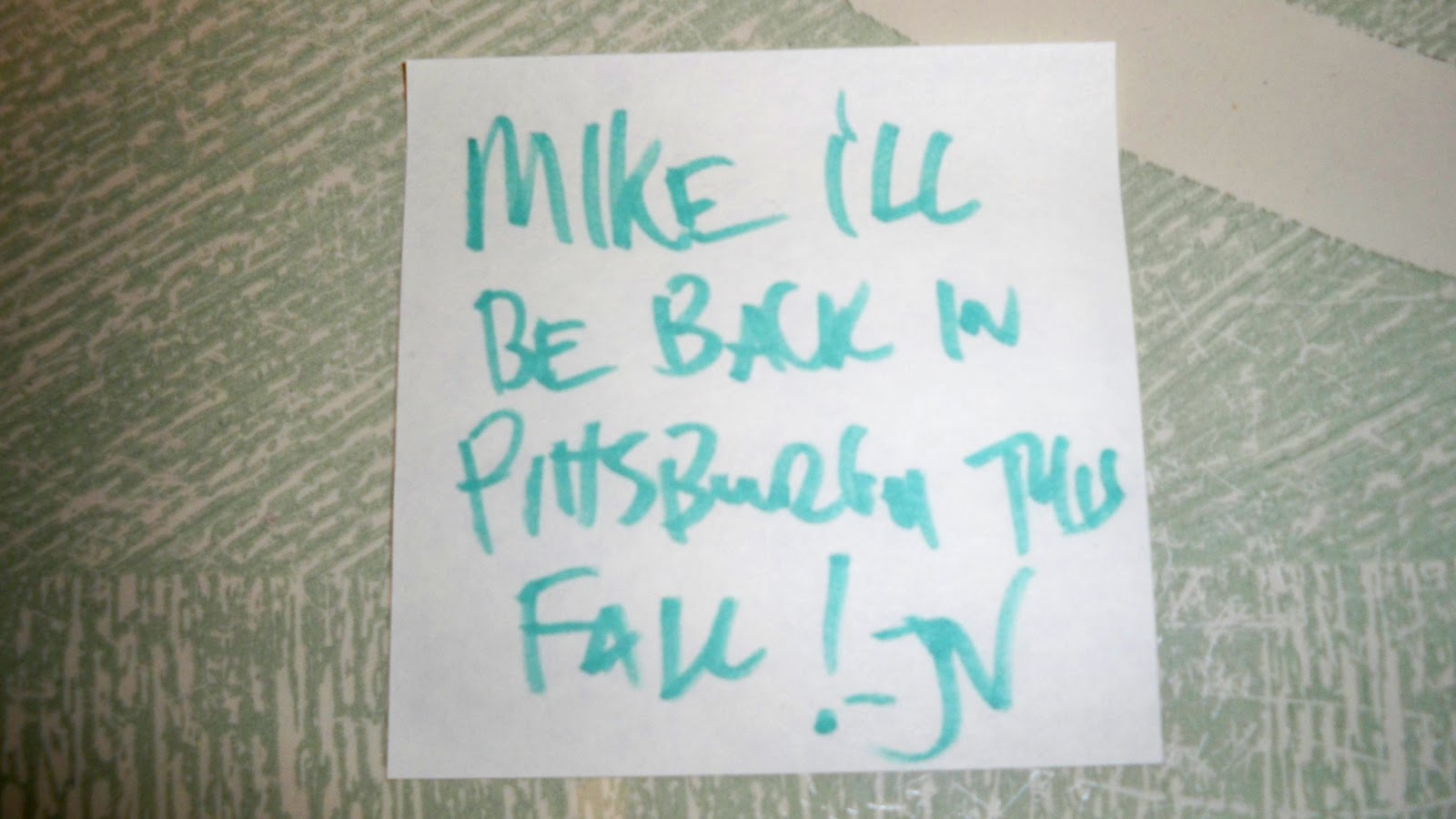
What was even more exciting was the following post-it note was attached to one of the album covers:

Thursday, May 09, 2013

B.A.L.L. is coming!

Something's bugging me. Not sure what, so I made a drink and decided I better write a little. I can't just do CD reviews and nothing else. I'm not producing enough copy to do that.

I never wrote that I interviewed both Kramer and Don Fleming last week. Not together but within an hour of each other. B.A.L.L. is having a reunion show in New York at the end of the month and when I mentioned it to my editor he said, "We've got to have a story on this." So naturally I had to be the one to write about it. If you saw my review of Kramer's recent Brill Building album, you know how I feel about B.A.L.L. And any chance to talk to Kramer is always a good time. We talked about all kinds of stuff. What a nut. A lovable nut, that is.

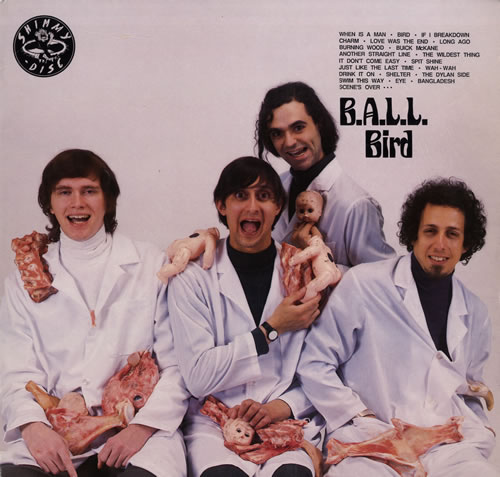
I pulled out a couple of the old B.A.L.L. records. Period (Another American Lie) might be the best one. Bird has the greatest album cover homage:
But it doesn't come close to their live show which was sooooooooooooo over the top.

Saturday, May 04, 2013

CD Review: Thiefs

Thiefs
(Melanine Harmonique Recordings)

The TV on the Radio of experimental jazz? A transplant of 1968-era Soft Machine into 2013? Thiefs (they meant to spell it incorrectly) can put those thoughts in your head while listening to their debut album. At least they put them in mine.

One of the reasons TVOtR has endeared themselves to me relates to the way that they don't sound like anything else I've heard, combining all kinds of disparate musical elements together without inhibition. Thiefs have that same fearless quality. With former David S. Ware drummer Guillermo E. Brown in a band, it gives you certain expectations, which he and his triomates (saxophonist Christophe Panzani, bassist Keith Witty) turn on its ear. Brown likes to groove here, in some cases limiting himself to just snare and kick drum with a little hi-hat, and showing restraint ("The Actual Neef"). The album's opening sounds come from effects-heavy samples (all three are credited with "electronics" in addition to their instruments), to which Brown gradually adds real drums. This track, "Doute/s" is one of two cuts recorded live at New York's Jazz Gallery, without any post-performance additions.

Further, Brown sings on a few tracks, with a strong voice that does sometimes sound like TVOtR's Tunde Adebimpe, strong in delivery and giving shape to something that seems a little loose. Melodically, though he also sounds a bit like Robert Wyatt from later in his solo career. He once sang in a neo-soul/no wave group called Pegasus Warning, which explains how he's able to take a traditional delivery and toy with it.

Although Thiefs are all about setting a scene, Panzani's playing makes sure the music doesn't satisfy itself with endless riffs or loops. On tenor primarily with occasional soprano, his solos add deeper perspective to the music. Panzani occasionally runs his horn through wah-wah effects, which is where the Soft Machine comparison comes in. It recalls Mike Ratledge's keyboard sound when he used wah-wah but before he started using his signature fuzz (heard on their Volume Two album). This sound warps "Daybaby" even further, a song that combines a soul ballad, an arty melody and a lyric inspired by the impending birth of a child. Any of those elements could run the risk of flying way off track but Thieves make it work.

Bassist Keith Witty adds a significant element to the mix, sonically. While it's easy to imagine a fretless bass guitar sliding all over the music, Witty sticks to an upright, which keeps the music on organic ground whether the jazz quality of their set is in full force or a trip-hop style takes over. Speaking of which, "Sans Titre (huile sur toile)" starts off like dub, with guest accordion player Vincent Peirani, magnifying that aspect of it before the coda goes off into double-time with everyone being just a touch out of sync with one another, although they still move as a unit.

With all the talk that goes on about making jazz contemporary in order to appeal to non-jazz fans, the thing that always seems to get sacrificed first is the edge, found in melodies or in the "blowing" sections, which get reduced to something that's heard as the fade-out begins. That doesn't happen with Thieves. As a perfect example, "The World Without Us" also sounds like a smooth ballad, complete with gentle Brown vocals. But even with electric piano (from guest Shoko Nagal) underscoring a gentle scene and Panzani playing soprano, the saxophonist still fits in a provoking, somewhat biting solo. And they follow it with "TWWU (postlude)" which only lasts two minutes, but it's a dark, ominous two minutes, where Brown makes my Adebimpe comparison a little more credible. This is accessible and thought-provoking.


Thursday, May 02, 2013

CD Review: Nicole Mitchell's Ice Crystal - Aquarius


Nicole Mitchell's Ice Crystal
Aquarius
(Delmark)

On one hand, it doesn't seem right to hear a band with a flute-and-vibes instrumentation and immediately compare it to the collaborations of Eric Dolphy and Bobby Hutcherson. The latter two are great artists to evoke, but it feels like it goes for the easy description. Then again, Aquarius does just that on the back cover, amending it by saying the album gives the reference "a Chicago twist." So it's not just me.

Flutist Nicole Mitchell has written for a number of bands over the last several years, including a string quartet, a project inspired by modern science fiction with intense vocals (that worked where others failed) and smaller groups. Aquarius, she says, is the first album in a while where she simply wrote tunes without an overarching concept, and as such it comes off like more of a straight ahead band with themes and solos - albeit ones that avoid anything standard in that situation.

Jason Adasiewicz provides the vibes, and even he seems to be approaching his instrument a little differently than usual. Known for leaning on the sustain pedal and letting harmonies spill into each other, he keeps it dry on several of the album's early tracks, providing strong punctuation with metallic clunks. There are other moments too where he uses his instrument for dreamy textures, like "Today, Today" and "Above the Sky," using the sustain.

Joshua Abrams (bass) has worked on several of Mitchell's albums and it's clear why he's her bassist of choice. Even when her writing doesn't follow a straightforward pattern, he manages to find a way to doing so solid walking behind her and Adasiewicz. His bowing on the title track sounds especially compelling, pulling out heavy double-stops, screeches and rapid lines. During that section, Frank Rosaly's percussive noises sneak up in the background, and it can be hard to tell if it's him or some noise in the next room is blending in appropriately with the disc. But that's Rosaly's skill in all of his projects, which is on display throughout the album, adding a solid backbeat to "Sunday Afternoon" or acting more pointillistic in "Diga Diga." Both situations make a strong performance.

Mitchell, who relocated to California a year or two ago, still has an excellent rapport with her Chicago compatriots. Her writing feels infectious from the opening notes of "Aqua Blue" until the closing "Fred Anderson," which features Calvin Gantt doing a spoken word homage to the title subject, the saxophonist/club owner/overall guru of Chicago, who passed away in 2010. (It works because the words are direct and straightforward without getting flowery.) Aquarius may be an album of unrelated tunes, but each has a distinct personality, shifting gears after the previous one, resulting in a consistent set. While the first half gets into more free territory, with some muscular flute exclamations in the extended "Aquarius," the second half feels a little more in the pocket, while maintaining the same level of action the whole time. Mitchell talks in the liner notes about all the Chicago touchstones that have shaped her (not the least of which is tenure in the AACM). It's clear that sense of musical adventure is still part of her musical DNA.

Sunday, April 21, 2013

Record Store Day 2013

For people like me, every day is Record Store Day. The idea of darkening the doorway of the neighborhood record shop (and there is one in my 'hood too) always seems appealing to me, so in some ways I should be dismissing the annual day with a brush of the hand. But yesterday I did sort of buy into it - but only perhaps because the timing worked with my life. The Attic, a record store across the river in Millvale (i.e. about eight minutes from my house when there's no traffic) opened at midnight, like they've done for at least the past few years. In 2011, I went there at midnight and got wigged out by the claustrophobia. It's narrow enough on a slow day. So this year, I decided to get up early (as I usually do anyway) and get there a little before 7 a.m., since it would either be dead or close to dead. I was right. 

The item that interested me was a live Art Blakey record that I think had the Jazz Messengers lineup with Lee Morgan and Wayne Shorter. Turns out, it wasn't pressed in time for RSD. On the jazz front, though, there were some 10" reissues of Fantasy EPs from the '50s, and I picked up this Cal Tjader release.


It's a pretty cool blend of all of Tjader's instruments - vibes (for which he's probably best known), drums (which his plays with an amazing amount of weight) and bongos (same as drums). The other guys in the trio play bass and drums, so with eight songs, there's a lot of variety. There were reissues of Miles Davis albums on Columbia, but it's stuff I already have in some format.

The next find was Destroyer's first album on Merge, which came out on vinyl for the first time yesterday.


Destroyer albums are all very strange to me. Strange and appealing. I don't have all of them, but I do own several. So far, this might be my favorite. It has that ethereal quality to it, but it also rocks, which is not something I always get from ol' Dan Bejar. Plus, the lyrics are amazing.

As far as singles go, there was a piece of cardboard next to the box of 7"s that read "Husker Du," so I knew I missed out something. (I later found out that it was a re-release of their first single, which I'm mixed on anyhow.) A box of Ringo Starr's biggest singles seemed like one of the stranger entries in the RSD canon. (To whom is THAT geared?) But the one thing that gave me the "I should get this" feeling was Sharon Van Etten's "We Are Fine."

The song appeared on the Tramp album but it has an unreleased B-side. I have to revisit that song a couple more times because I'm not sure how I feel about it yet.

If I had been super-flush with cash, I might have picked up the reissue of Half Japanese's 1/2 Gentlemen Not Beasts which is now a FOUR-record set, instead of the initial three records. But then again, I have two of the more rock Half Japanese albums that I haven't played in close to 20 years, but can't part with them either. There was also a used copy of the Miles Davis '60s box (CD not vinyl) that I feel like I should've grabbed because used stuff was discounted too. But right now, I'm up to my ears in a Duke Ellington Mosaic box that I borrowed from the library, so I decided to wait.

Conclusion: Three records, three different formats. Good times. Then I headed to work. On the way, I drove past Sound Cat, which had a line out onto the sidewalk before 8 a.m.

Friday, April 19, 2013

CD Review: Steve Coleman and Five Elements - Functional Arrhythmias


Steve Coleman & Five Elements
Functional Arrhythmias
(Pi) www.pirecordings.com

None of Steve Coleman's recent albums really qualify as casual listening. Listening to the alto saxophonist's sometimes rigid blend of a deceptively static rhythm section and tightly wound alto and trumpet melodies can really get under your skin. At other times, it sounds like off-kilter funk that can groove.

Functional Arrhythmias takes a departure from Coleman's The Mancy of Sound, which Pi released in 2011. Where that album featured two drummers and a percussionist setting up a tricky interplay, this time  Five Elements veteran Sean Rickman is the only drummer. Bassist Anthony Tidd, who like Rickman played in the band over 15 years ago, also returns to the fold, thus ensuring the group has a tight rhythm section to maneuver Coleman's writing. The frontline is pared down as well to just Coleman and trumpeter Jonathan Finlayson, after a few albums that added Tim Albright's trombone and Jen Shyu's voice, which was used as an instrument, as opposed to working as a vocalist. Five of the fourteen tracks add guitarist Miles Okazaki, who bridges the gap between Tidd's basslines and the horns.

On top of the instrumentation, there's the underlying concept of the album, which is inspired by the way the body's circulatory, nervous and respiratory operate. Percussionist Milford Graves studied the connection between these function and music, according to Coleman's liner notes, and it inspired the saxophonist to explore it in music. A concept like this can be something that sounds fascinating on paper but dry and mathematical in execution. Coleman has avoided that pitfall by making music that is challenging at times, grates at times, but keeps you listening. Only one track comes close to hitting the seven-minute mark, while most of them average about four minutes. In doing this, Coleman seems to realize that there are a lot of different angles to explore when approaching the concept, and he knows how to keep them compelling. "Cardiovascular" present a good example of the rhythm section's challenge: most of the time they repeat a waltz ostinato, rigidly locked into the riff, but every so often another beat (or is it two?) get thrown in, representing the arrhythmia and making your ear do a double-take. In "Irregular Heartbeats" Okazaki doubles up the bass melody which also keeps shifting the number of beats. "Adrenal, Got Ghost" changes things around, almost sounding like fusion funk, complete with cowbell, while Rickman plays "Cerebrum Crossover" on rims and woodblocks.

The rapport between Coleman and Finlayson sounds so tight that they almost sound like twin heads of one horn on "Sinews." Everything is executed with the most amazing, precise clarity. As the album opener, this piece is also the loosest, with a stop-start funk groove and a solo by Coleman that gets kicks off with some slippery blues feeling. While the two horns are cohesive, many of the tracks also require them to fire off their melodies with quick, staccato delivery, which is when they get a little unsettling. Especially when they're spitting out melodies in asymmetrical groups of notes, it can sound more like exercises, or prog-rock. But for every moment like that, they come back with "Limbic Cry" where they recall Ornette Coleman and Don Cherry having some deep conversation. Rather than brush it aside, it makes you want to listen in and figure out what Coleman and Finlayson are discussing.

Tuesday, April 16, 2013

CD Review: Dave Douglas Quintet- Time Travel


(NOTE: SINCE THIS POST HAS RECEIVED 48 SPAM COMMENTS IN THE MONTH SINCE IT'S BEEN POSTED, COMMENTS HAVE BEEN DISMANTLED)

Dave Douglas Quintet
Time Travel
(Greenleaf) www.greenleafmusic.com

Dave Douglas turns 50 this year, and that milestone seems to bring with it a state of reflection. The title of the trumpeter's latest album, on his own Greenleaf imprint, could reflect a desire to toy with the time signatures in his music, or it could be a way to look back at where he's been over these last five decades. Both ideas seem to filter into the quintet's performance to some degree, yet to call this a concept album would seem to be pushing the issue. Any modern jazz musician worth their salt will always have some sense of the past and the future, with a group of like-minded support players to give it the enthusiastic push.

Having said that, "Bridge to Nowhere" launches the album with a vamp that sounds like a hard bop idea that was discovered in an early 1960s session at Van Gelder's. Before it can turn into something closer to "Well You Needn't" this driving number takes on an elliptical form. Douglas builds in intensity, as does tenor saxophonist Jon Irabagon, who starts with shorter lines that he keeps extending, getting fire from drummer Rudy Royston. Pianist Matt Mitchell (heard last year on Tim Berne's Snake Oil) also turns in an impressive solo full of fast lines, which do go somewhere. A similar speed and clarity marks "Garden State" which effectively recreates the intensity of Douglas' home of New Jersey, where dodging and speeding seem to be the standard rules of the day. "Beware of Doug" is also uptempo, with a somewhat lighthearted bounce to it, and it gives bassist Linda Oh a chance to unleash an astounding fleet-fingered solo.

Time Travel also has some pensive moments. "Law of Historical Memory" (named for a six-year-old Spanish law regarding the Franco dictatorship and receiving justice from it) has Mitchell rolling out steady eighth notes as Douglas and Irabagon play longer, brooding lines on top of it. "Little Feet" also sounds more contemplative at first, but it still gives Douglas a chance to go a little wild, wailing into the upper register of his horn.

This same quintet, along with vocalist Aiofe O'Donovan, released the album Be Still last year, to much critical acclaim. Having your own label means not having to wait too long between releases to follow up on your accomplishments. But Time Travel should not be mistaken for a quick followup that Douglas put out just because he can. Without even considering the last disc, this is a fully realized, engaging work that stands as a worthy document by someone who should continue to be productive in his second half-century of performances.


Sunday, April 14, 2013

Blurt update, end of the week

Playing right now: Michael Gallant Trio - Completely

The week of vacation is over. Big plans were envisioned: cleaning up the crates of classical albums; finding some stuff to auction; alphabetizing - or at least organizing - the CDs that I put in the new rack a year ago; and listening.......yes, doing A LOT of listening to the discs that have been arriving. Hell, I might've even made plans to weed through email about releases.

So how did it go?

Monday, Tuesday and especially Wednesday, I was knocked out by illness. On Wednesday, all I wanted to do was stay in bed and sleep, without even listening to any music. The thought of any music annoyed me. I was in bed until about 6:30 that night. Tuesday night was the Mike Nesmith show. I suffered through a badly running nose to make it to the show. Figured a bunch of orange juice before the show and a dozen wings after would help me get through what usually feels like the final stage of a cold. But the next morning I had a 100-degree temperature.

Thursday I started to feel like myself, and then Donovan started getting sick and he stayed home the next day. Luckily Jennie was sweet enough to stay home too, and I got some work done. But the grand total of time to myself to get my thoughts and surroundings in order - one day.

In other news, don't follow any of the links in previous posts to the Blurt website. Since the site was severely hacked with malware, everything is moving to a slighly different site (new web address: www.blurtonline.com, no hyphen between words like the old one) and these links won't work. All the old stuff isn't up yet either, so it's not worth exploring yet anyway. However, my Mike Nesmith Q&A IS supposed to be posted tomorrow on the new site. That link should work.

Last night the Love Letters played at my fabled neighboring watering hole, Gooski's. It was sort of a special show because we were joined by Spaz, who was my bandmate in Paul Lynde 451, a local punk drag band in the early '00s. We did six PL451 songs, which sounded really great. For a noisy pop band, the Love Letters are a good punk band. But, as what seems to be more and more usual, we had a pretty sparse turnout. Not what I needed after a disappointing week. I did appreciate the folks who did come out though.

Tuesday, April 02, 2013

Playing with Musical Matches

I had an April Fools joke up my sleeve yesterday, that I've actually been sitting on for a year or two. The day before Donovan was born six years ago, Harp was still in existence and Fred fooled a lot of people into believing that Captain Beefheart had come out of retirement and was agreeing to tour. Pretty brilliant trick, it was, and not at all clear as a joke until you got to the photo credit, which read "A.P. Rilfool." Now every year, I think that I should do something along the lines of that trick. My idea isn't as wide ranging, but maybe I'll get it together next year. I had to write a couple reviews yesterday and by the time I had a moment for the joke, it felt too late in the day.

File this under "You Should Have Known Better": At the record fair that I mentioned in the last post, I picked up a copy of Chicago Transit Authority which a friend of mine had for $1. I recall moments on that album (I checked it out of the library when I was about 10) that were a little edgy, which a good friend has confirmed. "Free Form Guitar" consists of seven minutes of guitar feedback, going for a sort of homage to Jimi Hendrix. Then a few years ago, I heard the beginning of another song from the album (missed the title) that almost sounded like a Stooges riff, with fuzzy bass. Therefore, I've maintained a "one of these day, I'll check it out again" feeling about it.

Well I was right about "Free Form Guitar." Pretty noisy and good. It's followed by the mystery song, "South California Purples," which has a bass-line similar to "Dirt" but the comparison ends there. Once the horns kick in with all that bwah bwah bwaaaaah it looses something. Side Four begins with a recording made at the 1968 Democratic Convention (you know, the one w/all the rioting) and the chant "The whole world's watching" segues into the bassline of the next song ... which bottoms out when Peter Cetera starts singing. If he had only stuck with bass and kept his mouth shut, things would've been great because his basslines are pretty heavy.

I don't have a problem with a limited amount of Chicago's early stuff beyond that album. So when I was at the folks' house for Easter Sunday, I remembered that we once had a copy of Chicago II with one record missing. I think I bought it at a flea market and was bummed that the lost LP had "25 or 6 to 4" on it. But it does have "Make Me Smile," which has sounded pretty good recently when it's come on at work. When you're up close and personal with that song, it still sounds pretty flaccid, drum breaks aside. Not only that, it's part of a side-long suite, "Ballad of a Girl from Buchannon," which my bandmate/Buckhannon, WV native Aimee informed me, is spelled wrong. The final chorus of "Make Me Smile" doesn't actually come until the end of the side, after it's gone through a few more instrumental, Maynard-Ferguson-meets-prog sections, past "Colour My World" into the last chorus and a closing that sounds like some t.v. show theme.

Like I said, I should've known better. I'm kind of curious to hear the other side of the record, but not too curious.

Friday, March 29, 2013

Can't Think of a Title for a Return after several weeks of no posts

Damn, I know I've been away from here for awhile, but I had no idea it's been about a month! It figures that a burst of activity is followed by a burst of INactivity. But I was keeping sort of busy writing in other places. Both Mike Nesmith and the ICP Orchestra are coming to town in another 10 days or so, and I wrote about them for Pittsburgh City Paper (coming in next week's issue). There were a bunch of JazzTimes reviews too, including Pat Metheny's latest, which is something fairly out of character for me.

And then there's Blurt. Poor ol' Blurt. Something always seems to happen to happen to Fred and co., right around the time of South by Southwest. A few years ago it was the demise of Blurt's forerunner, Harp. This time the website got pretty badly hacked and infected with malware. The process is underway to get it cleaned up, luckily.

Last week the Pittsburgh Record Fair happened at Belvedere's. I didn't sell this time because I didn't feel like hauling all those crates of albums again. I bought a few things, nothing over $5 either. One of the happiest purchases of the night was a copy of School's Out by Alice Cooper. This was an album I owned from about second grade on. I think I got it for Christmas that year and I pretty much wore it out. I do remember that the desk part of the cover got a little ripped. Eventually I think it wound up in the giveaway box at the Record Recycler some time around 8th grade. The copy I got was almost the same as the one from back then. It didn't have the song titles on the back (my first copy did) and it didn't have the panties (luckily, my first didn't either). But the cover was in beautiful shape and it had the olive green Warner Brothers label, which always makes the heart beat faster. I still know every single note to that album. If I had a dollar for every time that me and my friend Eric put on the 55-second "Street Fight" and pretended to fight in my basement.... I'd be doing pretty well.