Tuesday, September 25, 2012

I have to go to bed, so read this

Playing right now: Sam Rivers/Dave Holland/Barry Altschul live reunion disc on Pi

Today, and last night really, I had to finish four reviews for JazzTimes which took me into the last morning/early afternoon. But by thunder, I got them done. There's been a lot hanging over my head over the past few weeks. I had two articles in the recent Pittsburgh City Paper: a feature on Roy Haynes and a Q&A with Laetitia Sadier. Roy played at the Hazlett on Saturday and Laetitia's here in a few days.

The Roy Haynes show was pretty amazing. May I have that much of a spring in my step when I'm 87 years old. And may I be able to swing that hard and so easily. The man is amazing, playing challenging tunes like Monk's "Trinkle Tinkle" like it's a piece of cake. His band was pretty solid too: Jaleel Shaw on alto and soprano saxes, David Wong on bass and Martin Bejerano on piano. Frequently, Haynes stepped out from behind his kit while one of the other guys was taking a solo. Sometimes he'd grab the sticks in time to whack out an accent on the beat. But he also did a little bit of dancing too, which was also delivered with ease.

The only time his age showed was when he took time to talk to the audience. He moved at a slower pace, answering some of the more vocal audience members who shouted comments back to him. At first it was sort of endearing and brought him closer to us. This was the case at the start of the night when he talked, as he tweaked his kit, about how many great drummers have come from Pittsburgh. It turns out a few of them were in the audience, including Joe Harris, who he invited down (the stage at the Hazlett is on the ground level, with the seats raised up, row by row). I think he just wanted him to come down to say hi, but Harris would not be denied, and he played a quick, tasteful solo, ending with a "shave and a haircut" accent on snare and kick.

But in the second set, Haynes lost track a bit when he had his bandmates speak to the audience briefly. It took a few minutes to get him back behind the kit. Regardless, he was still amazing. It was incredible to see some play with such thunder without really hammering on his kit.

*************************
Speaking of great musicians, the night before Opek played at Club Cafe in a tribute to their late trumpet player Chuck Austin, who passed away a few months ago, tragically the morning after an Opek gig at the Hazlett. He wasn't there, having been too ill to perform.

Tributes like this can either get maudlin or leave them bawling in the aisles, but this night was neither. It was just astounding. The band roared from the start, playing one of Sun Ra's "Discipline" pieces, which used to feature Austin as a soloist. Ben Opie had introductions for each song, but Dr. Harry Clark, the founding principal of CAPA High School and a friend of Austin, also got up to speak. This was the way a tribute should be: a little sad, a lot of funny and a big celebration of a person's life.

The only time my emotions almost got the best of me was when the band did "Mood Indigo," very much in the spirit of the original. (I joked with Ben about doing the Mingus version with the raunchy alto solo and scream from the leader, but that wasn't necessary.) It was lush and a little blue. And when the band did "Boogie Stop Shuffle," they were doing what Monk once described as "lifting the bandstand."

A couple hours earlier, the Sao Paulo Underground had played at the Warhol Museum, which explains a little why I haven't had time to blog in quite a while. (Too much going on!) Chicago cornetist Rob Mazurek is part of this band, along with drummer Mauricio Takara and keyboardist Guilherme Granado. It was a dreamy set, full of swirling sounds, coming from all three players. Mazurek had several effects for his cornet, Takara pulled out the cavaquinho (the miniature guitar of Brazil that looked like a ukelele) and Granado did all sorts of sonic tricks.

And much to my surprise, the SPU had a remarkable turnout. Last year when Mazurek came with the excellent Starlicker trio, the room was only half-full. On Friday, it was close to full. Granted there were at least two jagoff guys who insisted on talking to their dates throughout the set, but everyone else seemed into it.

Just to prove to you how much has been going on lately, the previous Saturday was the night Guided By Voices came to town. You can read my two cents on that right here.

Monday, September 10, 2012

Harlan Twins + Sonny Simmons = Wild Weekend

Oh, what a weekend it was. Friday night was the Harlan Twins album release party. And when I say album I mean a 12" slab of black vinyl in a cover with some shrink wrap. They released Old Familiar both as a record and as a download, no CDs, which I think is a pretty smart move.

Their show was at Belvedere's, which despite its vast amount of space, reached its capacity at about 11:00. Glad I showed up when I did, but my friend Marta wasn't so lucky. Since I walked her back to her car, I missed a good amount of the set by the Delicious Cakes, the second band of the evening. What I did see sounded really good. They come from the Elephant 6/Olivia Tremor Control neighborhood, with a slightly shambolic delivery of really great pop songs, played on jangly guitars, with a few auxiliary people (well, maybe just one) with them onstage banging on extra drums and adding to the festivities.

But before them, the show started with Outsideinside, a trio project by guitarist Dave Wheeler, also of Carousel. Like that band, this trio churned out some heavy '70s style rock, with a little more of a streamlined feel as Carousel's twin-lead assault. They made me think of the obscure Epic label band Tin House, but that might just be me.

I didn't write about the Harlan Twins show for City Paper in part because I already have a full plate this month. But if I had, I was going to lead by recalling the band's first CD release show. That night I told James Hart he absolutely had to keep that lineup of the band together because there was so much power there. "If anyone wants to quit," I told him, "make like Charles Mingus and punch them in the mouth."

These days, he and fellow guitarist/vocalist Carrie Battle are the only remaining members of that lineup and there was no punching going on. But the group is still amazing. The songs are well crafted, the arrangements are tight, and they've evolved beyond their habit of doing the slow rise in dynamics to a rousing climax. Not to put that habit down, because they did it well. But they have more tricks up their sleeve.

Two-thirds of the way through the set, the band brought up the former members Jules (bass), Neal (drums) and Paul (keyboards) and they brought the house down. At least they brought down my house. When they slammed into the rave-up "Get Gone" it was like they never stopped playing together. I nearly screamed myself hoarse. There's just something about that lineup. And I swear Jules plays the songs the way I'd play them, although he has more chops and great vibrato.

I listened to Old Familiar yesterday. Somebody that night said it was better than the first album, which made me skeptical. I'm not ready to pass judgment either way, but it is damn good. In part because you can really hear the way Greg's keyboards work with the guitars, which doesn't always come across live.

After a day at work where my legs were really sore from bouncing around (luckily my head felt fine...)

.....I headed to the Thunderbird to see Sonny Simmons play with the Cosmosamatics. My interview with Sonny ran in last week's City Paper and you can read it here.

Like most times when some adventurous jazz guys come to town, I went on a bit of a crusade to make sure there would be more than 10 people in the audience. So I was really pleased to see a whole crowd of people at the top of the steps leading to the stage area, with more sitting at the upper deck.

Charles Wallace, a local band that featured six guys that evening none named Charles, opened the show with a set of fairly straight ahead but heavily swinging tunes. It looked like the crowd thinned a little after their set was done so I grabbed a seat up front.

It took awhile for Sonny and the crew to start their set, but his warm-up on alto and English horn was pretty tuneful in its own way. I wasn't even sure if he still got out the double reed, but he played it like he's never set it down. And he was LOUD, on both instruments.

The first tune lasted pretty close to 30 minutes. (When they announced it later, it sounded like the title was "Avant Garde Destruct," a track from one of their albums.) Michael Marcus was playing clarinet and keyboards, and Jay Rosen rounded out the group on drums. After a theme full of hold and release notes, Marcus and Simmons blew fire together and then Rosen kicked into a free flowing thing to accompany Simmons.

And the man didn't stop blowing the alto the whole time. His tone was impeccable, all the way up to the top register of his horn. He was blowing long notes and embellishing them with Bird-like flurries. After awhile Marcus started playing some chords on the keyboard, which gave the some some extra shape and it almost seemed like a cue for Simmons. If Marcus was trying to get him to make room for some clarinet, Simmons wasn't buying it. He blew straight through. The inspiration might have wavered a little bit, but the energy did not.

Although I could've done without the women who were whooping and hollering regularly during the solo, like we were at some dance club. There were also some people behind me talking during the set, even during the quieter moments. I can't understand how you could look away from music like this long enough, without fearing that you'll miss something. Some of the yellers had started yelling, "C'mon, Sonny, we are READY," while they were setting up, which seemed kind of inconsiderate when a musician is fine-tuning their sound. But they left before the first tune was done.

And I digress....

"Dance of the Zentrons" was up next, with the English horn coming out. Again the tone on that instrument was pretty astounding. Marcus got his chance to show his stuff too, which by this time I had been eagerly anticipating. I've seen the two-horn-and-drums set up and almost would've preferred if Marcus stuck to the reeds all night. ("Reed" I should say because he didn't have his tenor.) The shifting back and forth to keyboard and clarinet kept taking away from the sound: should it sound full or spare?

After brief solo pieces by Marcus and Rosen (while Simmons had a drink off to the side), the trio wrapped up with slow blues, complete with some vocals. It was a good way to end the set. Actually I think it ended with some free wailing ("Free" is written on my note pad) so that must have been the last statement of the evening.

Saturday, September 01, 2012

CD Review: Aram Shelton Quartet - Everything for Somebody


Aram Shelton Quartet
Everything for Somebody
(Singlespeed Music) www.singlespeedmusic.org

Aram Shelton's latest presents another strong set of material from an alto saxophonist who should be getting more recognition for his prolific output and busy schedule. While his release earlier this year of duets with drummer Kjell Nordeson might have been more of a specialized interest, Shelton's quartet presents a full picture of his inventive writing and spunky soloing.

The band includes tenor saxophonist Keefe Jackson - who compliments Shelton so well that it's sometimes hard to tell who's who when their ranges overlap (they're panned towards different channels) - bassist Anton Hatwich and drummer Tim Daisy (who replaces original quartet member Marc Riordan). Shelton cites Ornette Coleman and Charles Mingus as influences on the group but it's more a case of taking inspiration from them rather than trying to copy those particular players. "Anticipation" presents the first such example, beginning with a Coleman-style folky waltz that shifts to a stretched-out rubato feeling for the middle eight, before shifting back to the first section. This structure recurs during parts of the solos too, which adds a good tension when the horns join together. Shelton also delivers a remarkable, frequently vocal solo.

"Joints and Tendons" leans closer to homage with a theme reminiscent of the Art Ensemble of Chicago. It features a very AACM approach of roughly five or six staccato notes followed by brief silence... then a sustained, often dissonant, harmony. Arty (no pun intended) and a little spare, it still offers intrigue for Daisy's brief spastic solo and the fact that Jackson and Shelton on harmonize in crisp tones closer to West Coast cool cats than Chicago revolutionaries.

"Barely Talking" has a simple, catchy melody and a solo from Johnson that sounds free, especially in connection with Daisy, but maintains a focus and direction throughout. Hatwich also gets his moment in the spotlight too. "Deadfall" gives the leader his chance to go it alone for the first two-and-a-half minutes.

After last year's impressive albums on Clean Feed with the groups Cylinder and Arrive, and the most recent Fast Citizens album on Delmark, Shelton is coming at it from all angles with a strong voice and engaging material. Everything for Somebody adds to that, and hopefully he's starting to catch on so that the title won't just refer to a limited set of listeners and appreciators.

Friday, August 31, 2012

Looking Ahead to September

September looks to be a big musical month for Pittsburgh. Or should I say, bigger than usual because there's always stuff going on here. Next weekend, the Harlan Twins release their second album on Friday and the following night veteran alto sax player Sonny Simmons is in town. The weekend after that, Guided by Voice are coming to town, and I think Paul Labrise is releasing his new album the night before. Wye Oak is returning to town that Thursday (the 13th I think). Then, the week after that, Sao Paulo Underground is coming to the Warhol, followed the next night by Roy Haynes' show. Then the week after THAT, the Love Letters are opening for Chain and the Gang, the band that includes Ian Svenonious. Laetitia Sadier (formerly of Stereolab) is also in town, I think the night before. Two nights later, the Pittsburgh Record Convention is happening and I'm going to be selling stuff there.

It all kind of makes my head hurt.

This past Monday, I had back-to-back phone interviews with Laetitia Sadier and Sonny Simmons, both conducted while Donovan was sequestered up in the office watching a DVD of The Electric Company. Laetitia was in England and as much as I would've preferred not making an overseas call, I was excited to talk to her. City Paper is going to run a quick Q&A with her, but I think Blurt wants something too. So I might actually break even with the cost of the call.

We started off the conversation talking about Pittsburgh, which she actually remembered from a Stereolab show close to 10 years ago. She remembered the layout of the late Club Laga, which is pretty impressive considering how she's probably travelled the world several times over. We also talked briefly about the film Diabolique, the remake of which was filmed here at my old church. I was supposed to have 25 minutes with her but we actually went over because she never said anything and the conversation was going to well that I was going to take my chances.

Sonny Simmons' manager warned me that he "isn't very good on the phone, so I'll be on other line," which made me wonder if I was going to get another one of those interviews where the answer to every question was "man, I just want to play." On the contrary, Sonny was pretty animated and chatty, and willing to answer all of my questions. I really really really hope that a lot of people come out of the woodwork for his show here. I just found out that he's here the same night that the Mattress Factory is doing their annual jazz and poetry show with Oliver Lake on the North Side.

On this day a year ago, and two years prior to that, I was getting ready to catch a plane to Detroit for their Jazz Festival. Naturally I'd love to go this year, representing JazzTimes again but I decided that I wanted to be home Labor Day weekend this year, so I didn't volunteer myself this year. Oh well, maybe next year. It's a shame because this year, I actually have business cards made up with this blog's email address on it. Almost professional.

Saturday, August 25, 2012

CD Review: Marco Cappelli's Italian Surf Academy - The American Dream


Marco Cappelli's Italian Surf Academy
The American Dream
(Mode/Avant) www.modrecords.com

In Italy the sound of twangy guitars didn't exactly correspond with images of the beach in the 1960s. It was often the sound that accompanied suspenseful or grisly scenes in films by Sergios Leone or Carbucci, with the score coming from the pens of Luis Bacalov or Ennio Morricone instead of the Ventures. Guitarist Marco Cappelli, an Italian native now living in New York, decided to pay homage to the music of his country. The American Dream comes alive with visual cues which the guitarist blends with the sense of free form experimentation he picked up his new country. But what comes across predominantly is the compositional strength of these pieces and the way Cappelli arranges them.

The guitarist works with a trio setting, joined by bassist Luca Lo Bianco and drummer Francesco Cusa. As quickly as they set the tone, they're just as likely to break it down and reshape it. "Django" begins pensively enough, but it soon goes in a free direction, climaxing with bent surf notes and finally fading out with a wah-wah reggae power chord. Morricone's "The Sundown/S. Antonio Mission" has the pathos for which the composer became famous. From there, though, the trio breaks into free jazz in which the rhythm section almost sounds like free metal, except for the fact that the production cuts down on the low end bombast. "Blood and Black Lace," composed by Carlo Rustichelli, has the minimal accompaniment that leaves the guitar swinging naked in the breeze, with a prime descriptor of this kind of music.

Vocalist Gaia Matteuzzi joins the Academy on two songs with greatly different results. Anyone who heard John Zorn's take on "Erotico (The Burglars)" from his Morricone tribute The Big Gundown remembers Shelley Hirsch's yelping vocals, and might think of it when hearing Matteuzzi on Armando Trovajoli's "Sesso Matto." The difference is Matteuzzi seems to be going for more of a fake orgasm feel - double-tracked at that - while Hirsch seemed to be lampooning that concept. In other words, it's a bit much. (Of course, some, uh, dudes might think it's a good accompaniment to The American Dream's cover.) Better is "Deep Deep Down" which almost sounds like a pop song, with leaping intervals that offer another impressive point in Mr. Morricone's favor.

Closing the album with "Secret Agent Man" brings the album back to our shores, beginning with a shout-out to ol' James Bond. Cappelli gets rid of the syncopation in the melody which make it sound a little square at first. But upon further thought, it feels like the way one of the previous composers might have scored it.


Wednesday, August 22, 2012

CD Reviews: Harris Eisenstadt - Canada Day III & Canada Day Octet


Harris Eisenstadt
Canada Day III
(Songlines) www.songlines.com

Harris Eisenstadt
Canada Day Octet
(482 Music) www.482music.com

The descriptor drummer/composer/bandleader no longer seems that unusual. There are more and more players who lead from behind the trap kit, composing more than just rhythmic outings over the easy changes. But Harris Eisenstadt seems to spend a lot of time working on his compositions. His notes for Canada Day III make several references to first drafts of the music or how a couple pieces began as sections of other compositions that ended up on the cutting room floor. It proves that you should never throw away any ideas. It also proves that Eisenstadt is pretty productive musician. Less than a year ago, I reviewed his September Trio album from Clean Feed, which featured an entirely different personnel than either of these albums.

Canada Day III was recorded by his quintet: Nate Wooley (trumpet), Matt Bauder (tenor saxophone), Chris Dingman (vibes), Garth Stevenson (bass) and Eisenstadt. The pieces are marked by subtle rhythmic tricks and melodic turns that don't loose any impact if you don't read about them in the CD cover. The quintet recorded them following a tour which means they are very familiar with the ins and outs and it sounds natural. "Slow and Steady" has a feel of intrigue and a slight touch of "Misterioso" thanks to Dingman's coloring. Two of the melodic instruments play in four while the other two play is six, both changing sides before the relatively brief (3:45) tune wraps up. Again, without knowing the basis of the structure, it's easy to just get lost in the mood. It's also a good way to open the set.

Upon hearing sustained vibes notes over a walking bass line, it's hard for me to not think of "Hat and Beard," from Eric Dolphy's Out to Lunch. "The Magician of Lublin" really sounds nothing like that tune, but the feeling is there in the opening moments, following some high register bowing from Stevenson and before the horns play the brief melody. Dingman plays remarkably throughout the album with a very astute way of backing the soloists or taking one on his own. Wooley can live up to his name, sounding downright feral ("Nosey Parker") or bright and sharp ("Magician") at will. Bauder also balances no-nonsense blowing with a gruff side, the latter coming in the opening of "Shuttle off This Mortal Coil." That title and several others betray Eisenstadt's influences, which go beyond music to literary sources and account for the unique stylings of his work.

Speaking of which, he added alto (Jason Mears), trombone (Ray Anderson) and tuba (Dan Peck) to the quintet for a performance that lead to the recording of the four part "The Ombudsman" suite on Canada Day Octet. Eisenstadt has recorded no less than four large scale groups in the last 10 years (does this guy ever stop?) so he's no stranger to a group this size. The term ombudsman might be familiar to the NPR-listening crowd since they've had one who serves as a go-between for their staff and listeners. Eisenstadt sees this ombudsman as a mediator between "those for creative music and those who are mystified by it." It begins with free drumming and a rubato theme, with all manner of different shapes coming and going. The three new guys to the fold all get a lot of space, Peck getting some of the more interesting parts. In the 14-minute first part, he sounds like he's humming as he blows. This track also ends with a feeling of group improvisation where everyone minds their p's and q's to make sure things don't sound too busy.

"Ballad for 10.6.7" closes the album, an homage to computer problems that slowed up Eisenstadt's writing. Naturally, such man-made delays didn't keep this good composer down and like the ballad on the previous album that he dedicated to his wife, this one isn't your typical sweet ballad, but something with a bit of bite to it.

Friday, August 10, 2012

The Week's News

Playing right now: Marilyn Crispell/Mark Dresser/Gerry Hemingway - Play Braxton (Tzadik)
Picked this up a couple weeks ago on a whim, mainly because I'm a Crispell fan. I'm not a Braxton buff, but I actually recognize one of the pieces on it!

Filed three reviews with JazzTimes yesterday, which explains why I haven't blogged about any new releases for over a week: I was getting to know the ones I had to write about.

On top of that, the Love Letters played the Rock 'n Bowl night at Arsenal Lanes on Wednesday. We didn't have the best turnout: three friends of mine, plus another three or four bowlers. But the friends made all the difference, and we played a good set. Once again, we had people figuire out our setlist by grabbing song titles from a pile of strips of paper (I forgot to bring the hat I normally put them in.) The evening felt so laid back that it didn't matter that we took forever between songs.

Then yesterday afternoon, I got an email offering us the opening slot for Chain and the Gang's Pittsburgh show on September 26. Ha cha! The Love Letters' first big show opening for an established out of town band! We did play with one touring act at Gooski's, but that was a case of someone wanting to get on our bill since they were on the road. This time, we asked if we could get on and they said yes. I never pursued this in the past with other touring bands because it always seemed like you had to stand on your head, play an audition and then sell two dozen tickets in order to be considered by the promoter as the opening act.

In other news, I also picked up the album by Spectrum Road, the tribute to the Tony Williams Lifetime that includes Vernon Reid, Cindy Blackman Santana, John Medeski and Jack Bruce. I'd read about it and lately I've been getting back into older Lifetime stuff, even though some of it sounds a bit overblown and a little unfocused. Despite that, I think they were an amazing band, the rare jazz band that really played rock with the same focus as the jazz they had played.

It was a sales incentive that the SR album is out on vinyl, and only a dollar more than the CD. It's also encouraging that my favorite Lifetime song kicks off the album, "Vuelta Abajo," which was originally on Turn it Over. I was pretty surprised how faithful this group is to the original and also how the production didn't go for a state of the art cleanliness. It almost sounds as muddy and raw as the original albums.

The rest the album is pretty strong too. I always skipped John McLaughlin's "One Word" on the TWL compilation I have because the vocals (by Bruce) always sounded too flaky and overblown. Here it sounds a lot more solid, and the changes in the middle section are more pronounced. Throughout the album Vernon Reid keeps his metallic indulgences low. He shreds, for sure, but it never gets excessive. These guys could've taught the revamped Return to Forever a thing or two. Of course part of the reason they got together is their belief that, unlike RTF, Williams never got due credit for the ground he broke with Lifetime, for which I agree. They were first and they did it best. Especially Larry Young, who I've always loved.

Thursday, August 02, 2012

CD Review: Devin Gray - Dirigo Rataplan


Devin Gray
Dirigo Rataplan
(Skirl) www.skirlrecords.com

Dear Skirl,
Good to hear from you again. I always look forward to hearing new releases on your label.Those 5X7 soft covers that you use really stick out in a crowd.

Now you might remember that I've groused on this very blog about the artwork on your CD covers. Well, not so much the artwork as the point size of the type. On previous releases, it was usually pretty hard to read the credits, which are important on albums like yours. We have to make sure credit is given to the artists. I never cared for the Wes Wilson-esque idea that the look of the information was more important than the information itself, which had to be dug out of the concert posters he designed in the mid '60s.

I'm not going to conclude that it was my opinion that led to this, but I was glad to see that, on Devin Gray's debut CD, the writing is much bigger. So thanks. And I hate to sound like I'll never be happy, but geez, man - black print on a dark red background that fades into black? It's just as much of a challenge trying to read the song titles. One day after listening to Dirigo Rataplan in the car, I held up the cover in direct sunlight and only then could I see the titles on the back cover (I scanned the front and back above because it's important to see the look of the whole package) but you can't really expect most of you listeners to arrive at such conclusions.

With that out of the way, I have to say drummer Gray has put together a really strong debut as a leader. On the first couple listens, tenor saxophonist Ellery Eskelin and trumpeter Dave Ballou sounded like they were doing a lot of blowing without really connecting. But the more I zoomed in on them, it became clear they interact a lot throughout the album. They're virtually spinning phrases together in "Quadraphonically" first during the theme, and as the tune opens up when Ballou keeps ending Eskelin's thoughts with a high chirp. In the freer "Otaku" they offer dual commentary that  adds to the way Gray stirs up a free direction from his kit.

"Down Time" has a steady 4/4 backbeat and Michael Formanek's bass line almost sounds like "Day Tripper." Ballou plays over the steady groove then it slows down for Eskelin who goes completely solo for a significant portion of his melodic solo. Knowing the saxophonist from his earlier trio recordings, this feels a little subdued but it's still a great work."Thickets," dedicated to Gray's mentor Gerald Cleaver, gives Ballou the chance to briefly play solo. There is a great moment of synchronicity when he enters at 3:15 after a few silent seconds. Gray gets a high pitch on a cymbal right on top of a high trumpet blast, with the result almost sounds like a keyboard blast. Kudos to Formanek for some excellent bowing work in this track too.

Sometimes it was easy to forget that the leader of the group was Gray, which is to say he's not an overbearing player and neither are these eight tracks focused on the drums. He does provide some exciting moments, full of great splatters and crashes. In his homage to Charles Ives, "Prospect Park in the Dark," his use of mallets on the cymbals gives the piece a lot of color.

So Skirl, please excuse the lateness of my reply. And if the format of this review bugs you, forgive me and let's just chalk it up to an early morning experiment based on a crazy idea. I'm not trying to be sanctimonious, just trying a slightly different take on the opinion format.

Love,
Mike

Monday, July 30, 2012

Don't Forget to Write

I still make it out to a few shows on a regular basis, but sometimes I forget to write about them. Unlike some bloggers whose very moves seem to be fodder for their blogs, I don't always get around to posting. But Saturday night, after the Love Letters played at Gooski's, and while City Steps was playing I was prodded by a friend of mine to make sure that I didn't forget to post about that show. It had nothing to do with the fact that it was our show. She was more interested in seeing me write more live reviews of locals gigs. Point well taken.

It's always great to have a large audience come out to see you, but I'd be lying if I thought that the Love Letters were a huge draw at this point. But sometimes it doesn't take a big crowd to make me feel positive about the night. Just seeing new faces in the crowd - friends and acquaintances who've never seen us before, who come to check us out - can get me going. And that's what happened at Gooski's on Saturday night. The bar was really thin, especially for Gooski's standards. There was a lot going on that night - a few other shows, some parties - but a handful of friends from work came out for the first time, which was really encouraging.

Our set went pretty well. I did something I don't usually do before a set: I had a shot of Bullet (to keep the throat loosened up) and it was gone before we even hit the stage so I figured why not get another one. It didn't totally throw me, but it did make my hands a little loose early on. I felt like I sang really well though. We added an old Mystery Date song to our set called "The Mysterious Stranger," and we thought it would be cool to have Erin come out from behind the drums to sing lead. That way Aimee would have a chance to whack away at the drums, like she did when we were in Mystery Date together.

Then City Steps went on. I love that band. Michael is a great songwriter, with a knack for catchy, ear-tugging chord changes, the likes of which remind me of classic British Invasion pop, with a dose of Belle & Sebastian thrown in. With Bill and Kate, late of the Hi-Frequencies, making up half the band, it's very easy to get an authentic '60s vibe from them, since their hearts lie with that stuff. Not to mention the fact that they're great musicians. And Joe the drummer (who's also Joe the bass player in Neighbours) is also a really great listener so he keeps everything in the pocket.

The band has been recording an album. In fact they were a bit late in getting there because they were finishing up some tracking that evening. I can't wait to hear it to see what they decide to do production-wise with their songs.

Michael plays acoustic guitar exclusively and wears it pretty high, which always makes me think of British Invasion players (Gerry & the Pacemakers especially). It made me want to yell out Herman's Hermits songs too because I can see these guys pulling off a good cover of something like "A Must To Avoid," one of HH's more credible songs. Maybe we ought to have a British invasion night somewhere. Neighbours should get involved too. (I can see their drummer Andy as Dave Clark in the Dave Clark Five.)

My friend who reminded me to post this also said City Steps sounded a bit like the '90s band Material Issue. I can't for the life of me remember them, instead getting them mixed up with Material, the revolving door funk-jazz project of Bill Laswell in the '80s. But she sent a link to me so we'll see.

Friday, July 27, 2012

CD Review: Don Cherry - Organic Music


Don Cherry
Organic Music
(Caprice) www.capricerecords.se

When the British punk jazz group Rip Rig and Panic got Don Cherry to join them on their second album I Am Cold it was more than a family favor (the trumpeter's step-daughter Neneh was one of the band's vocalists). Like their debut album, I Am Cold changed moods with virtually every track, from tranquil piano interludes to free funky jazz, with an emphasis throughout on African-inspired grooves.

Thinking back on the number of tracks where members of the band chatter in what sounds like gravelly scat syllables over mellow bass and melodica melodies, I have to wonder if those guys were taking a cue from Cherry's Organic Music album, which was originally released in 1973. It too moves all over the place, although with much less brevity than RR+P would display a decade later. And even when the music wanders away from its direction, the inspiration still carries it.

Long before "world music" became a catch-all phrase forWestern music that incoporated non-Western influences (usually sanitizing it by playing it slickly over 4/4), it could have been defined more by a desire to just play different kinds of music at different times. Rather than putting everything together, Cherry seemed more interested in exploring music of different countries. With that sense of experimentation comes a certain excitement with these recordings.

Cherry had recorded a duet with drummer Ed Blackwell in 1969 called MU which has been considered his watershed moment. Organic Music went all out, with four sides of music, much of recorded outside the confines of the studio, when Cherry was being his inquisitive self. The illustrated cover (the front and back are reproduced at the top of this review since they make one big picture) goes along with this, and it also recalls some ESP albums from a few years prior.

The 12-minute "North Brazilian Ceremonial Hymn" gets the album off to a challenging start. It contains interesting elements though, not the least of which is the time of the recording - 6 a.m. in the morning - and the combination of adults and children chanting over a drone, including a crying baby in the final minutes. Like the new liner notes suggest, the piece sounds like a cross between a Delta blues moan and a Buddhist mantra thanks to the stringed instruments that occasionally punctuate the chant.

Side Two of the original album was taken up by the two-part "Relativity Suite," basically two different grooves created by African and Indian instruments that Cherry uses for vocalizing and chanting. Sometimes he seems to search for inspiration, but he also lays out his philosophy in Part 1, the desire not to be in tune with time or a slave to time to attempt to catch time but "to flow with time. This is the organic way. This is the way of the organic society."  Along with that guidance, the group sustains momentum in the way that the instruments create different rhythms and textures beneath him and his whoops and wails.

The third quarter of the album was recorded in a geodesic dome that was built behind the Museum of Modern Art in Stockholm. There's a little more of Cherry the jazz musician in this part, which includes a brief Terry Riley piece, an impromptu version of "The Creator Has a Master Plan" (with Cherry on piano and vocals) and a piece named for the museum's installation, "Utopia & Visions," which recalls Alice Coltrane's flowing music. The sound quality of these tracks is on the lo-fi side but the music, driven hard by drummer Okay Temiz, is not. The same can be said for two tracks that come from Cherry's brief time teaching at the Bollnas Folk high school. This raw but compelling performance puts Cherry and Temiz together with 50 teenage musicians which tackle Terry Riley and Dollar Brand works.

Sure Organic Music is a bit repetitive and underdeveloped, but that's part of its charm. This is the sound of discoveries being made while tapes just happened to be rolling. This reissue is available both on disc and double-album. Seeing the handwritten credits in a full-size gatefold probably drives home the feeling of the album. But the disc also has a deluxe booklet with new and original liner notes.

Tuesday, July 24, 2012

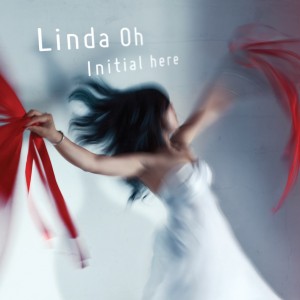
CD Review: Linda Oh - Initial Here


Linda Oh
Initial Here
(Greenleaf Music) www.greenleafmusic.com

Bassist Linda Oh's life has been one of extensive journeys. She was born in Malaysia to Chinese parents, who moved their family to Australia when young Linda was three years old. After spending her teenage years playing in rock bands, she headed to New York to study jazz and eventually appeared with artists like Dave Douglas, JD Allen and Ambrose Akinmusire. The latter played on Oh's 2009 debut Entry.

Initial Here is inspired by the way the journeys have impacted her, but her writing reflects this pensively rather than trying to put across a concept album or by trying go to a different world with each song.  Oh alternates between acoustic and electric basses (with pianist Fabian Almazan doing the same with acoustic and electric pianos). She has a tone on the upright that feels immediately engaging and authoritative, especially on "Mr. M" which pays homage to Charles Mingus both in its solo and in a melody that recalls his more reflective writing.

"Thicker than Water" brings in Oh's other instrument, the bassoon, which duets with the bowed bass behind vocalist Jen Shyu who sings in both Mandarin Chinese and English. With a melody as close to opera as jazz, this track's lyrics address Oh's mother and female forebears. While it includes questionable phrases like "satiate your soul" the overall message and Shyu's strong delivery lend a lot of weight to the message.

Throughout the album Oh shows a knack for turning unusual rhythmic features into strong grooves. "Ultimate Persona" is based on an Indian polyrhythm which keeps changing slightly over four (or maybe eight) repetitions. Drummer Rudy Royston drives this, as well as "Deeper than Happy" which is full of stop-start figures. Along with a strong reading of Duke Ellington's "Come Sunday," the quartet pulls off a brilliant medley of West Side Story's "Something Coming" - playing it in an urgent 4/4 clip - that segues in the climax into Igor Stravinsky's "Les Cinq Doigts," a piece that sounds very similar melodically.

The closing "Deeper Than Sad" ends things on a melancholy note which comes as something of a surprise considering the way the rest of the album seemed to be more on the upswing. But the quartet's performance, which follows a dirge-y figure and builds in dynamics to include some melodica bursts and some haunting backing vocals, ends up feeling uplifting in its own way.  There are a lot of ideas moving around on this album, but none of the tracks feel busy.

Monday, July 23, 2012

CD Review: Ravi Coltrane - Spirit Fiction


Ravi Coltrane
Spirit Fiction
(Blue Note) www.bluenote.com

Ravi Coltrane's first album for Blue Note Records as a leader does not put him in a setting that either relies on the label's golden years nor does it lean on the family name and heritage. While the latter situation is unlikely anyhow, given the saxophonist's weighty discography, some people might have expected the former since Coltrane played with the Blue Note 7, an all-star group that released an album and toured to mark the 70th anniversary of Alfred Lion's creation of the label.

Spirit Fiction has some compositions that come from outside the band, but instead of Horace Silver, Lee Morgan or Coltrane's father (Blue Train might be his only album on the label but it's probably in their Top 10), he tackles Ornette Coleman and Paul Motian, with no less than album producer Joe Lovano joining him on both. The rest of the tunes come from Coltrane or his longtime bandmate Ralph Alessi (trumpet) and while they appear to aim in a straight forward direction, they get more adventurous the deeper that they are investigated.

To be sure, Coltrane hits the ground.... probing. His soprano saxophone enters "Roads Cross" testing the waters before a spirited free improvisation is stirred up by his quartet (pianist Luis Perdomo, bassist Drew Gress, drummer E.J. Strickland). If devotees of Blue Note are meeting Coltrane for the first time, they're getting an audacious opening salvo, albeit one that won't disappoint anyone with open ears.

Just past the album's midpoint, the quartet revisits the scenario with "Cross Roads" which sounds a little more urgent but just as exploratory. It provides an interesting comparison to the title track, which is equally free flowing for another reason: the quartet was split into two duos which recorded separately from the other and was superimposed after the fact. Perhaps they played it safe by limiting themselves to 2:28, but in doing so they arrive at a complete statement with no room for filler.

The quartet plays on six of the albums 11 tracks. The remainder reunites Coltrane with the band that performed on his 2000 album From the Round Box - Alessi, Geri Allen (piano), James Genus (bass) and Eric Harland (drums). This group also sounds so in tune with each other that they can keep it loose at the same time. The two horns begin "Who Wants Ice Cream" unaccompanied, sounding like they're completing one thought. Harland's accents really drive this one too.

The quintet is also the group that interprets "Check Out Time," the Coleman tune that comes from his Love Call album. The idea of adding a piano to the track seems odd but Allen was the first pianist to play with Ornette (on both of his Sound Museum albums in 1996) in over four decades. The two tenors, trumpet and piano create an especially rich sound on the theme and after some far-flung solos, they explode the theme in about four directions before bringing it back home. Motian's "Phantasm" recreates the warm bliss that could be felt when Lovano played with just the composer and Bill Frisell. Here, the two tenors work magic joined only by strong participation from Allen.

Coltrane's last album, 2009's Blending Times, stuck with me because he played with a rather cerebral sense of exploration that gave him a unique voice. That sense continues with Spirit Fiction which features two whole bands that share that are looking for new discoveries. This album has a lot of them.

Wednesday, July 18, 2012

CD Review: Arts and Sciences - New You


Arts & Sciences
New You
(Singlespeed Music) http://www.singlespeedmusic.org/

The members of the Oakland, CA quartet Arts & Sciences all spent time in a conservatory or two. In addition to learning their instruments on campus, nearly all having logged time in the odd pop band tUnE-yArDs. They also all have an affinity for prog-flavord free improv and composition. In particular, they seem to have digested a good bit of Tim Berne's oeuvre. Admittedly they cite the alto saxophonist's Bloodcount band in their bio, but the quartet seems closer to Science Friction, his more electric group. It could attributed to Michael Coleman's electric keyboards which build structures for Jacob Zimmerman (alto) and Matt Nelson (tenor) to develop, or knock down, depending on the situation. Drummer Jordan Glenn completes the band and adds aggresive feeling to the playing, sometimes like Jim Black.

No specific songwriting credits are listed anywhere on the cover, although Coleman's name appears with "ASCAP" next to it. Zimmerman actually penned one of the 10 tracks but by leaving the specifics off the cover, Arts & Sciences comes across like a unit rather than a band led by one particular player.

New You includes a few instances of conservatory geek humor. Case in point: "Baby Boner," a title which the band hopefully will come to regret and re-name. This suite-like episode, like opener "People Really Like Me," also proves that the quartet enjoys abrasive repetition. The latter drifts off with Zimmerman blowing a two-note loop, while one-third of the 10-minute former track gets stuck on an odd-meter lick that only changes in texture and dynamics. Abrasive? Yes. Unlistenable? Not really. Maybe just on the first listen.

Before "Baby Boner" gets to that point, it borrows what I like to call the "scenery changing" solo approach from Berne, where the background changes while a solo happens. The twist comes in who appears to be soloing. In this case, it's Coleman and Glenn, while the two saxmen work and rework the setting. "Scientology" adds guitar and three extra horns (including Singlespeed head honcho Aram Shelton) but the out of tempo piece sticks a little too closely to its slow theme, with just a brief spot for a keyboard/drum break. Better is "Shunting" which starts out free and furious, shapes into a heavy groove and then breaks down again.

The longer tracks are punctuated by shorter pieces that serve like interludes. In fact, the 31-second "Missed Opportunity" feels like the acoustic piano exposition for "Scram,"' which immediately follows and begins with Coleman rapidly spinning a nervy synth cluster. Other times, they hang around long enough to get a choppy melody out there ("Poodle," another tip of hat to Berne angularity), prove that they can play chamber music relatively straightly  ("Step Child") or go through several prog-y shapes in a less than three minutes, including one that sounds like a tripped out quote from Raymond Scott ("Those Lepers").

Clearly Arts & Sciences has a variety of backgrounds and influences to draw on with their work. Sometimes when the ideas get thrown together in a somewhat reckless fashion, the results feel a little scattered. In their case, the uninhibited qualities of these guys work to their advantage.

Saturday, July 14, 2012

Pharoah Sanders addendum & more writings

Playing right now: Josh Berman & His Gang - There Now (Delmark)
More to come on this. Later

After posting the Pharoah Sanders review it occurred to me that I didn't make a fuss over the Pittsburgh contingent on the album. In fact, the Don Cherry session had two Pittsburgh natives in the rhythm section: bassist David Izenzon and drummer J.C. Moses. Izenzon also showed up on the Paul Bley session too. These are two guys you never hear about when locals rattle off the names of musicians who grew up here. Them, and Beaver Harris.

Here are some recent reviews of mine that are on the JazzTimes website: Tomas Fujiwara & the Hook up and Jerome Sabbagh

In the current print issue (August), I reviewed albums by Henry Threadgill's Zooid and Ballister, the latter a free improv trio consisting of Fred Lonberg-Holm, Dave Rempis and Paal Nilssen-Love. Look for it and buy it. John Pizzarelli is on the cover. Last week I was working on a piece for the magazine, the first thing bigger than a review I've written for them in a while. With that out of the way, I'm hoping to concentrate more time here in the next week. I hope, I hope.

Tonight is Karl Hendricks' album release at Gooski's. I'm hoping to make it there. The new album's out on vinyl and disc!

Friday, July 06, 2012

CD Review- Pharoah Sanders - In the Beginning 1963-1964


Pharoah Sanders
In the Beginning 1963-1964
(ESP-Disk) www.espdisk.com

Before Mosaic started their three-disc Mosaic Select series, they released a few boxsets that pushed the limits of what belonged in a deluxe set. Combining Lennie Tristano sessions with those by his students Lee Konitz and Warne Marsh kind of made sense, as did the Vee Jay sessions by Lee Morgan and Wayne Shorter (which only intersected on one album). Peggy Lee and June Christie seemed to be a set of convenience: "Two girl singers, both on Capitol!"

ESP's retrospective of pre-Impulse! works by tenor saxophonist Pharoah Sanders contains an interesting batch of music, as well as some interview snippets throughout. But most of the music in the box has been readily available in reissued form for quite some time - mostly by the reactivated label itself. Considering that half the four-disc collection is taken up by performances by the Sun Ra Arkestra (which included Sanders) and that many of the interviews don't deal with this boxset's main subject, it has a rather thrown-together feeling. And while it provides a great introduction to both the saxophonist and the Saturn expatriate for whom he played, a set like this is geared more towards the longtime collectors than the novices.

Sanders is best known for his searing tenor work that came to fruition during his time with John Coltrane's quintet, from 1965 until Coltrane's death two years later. But Sanders was far from one-dimensional as the early sessions with Don Cherry and Paul Bley reveal on the first disc. A brief interview with Sanders (like all the interviews, no date is given) begins the set, setting the scene for his arrival in New York. The Cherry session comes from 1963 (possibly a year later) and includes bassist David Izenzon (who would soon join Cherry's former bandleader Ornette Coleman), drummer J.C. Moses (who played with the cornetist in the New York Contemporary Five) and pianist Joe Scianni.

The music feels loose with simple composed structures, much like Coleman and also like the compositions Cherry recorded with Blue Note (and that have appeared on live discs released after the fact by ESP). Sanders had yet to tap into the frenzy of his later work and favors a tone very much like Coltrane, though his melodic choices don't make him a copycat. Only three different compositions come from this set, two have alternate takes which vary from each other. Another track credited as Thelonious Monk medley finds Cherry nooldling at the piano on four Monk melodies. Considering that Izenzon rambles softly on top of them, it's likely this track came from during downtime between takes while the tape was rolling.

The session is followed by four minutes of an interview with Don Cherry talking about... Ornette Coleman. Pianist Paul Bley follows with a few minutes of discussion of his instrument's changing role as the avant garde movement took root. Yes, these are both interesting interviews but this has nothing to do with Pharoah Sanders or his work with either of these musicians.

The 1964 Bley session also features just three compositions (all by Carla Bley), again with two alternate takes. With Paul Motian on drums and Izenzon in the bass chair again, it presents an interesting take on this music, Sanders virtually predicting a direction that his future leader would be taking over the next year. It would have been interesting if this quartet had released a whole album. Instead, Bley would re-record two of these a few months later in a session that included Marshall Allen from the Sun Ra Arkestra.

Pharoah's First, Sanders' debut and sole release on ESP during their original run, makes up the bulk of disc two. The two 20-plus minute tracks have been maligned for placing the wild tenor in a more straightforward setting, but the saxophonist doesn't exactly sound confined. If anything he might have been better off skimming a few minutes of solos off both tracks. Still, this album can be found in the ESP catalog on its own.

Three years ago, ESP released Sun Ra featuring Pharoah Sanders and Black Harold, a recording from the Four Days in December concert series staged by the Jazz Composers Orchestra in the final days of 1964 which featured many of the musicians moving in a newer, freer direction. Half the album had been released by Ra's Saturn label, while the first five tracks were new to the public on that release. In the Beginning clarifies that the unreleased tracks actually came from the December 30 performance, while the remainder were recorded the next day, along with an additional 25 minutes of outer space wildness.

The sound quality on both discs is on the quiet side - which is not the case with the 2009 release - and not just because one set is mono and the other stereo. While there are numerous live recordings of the Arkestra, this one might not have much appeal beyond the diehard collector. Sanders, who supposedly made the transition from birthname Farrell to "Pharoah" courtesy of Sun Ra, can be heard blowing his trademark overtones but he doesn't get a lot of solo space.

Disc four is bookended by more interviews, this time with Sun Ra himself as well as Sanders. The latter begins that disc with a dissertation about how major labels neglected him, which may be more entertaining than accurate. He later adds a recollection of John Coltrane, though nothing about Sanders. The saxophonist closes his disc, sounding relaxed and willing to talk about meeting Coltrane, which draws a chuckle from the normally staid Sanders. Here, as he has in the various interview segments, he speaks about his music not as a revolutionary but as someone who would interesting in expressing beauty and art in his work.

Considering how much of this music is in print in other formats, it might have been more interesting to release the music on disc one in tandem with the unedited interviews. As it stands In the Beginning loses some focus and comes off as a bit of a shoddy collection.

Sunday, July 01, 2012

Love Letters, Will Simmons & the Bundt Cake Bunch, Paul Labrise

Last night the Love Letters played at Hambone's, along with Paul Labrise and Will Simmons & the Bundt Cake Bunch (who were listed incorrectly as "the Bundt Cake Gang" on the flyer; my bad). Things got off to an auspicious start because the Bundt Cake Dudes actually showed up with real bundt cakes. Two in fact: one chocolate and one carrot cake. The latter was the winner in my book with a great consistancy and that delicious cream cheese icing that could've been a tad thicker but really was just fine as it was. The chocolate was equally good, but a bit rich and a bit heavy for that heat. Jo, the angel that books the shows there, set me up with a cup of coffee which was the perfect compliment to the pre-gig snacks. (When we play last I really try to go light on the booze, since gin kills what little vocal range I have.)

Paul was originally going to play with a bass player but said four-string guy was unable to make it so it was just Mr. Labrise and his acoustic guitar. He's a really great guitarist and a pretty clever songwriter so he put on a solid set of his own - catchy, pithy, good blend of chords that were picked and strummed with a few little lead-y things in there.

The audience size was fairly thin at that point and I felt it starting to bother me towards the end of Paul's set. One of my friends from work showed up, although she showed up in part because she's friends with Bill from the BCB. And two other friends texted that they wouldn't be able to make it.

But Will & the Gang snapped the mood into a postive groove from song one. He, bassist Greg and trombonist Bill used to play together in the Hope-Harveys and now they're bolstered by the addition of Red Bob, my former bandmate in Amoeba Knievel (with whom he still plays). Will was playing a Telecaster through a Fender twin, which really took me back to LA circa 1968 (key psychedelic era is what I was thinking of). But when they did one of his instrumentals that has a polka kind of feel, it took me to Redlands, CA circa '85, i.e. Camper Van Beethoven territory. Light-hearted and good timey but definitely not joke rock. Plus, they covered the great Al Hirt/New Orleans chestnut "Java."

Then us Love Letters took the stage. I felt like it was a good night. By then the lack of a larger audience didn't bother me too much. I was there to play. And we were pretty together from the start. Sandwiched between Aimee and Buck, I was getting a good dose of both organ and guitar. I was actually having a hard time hearing the snare drum, though. So there was one song where I think the tempo was a little slippery at first - but that's because there aren't any drums in it just yet. The show centerpiece, again, was "As We Go Along," the Monkees deep cut from Head sung by our drummer Erin. It was pretty exciting. Then I had to follow that, since I was singing the next song. In a move that could never have been planned for real, Erin lost a drum stick and it hit my leg during the next song. Luckily things didn't fall apart.

We have another show coming up on July 28, this time at Gooski's. Hopefully we'll get a better turnout for that.

Saturday, June 30, 2012

Read these articles, too.

Whenever I end up getting some writing assignments, my posted output slows down. Last week I had the cover story in City Paper on the Beagle Brothers, my first ever cover for them. Then on Tuesday, Blurt posted my Man Forever piece. I also got an assignment from JazzTimes to write about the band Positive Catastrophe, which includes Taylor Ho Bynum, who I spoke with last week.

After finally publishing the Alexander Tucker piece (right below this post), I'm feeling really productive and wish I had a couple more hours, because I'd happily bang out another review. But today's a work day. And the dishes are staring me down in the kitchen. Maybe tomorrow morning.

Oh wait - the Love Letters have a show tonight so I should probably sleep that off in the a.m.

In the meantime, check out the links above, if you haven't already.

CD Review: Alexander Tucker - Third Mouth


Alexander Tucker
Third Mouth
(Thrill Jockey) www.thrilljockey.com

When I reviewed Alexander Tucker's album Dorwytch nearly a year ago (see post on July 6, 2011), it struck me not only because I was expecting something a little more along the lines of, uh, traditional warped pop, but also because what he actually created was a very dense, churning sound often built around simple vamps. That latter point ultimately created some interesting textures but often brought the music down because too many of the songs sounded undeveloped, with instruments just piled onto a spare framework. (Tucker has been doing this rather prolifically since the early '00s, but this was my first introduction to him.)

On Third Mouth this English bard for the new millenium sounds more focused. Things are as spacey as ever, but there's more direction to these tracks. As a vocalist, Tucker evokes Robert Wyatt, with a high tenor that has a lot of impact even if the words aren't immediately discernable. Acoustic guitars provide the foundation of many tracks with cellos and keyboards filling things out, with backwards electric guitars and other effects added for finishing touches.

The combination makes a song like "The Glass Axe" sound like a subdued prog rock, playing for the first few minutes on a haunting droney riff, only to shift midway into a different section where guitar, keys and vocals move together on the melody. "Window Sill" also has a lot of  strings and accented acoustic guitar picking, before it collapses into a sound collage of droning keyboards and found sounds that might be clocks, dripping water and chimes. Later on "Amon Hen," he branches out into territory that recalls Tom Waits, courtesy of some scraping guitar noise and saxophones that don't comfortably fit with the surroundings but still manage to complement them.

"Andromeon" follows "Window Sill," turning up the volume a bit to make things a bit more dynamic. Like a couple previous tracks, Tucker begins playing a slow waltz, this time with wall of droning guitars (electric, this time) and cellos. The vocals get doubled with two voices singing within an octave of each other, again sounding like Wyatt in his prime prog era. Rather than giving in to the temptation to let the music rise like tidal wave and slowly ebb, the song lasts just over three minutes, hitting hard and stopping before it can wear out its welcome.

That is probably the strongest qualities on Third Mouth. Tucker never lets things carry on too long. "Amon Hen" and "Sitting on a Bardo Pond" (the latter a tongue-in-cheek homage to that band) are under two minutes, acting more as interludes. Most of the songs last somewhere between three and four minutes and when "The Glass Axe" does push seven, it's with good reason as it has two distinct parts. The closing "Rh" also lasts as long but it's going for a loopy, trance feel anyway so it serves its purpose. This sense of economy departs from Dorwytch which seems to take its time getting to where it wanted to go. Dreamscapes can be cool but it feels like Tucker realized that he doesn't need to stop and survey everything as he rolls along, and the album is all the better for it.

Tuesday, June 26, 2012

Make it Look Like a Tux

This morning, my wife banged on the bathroom door pretty urgently and when I opened up, she was holding the section of the paper with the obits in it. "I thought you should see this." My beloved godfather/piano teacher and bandmate of my Dad, Teddy Zee as he was known professionally, died on Sunday. He was 87.

Teddy had a larger than life personality that impacted our whole family. I'm not sure exactly when Pop met him, but by the time I came around, they were playing gigs on what seemed like every weekend, usually at Churchill Valley Country Club, or just "Churchill," as we called it in our house. It was just part of the family life - Pop was "going to play," and often me or one of my brothers shined his shoes for him and/or loaded his bass and amp into the car while he was getting ready. If the band's suits had to look especially spiffy, the order from Teddy was to "make it look like tux."

At the club, they'd play a continuous set, seguing one song into another. I mentioned this once to a sax player I met who had played with Teddy and he referred to the band's groove as "the businessman's bounce," where the tempo stayed the same but the melodies would change. It's a tradition that dates back to the lavish clubs in New York, like the El Morroco. (We have an album where the band does just this - going from one song to the next.) Years later it occurred to me how there's a skill that the band needs to keep this music swinging and not make it just bland background music. These cats had it going on.

One of the things that kept it lively was Teddy. My dad has tapes from the gigs and you can hear Teddy makes cracks mid-song, keeping the music lively, cheering on dancers and simply creating a festive atmosphere. He was like that offstage, too, lighting up a room when he came in. His laugh became part of the repetoire with me and my brother Tom, a two-syllable "huh-HUH!" that was sort of like an Ed Norton chuckle.

Because of that spirit, I remember always feeling like I should be cutting up when I had piano lessons with him. I was always looking for a joke and feeling hyper - something I see in Donovan when he takes forever between songs as he practices the piano. Teddy once recorded a piano lesson (there was always a tape recorder around) where I was especially wound up, and Tom and I listened to it a lot. We were especially amused with a section where I stood up and pointed at the metronome. "SIT DOWN," Teddy barked. "You're not going to use the metronome for quite a bit." [It's all in the delivery. I can still hear it in my head.]

He later bought me a metronome. He also gave me a lot of albums, including a Mongo Santamaria album and a Gerry Mulligan 10" which I still own.

When one of my cousins got married in 1998, the reception was at Churchill and Teddy played solo during the dinner. He was walked through the room before his set started, Pop stopped him and I talked to him. It was the first time I had seen him in over a decade, and the band with Pop had broken up about that long ago.  Later we made eye contact as I walked past the piano and he stopped the tune he was playing and launched into "The Way We Were" with a big smile on his face.

I later asked him if he could play "La Vie en Rose," which had been one of the songs at my wedding. "How'zat go," he asked. After I hummed about six notes, he said, "oh yeah," and launched into it.

His wife, who our family always referred to as "Chip" back in the day, passed away about two months ago and I stopped by the funeral home to pay respects. He seemed pretty lost without her and he wasn't in the best of health. But the thing that I took away from that was that he still encouraged me to sit down and the piano and run scales to keep my chops up. A few days later I did, and I'm glad because it wasn't as easy as I thought.

That's how I'll remember him.

Tuesday, June 19, 2012

Another Hit from the Folks' Record Cabinet


On Sunday, we went to my folks' house for Father's Day and I asked to borrow the Four Freshman album In a Class by Themselves. This is another one of those albums that played a big roll in my childhood. There was a period of time, probably only about a week or two but it felt like longer, when I needed to hear this album every night before bed, as my sister and I had our glass of Quik.

My folks were both very big Four Freshman fans, to the point that I wonder if I would be here right now typing about this if the group hadn't been around. Once, when they came to town, Mum met them after the show and invited them to a party at her house (she still lived at home, but there were always parties there) and two of them showed up. A few years ago, she retold the story and said that it was only years later that she wondered if they showed up hoping to get lucky. (They didn't, by the way.)

Anyhow, this album came out at a time when the vocal group was attempting to remain current amidst the pop music boom of the '60s. Their vocal arrangements were really unique and were a huge influence on the Beach Boys, who were now supplanting them. So this album includes standards like "Canadian Sunset" and "Girl Talk," as well as dubious choices like Donovan's "Hurdy Gurdy Man" and the New Vaudeville Band's "Winchester Cathedral." It was the latter two songs that really stood out to my ears as a kid, especially "Winchester Cathedral," because Ross Barbour delivers it in what was known as his "Leroy" voice, something akin to Donald Duck. And ironically the delivery makes it pretty impossible to make out the words.

That song comes at the end of side one, and follows an absolutely eerie take on Paul Simon's "Old Friends." The latter number is done fairly rubato with a lot of a cappella sequences, interspersed with some sawing strings, similar to Psycho though not as shrill. In short, it really goes a long way towards capturing the song's underlying messasge about the fear of growing old, especially when one of the guys, with a lower voice, practically whispers, "How terribly strange to be 70." (In what seems like a connection, the liner notes mention the fact that the band was 40 years old at the time of the recording). I'm sure someone at Liberty Records insisted they needed to really lighten things up following that song.

The cover of the album always puzzled me. A dame in feather boas, laying on a table next to a pile of grapes and a bucket of champagne. At the top of the hill behind her sat a Mercedes. How is she going to get to her car, I used to wonder. Where are the steps?

Yes, I looked at this cover a lot. It's a miracle the record still plays. Along with the Fifth Dimension's Greatest Hits, Equinox by Sergio Mendes and a couple Herb Alpert albums, this was probably one of the albums that gave me ideas about how melodies and harmonies should sound - prior to discovering and being smitten by the Beatles and Alice Cooper.