Thursday, February 28, 2013

CD Review: Kramer - The Brill Building


Kramer
The Brill Building
(Tzadik) www.tzadik.com

This review is going to include a lot of me, at least in the beginning. You see, Kramer and I go back a long way. Not personally, though there is personal business involved too. But back around 1990, Kramer was it. He had one of the greatest bands in the world (Bongwater). He had a label that kept churning out all kinds of weird records (Shimmy-Disc), some of which were awesome, some weren't, but all were worth exploring, especially if you worked at a college radio station. On top of all that, he played bass, through a fuzz pedal, no less. He was doing things that I dreamed of doing.

In the fall of '89, I went to my first CMJ Music Marathon, and saw his other concurrent band B.A.L.L. Until I saw Bongwater a year and a half later, this was one of the most amazing, almost-falling-apart acts I had ever seen. The set began with Kramer running some cheapo cassette player through the p.a. with some strange music on it, and taking balloons from a garbage bag and throwing them into the audience. While all this was going on, guitarist Don Fleming stood there yelling, "PAPERBACK WRITER!" When they kicked into the music, they rocked really hard too. Every few songs, Kramer shot silly string into the audience. He also took an American flag and duct-taped it to the back wall, upside-down and haphazardly. (This was during the era of laws over flag-burning.) The band's energy and focus floored me. But it was too good to last. After about 15 minutes, Fleming's amp stack fell over and broke, so the set ended abruptly. Disappointing at the time, it almost seems vaguely appropriate.

Two of my bands ended up recording at Kramer's Noise New Jersey studio a few years later. Bone of Contention made an album over Memorial Day weekend in 1995 and two years earlier the Pundits drove up for a weekend to record three songs on a Sunday, which Kramer mixed that night before we split. It had always been my dream to have him produce BoC, though by the time we got up there, he was moving away from the gauzy sound of the Bongwater and Galaxie 500 albums towards something else. Still, it was a good time and I even got him to add an extra bass part to one of our songs that I had envisioned to be a little B.A.L.L.-ish. (Kramer, if you're reading this, I didn't tell you that at the time because I felt to inhibited. Didn't want to get on your bad side.)

When Kramer released the three-record opus The Guilt Trip in 1993, I was psyched. Not only was it gigantic, it sounded great, with all kinds of different stylings going on. But after one great album with Daevid Allen (Who's Afraid, which I come back to about every six months), the Shimmy-Disc outpouring seemed to slow down and didn't slay me as much.

Out of nowhere, Blurt's Fred Mills wrote a piece about Kramer's first new album in ages. Brill Building pays tribute to the songwriters who worked in that storied locale in New York (where my sister works now, though not as a songwriter) by covering 10 of them. I had to have it.

The album is marked by a lot of vintage Kramer stylings, specifically the use of sampled recordings before, after and sometimes during the songs. By 2013 standards, this is nothing new, but he was doing this on Bongwater records and it actually goes back to his days with Shockabilly (who were to classic rock what Spike Jones was to '40s music; why I'm the only person to say that, I'll never know). Sometimes they seem to be voices that randomly were chosen to go there, other times, there might be some political charge to it that gives the song a little more depth. Some of the ones on this album seem to have a continuing theme related to the '60s: Lyndon Johnson paying tribute to John Kennedy while signing the Civil Rights Bill; newscasters talking about Jack Ruby, presumably after he shot Lee Harvey Oswald.

Without even considering that he worked on it for seven years, it's clear that Kramer has a fondness for these songs and put care into this production. (His last few outings seemed to be not much more than simple jams with layers of overdubs piled onto them. A previous Beatles cover also a little lazy when he messed up lyric order.) The album begins with the creepy "He Hit Me" (whose title omits the "...and It Felt Like a Kiss"), but the slow tempo and sea of keyboards seem to make a statement on the unsavory message of the song. Brill Building also has extensive liner notes by Kramer where he analyzes that song and its meaning, not to mention the whole milieu of the Brill Building and the connection with Lower East Side poets like the Fugs. That alone is fascinating in and of itself, and not just because the layout makes it a challenge to read.

Kramer once described his take on covers as being something like part tribute and part lampoon, and that feeling comes across in several tracks. "Do Wah Diddy Diddy" finds him channeling an old Jewish grandfather while mumbling that insipid title. (Or maybe he's invoking Jack Mundurian, the novelty singer that he sampled on The Guilt Trip). In the "I knew we were falling in love" section, he shifts gears and belts it out like a rocker, which hams up the whole thing and makes you appreciate the whole thing. The fuzzed out electro-clash version of "I Want Candy" might be a bit much but the spastic version of "Save the Last Dance For Me" - which features R. Stevie Moore singing, drumming and playing way off-key guitar - is right on the money.

While several of tunes are fairly faithful and play it fairly safe, nearly half of the album successfully takes the songs where they've never gone before. For starters, there's a country-and-western take on "Spanish Harlem," complete with Johnny Cash-style guitar strums and some horse neighs. "On Broadway" gives us guest vocalist Jad Fair at his most soulful and guest pianist Mike Jones doing some busy but boppish piano fills. Neil Diamond's "Cherry Cherry" gets translated into Spanish and rearranged to sound almost like "Guantanamera," at least when the Sandpipers did it. That's not a put-down either. This is beautiful.

After what seems like a long time away from the limelight, this album signals that Kramer still has the creative juices flowing. The guest vocalists (which also includes Danielson's Daniel C. Smith on "Paradise) offer variety that evokes the groups that sang Brill Building songs. Yet Kramer himself is in extremely fine form whether he's goofing or making like a straight crooner on "Baby It's You" and "I Love How You Love Me." Which has me thinking, next time out, maybe he ought to take on the Great American Songbook. Kramer, you getting this down? It could be another chapter in the Great American Jewish series for ol' Zorn.

Wednesday, February 27, 2013

Suzanne Vega, Ethnic Heritage Ensemble, One Night

Monday was a great night for music. The evening started at Club Cafe where Suzanne Vega was playing two shows. I attended the first show, at 6:30, where I felt like one of the younger people in the audience, something I haven't felt in a long time.

Some people might be surprised to hear this but I really like Suzanne Vega's music. In fact, I should say that I love it. She has a beautiful voice, very calming and spellbinding at the same time. She is a great storyteller, which I'm reminded of every time I hear some mediocre "singer-songwriter" type banging on an acoustic guitar and trying to make a statement. And now it's clear that she has an impeccable stage presence, telling stories between songs that are charming and amusing, and playing songs that close to 30 years old like they're brand new.

All of this was on display in the opening minutes of the show when she and guitarist Gerry Leonard got onstage. Vega casually donned a top hat, which she flipped into shape before she introduced "Marlene on the Wall." That song alone is filled with all her attributes: great lyrics, great story and a key change in the chorus that grabs your ear without letting you think about it as it amps up the beauty of the whole thing.

Her song selection incorporated all of her albums, and then some. She has recently released a series of albums called Close-Up in which she's re-recorded her back catalog acoustically, grouping the songs by theme over the four volumes. The reasoning wasn't explained, but knowing the state of record labels (most of her albums were on A&M) it could have something to do with getting the songs back out there. Since she's still writing songs, anything else might be a bit dubious.

Mid-set she played a few new songs in a row. Tentatively titled "Fool's Complaint," this first one had a verse that sounded exactly like "When Heroes Go Down," and had what seemed like a clunky opening line for someone like Suzanne ("I really hate the Queen of Cups."). "I Never Wear White" also seemed a little basic with a second line like "I wear black." At the same time, she has a unique way of giving a line like that some gravity, whereas anyone who came after her might sound like a hack. Leonard gave the song a heavy rock riff, with his arsenal of effects pedals that added bass tones throughout the set and looped chords so he could play some leads. This made "Blood Makes Noise" as creepy as the studio version, especially when Vega's voice added some reverb and delay.

As hoped, the show was over in enough time to get down to the Thunderbird Cafe to see the Ethnic Heritage Ensemble. Leader Kahil El'Zabar has been here several times over the past few years with a few different groups, including one with baritone saxophonist Hamiett Blueitt. This trio is possibly the most remarkable, especially since it consists only of him, trumpeter Corey Wilkes and saxophonist Ernest Dawkins.

El'Zabar might do a similar thing each time he comes - one tune on kalimba, one on trap kit, one on conga - but hearing him is like listening to an album you really like. It's always enjoyable. And even if his vocalizing might be similar to Keith Jarrett's noises during his solo, everything else makes this music infectious. "Black is Back" opened with a hypnotic finger piano groove which the horns built upon. Dawkins, on alto, sounded especially sharp, quoting "Wade in the Water" toward the end of a bristling solo. It's no surprise he was laughing with excitement as the tune wound up, with all three of them whispering the title.

If Clifford Brown was still around and he took inspiration from Lester Bowie, he might sound like Corey Wilkes. The second, untitled piece of the first set (with El'Zabar on drums, playing tempo and  a melodic undercurrent) featured Wilkes showing off his bright tone and wild intervallic leaps, occasionally putting the bell of his horn right on the microphone for emphasis.

Bands like the Ethnic Heritage Ensemble, like the Art Ensemble of Chicago before them (a few of whom played with El'Zabar), will tip their hat to the past without ever forgetting that they're a band of modern times. As an example, they played Dizzy Gillespie's "Bebop" with El'Zabar on hand drums (not sure if you'd actually call it a conga drum), which gave the song more of a pedal point base instead of flurry of chords normally heard in it. It changed the shape of the tune and gave it a new life. Acknowledging it's origin, perhaps, Dawkins quoted the bridge of Charlie Parker's "Donna Lee" - twice.

The second set kept the energy up, even during the more meditative "Can You Find a Place," with its vocal and kalimba groove. Dawkins pulled out tenor and alto to blow behind Wilkes during the boppish opener. And the all-percussive final tune took us out on a very high note.

Tuesday, February 26, 2013

CD Review: Barry Altschul - The 3dom Factor


Barry Altschul
The 3dom Factor
(TUM) www.tumrecords.com

Robert Wyatt once said that every time he hears a new record, he wants to hear an old one. It was his personal reworking of some author's observation that every time he reads a new book, he then wants to read an old one. That happens a lot with new albums: After hearing a new work by someone, I want to hunt down everything else they've done. Otherwise I feel like I'm missing something.

That feeling occurred while listening to The 3dom Factor, drummer Barry Altschul's first recording as a leader in over 25 years. Altschul earned his stripes for his work in Circle (the co-op group with Dave Holland, Anthony Braxton and Chick Corea) and the trios of Paul Bley and Sam Rivers. He's an ingenious percussionist who can play freely or swing viciously. In the past couple of years, he resurfaced, on the reunion disc with Rivers and Holland, and on Jon Irabagon's lengthy spontaneous disc Foxy. But between his name-establishing work and his resurgence, the drummer proved himself to be an excellent composer too, releasing albums which, on the basis of these performances, I feel compelled to track down.

The 3dom Factor revisits several of those compositions, with Irabagon (on tenor) and Joe Fonda (bass) along for the ride. Carla Bley's "Ictus" is also included, a tune Altschul played in Paul Bley's trio. Three new songs appear on the disc as well, to prove this isn't just a reflection of the past. Far from it - this is a vital album that is exuberant throughout the whole set.

From the moment the title track kicks off this album, the trio operates on a high level of communication. The theme here is vaguely reminiscent of an Ornette/folk style melody, which moves into solos marked by Irabagon doing some rapid slap-tonguing. When things drift apart freely, Fonda brings it back with some authoritative slides up the neck.

Altschul incorporated all sorts of percussion into his playing, and "Martin's Stew" exemplifies this. Over Fonda's bowed ostinato, the drummer blows whistles and never fully moving to the trap kit until Irabagon's solo later in the piece. The tenor player has appeared in different situations in his own sessions that span straight ahead jazz and blistering free improv, not to mention the nothing-is-sacred approach of Mostly Other People Do the Killing. In "Martin's Stew" he draws on all those experiences with astounding ease, going from growling overtones to convoluted lines of bop in a matter of breaths. His depth serves as a reminder that this guy is one of the most creative younger saxophonist out there.

When the group plays the two ballads, a little bit of wildness lies below the surface but it never shatters the mood. "Irina" uses space really well, moving a couple phrases at a time with punctuation coming from Altschul. Fonda plays a solo with a contrast of drawn-out notes and fast phrases. Irabagon feels like he wants to go wild but never does, using that energy instead to add color to the piece. He does something similar in "Just a Simple Song," starting subdued and gradually moving to a high shout. Fonda's double-stops in the melody make this one compelling too.

In the mid-'80s, Altschul wrote a tune called "For Papa Jo, Klook and Philly Too," paying tribute to his heroes Papa Jo Jones, Kenny "Klook" Clarke and Philly Joe Jones. Here the trio adds a little funk to the tune, transforming it into "Papa's Funkish Dance," and his rhythmic punctuation is electrifying. Another surprise comes in "Natal Chart," which is based on the idea that each of our solar system's planets have their own tone, and each is represented in the song. While things start wild, the planets align and the group eventually shifts in a Dixieland groove. That might sound crazy, but it works thanks to more bowing from Fonda and some machine gun-style fluttering tonguing from Irabagon.

The folks at TUM Records (which is based in Finland) know how to put together a package. The 3dom Factor's nearly 30-page booklet rivals AllMusic.com for detailed notes on the session, the musicians and the compositions, to the point where there's a bit of overlap. Nevertheless all the info is useful and it serves as the icing on a birthday cake for Mr. Altschul, who just turned 70 in early January.

May his seventh decade bring him more recognition not just for his past triumphs but for what's capable of doing right now. And believe me, he can still do a lot. It was tempting to expound on nearly every track.


Sunday, February 24, 2013

CD Review: Chris Potter - The Sirens


Chris Potter
The Sirens
(ECM) www.ecmrecords.com

There have been moments during the last few Chris Potter albums where it's been easy to think, This is the future of jazz. Not to say that there aren't a lot of musicians advancing the music, but saxophonist Potter is someone who's fairly close to "mainstream" jazz but approaches it with the vision of, if not an avant-garde player, than someone who really pushes himself and listeners in the direction of adventure. He's a creative player, on tenor and soprano, as well as bass clarinet. For a musician who has played with Marian McPartland and Steely Dan, he has brought a good deal of fire to Dave Holland's groups, and Paul Motian's trios. In fact Motian's Lost in a Dream probably ranks with some of the best jazz albums of the last decade.

But the real excitement can be found on albums by Potter's Underground units, where he forgoes bass, has Craig Taborn cover those duties with keyboards and lets his Holland bandmate Nate Smith go wild on drums. On their 2009 album Ultrahang it seemed like Potter might have taken some cues from Tim Berne and he clearly knew what to do with them.

For his first album as a leader on ECM, Potter has brought along Taborn (on acoustic piano), with bassist Larry Grenadier and drummer Eric Harland for his core quartet. The extra sense of experimentation comes with a second pianist, David Virelles, on prepared piano, celeste and harmonium. Virelles (who just released the highly-regarded Continuum on Pi Recordings) only seems to appear on a few tracks, if my ears are being accurate. But he adds a twist to the music without cluttering the balance of the quartet. The pianists' spare duet that closes the album leaves you wanting a lot more than some bare exchanges of sound too.

The compositions were inspired by the writings of Homer, and that being said, many take the slow and thoughtful course. The minor title track begins with Potter on bass clarinet, leading to a bowed solo by Grenadier in the same register as the reed, wrapping up with the leader switching to tenor. "Strangers at the Gate" finds Potter on soprano, and a dialogue between Taborn and Virelles with the latter's celeste being the more dissonant voice. In contrast, "Kalypso" doesn't quite capture the feeling of its synonymous title, but it gets Harland to play the melody with the tenor and get a little space of his own to flex a little.

Being an ECM album The Sirens has the majestic and somewhat dreamy production of Manfred Eicher setting the mood, though Potter reveals the bite in his playing as well. "Wine Dark Sea" begins gently but as his tenor solo develops, he gets a little more jagged, with the fire of the Underground albums coming into the mix. "Wayfinder" continues with the same type of wooliness, with Virelles adding some prepared piano clicks and celeste. Marked by shifting time signatures, the band still almost locks into a funk vamp by the end of the tenor solo.

Potter's sense of adventure is still going strong and this new album offers proof, which only grows with repeated listens.


Friday, February 22, 2013

On Allison Miller, Kevin Ayers, Chris Potter

Finally! I'm finally back online, 100%. Monday morning our internet connection was going on and off, on when the PC went into sleep mode, and off when I wanted to get online. After going through the long, drawn out, impersonal call to Verizon, complete with the canned empathy by the operator, it was clear that the problem was on our line and a tech had to come out. On Wednesday.

He finally came on Wednesday, only 30 minutes past the 4-hour window that they gave and he fixed the line. But the shock waves that the line update made (figuratively) kept me from getting on smoothly until about now.

Tuesday night I went to the Thunderbird because Colter Harper was leading Space Exchange that week and he had drummer Allison Miller in from New York to play with him. It was wild, because they were playing some of Colter's vocal songs, which are a little more singer-songwriter than straight jazz. Then they'd go off on solos and Miller was tearing it up like some combination of George Hurley and Jim Black. (That just came to me, Allison, don't bust my chops if you think I'm off the mark.) I know she plays with songwriters like Brandi Carlile too, so I wish I could start a band with her.

That night I was talking to my friend Jeff Berman about Soft Machine. I had posted on Facebook a few days ago that I pulled out Third and still love it. Jeff commented that he saw Soft Machine live, and on Tuesday he explained he saw them more than once, which made me jealous. And then...a day later, he came into the store and told me that original Soft Machine bassist Kevin Ayers had died. It's not quite the same synchronicity as when Paul Motian died (I was driving home one night thinking about how I might try to interview such a tough interviewee, unaware that he had died about an hour earlier), but still it was odd.

Here's an Ayers obit with a great photo of early Soft Machine. Funny how all those British bands started out looking zany or wiggy in the early days and later became so stoic. Compare the Syd Barrett-era Pink Floyd to the lineup right after, and you'll see what I mean.

Here's also a link to an early Soft Machine song, "Jet Propelled," when the lineup also included Daevid Allen. I was rather disappointed with this whole album of songs, but this one is great.

Tonight is the Paula Poundstone show. I wrote a quickie about her for Pittsburgh City Paper this week but I think I'm going to skip the show, much as it'd be cool to see her. There are a few things coming up next week, including Suzanne Vega and the Ethnic Heritage Ensemble both on the same night. Plus I'm recording on Sunday afternoon. Both things could cut into family time.

Another thing that's happening this weekend is that the Chris Potter Quintet is playing in Cleveland. If only we were traveling to Ohio this weekend, I'd steal away to that for a few hours, but that ain't happening. If you're near Cleveland, though, check them out. I'll be reviewing the new album here soon.

Sunday, February 17, 2013

CD Review: Wayne Shorter Quartet - Without a Net


Until March 5, there was an obtuse review here, but I've since revised it and given it to Blurt for them to run. I'll post a link when it's on their website.

Thursday, February 14, 2013

Ken Stringfellow in Pittsburgh

Playing right now: JD Allen Trio - The Matador and the Bull.
(I bought this CD about 10 days ago during a binge at Sound Cat and didn't get to take the shrink wrap off until this morning.)

All the writing assignments, for the moment at least, wrapped up on Tuesday morning. They included a story for JazzTimes, four CD reviews for the same magazine (I was good and submitted some ahead of time), about three for Blurt and a preview for City Paper. Plus interviews for all of them that needed to be transcribed. Now it's back to the lingering feeling that I should be reviewing everything else here. What a joy it would be to just do that all day.

Last night I went to the Thunderbird to see Ken Stringfellow, with Will Simmons and his band (not sure if they're still the Upholsterers) opening. I missed Karl Hendricks' solo set since I had what's known in this house as "baby duty," though the person in question who I was putting to bed is no longer a baby. Will and the Gang played a tight set that included a guest vocal spot by Karl himself on a song called "Don't Look Back" that's not the Boston song. It's from some Nuggets box.

I'm not all that up on the Posies catalog though I think somewhere there in the house there's a solo CD by Stringfellow from when he was here on a solo tour. He has a beautiful voice, and a lot of his songs were marked by "woah-woah"s. I was expected something a little more pure pop, with power chords and hooks, but his playing was a little less pronounced than that, meaning it was a little more open. It was a different story when he played keyboard. Those songs were a little easier to groove on.

But he played a looooong time. I'm not exactly sure when he started but I'm pretty sure he bypassed the hour mark when I finally decided that I needed to hit the hay. Local violinist Megan Williams (my ex-bandmate from Up the Sandbox) and vocalist Emily Rodgers joined him, Megan for several songs, Emily for one that was sung on Stringfellow's album by Margaret Cho. He also talked Bill Fulmer from the Simmons band to blow some trombone on a song too.It all sounded pretty good.

In other news, I just discovered a couple days ago that Suzanne Vega is in town the same night as the Ethnic Heritage Ensemble. I've seen the latter and always passed up the former. I might try to do both that night, as Vega's doing an early and late show.

I've been getting daily comment emails sent to me that I delete, figuring Blogger would delete all the messages. Imagine my surprise when I saw 14 spam comments of "I enjoy blog you write" crap.

Tuesday, February 05, 2013

Monday recap

Yesterday I saw more writing action/preparation than I feel like I have in years.

9:00: Drop the boy off at school
9:30: Interview trombonist Curtis Hasselbring
10:00 - 1:59: Shower, mail package at post office, finish a review (a week early!) and send to JazzTimes, start on a second review
2:00: Interview Mary Halvorson re: Curtis Hasselbring, tinker w/review a little more
2:30: Interview Kahil El'Zabar for his upcoming Pittsburgh show
3:00-3:10: Run around in circles, feel productive, until it's time to pick up the boy from school.

If only everyday offered this much writing activity. I just emailed the second review and now I can't decide whether I should start on the El'Zabar piece or just listen to a CD I have to review by next week.

Friday, February 01, 2013

RIPs

Playing right now: Curtis Hasselbring - Number Stations (Cuneiform)

Before January even ended, there were a few RIPs to acknowledge. Jayne Cortez, poet, activist and performer (and one time wife of Ornette Coleman and mother of Denardo Coleman) actually passed away on December 28, though I only heard earlier in the week. She came to Pittsburgh in a band with Denardo around 2000, but unfortunately I never got to see her. She was 78. Here's an obituary on her. You know someone's legit if the Huffington Post is writing about them.

This week, "Conduction" master/cornetist Lawrence "Butch" Morris died on January 29, after a battle with lung cancer. Here's a nice obit on him. I got to talk to him a few years ago in advance of a performance in Buffalo and his philosophy about conduction was pretty fascinating.

Then last night, I read that Barbara Manning's mother, Saria Farr, also recently passed away. She wasn't a musician, at least not in the same capacity as her daughter, but she was clearly a positive influence on Barbara, whom I count as one of my all time favorite songwriters. Whereever she is, I wish Barbara and her sister Terri all the best.

Wednesday, January 30, 2013

CD Review: Ben Holmes Quartet - Anvil of the Lord


Ben Holmes Quartet
Anvil of the Lord
(Skirl) www.skirlrecords.com

You never know when you're going to cross paths with random musicians who, years later, will be seen in a completely different light than the first experience. Several years ago, the back room of my neighborhood bar/live venue Gooski's was stuffed probably way past the fire code with all manner of people interested in checking out the good time that would be laid down by Slavic Soul Party! (Despite the excessive cigarette smoke,  still legal in some places in the Keystone State, the group did not disappoint.) Everyone in that band probably had at least one other musical venture besides SSP!, but the frenzy of the evening made it hard to find out anyone's individual story.

It's hard to say if Ben Holmes was part of the trumpet section that night, but it's pretty likely. Holmes has an ongoing interest in Balkan music as well as modern jazz, and has played with a great number of bands and projects that feature both styles. Anvil of the Lord - a title that gets more amusing the more you think of it as the counterpoint to Led Zeppelin's classic biography Hammer of the Gods - cites Holmes' Eastern European influences, but this isn't simply good time party music with some improv in it. These nine originals are fairly straight forward (at least for an album on Skirl) tunes with subtle harmonic movement that comes with deeper listening.

The quartet's instrumentation gives it a unique sound. The rhythm section of Matt Pavolka (bass) and Vinnie Sperrazza (drums) back up Holmes and trombonist Curtis Hasselbring, the end result being both a little spare  and keeping the focus on the horns. Pavolka and Sperrazza don't play with flash but their steadiness adds some fire to "Doodle for Rhapsody," the opening salvo which grooves in a syncopated, uneven meter. Nearly all the songs have specific inspirations and this one takes a cue from a Romanian singer Gabi Lunca, which can be felt in the harmonies of the brass.

At other times the muse isn't too obvious, like "Nada v. Armitage," a fairly calm homage to a fight scene in the film They Live between those two characters, portrayed by Roddy Piper and Keith David respectively. "Malach Hamovi" (Hebrew for "Angel of Death") has a noirish feel with slinky bass behind a plaintive, melancholy line. Holmes wrote this in response to Chopin's Prelude No. 2, which is know as the "Presentiment of Death." If Chopin hung out in Downtown New York, maybe it would have sounded like this as well.

Sometimes a Miles Davis vibe creeps slowly into the music. With "Song for Creel Thompson," the melody starts off sounding a little like "Nefertiti" but moves on to greater development as well as solos with some quick double-time licks from Hasselbring and great intervals from Holmes. The more pensive "Moved Like a Fog" contains some of that vibrato-less honesty that recalls the Prince of Darkness.

If any criticism can be made of Anvil of the God it would be that Holmes and the crew almost sound too relaxed, and nice without a lot of bite initially. They clearly all know the nuances of Holmes' writing but some push and pull could have given it a little more edge. Still, it's a fine set of work from a guy who can  get a room of hipsters dancing or get a bunch of modern beatniks to lean in close and listen.

Tuesday, January 29, 2013

The Music that I Play Sounds Like...

Playing right now: a recording of the Love Letters show at Club Cafe, made a week ago last Friday

It says it in a couple places here on the blog, but the Love Letters are the band of which I am a part these days, in case you didn't know. The night of this last show Bob Loiselle, from opening band Junk Fingers, told me that he thought we sounded like a cross between They Might Be Giants and the Human Switchboard. I love one of those bands and, while I don't hate the other one, I still look upon them with a bit of suspicion.

Funny thing is, in listening to this recording, I can hear exactly what he's talking about.

At least on my songs.

In other news, I'm trying to be prolific in terms of CD reviews these days. I have a stack of assignments for Blurt and JazzTimes but I banged out two for the former today. (One submitted, one to be submitted in the a.m. after I've have some distance from it to give it a final read.) I'm hoping this productivity will continue and that I can drop one on the blog in between these two.

Friday, January 25, 2013

CD Review: Jason Robinson - Tiresian Symmetry

Jason Robinson
Tiresian Symmetry
(Cuneiform) www.cuneiformrecords.com

This is the time of year when I usually hit upon albums that I completely missed during the previous year. These are things that flew under my radar for any number of reasons (the biggest usually being, "That looks cool, I'll have to check it out sometime soon"), only to find it in near the top of the year end lists. Granted it's a rare breed of writer who can keep up with everything. On the Rhapsody website, critic Tom Hull said he reviewed 535 new jazz albums last year. That is both admirable and - when you do the math - exhausting, especially if you factor in box sets. I think last year Peter Margasak had a Top 40 of 2011.

But enough of a set-up. Jason Robinson's Tiresian Symmetry is my this-is-amazing-how'd-I'd-put-this-off-you-need-to-check-it-out-ASAP release. It comes from Cuneiform, the long-standing adventurous label that had a banner year overall (to name few: Wadada Leo Smith's four-disc Ten Freedom Summers  and Living by Lanterns' New Myth/Old Science which I reviewed here). I listened to it several times without checking out the liner notes so his concept of the myth of Tiresias and the numerical relationship didn't affect my listening at first. (According to Greek myth, this soothsayer lived for seven generations, both as a man and a woman, giving Robinson the idea to explore relationships between 7 and 2.) What caught my attention are the different sections of the title track and "Radiate" which each continue for 10 engaging minutes each.

Sometimes Robinson's writing reminds of me of Tim Berne's more subdued tunes, where things move gently but the horns feel like they're ready to go wild, and time signatures change on a dime. This happens a lot in the last couple songs, but "Saros" not only has that going for it, it starts with JD Parran doing some great contra-bass clarinet squonking. After the nine-piece band states the theme, things move into a tuba (or maybe bass trombone) solo, and when Robinson takes a solo spot, one of the lower brass guys starts wailing through his horn behind him.

The instrumentation is intriguing enough, but the personnel is the kind that should pull people in too. Robinson plays alto flute and soprano sax. Allan also handles alto clarinet and tenor. Along with them on the front line is Marty Ehrlich (alto sax, bass clarinet, C flute). Marcus Rojas and Bill Lowe both play tuba, creating some beautiful harmonies on the level of French horns on "Radiate." (Lowe doubles on bass trombone.) Drew Gress handles bass, Liberty Ellman adds some guitar solos, and the double-team of Ches Smith and George Schuller both play drums (Smith also plays glockenspeil) without getting too busy or thunderous.

This album was released back around September, but if you missed it then, now is the time to discover it. Not being familiar with Robinson's work, this disc makes me want to explore his back catalog too.

Wednesday, January 23, 2013

Quickie

Playing right now: The Mau Maus - Scorched Earth Policies: Then & Now

Harrison Bankhead's Kickstarter project was successfully funded! I was really glad to see that. Hooray for music.

Blurt posted my Franklin Bruno piece a couple days ago. Here it is.

I was lucky enough to get a download of Wayne Shorter's new album, which is cool because when the end of the year comes, I'll be able to opine on whether it deserves to be in the Top 10 or not. I made CD-r of it  because I wanted to hear it with good fidelity, not just on lo-fi computer speakers. Turns out the burn wasn't totally successful, and at the end of the 23-minute "Pegasus" it keeps skipping back two minutes to the end of the song, and won't go further. Conspiracy theorist that I am, I was starting to wonder if this is some elaborate trick the brass at Blue Note did to make sure that I won't share the music with anyone. Guys - don't worry. I won't give it to anyone. But if you keep this up I might not even feel compelled to write about it.


Wednesday, January 16, 2013

Jeff Mangum review, new sax in town, Harrison Bankhead Kickstart

Blurt published my Jeff Mangum review yesterday. You can find it here, along with some video links although I would like to go on record and assure you it was not me who filmed them. The piece was written over several days, which was a good idea because it helped me figure out how I wanted to talk about him. There were actually a couple different ideas in my head about how to start and finish it.

Last night I went to the Thunderbird Cafe for the weekly Space Exchange sometimes jazz/sometimes something else series. Saxophonist Erik Lawrence just moved to town pretty recently and last night he led a trio with drummer Dave Throckmorton (one of the SE curators) and bassist Paul Thompson. Lawrence plays/played with the Honey Ear Trio (who I reviewed here a while ago), Steven Bernstein and the late Levon Helm. He was playing baritone, tenor and alto last night, although I missed most of the baritone playing because I got there late. It was great stuff and a bit on-the-fly, with Erik explaining arrangements to Paul and Dave before they played tunes, yet sounded remarkably together and exciting. There were a lot of vamps that the bass held down while Lawrence moved all over the horn, pushing into the upper limits when necessary.

Lawrence said he likes our town, so let's show the man some support. We don't want to loose him like we've lost other heavy hitters. Next Tuesday, he's sitting in with at Thunderbird with Book Exchange, Ben Opie's trio that plays Monk, Braxton and Coleman. That should be a blast.

And finally, I got an email from Stephen at Engine Records about a Kickstarter campaign he has to help record and release a new album by bassist Harrison Bankhead. The goal is to raise $1500, of which $720 has been raised as of this morning.

The deadline for it is this Friday, so I realize this mention is last minute. Check it out right here. Bankhead has played with a lot of great Chicago musicians like Roscoe Mitchell, Von Freeman, Hamid Drake and the Windy City's last guru Fred Anderson (that's my description, not common terminology). It'd be really amazing if we could help this project happen.

Saturday, January 12, 2013

Jeff Mangum and Jazz Critic's Polls

Jeff Mangum played in Pittsburgh two nights ago, and it was one of those rare instances where the evening was exactly what I would had hoped it would be. Sometimes the anticipation you build up in your head can create this image of how things will go, and when it isn't exactly like that, it can be disappointing, like seeing a band you like play mostly new songs that you don't know, or there is a lackluster sound mix. Not so at the Carnegie Music Hall on Thursday. I'd expound at length here, but I'm going to write about it for Blurt so I'll link it when that happens.

In other news, my opinions were requested for the Rhapsody.com Jazz Critic's poll, regarding the best albums of 2012. You can find it here. If you want to skip right ahead to the list of albums, this is the place to go. Maybe I shouldn't be so gee-whiz about the whole thing since I've been writing for JazzTimes now for 10 years - in fact my first feature appeared at the very end of 2002, now that I think about it - but that work is done primarily in isolation. So it is kind of wild to see my name rubbing elbows with the likes of Peter Margasak, John Litweiler, John Szwed and Scott Yanow, all writers of distinction to me. Not to mention the fact that this poll, which began at The Village Voice, is assembled each year by Francis Davis, another great writer (and spouse of Terri Gross too). 

Monday, January 07, 2013

CD Reviews: The Whammies and Jeb Bishop/Jorrit Dykstra

 
The Whammies
Play the Music of Steve Lacy
 
Next to Paul Motian, Steve Lacy might be the one instrumentalist who is starting to be saluted for his compositions, posthumously. The quartet Ideal Bread is devoted to the late soprano saxophonist's work, and now come the Whammies, a wild sextet of musicians hailing from Amsterdam, Chicago and Boston. The most famous name on this disc is that of drummer Han Bennink, who played with Lacy in the 1980s. But the group is the vision of Driff Records founders Jorrit Dijkstra (alto saxophone) and Pandelis Karayorgis (piano),who are based now in the Boston area. Joining them are Chicagoans Nate McBride (bass) and Jeb Bishop (trombone) and, for four tracks, Bennink's Instant Composer's Pool associate Mary Oliver (violin, viola).
 
The group pays attention to details of the compositions, some having more apparent structures while others come across more like sketches to toss off before jumping into the fire. Each title is accompanied by a dedication, something Lacy didn't always indicate on the original releases, but which Dijkstra unearthed while researching the composer. They offer some insight into the work too, explaining the loose movement of "The Wire," dedicated to Albert Ayler, and giving a hint about the work of Dutch painter Piet Mondrian in the Monk-like shuffle of "As Usual," in which Oliver plays in the upper register of her instrument while Dijkstra joins her on lyricon, an antiquated wind synthisizer which sounds more like static-y noise. "Ducks," dedicated to Ben Webster, could go either way, evoking the title more than its honoree (unless personality is considered, perhaps). Regardless, it's a fun romp. In "I Feel a Draft" the horns repeat a simple two-note melody while the rest of the band jumps around, Oliver getting close to nails on the chalkboard again. It's hard to believe that this tune was dedicated to Lacy's close friend and longtime collaborator Mal Waldron.
 
But the group settles down and swings too. "Bone" and "Dutch Masters" reveal some unique scoops and turns to Lacy's writing, reminding us that it might be time to dig into his voluminous catalog of work. Bennink might be known for his wild approach to his drums, which is often as visually wild as it is musically, but these two tracks remind us that he's also an excellent timekeeper who can light a fire under soloists with his carefully placed accents. Karayorgis plays some spiky tri-tone accompaniment behind the soloists in "Bone." It too feels much like Monk, which makes sense since Lacy was one of the legend's biggest advocates. It should also be no surprise that the Whammies end with a Monk tune that's not often heard, "Locomotive," a riff tune which he recorded for Prestige and Columbia. McBride takes the first solo - plucking with more frenzy than this song ever heard from someone like John Ore - before Dijkstra's cool understatement takes over, He begins his own way but remembers Monk's style reincorporating the theme into the solo. Karayoris has the same idea and the album ends triumphantly.
 
According to this album's press release, the Whammies are scheduled to tour the Northeast this month. I could really use a dose of live music like this in person.


Jeb Bishop/ Jorrit Dijkstra
1000 Words
 
Before they recorded with the Whammies, Bishop and Dijkstra met up for a series of trombone and alto duets in Chicago, where the former has played with umpteen bands under his own name and that of people like Ken Vandermark. Anyone expecting a series of pointillist free improvs that feature a lot of "extended technique" won't be disappointed - but they won't hear it right away either. 1000 Words features tone poems, counterpoints and near-ballads as much as the wild stuff. So it's not your average avant garde duo session.
 
The arrangement of the title track makes them actually sound like more than two horns since they play at opposite ends of their range at first. "Bone Narrow" throws you off balance with a call-and-response melody which keeps shifting between who starts the phrase.
 
In light of both these albums, Dijkstra is becoming a saxophonist to watch, thanks to a bell-like tone and an inventive mind. But he ups the ante with his playing here, slap-tonguing so sharply that he sounds like closed snare drum adding accents ("Klopgeest") before he starts into some Braxton brittleness. Bishop also shines, especially with his artillery of mutes. He opens "Standpipe" sounding like a free fretless bass guitar and even when this tune sounds rather monstruous, the changes played underneath it sound a bit sweet.
 
The first paragraph's statement about free improv wasn't meant to knock it. But some albums of it that sound great on the first listen don't always hold up under, or motivate, repeated listens. Bishop and Dijkstra have a lot of variety to this set, in all but one track keeping things under six minutes. So 1000 Words  has a lot to bring people back.
 
The Driff imprint is off to a strong start.


Sunday, January 06, 2013

Where Did the Time Go?

Well here we are, nearly a week into 2013 and I've taken something of a vacation for the blog. Or so it seemed. I decided it's better that I start the year with a personal essay rather than another review, although I have a steady stream of things that I want to review. But I was reading the Riff column in the Sunday New York Times magazine today where Hugo Lindgren talked about how all the great ideas he's had for stories, sitcoms, musicals and what-have-you have died on the vine. He went on to site a Times article written about cab drivers who were aspiring to be poets, playwrights, actors, you-name-it. As time went on, that story went, the even split between making a living and doing what you want starts tipping towards the former category with very little left for the latter.

I've been feeling that a lot lately. A whole lot. I'll get up at 6 a.m., or even at 5:30 a.m., with the coffee pot already full, since I programmed it the night before. My plan is to get in an hour of writing before everyone else wakes up and I have to get involved with insiginificant things like breakfast, a shower and getting dressed. What happens is I feel like I need to take just one more listen to a disc I'm supposed to review. Or check email first. Or remember there was one thing related to work or the band that I need to take care of. Or the worst - Facebook. A quick check of my FB messages can easily digress into the scrolling down of overnight posts. Then - WHAM! - the first cup of coffee is gone, I'm hungry and there's no time to even start a decent review so why bother. Yesterday morning, our water pressure was really low, so I put on the a.m. news hoping to find info. When that was a dead end, I finally called Pittsburgh Water and Sewer Authority, who didn't really know anything. Then as I was walking out the door to work, remembering activities for the band I hadn't done and now feeling TWICE as surly, the water pressure was restored anyway.

One resolution I did make this year was to not let Facebook suck up too much of my time. So far, I've been mildly successful. Tomorrow is the first day off I've had since before the holidays where I'll have some time to myself and I plan to devote at least some of that time to here. Because I don't have any freelance work due either.

Last week I had to get an extension on a story about Jeff Mangum, who's coming to town on Thursday. Mangum, the reclusive voice of Neutral Milk Hotel has made something of a comeback which has made fans of his band's 1998 indie classic In the Aeroplane Over the Sea sob in the aisles whenever he shows up. But he's not doing interviews. Not that this is new. He's been refusing them for a while, and won't let either Joe Indie-Elite or NPR record a second of any of his performances. No, no, I knew that going in. But I had it in my head to write an article titled "Searching for Jeff Mangum," bolstered by quotes from bandmates and friends and associates, all giving a picture of what he's all about, summarizing the majesty of his music at the same time.

Nope. My sources dwindled, politely declined or changed minds. It was looking like it was going to be all me, with references to quotes from NPR and Magnet. (Though in retrospect, perhaps I should've interviewed my editor at Blurt, the esteemed Fred Mills.)

One wildcard source came through, though, and he had great recollections. For details, pick up Pittsburgh City Paper on Wednesday. And if you're thinking of coming to Pittsburgh to see Jeff on Thursday, grab you ticket like now. (How am I doing with these italics? Too much?)

With that out of the way, it's time for my annual self-flogging entry on my participation in "Best of the Year" lists. Actually, I'll leave you with this thought and nothing else: Blurt did a freakin' Top 75 albums of the year. I don't know anything about #1, and I haven't heard anything on the list until #9. Don't axe me, Fred. Here's the list.

Thursday, December 27, 2012

CD Review: Marc Riordan Quartet - Binoculars


Marc Riordan Quartet
Binoculars
(Club Nerodia) www.marcriordan.bandcamp.com

Anyone familiar with Marc Riordan's name outside of Chicago probably knows him as a drummer, a role he filled with the Aram Shelton Quartet and Josh Berman's Old Idea, among others. Binoculars introduces him as a pianist, in a set of seven originals and one cover that show him to be equally as skilled in the melodic world as he is behind the traps.

Riordan's composing owes a great deal to Thelonious Monk. So much so that a couple tracks seem to use phrases from Monk standards as springboards to new directions. The opening phrases of "Lesson Learned" could have ushered in "Monk's Mood," with a few teases of "Crepuscule with Nellie" on the side. "On the 6th" bears has a passing resemblance to "Pannonica." Yet neither example reduces the music, or Riordan, to a mere imitator. With alto saxophonist Peter Hanson upfront, and bassist Daniel Thatcher and drummer Tim Daisy holding the rhythm together, the quartet's sound takes the spirit of '50s angular bop and puts a unique stamp on it. Riordan also cites Herbie Nichols as an influence, which can be felt in "I'll Text You."

Then when it comes to covering an actual Monk song, Riordan goes the extra mile by playing "A Merrier Christmas," which would be known only to scholars or fans who read Robin D. G. Kelley's engrossing Monk biography, since the composer never officially recorded it. Don't look at the CD cover and it's hard to tell which track is the cover, another mark in the quartet's favor.

They also break away from straight four tempo with "Little Dog," a catchy number that translates Ornette Coleman's electric compositions to a loose limbed acoustic setting. The alto theme in "Magnetic Personality" almost sounds like an exercise, but the rhythm section's punctuation keeps it from sounding mechanical. Hanson and Riordan began to solo simultaneously and create some compelling tension in the process. The saxophonist's tone ranges from sharp-tongued to clear-and-crisp throughout the session. Riordan sounds assured and inventive as well, whether he's contributing to a fast melody line, adding some nervous Cecil Taylor-esque trills or comping.

It's still strange to me that so many musicians stay stuck in the "Golden Age" of jazz (post-WWII to the early 1960s) and do nothing but replay that era without adding anything to the canon. But get a group of guys together who are normally associated with more avant-garde leanings and they swing harder and more creatively than the traditionalists. Marc Riordan now has proven his skills on two instruments, so it's understandable if he's in a quandry about which one to pursue. Just keep your eye on him.

Sunday, December 23, 2012

CD Review: Iron Dog - Interactive Rock Album


Iron Dog
Interactive Album Rock
(Phase Frame) irondogmusic.com

Poetry and jazz make strange and often wrongheaded bedfellows. Like comedy, a lot of it has to do with the delivery. The poet's voice can blunt a decent set of words by using the cliched rising in pitch at the end of a phrase or, in contrast, taking on a self-important or self-conscious/heh-heh-what-the-hell-am-I-doing-here tone, which is usually speaks to the level of the words they're speaking. And I'm sorry, but the poet's who think it's a good idea to verbalize the sound of free improvisation? They make me run the other way.

Sarah Bernstein, violinist and one-third of Brooklyn's Iron Dog, adds poetry to the group's free improvisation and none of the bad trappings mentioned above factor into her work. In fact, it adds to the forward motion of the group's sound, spiking the energy up a bit. Typically her voice acts less like the center of the music, and more as an addition to the sound. Her delivery isn't animated, though it's not flat either.

Some of her texts consists of two short phrases, others get more extensive and manipulated. The latter example comes in "Love Segment" where a series of "love" phrases (love entity, love surface, love cursive) get repeated, sometimes without the "love" in front of them, slower and faster, making the 13-minute track simultaneously fascinating and abrasive. In "Pain Glorious" she fires off a series of scraps reminiscent of Beat poets  ("Pain glorious/ sunk-eyed furious/ pills, fun/ curious distraction/ allowed to keep the color/ keep the flame") so quickly that it's hard to follow the lyric sheet along with her. As she repeats them, Bernstein manipulates her voice through a delay/reverb pedal, so even as she slows down the verbal delivery, the package still has a mystery code put on them, which seems to imply that the sound serves a more important role than the words themselves.

Sound is something that Bernstein and her trio mates Stuart Popejoy (bass guitar, synthesizer) and Andrew Drury (drums) build especially well. Each one of them stretches the uses of their respective instruments to a point where it's often hard to tell who's doing what. "Like the Slow Train" mysteriously opens the album with what sounds like a banjo loop, an instrument that no one plays. In "Pain Glorious" Bernstein's effects make her violin sound somewhere between Mary Halvorson's guitar skronk and Taylor Ho Bynum's half-valve cornet blasts. In this track especially the trio really listens to each other, with the violin playing shards of melody as the rhythm section creates a churning drone beneath her, marked by Drury's array of bows and mallets on a dustpan and on the drums (he mentions several items such items in the liner notes).

The reason the group decided to call this Interactive Album Rock is not blatantly clear, but I'm guessing it might have something to do with the effect it can have on listeners with open ears. These three make a solid improvisation unit and they've succeeded in the admirable task of removing the bad stigma of the poetry-and-jazz combination. Those qualities can make us feel like we can get involved in the music.


Saturday, December 22, 2012

Thinning the Pile

Now that it's getting to the end of the year, the mailbox isn't filling up with promotional CDs. That means I finally have time to catch up on some things that I've wanted to review here over the past couple of months. Truly I would have liked to have started catching up a week or two ago, but last week I had the Franklin Bruno story due for Blurt and it really sucked up a lot of time, both literally and mentally. Then there was holiday preparation - like putting up a Christmas tree that had been sitting on our front porch for a week. (Crazy, isn't it? Turns out you do turn into your parents after a while.)

So here we are right now. I wrote Scott Boni a few days ago, and Living by Lanterns yesterday. Then a new review ought to be here tomorrow morning. Right now it's time for late night festivities.

Friday, December 21, 2012

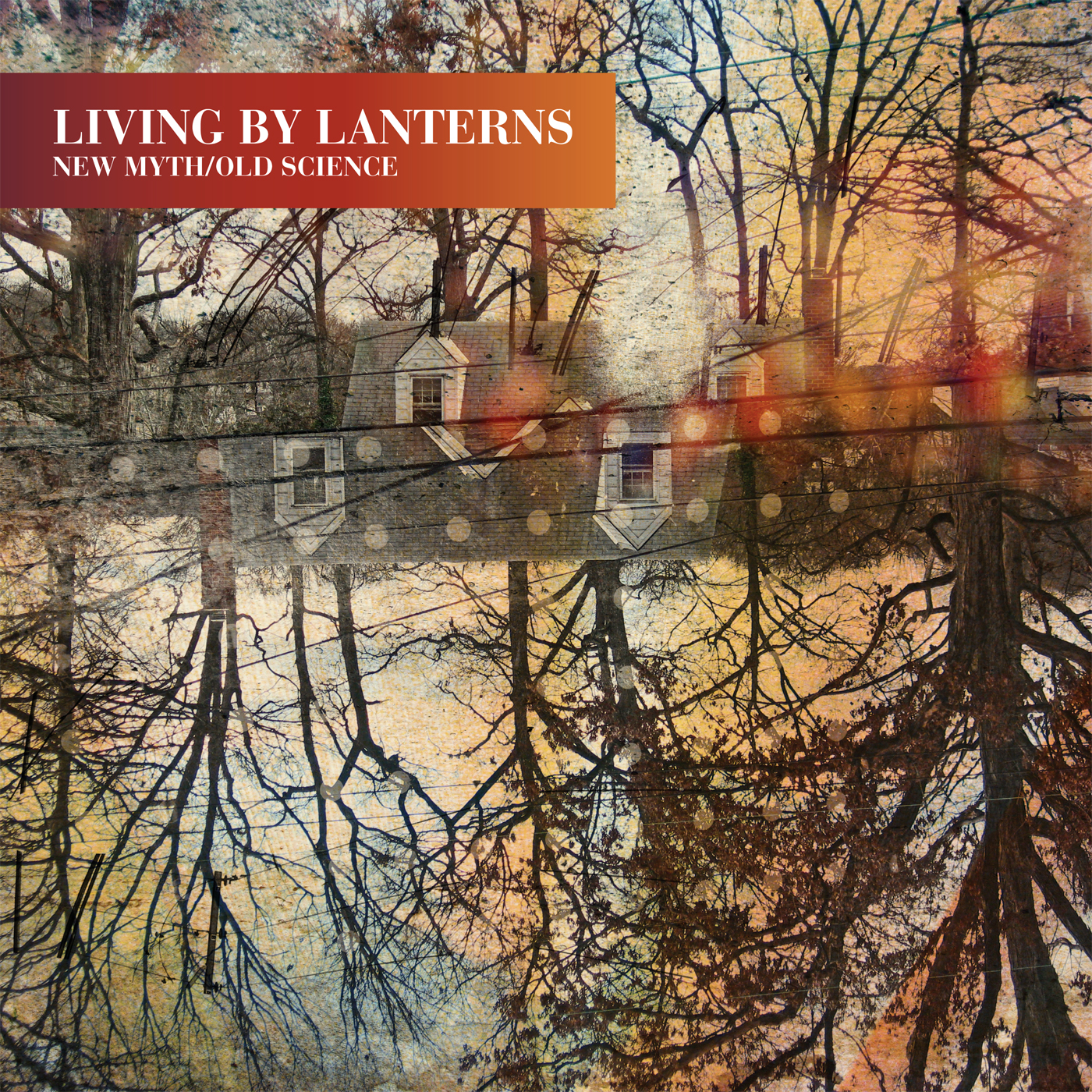
CD Review: Living By Lanterns - New Myth/Old Science


Living by Lanterns
New Myth/Old Science
(Cuneiform) www.cuneiformrecords.com

Experimental Sound Studio commissioned drummer Mike Reed to create some music inspired by Sun Ra and, as inspiration, they loaned him an iPod filled with unreleased tapes of the eccentric composer - 700 hours of them. Do the math. Figure out how long it would be before your head would swim after getting into the music.

According Terri Kapsalis' liner notes, it wasn't just music contained on those tapes, which began in 1948 and ran until 1985. (Which means Ra was probably doing this long before Andy Warhol got into the act.) They also included recordings of a tv show that included Duke Ellington (complete with commercial breaks), a radio show about acupuncturism and a tape about self-hypnosis, all of which were considered "research." You have to wonder if Ra ever returned to these recordings for reference or forgot about them.

The springboard for New Myth/Old Science came from a 1961 tape of Ra, tenor saxophonist John Gilmore and bassist Ronnie Boykins playing what sounded like song sketches. Vibraphonist Jason Adasiewicz worked with Reed to create some structured tunes out of them and then they assembled a five-star group of players to bring it to life. In the studio during September 2011 came Reed's Loose Assembly members Greg Ward (alto saxophone), Tomeka Reid (cello) and Joshua Abrams (bass). Bringing further dimension to the music are Taylor Ho Bynum (cornet), Mary Halvorson (guitar), Ingrid Laubrock (tenor saxophone), Tomas Fujiwara (drums) and Nick Butcher (electronics on two tracks). Reed and Adasiewicz both appear too, and both drummers play together without ever sounding overbearing, or even like two drummers except for the times when different rolls or fills start coming out of each speaker.

New Myth/Old Science works so well because the seven tracks can evoke Sun Ra's Arkestra if one listens with that in mind, while at the same time they come across as highly original. Listen to the music without knowing the background and it feels like a solid album on its own merits. It opens with the one-minute "New Myth" which has the Arkestra leader himself ushering us in with some philosophical questions over a static of lo-fi tape noise and instrument growls (the latter of which could be either from 1961 or 2011). Then "Think Tank" kicks in for over 11 minutes of quick group statements surrounding solos by Halvorson (who gives things an idiosyncratic touch by playing with distortion), Adasiewicz (adding a lot of tonal color, here and throughout the album) and Bynum (who disregards the background riff for something loose and puckish, and takes the rhythm section with him).

Ra's drones can be imagined in "Shadow Boxer," which has a 7/4 ostinato and a theme that creates an exotic melody through the use of the horns and cello. Reid gets the spotlight here. "Grow Lights" features another vamp, after some long tones from Bynum's anxious cornet and Abrams' bowed bass. This time, the cello plucks out a call that's answered with a two-note response from Halvorson that almost sounds mischevious due to its dissonance.

But the album also includes an equal amount of straight-forward blowing time too. "2000 West Erie" includes hot solos by Ward and Laubrock, showing the kind of depth once displayed by Gilmore, beginning on the ground and gradually going off. Dueling solos occur in "Old Science" over a riff that sounds like spy surf music. The final ensemble section of this piece ends the album with a triumphant feeling that encapsulates the success of the whole project.

(UPDATE: This review has drawn a lot of spam, so I've dismantle the comments. If you want to tell me something about this album, try another entry. If you're a spammer, go to hell.)


Wednesday, December 19, 2012

CD Review: Scott Boni Trio


Scott Boni Trio
(self-released) www.scottboni.com

Scott Boni and I go back a few years. Originally from Washington, PA, the alto saxophonist went to the Berklee College of Music (back when it was the "School" of music, I believe) and came back to Pittsburgh around the early '00s. He caught my ear because he could play jazz classics and they sounded like more than just tributes to a golden era. It helps with you have bassist Paul Thompson and drummer Dave Throckmorton driving the rhythm section, but Boni had a lot of invention in his playing as well.

During the early '00s, Pittsburgh was a challenging place for a guy going the acoustic jazz route and we had several phone conversations about it and the state of music journalism in Pittsburgh. He had an appreciation for all manner of music, even more commercial pop stuff and it wouldn't have surprised me if he went in that direction. For awhile he played tenor with the surf-groove instrumental band the New Alcindors, which was a good example of my worlds colliding upon seeing him at the Quiet Storm coffee shop, back when they had bands. Then there was a period where it seemed like he was going to pack his horn away for good.

Luckily that didn't happen. A few years ago, Boni moved back to the Boston area and a few months ago this CD showed up on my doorstep. It's impressive first of all because the sax-bass-drums context can be a fairly bold setting for someone who hasn't totally abandoned playing over changes. Not only does Boni put forth a convincing performance, the set is made up entirely of original pieces, including three reconstituted classical or "contemporary classical" works, in which he's pushing himself and his bandmates to creative heights.

Bassist Mark Zaleski and drummer Mike Connors (any relation to the same-named star of Mannix?) are a malleable rhythm section that gives each piece a distinct personality. On the bright opener "Miss Iowa" Connors lays out at first, eventually joining Zaleski to put a spring in Boni's step. A track later in "For a Friend" they're playing loose and rubato, allowing Boni to contemplate in phrases that unfold slowly and swoop around. Maybe mid-'60s Coltrane would be a touchstone here, but these are Boni's thoughts now. Around 4:30, he uses the lower register as some punctuation in a sharp manner that shows how far his approach has come in recent years.

On the subject of touchstones, the saxophonist has borrowed from Beethoven, Chopin and Glass (Philip, that is) for the pieces "Ludwig," "Nocturne" and "Glass" respectively. "Ludwig" comes from the second movement of Beethoven's 7th Symphony, but this is no third stream attempt at swing. Zaleski walks through a beat that Connors constantly fires up with tasteful fills. Boni's tone often has the clarity of a classical which works in the opening minutes when he sticks with long, clean lines but he eventually opens up the melody, later handing it off to Zaleski for a brief but effective solo. Without knowing the source material, or even the source, it's still easy to get caught up in the music.

Philip Glass' music has always struck my ears as the equivalent of little more than hitting the arpeggiator on an '80s keyboard, and "Glass" (based on his third String Quartet) has some of that going on. But on the saxophone, the rapid arpeggios, going up into the upper register and presumably requiring either circular breathing or some fast, carefully placed gasps of oxygen, sounds kind of pretty and more emotional. During the solo section Boni breaks away from the repetition, later sneaking in some fragments of it back in, and it all works.

"Nocturne" might be based on Chopin's #20 in C# Minor, but this no pastoral music either. Not to say that it isn't gentle but Zaleski goes a few steps beyond simple accompaniment here and it gives it a little more spark and helps to color in the texture, without a need for additional players. The piece fades with Boni repeating a riff that starts at the bottom of the horn and ends on a rather Dolphy-esque high note. He plays it faster and faster sounding a little more gruff with each one. If nothing else, this is the signal of a new phase in his career.

As I write this, it feels more like I'm writing liner notes than a review. But I'm a little close to the subject in this case and don't mind getting a little effusive. That's what blogs are for.

Thursday, December 06, 2012

New record store in town

I think I've crossed a certain threshold in my life. I'm sitting here listening to a Dave Frishberg album that I bought with my own money. I'm really not that big on jazz vocalists, especially one that is so self-consciously witty. But I've always kind of liked "I'm Hip," which is the first song on the album. Buck Bryce used to play this on WYEP back in the '80s when I was in high school, delivering the Post-Gazette and listening to his show each morning.

Speaking of that time of my life, there was a brief period back in 9th grade when I used to get a catalog from a record store in the Bay Area called Rather Ripped Records. It was a BIG DEAL because it always had a mix of new, sealed stuff along with occasionally rare things. There were several good used record stores in Pittsburgh at the time, but getting a list from one in another city had a certain level of intrigue.

At the time I first discovered it, I hadn't fully dove into punk rock and was still heavily into catching up on '60s music that I had missed. As an example, my favorite bands at the time were probably Spirit, Traffic and Moby Grape. (Although I did see the Pretenders that fall.) I think the first thing I tried to order from RRR was something by Iron Butterfly, either Heavy or Metamorphosis. That was already bought so I got my alternatives instead: the Bonzo Dog Band compilation History of... which I still have, and Vanilla Fudge's Renaissance, which even then I thought was pretty lousy, save for "Season of the Witch." On Christmas Eve that year, my second RRR package arrived: Moby Grape's Grape Jam and Talking Heads '77. Exciting times. Some time in early '82, the catalog stopped coming because RRR had a fire and flood and lost a lot of inventory.

The reason for mentioning all this is that last week, Russ - the man who started the store - opened a new shop in, of all places, Lawrenceville, just five minutes from my house. He and his wife moved back here a few years ago to take care of his parents and after selling out at a flea market he opened a storefront. And that's where the Dave Frishberg album came from, as well as a Phineas Newborn album on Contemporary and a couple of CDs.

Strange how things work out. I often think about when I got those albums because it was such a turning point in my adolescent life. There's another elaborate entry about Christmas 1981 on the blog somewhere. And now the man who helped set those memories is back here, in the town I had no clue where he grew up. Funny I never knew that at time.

Wednesday, December 05, 2012

CD Reviews: James Ilgenfritz & Maroney/Ilgenfritz/Niescier/Drury


James Ilgenfritz
Compositions (Braxton) 2011
(Infrequent Seams) www.jamesilgenfritz.com

Next to solo drum albums, solo bass albums can be the most challenging of the lone-instrument albums. Solitary horns seem to have a wealth of sonic possibilities, and the piano and guitar can be whole bands unto themselves, but the timbre of the bass can prove limiting for all but the most devoted listeners. With that in mind, New York-based James Ilgenfritz gave himself twice the challenge when he went into the studio armed with his bass and a sheaf of compositions by Anthony Braxton. Presumably, it's hard enough to play the composer's music convincingly with an ensemble. Left to your own devices, there's myriad roads to travel.

Ilgenfritz has succeeded in this challenging project. Listeners don't need to be Braxton-philes to enjoy the album either, although I'm sure that helps. The bassist states in the liner notes that during the recordings, he typically had three music stands spread out in front of him, with at least 15 pages of music to draw on for inspiration. As a result, the six tracks typically feature pieces of at least four compositions, Language Music and/or Ghost Trance Material. One track includes a blend of 13 different pieces in the space of 19 minutes. While he moves from section to section, it never sounds like a case of jumping to something else simply because the going gets rough. For the most part, the segues sound planned and natural.

To the nascent Braxton fan, hearing a familiar strain, like the descending/ascending melody of "Composition 40F" acts like a beacon in a sonic fog. And it hangs around just long enough to leave its mark before disappearing into the more recent "Composition 223." This also functions in a manner similar to a Braxton performance, at least the one that occurred in Pittsburgh nearly five years ago, where he frequently wrote numbers on a chalk board and gave them as cues to members of his band. Incidentally, one of those heard that night pops up in the 19-minute epic, the written-through "23C," that appeared on the composer's first Arista album in the 1970s. (A recording of Marilyn Crispell, Mark Dresser and Gerry Hemingway came out on Tzadik this year that also includes "23C.")

While the compositions themselves sound engaging in their own right, Ilgenfritz offers ample proof that his performance skills should be getting more recognition. He tackles the music like a solo bass recitation of Braxton is second nature, and he keeps the energy level high with extended technique that draws some great noises from his instrument. His bowed harmonics never digress into nails-on-the-chalkboard scraping. Instead, they sometimes sound like a great blast of feedback. Elsewhere he gets some hypnotic low droning going. In one track that includes a transcription of the first trumpet cadenza from "Composition 103" (the third candenza shows up in a later track) Ilgenfritz begins with the grace of a cello and goes on to evoke the sound of an air raid siren.

Incidentally, Ilgenfritz chose not to include the visual representations of the compositions, opting instead to go with the numbers. Considering how many pieces he plays and what that would mean in terms of space on the cover, it was a wise decision.


Maroney/Ilgenfritz/Niescier/Drury
MiND GAMes
(OutNow) www.outnowrecordings.com

The bassist also plays in a number of different projects including this quartet, referred to as the acronym MiND, with pianist Denman Maroney, alto saxophonist Angelika Niescier and drummer Andrew Drury. Their disc alternates between free improvised tracks attributed to all four, and compositions by Maroney, Niescier and Ilgenfritz.

The first, spare group piece "Ledia House" unfolds gently, giving the impression that the session will lean heavily towards obtuse fragments of sound that bounce off each other as much as it will connect. Bowed scrapings, percussive waves and gentle saxophone trills ebb and flow for three tight minutes. But although the rest of the group pieces favor a spare type of improvisation where understatement is key (rather than going for cathartic blowing) the mood shifts immediately with the next track. Maroney's "One Off or Two" sounds comparatively like a bright, conventional sounding piece even though the pianist doesn't let you feel like you're on solid ground. The two-chord vamp and Niescier's crisp alto are underscored by a rhythm that keeps changing ever so slightly. Just when you think it's a waltzy stride, it shifts a little towards a choppy 4/4 and you wonder if you just heard it wrong initially. Then it feels like it's speeding up. Suffice to say, the title rings true.

Ilgenfritz's compositions feature shifting structures and points of focus. "Social Hypochondria" bounces back and forth between bowed bass and pretty alto and piano voicings. Maroney, who is known for playing "hyperpiano," utilizes some of those effects behind Niescier, bending notes and giving his instrument a more "prepared" percussive sound. "Canter," the bassist's other piece, sounds both beautiful and puzzling, with pregnant pauses from the piano which gets more and more in tune with Drury's unique approach to the drum kit. (He doesn't appear to use sticks for several songs, using instead bows and other items to create vibrations.) Although everyone is moving in parallel lines, it's easy to feel the focus and structure at the core of this music.

Niescier's "Warm Bist du Gekommen?" closes the album with 18 minutes that begin feeling quiet and loose but eventually settle into something that almost straightforward. With the composer virtually taking a backseat to her bandmates until the last five minutes, they almost sound like an exploratory straightahead jazz trio - albeit one on a record that's been a little warped (again, thanks to Maroney's reinvention of his piano's innards.) Not to give the pianist all the glory, but tweaking a mammoth instrument like the piano is no small feat. And it sounds good.

Sunday, December 02, 2012

Sunday Morning

Last week, I had five reviews to write for JazzTimes. One of them was a three-disc set, one was a two-disc set. So that kept me busy for several days. When I am reviewing something I tend to try listening to it over and over again, because unfortunately my memory doesn't always retain details the way it used to. I tend to feel like I'm not being descriptive enough either. I should be writing something for here right now, but first wanted to play catch-up.

Blurt uploaded my Azita feature: http://blurt-online.com/features/view/1275/. I also have a serious amount of reviews in the latest issue of JazzTimes. Then tomorrow I'm interviewing Franklin Bruno for a Blurt article. That should be fun. I should be listening to the Human Hearts album now to make sure I don't just ask questions about 15 years ago.


OK, got nothing else to say now. Gonna get to writing work. Or preliminaries.

Thursday, November 22, 2012

Thoughts on Magnetic Fields show

Playing right now: Hospitality's self-titled album. It was in the CD tray right after Charles Gayle, which makes for quite a transition of sound and sound quality.

Here it is, Thanksgiving morning. It's such a novelty to be drinking coffee and sitting in pj's at 8:48 in the morning and not having to be anywhere - not work, not church, not dropping the kid off at school. And not having any frantic deadlines hanging over my head. I filed a story on AZITA with Blurt earlier this week, which accounts for my lack of activity here. As soon as that's posted, a link will be provided here.

Last week's Magnetic Fields show was a really enjoyable experience, aside from the overwhelming heat of the Carnegie Lecture Hall, which only exacerbated my already bad tendency to get droopy eyelids. Jennie and I sat behind my sister and her wife, who had just gotten into town a few hours earlier. Seeing her added to the excitement. We just got to talk a little bit before the show started.

The band's merch gal Emma Straub opened the show doing a reading. First she read an essay about going to see former New Kid on the Block Joey McIntyre which was really well constructed. It was not heavily ironic, it wasn't fawning or yearning about the early days, it had a really good perspective on the whole scene - which consisted of him doing standards that a lot of his no longer young fans understood. She also read an excerpt from her book Laura Lamont's Life in Pictures which was also really good.

In what seems like true Magnetic Fields form, they were introduced a few minutes before they made their way to the stage. It seems like Stephin Merritt doesn't mind making people wait, and wouldn't see what the problem with that was. But then out they came, announcing themselves as "The Carnegie Five." Merritt played a few different keyboards - harmonium (pump organ/accordion looking thing), melodica/hooter. Along with him were the sweet yang to his grumbly yin Claudia Gonson (piano), Shirley Simms (ukulele), John Woo (guitar) and Sam David (cello).

For an instrumentation that seems really spare on paper, they got an incredibly rich sound. Woo used several effects on his guitar, giving it a really psychedelic sound, which helped with that. But the use of the uke and the way it blended with the keyboards were really exquisite. Gonson and Simms sang a lot of the songs. When Merritt sang he sounded really strong. A lot of people harp on his low, toneless voice, but I'm here to tell you that he really does have a strong voice that has a lot of power to it. With a little more training, he could be a bit operatic. No lie.

And the hits kept coming. I counted 25 songs in the proper set. (We had to leave just before the encore so they could've topped 30 by the end. If that's the case, we got our money's worth, at about a buck a song.)

I feel rather lucky, as I mentioned here previously, that when I interviewed him for City Paper, I had a good chat with Mr. Merritt and he seemed rather friendly and nice. So I took his onstage grumblings to not be that bothersome. It seemed more like a way of showing how friendly Gonson is compared to his shortness. She repeatedly tried to help members of the sold-out crown find seats so they wouldn't have to stand in the back aisles. This didn't take too long between songs but long enough for Merritt to ask if the lights could be turned down so that Gonson couldn't see out there anymore. Way to go, Grumpy McGrumpsalot.

Wednesday, November 14, 2012

The Return of Franklin Bruno

Playing right now: Thomas Chapin - Quartets '95 & '96

On Monday, Donovan and I were getting ready to go out when I realized that I hadn't sent my Best of 2012 list to JazzTimes. After quickly dispatching that - and feeling that, this year, I actually had a better grasp of the albums that merited such a distinction - I thought I'd quickly check my personal email account just to see if there was anything important there.

As fate would have it, my good friend Will sent me a very important email, letting me know that Franklin Bruno - once and forever the frontman of Nothing Painted Blue and a big inspiration to my songwriting over the past 15 years or so - was going to be appearing at Sound Cat, the record store in Bloomfield. FRANKLIN BRUNO IN PITTSBURGH! FOR FREE! AT 6 O'CLOCK! HOLY COW!

I had been thinking about him recently because during my interview with Stephin Merritt, I brought up Bruno's name, and Merritt mentioned how he remembered a song Bruno sang at CMJ in 1993 - and he proceeded to sing "Growth Spurt" to me, melody and crucial lyrics intact. I hadn't heard hide or hare from Mr. Bruno in several years. About 10 years ago he played at Quiet Storm in support of a solo album, and a few years later there was a posthumous final Nothing Painted Blue album, which is not exactly reviewed but expounded up in this early entry.

Well not only is Bruno still playing music, mid-set he mentioned that he now lives in New York, rather than back in California where he originated. And he was appearing not as himself but as part of a two-piece band called the Human Hearts, who just released an album called Another. His partner in crime is drummer Matt Houser who pounds like a monster, and occasionally came close to drowning out the guitar in the louder moments of the songs.

Any longtime fan of Bruno's will appreciate the songs from Another, as they have the same brand of guitar pop with a sprinkling of jazzy chords to spice up the music. And then of course there's Bruno's gift as a lyricist for which he's virtually in a class by himself. There was one song he did that really reminded me of separate parts of a couple songs that I wrote several years ago (not that he would've ever heard them since they were never released). But that was cool with me because I think I subconsciously lifted pieces of his work in one of my songs - on top of thinking WWFD when I wrote the lyrics.

The crowd was small. I could probably count them on two hands. But if I had no idea one of my faves was in town, how's the rest of the fair city to know? But of course this simply meant that there was a small very appreciative flock of people hanging out and listening intently.

Another is available both as a CD and a double-10" vinyl. The packaging and the general festive mood of the evening made me decide that I needed to get the double 10" of course. Bruno plugged the vinyl by explaining that the previous day he had them all set up in his apartment, assembling them (they come in two separate handmade covers, with a cardboard insert and a band to hold them together). This was before he mentioned living in Queens, so he had me puzzling how he did the production yesterday and got to Pittsburgh so quickly. "He must've flown here," I thought. The packaging and the general festive mood of the evening made me decide that I needed to get the double 10" of course.

Years ago, I interviewed NPB for my fanzine Discourse and I remember Bruno talking about how impossible it seemed to try to attempt a career in music playing the style that he did. He didn't seem interested in any compromise and was going to school for a doctorate in philosophy. (Drummer Kyle Broudie had just taken the bar exam prior to the tour.) The way they talked about it made it sound like there was limit placed on how long they'd be doing this. That was about 18 years ago and while it might have held true for Broudie, it does my heart good to know that Bruno is still doing it.

Tuesday, November 06, 2012

CD Review: Ron Miles - Quiver


Ron Miles
Quiver
(enja/Yellowbird)

This is a beautiful album. With only trumpet, guitar and drums, Ron Miles, Bill Frisell and Brian Blade respectively create a sound that is simultaneously spare but very full. The results don't ever sound like something is missing from the group but rather enthralls with the way they use what they have.

Frisell is no stranger to this kind of set-up, having playing in Paul Motian's trio with saxophonist Joe Lovano. But Brian Blade is no Motian, which is to say he's his own man. He keeps tempo even as he adds impressionistic colors the music. His bass drum accents on "Just Married" give the song's two-step an infectious punch that drives it along with Frisell's countryfied picking, the latter instructed by Miles to evoke "Big Buckle Elvis." This follows a slow, 10-minute reading of 1920s obscurity "There Ain't No Sweet Man That's Worth the Salt of My Tears," which doesn't waste a minute of time and includes some thunderous mallet work from Blade.

Hearing recordings like this reminds of why Frisell won me over the first time I heard him. The mood that he creates on these sessions, balancing accompaniment and lead voicing, is hard to replicate. Notes from chords scatter over the drums and between the trumpet in "Queen B" and work double-duty in Duke Ellington's "Doin' the Voom Voom."

And, saving the best for last, there's Ron Miles, whose vision is responsible for all of this. His compositions reveal a vast knowledge of music. Some of these roots get referenced in his own writing, such as "Bruise," which has the off-beat style of Monk's "Evidence," before it opens up into an angular swing, wrapping up with a blues groove. Miles' unaccompanied opening to "Mr. Kevin" sounds so rich that a solo trumpet album doesn't seem out of the question from him. Another long track comes with "Days of Wine and Roses," in which all three players stretch their own way, never clearly stating the song's melody until they're done with it. By that time it's almost hard to believe that they've gotten something so emotionally deep out of a song that can often sound so maudlin.


Monday, November 05, 2012

Back in the Studio

I stepped into a recording studio yesterday for the first time in about six years. The Love Letters laid down basic tracks for four songs at Machine Age Studios. We've been together about three years but the urge to record never really came along until recently. And by recently I mean the idea probably came to light in the past nine months or so because it takes us a while to get from thinking to doing.

I've recorded with most of my bands and in several cases, released albums (CDs) only to have somebody leave the band or see the band breakup a few months after we put out the album, leaving us with no way to unload all of the product. The Mofones had the right idea: we recorded an EP and burned copies of it as we went so we only had as many leftover discs as we needed. The Love Letters have moved along a little slower than most bands, since we all have other things going on beside the band, so it didn't seen like we were ready for quite a while.

I was actually a little nervous heading in, for some reason. Recording always seems to be a tense process for me. Sure you can go back and rerecord flubbed notes, but it's much more rewarding when you can get it right on the first try. Which never happens. But today, we had a good engineer who encouraged us to go back and record an extra take or two of songs, even if we thought the one we just finished was good. And usually the next one did have something strong going for it, either in spirit or technicality.

For the first time ever, I played to a click track. We have one song that doesn't have any drums in it for the first verse and we always seem to get a little wobbly, so the click was good for that (Dave the engineer shut it off as soon as the drums kicked in). And we're doing a Monkees song that is not only drumless until the very end, but is in 5/4 during the verses and 6/8 in chorus. Dave also made me bass sound really great. I love my Rickenbacker but the low end can disappear on the E string, leaving it to sound a mid-range and buzzy. But it sounded beautiful and rich in playback.

Once we get the songs done, a couple of them are going to be sent out to John Collins of the New Pornographers to mix and, I guess, produce. It seemed like a wild idea - the band has some direct influence from the NPs so I emailed John to see if he does things like this. And he does so why not? I think we can only afford to have him do two songs right now.

But before that, we need to get the overdubs done.

Friday, November 02, 2012

Two Interviews Go Well

Yesterday I interviewed Stephin Merritt of Magnetic Fields. After all I'd heard about him being a little prickly, I was really nervous about it. Once upon a time I would've been saying, "Yeah, bring it on," like I did when I desperately tried to score an interview with the late great organ maestro Jimmy Smith (who had a rep for being nasty with reporters). Those bold days are gone, however.

But as it turns out, Stephin was a nice guy. We had a great conversation, veering back and forth between questions about the band and tangents where we discussed rhyming dictionaries and the scarcity of Lawrence Welk records. I have to write a piece for City Paper to preview their show in mid-November so I think I should have some good fodder for that. I just have to transcribe the damn thing, which might take a while.

One week earlier I had another interview that I was apprehensive about. (At this point I should probably indicate that in the hours leading up to phone interviews, I'm almost always really anxious. There's the fear that the tape player might not work, the batteries might die, not to mention that the interview might bomb.) But the person I was interviewing was Azita, the pianist/songwriter on Drag City. I sort of wondered, based on her intense music, if she was going to be a tough, serious interview subject. Alas she was not and another good conversation ensued.

Maybe it pays to be a nervous wreck because when you are and things go smoothly you feel twice as relieved.