Saturday, July 24, 2021

LP/CD Review: Liz Phair - Soberish


Liz Phair
Soberish
(Chrysalis) www.lizphairofficial.com/  

What impressed me most about Liz Phair's debut, Exile in Guyville, was not the candid sexuality of the lyrics or the supposed track-by-track takedown of the Rolling Stones' Exile On Main St. (to this day, I still don't know the '70s classic as an album, never having gotten around to it in its entirety). Instead, Phair's songwriting style, which didn't follow standard conventions and varied with almost every track, stood out from the first cut. On "6'1"," the thought in that first line stretched out over an unusually long set of bars and chords. The cascade of vocal lines in "Johnny Sunshine" offered another great example of her musical ear. Phair definitely had a way with words but she also had a way with changing a chord pattern at an unexpected moment to make a sharp left turn ("X-Ray Man" on the equally solid sophomore release Whip-Smart).

It's been a long time since I've heard a new Liz Phair album. That can be attributed to her self-titled 2003 album. Maybe that comes as no surprise. Legions of listeners felt the same way about an album that brought in the production team The Matrix, who had worked with pop singer Avril Lavigne and Britney Spears. They only worked on four of the 14 tracks but what they did left a stain on the whole disc, an aural spraypaint that said, "Don't expect anything close to Exile In Guyville here." 

And no, you can't fault Phair for wanting to do something that did not replicate her past glories, but Liz Phair felt like the equivalent of a creative friend throwing themselves into a new style without really knowing what they were getting into. That move resulted in an album that tried very hard to present an image or identity, something that the post-college grad who wrote on her four-track would never do.

The Hot Mom look (spread-eagle on the cover, straddling a guitar, hair in her face) seemed awkward. (The CD also came with more posed photos that could be downloaded as wallpaper or screensavers.) Then there was the song "H.W.C." which sounded more like a Phair imitator who hadn't mastered much more than raunchiness. (The song's initials stood for "Hot White Come," which I spell out for clarity's sake but feel icky in the process.) Or worse, it sounded like a dude's idea of  Phair lyric.

I meant to check out the albums that followed Liz Phair, but never felt the urgency. When a review compared her next album, Somebody's Miracle, to Sheryl Crow that's all that was needed to keep walking. Seeing Dave Matthews' name in the credits on 2010's Funstyle didn't assuage any concerns. Nor did the mention of a rap track on the album.

Then the most unlikely media (at least for this writer) came calling: music videos. Phair made videos for "Spanish Doors" and "The Game," the two songs that open Soberish. What came across in the former was the riff in the chorus that gives it one of those unexpected turns just like her early work. "The Game" includes an anthemic power-chord chorus that also tugs on the ear, and overrides the metronomic synths in the introduction. Speaking of electronics, the chorus of "Spanish Doors" has some back-up vocals that sound auto-tuned and threaten to drown out the main lyrics. Thanks to the lyric sheet, they don't, but it's hard to tell of the effect is used for irony or not. Regardless of the intention (maybe it's not even auto-tune) "Spanish Doors" makes a strong opening, which "The Game" continues. 

Soberish reunites Phair with Brad Wood, who produced and played on Guyville and Whip-smart. Guitarist Casey Rice, who also appeared on them, shows up to play some guitar and co-write "Hey Lou," a puzzling if catchy song that takes the late Velvet Underground singer to task for his irascible attitude. (The third verse seems to take aim at his late partner Laurie Anderson, though she gets off a bit easier.) 

Whether or not Wood and Rice had any direct influence on her, Phair sounds rejuvenated and focused. She always was a good storyteller and while many of the songs deal with relationships on the rocks, each comes with its own angle on the topic. They could all be of a piece or they could stand separately. Speaking as someone who's only a few months younger than Phair and continues to try and write songs, it can be easier to sing convincingly about romantic tension than romantic bliss. The reflective mood of "Sheridan Rd.," feels poignant without being too dramatic ("Winding down Sheridan/ the wind in our hair/ we notice the new but the old is still there"). 

Aside from the repetitive "Soul Sucker" she never lets anything go on too long. She couldn't go without getting a bit raunchy but "Bad Kitty" couches it in a slightly witty metaphor ("My pussy in a big dumb cat/ it lies around lazy and fat/ But when it gets a taste for a man/ it goes out hunting for him anyway it can"). Plus it's anchored by a solid guitar groove. The big surprise here is that her son James receives credit for "additional engineering" on this and one other track. 

Musical textures change with almost every song. Several tracks could fit in with more commercial electronic pop, taking a streamlined, clean sound and adding something to it that is rarely heard in popular music anymore. That element in this case is Phair herself - a somewhat understated vocalist who knows how to spin a yarn better than most people in her position. She's still got it. 


Monday, July 12, 2021

Getting My Hands On A Unsung Classic (Marion Brown), Checking Out Two New Things (Ocelot, Maria Grand): Quick Takes, Relatively Speaking

Not that anyone seems to notice (I've checked the number of hits I get on each post) but I want to get back into the habit of posting more often. I really fell off the wagon last month in part because I was getting ready for a Record Fest and had a lot of stuff to prep for it. There was also some time that I was sidelined with a summer cold, which really zapped my focus. After writing the assigned stuff (album reviews) that I had during the month too, I just couldn't psyche myself up to do any posts. There was plenty I could've have written about but the question of where to start just overwhelmed me, made me feel completely unprepared and just sort of bummed me out. Then I sought refuge in albums that I've listened to a million times. Or worse, I'd spend time poking around on social media. I got really hooked on what I call "jazz porn": the search for original pressings of classic albums, posts from people who have them, what differentiates one pressing from another, how much they're worth and if a copy can't be found for sale. 

All of that kind of leads into this post, which I decided did NOT need to be a full blown review of a new release, complete with critical insight and description. It's a more personal piece about one person's quest, along with a few random thoughts on two other current releases. 


Sometime ago, I got it in my head that I really wanted a copy of alto saxophonist Marion Brown's Three For Shepp. Not just any copy, like the reissue on Superior Viaduct that is fairly easy to come by (at least in my sphere). I wanted an original orange label copy on Impulse! Records. Yes, it's one of those first world quests of people my age. But - with all due respect to the people at Superior Viaduct, who I'm sure do a great job - there's something about reissues that make me suspicious. Blame it on way off-center pressings on Actuel albums (I had to return one, it was so bad) and Blue Notes (I still have it them but they make me grumble). The act of picking up a first pressing also makes me feel a connection with the person who bought it when it first came out, creating wonder in my head about how this music affected them. 

The problem is Three For Shepp (which does include three compositions penned by Archie Shepp and three by the leader - a tip of the hat to Shepp's own Four for Trane album) doesn't come easy. Or cheap. A copy sitting on Discogs is going for the bottom end of three figures. A copy on eBay was a little less, but the seller lives in Japan, which means the postage is through the roof. 

Last weekend, someone I follow on Instagram posted about the album and, responding to a comment I made, mentioned that Reckless Records in Chicago had an OG pressing for $75. I jumped at the prospect, contacted an old friend who worked for the store, inquiring how to see if it's still there for sale. 

It was, but it wasn't OG. The copy was an Impulse/ABC pressing which came a few years later. But I was fixated on this album, talking to friends about it enough that they were probably going to smack me if I didn't shut up about it. "Near mint" too? Why not. 

The package arrived on Saturday. I had to sweat it out through a busy work shift and a few post-work errands before I could get home and open it. But, man, it was beautiful. Like the first press, it still has the trademark Impulse! laminated cover. The pinhole (why do so many Impulse! albums have them?) is noticeable in the photo above, but I can live with that. And the music itself - awesome. I forgot that trombonist Grachan Moncur III is the second horn on it, which makes it even better. I played the record last night and then first thing this morning as I made coffee. 

One album I had been meaning to write about over the past couple months is the self-titled debut from Ocelot, the trio of Yuma Uesaka (tenor, clarinets), Cat Toren (piano, nord) and Colin Hinton (drums, percussion). Toren's late 2020 release with her Human Kind group, Scintillating Beauty, was a strong, unique session that gave this trio's album on 577 some strong anticipation.

All three musicians write for the group, creating music where open space has as much value as the moments that are filled with sound. To that end, they recall the trio Paradoxical Frog, in both instrumentation and sound, more specifically the works of that group's composer/drummer Tyshawn Sorey. 

The problem with Ocelot is the long, drawn out reed tones and piano clusters take a long time to land after circling the air. Specifically, three of Hinton's compositions last between eight and 10 minutes and spend three-quarters of that time slowly moving towards a cohesive theme, and the sparsity doesn't always justify the wait. Uesaka stirs up some fire in  his "Iterations I," aided by Hinton, while Toren thunders underneath him. His other contribution "Post" is built on a tense trill, played by all three members. The length of time that  Uesaka blows without breathing is impressive, but beyond that it's pretty grating. 

Toren's two offerings have some of the album's strongest moments. "Crocus," which closes the set, begins like a straightforward piano ballad (in the beset way possible) rising up and getting a bit spiritual even as Hinton maintains a relatively steady 4/4 beat. "Anemone" combines free tempo and dynamics (along with mid-song horn changes, something Uesaka does throughout the album) with good results. 

In live performance the sparse quality of the music could fill a room with suspense. But on album, at least this time, it leaves a little more to be desired.   Go 577Records.com or 577records.bandcamp.com/album/ocelot to check it out. 


Usually when I'm going to review an album, I listen to it several times, making sure I have an idea of what's happening on it. Tenor saxophonist Maria Grand's album Reciprocity (Biophilia) has been out for a while and I finally gave it a spin last week. After just one listen, it was clear I needed to write something about it soon because it's a powerful album. With bassist Kanoa Mendenhall and drummer Savannah Harris accompanying her, Grand turns in a set of original works that groove and push the rhythmic envelope as well. 

Reciprocity was recorded while Grand was pregnant with her son and that fact overshadows the album in a way, like the whole thing could be considered a conversation between the two of them. In her liner notes, Grand talks about playing shows while pregnant, saying that baby Anyí danced in utero during the performances. Several tracks have vocals from all three members of the group, the most impressive being the arresting harmonies on "Now, Take, Your, Day," which recalls the Haden Triplets in its rich blend of voices. As a soloist and composer, Grand reminds of JD Allen's approach to the trio setting, getting a wide swath of ideas out of what could be a limited harmonic setting. Look for this one on the End of the Year lists, or raise cain if you don't. 

PS the photo above is just one side of the origami-style fold-out cover that has become Biophilia Records' environmentally-conscious trademark look. Visit Grand's Bandcamp page or the Biophilia page for more info. 

Tuesday, July 06, 2021

CD Review: Wadada Leo Smith with Milford Graves & Bill Laswell - Sacred Ceremonies/ Wadada Leo Smith - Trumpet


Wadada Leo Smith with Milford Gravers & Bill Laswell
Sacred Ceremonies

Wadada Leo Smith
Trumpet


Wadada Leo Smith likes to create works on a large scale. Looking back over the last decade or so, he released Ten Freedom Summers (2012), which took up for four discs. America's National Parks (2016) consisted of two discs. There were also several two-disc works by his Golden Quartet, a duet with Vijay Iyer and an album for a 22-piece improvising orchestra. Smith has also released six albums of solo trumpet works, including one that paid tribute to Thelonious Monk. (In addition to creating new works, Smith is very reverent to past masters.) 

Which brings us to his two latest releases, which each contain three discs of music. Sacred Ceremonies contains a disc's worth of duets with the late drummer/percussionist Milford Graves, one with bassist Bill Laswell and a third with all three players coming together. Trumpet, is another set of works by Smith, alone with his horn. All this from a man who turned 80 this year. 

Both sets require commitments, not merely of time but of attention. However, once the music begins, it pulls the listener deeply, piquing the curiosity.


One interesting characteristic of the first two discs of Sacred Ceremonies relates to the way that the instrumentation, which might be considered "spare," actually fills up the space. Smith alone can fill the room with his bold trumpet tone, even when he uses a mute. But Milford Graves (who passed away right as this set was released earlier this year) occupies a unique space in the music with his unique style.

His kit alone, photographed several times in the album's booklet, is a hybrid of various types of drums, none of which have bottom heads on them. The sound resonates differently than other kits and Graves approached his artillery in a way that met at the crossroads of rhythmic foundation and freedom, creating something much more flowing. In the middle of "Baby Dodds At Congo Square," Graves sounds like he's playing tablas, bending notes out of the skins of his drums, while Smith works first with a mute and then without. The drummer's hi-hat can be heard tapping in the background, almost like a human pulse.

Laswell's bass has a signature sound, both limited in range and vast in scope. The heavy attack that he utilized in groups like Last Exit is traded for something much more subdued and reflective here. He lets Smith lead the way most of the time, creating a foundation under him that never gets in the way. Smith responds during Disc Two by blowing some wild multiphonics. Although the music might be loose rhythmically, a connection can be detected between both players as they pay tribute to Prince, Donald Ayler, Tony Williams and Minnie Riperton in their unique way. (Laswell almost gets a riff going in "Earth - A Morning Song.") Throughout the set, some phantom instruments (overdubs presumably) float up between both players to add some more depth.

On Disc Three, it's sometimes hard to hear the connection between the three players, as opposed to three random sounds going at once. But when Graves begins unaccompanied on "The Healer's Direct Journey," he creates an energy that makes the whole thing sound full and connected when Laswell and Smith join in. Muted trumpet and bass do the same thing in "Waves of Elevated Forces," bringing the energy to a high level. Graves starts a polyrhythmical groove which sounds like he's doing it all with his hands and no sticks. 


Considering the impact that Smith's trumpet can have on a room with good acoustics, it makes perfect sense that he recorded the three discs of Trumpet in a church. The sessions took place over four days at St. Mary's Church in Pohja, Finland. From the opening notes of "Albert Ayler" on Disc One, it's clear that every note has significant weight and any growls will be even more dramatic.

All the music on the set pays tribute to friends and artists who have impacted the trumpeter throughout his life. Musicians like Reggie Workman, Steve McCall, Amina Claudine Myers receive their due, along with James Baldwin, Malik al-Shabazz (Malcolm X), as well as family and the film Rashomon. As he explains in the accompanying booklet, in reference to "Howard and Miles - A Photographic Image," it's not Howard McGhee and Miles Davis he's specifically evoking in the music: "What I am referencing is the idea of a creative language, which is the real energy that defines the dynamics of musical traditions."

Likewise, "Albert Ayler" doesn't feature wide vibrato. (On the contrary, that track actually contains a few melodic fragments that touch on "Nature Boy.") In fact, nowhere throughout the whole set does Smith engage heavily in extended techniques at either end of his instrument's register. He throws in a few growls and some high shouts, but these act as added emphasis rather than the main focus. One of his graceful skills comes when he continues to blow his horn while moving the mute in and out of the bell. It creates an almost ghostlike effect, sounding like another trumpet flittering in the background. 

Smith's playing has always utilized open space for dramatic effect and he never overplays with a more simplified line can deliver his message. For that reason, it can be a challenge to listen to a lot of Trumpet in one sitting. Without any accompanying instrument to play off of, much of the music seems to reside in a slow tempo. 

However, each disc lasts an average of 45 minutes, a reasonable amount to absorb in one sitting. There are moments of contrast as well. "Festival of Breaths," from Disc Three's suite "Discourses on the Sufi Path - A Remembrance of  Dr. Javad Nurbakhsh," gets a little more upbeat, with some upper register trips getting equal time with the open space. A later passage also feels fast and finds Smith smearing his notes a bit. 

Like most TUM releases, Sacred Ceremonies and Trumpet come with full color booklets filled with biographies of the artists, Smith's poetry and liner notes about the music. The music might be challenging but the packaging makes it easy to grasp and well worth the exploration.


Tuesday, June 08, 2021

CD Review: Ivo Perelman/Matthew Shipp - Special Edition Box / Ivo Perelman Trio - Garden of Jewels

Ivo Perelman/Matthew Shipp
Special Edition Box

Ivo Perelman Trio
Garden of Jewels

Ivo Perelman is not a tenor saxophonist who can be heard blowing overtones from the bottom range of his horn. In fact, Perelman spends very little time on these new releases in the low end of his horn, preferring the middle register and upper, altissimo range of it. Once again, his mastery of high harmonics extends ideas he begins in a lower register, taking them way up the octave into a range that might seem impossible or a challenge at best for most tenor players. For Perelman it seems completely natural.

Both of these releases find the saxophonist in the company of his longtime collaborator Matthew Shipp (piano). Garden of Jewels brings drummer Whit Dickey into the fold. Like everything Perelman does, both sets of music are completely improvised, although the deep connection between the players often makes things sound like they could be working from a structure.

For the listener new to the Perelman oeuvre and uncertain where to begin in to dive into his massive catalog, Special Edition Box can be a valuable entry point. The SMP release features a 51-minute studio session, Procedural Language, along with a live Blue-Ray disc of a 2019 performance in Sao Paulo, Brazil. Finally, Jean-Michel Van Schouwburg's 47-page book Embrace of the Souls provides a lot of insight into the music.

The 12 tracks are simply numbered without titles. From the beginning, Perelman and Shipp play with symmetry, one anticipating the other. In Track 5, the saxophonist really straddles a deep smoky romantic tone with a tension that has wails and whines lurking just beneath the surface. Shipp does walking minor underneath. I like when he holds a note on tenor to see how Shipp will respond. The way the track ends doesn't resolve but stops, as if to say, "There's more coming."

On Track 9, Shipp hits single chords and lets them ring while Perelman plays in the upper register. not sounding icy or rough all the time, sometimes delicate and pensive. When Shipp settles on one chord and keeps it coming, the drama builds and the final octave leap by Perelman feels especially effective.

While it can be valuable to have the duo's performances in tracks ranging from two to seven minutes a piece, there's something compelling about hearing them playing continuously for an hour. (A previous SMP release, Live at Nuremberg, really sold me with a 55-minute performance followed by a four-minute encore.) The Blue-Ray Live at Sao-Paulo at SESC finds the duo in a spirited conversation, exploring all manner of ideas, perhaps expanding on things they did in the studio session (which was recorded earlier that year) but also taking it new places. At times, Perelman's mid-range and softer playing gets overpowered a bit in the swell of the piano, but his ideas can still be felt. Seeing the two players in action - especially Shipp, whose hands seem to simply flow over the keys - is a rare treat for those who don't get to hear them live.

Schouwburg's book Embrace of the Souls complements the music, offering insight into this recording and earlier releases. While free jazz writing can sometimes border on overly esoteric imagery or heavy metaphors, he avoids that. A blogger in his own right, Schouwburg writes personally about the music, offering plenty of examples of how the music has impacted him, which can go a long way in making this often-labelled "noisy" music seem beautiful.

The box is available in a limited edition of 360 copies.


Perelman is skilled at the upper register melodic inventions, but when he gets into the middle range of his horn, or goes a little lower, he reveals a side that owes more to the smoky sound of Ben Webster or Coleman Hawkins. It might be fleeting moments here and there but it lasts long enough to impress the listener with the idea that this music has lyrical qualities to it as well. His breathy entrance on the opening title track says a great deal about him. Perelman enters like he's calling a meeting to order, soft but firm, before hitting some wide vibrato. There's something powerful about the opening wail of "Amethyst." His whole horn seems to reverberate with the high notes that cue the trio. 

On Garden of Jewels, the addition of Dickey to the Perelman/Shipp axis does not change the sonic qualities all that much. Dickey is not a raucous player, instead coming across as more thoughtful, listening first and reacting second, rather than simply crashing into the party. His approach incorporate the lessons he learned from the late Milford Graves. Some of it feels extremely subtle - cymbal crashes here, cymbal rolls there, followed by a roll on the kit - to the point where you have to focus closely on him to figure out where he is. But therein lies the power of a good session, which compels you to listen closely.

With Ivo Perelman, it's tempting to say that his albums could be considered like journal entries - documents of what he was doing on a particular date with a particular group of friends. But that might sell it short because these are live documents (whether or not they are made in front of an audience) where he creates in the moment. To compare it to the written word doesn't do it justice. It's better to listen. And read. 

Thursday, May 27, 2021

CD Review: James Brandon Lewis/Red Lily Quintet - Jesup Wagon


James Brandon Lewis/Red Lily Quintet
Jesup Wagon

While exploring Jesup Wagon - both the music and the concept behind it - one idea rises to the surface: A good education can introduce young students to new ideas and historical figures in stimulating way,  help them tap into things about themselves that they didn't know were there. 

While typing the paragraph above, it seems like an obvious idea. But too often, these opportunities don't reveal themselves. (Read the section of William Parker's biography about what he was told in high school and you'll see what I mean.) This could also be a personal reaction, having had a mediocre elementary school science teacher who totally soured me on that subject, making me feel like it was over my head. 

But saxophonist James Brandon Lewis was fascinated by George Washington Carver once he read about him. Carver, who is best known as a scientist, was also a musician and he saw art and science as inseparable. He died in 1943 at the age of 79, and probably never got to hear bebop or the music that followed it. But much like John Coltrane or William Parker, the good doctor knew that artists, like scientists, were both on a quest for truth.

Lewis might have a made a good scientist had he not pursued music as his main vocation. Luckily for everyone listening, he stuck with the saxophone. His interest in Carver's life serves as the underlying concept to Jesup Wagon. The connection between the music and the inspiration of all seven tracks might not always be apparent to the listener, but Robin D. G. Kelley (author of Thelonious Monk: The Life and Times of an American Original) penned the liner notes to offer context. Coupled with a band that includes the aforementioned Parker (bass, gimbri), Kirk Knuffke (cornet), Chris Hoffman (cello) and Chad Taylor (drums, mbira), Lewis has created a high caliber concept album.

The quintet creates a sound that acknowledges adventurous jazz from the past and uses these lessons to create something that's very much of the moment - accessible while it possibly stretching the size of your comfort zone. Lewis sometimes plays with the gritty tone of vintage Archie Shepp but his ideas have a longer flow to them. Rather than emitting some shorter bursts of energy, he develops extended ideas that seem to keep unfolding. After the subdued opening of "Arachis" he plays freely but spins some detailed lines of thought. 

Several tracks feature some swirling grooves that are built on layers of counterpoint. In "Lowlands of Sorrow," Parker plucks the gimbri behind Hoffman's cello, while Taylor sounds like two or three players going at once, trap kit and percussion. Taylor switches to mbira (finger piano) in "Seer" that makes this groove feel like the trance-inducing work that Sun Ra could create with the Arkestra (with pieces like "Exotic Forest"). The closing "Chemurgy" begins with a yearning melody that nods towards Ornette Coleman's "Lonely Woman" but gets into another groove, which this time feels a little looser. Knuffke, who plays dynamically throughout, inspires Lewis to add some aggressive riffing behind the cornet solo. The saxophonist does this type of riffing, or looping, earlier in the album, and it serves the music well, building the intensity and indicating that things are about to move up a notch.

"Fallen Flowers" and "Chemurgy" conclude with Lewis reciting some original poetry, which brings the focus back to Carver. His voice avoids any clichés of "jazz poetry," reading with an honest tone that leaves the listener with more ideas about the music and its inspiration. It serves as a reminder that further exploration of this music (and Kelley's vibrant notes) will be explored in greater detail on future listens.

Jesup Wagon is available on CD and vinyl (though earlier this week, it seemed that copies being touted on social media were being snatched up quickly). The album should be explored in tactile form, much like the way Dr. Carver got to know his plants by reaching into the soil and experiencing them up close and personal. 

Saturday, May 22, 2021

DL Reviews: Dead Cat Bounce - Lucky & Live in STL / Matty Stecks & Persiflage - Night Cravings

Matthew Steckler - or Matty Stecks as he has also known these days - has been a productive saxophonist, composer and bandleader for quite a while. But the past couple years have seen him on a creative streak with albums. In 2019, he released Long Time Ago Rumble, a double-CD that he recorded during a residency in Manitoba. Among other things, it included a new musical score for Charlie Chaplin's 1914 short Musical Tramps, as well as more straight jazz and more contemporary sounds.

This year, Steckler has release a live 2003 set by Dead Cat Bounce, his four-saxophone/bass/drums group, which follows several other albums that more people should still be talking about now. He has also released a new studio sess by his post-DCB group Persiflage. Both are available as downloads through Bandcamp. 


Dead Cat Bounce
Lucky & Live in STL
(Matty Stecks Music) deadcatbounce.bandcamp.com

The "STL" in Lucky and Live in STL refers to St. Louis, specifically Washington University in that Missouri city. In February 2003, Dead Cat Bounce performed the eight tracks from their debut Lucky By Association on campus, in the order which the music first appeared on the album. The lineup had changed a bit since they had recorded the album in 1998. Saxophonists Charlie Kohlhase (a veteran of the Boston jazz scene) and Jared Sims joined Steckler and Felipe Salles in the saxophone section. Drummer Bill Carbone carries over from the album but bassist Gary Wicks was new to the fold. In '03, this lineup was having a great night. 

Dead Cat Bounce always had a habit of bridging the gap between fun and gravity, free wailing and rich section work. This happens frequently during Lucky and Live. In "Mentes Flexivies" some of the most rabid soprano saxophone lines to come down the pike in ages (courtesy of Salles) lead to a rich tenor solo from Sims before the four saxes dive into a harmonized section that sounds like a post-modern Four Brothers from Some Other Mother. "Pendulum Switch" features a similar quick cut section, with a tempo change on top of that. On this track, Salles plays baritone sax, going off the rails as his solo climaxes before the other saxes catch him.

Taking liberties with Charles Mingus' "Goodbye Pork Pie Hat" can be a slippery slope. The group's heavily syncopated 6/4 groove works though, adding to it without sounding precocious and maintaining the melody's sense of loss. A re-arrangement of their studio version (which is well worth revisiting too), it climaxes with a canon-like arrangement for the horns. "Hot Peas and Butter" closes things in a manner that channels Mingus, with shouted vocals that sound pretty electrifying and seasoned for a bunch of (at the time) young fellers. Having seen them do this piece live, Steckler, a thin red-haired guy, suddenly became possessed with the spirit of Mingus or a church deacon. 

On a side note, I made Steckler late for that show, which took place in Pittsburgh. Interviewing him for a JazzTimes article, we ducked into the tour van and the band, not being to find him, started the set without him. 


Matty Stecks & Persiflage
Night Cravings
(Matty Stecks Music) persiflage.bandcamp.com

Steckler (I'm not ready to jettison the last syllable of his name) released the first album under the Persiflage banner in 2006, with a quintet that included trombonist Curtis Fowlkes and drummer Pheeroan akLaff. The band on Night Cravings features an entirely different lineup with a slight alteration to the rhythm section. 

The leader (on alto, soprano and flute) is joined on the frontline by trombonist Curtis Hasselbring. Satoshi Takeishi (drums) and Dave Ambrosio (bass) helm the rhythm section along with Todd Neufeld who plays both electric and acoustic guitars. The latter axe adding an alluring sonority to several tracks, like the reflective "What Seems Eternity In Salem." Persiflage feels a little more grounded that Dead Cat Bounce's zaniness but the music is never lacking in the surprises that it might be hiding around the corner.

Titles like "Do the Betty Rubble" indicate that Steckler hasn't completely left the subtle humor behind, though this noirish structure with close horn harmonies isn't not what the title might indicate. "Agiturismo" could be described as a march that moves sideways before collapsing into break where the acoustic guitar thinks out loud over ticking percussion, leading to a 'bone and bowed bass duet before a lone soprano starts to rage. On the subject of rage, the leader's alto has a downright searing tone on the title track. 

Considering these recordings came out of Steckler's "Windsor Terrace" (Brooklyn) period which dates back at least six years, there's no telling where his musical head might be now. Regardless, the compositions alone on Night Cravings indicate that it's best to keep a close eye on him. 


Tuesday, May 18, 2021

Extra Curricular Blog Links

Playing right now: Matty Stecks & Persiflage - Night Cravings
(Soon to be reviewed here....)

One of the reasons my number of posts here has dwindled relates to writing I'm ... doing for another blog I'm not abandoning this one, though. There will be more musings about the jazz and things soon.This other writing is done sort of on spec. My dear friend Will Simmons has created a blog called The Gullible Ear, in which a pool of writers take turns doing a post about a song. That's right - a full post devoted to one song. Well, sort of. Some of the writers have taken liberties with that concept, but it's all in the interest of celebrating music, and musical memories, so dig in. 

My posts, so far, have come straight from my youth, literally. My earliest musical memories, when I memorized records (and tapes) not because of the words on them, but the pictures and shapes and colors. I don't think I've written about anything yet that I heard after I could read. Maybe it's the age I'm getting to be. 

In reverse chronological order, here they are. Most recently, I talked about Little Richard's "Lucille." Not just the song, but a very specific version of it and the quest to find it. 

Back in early April, the song of choice was Herbie Mann's "Comin' Home Baby," which was the second installment (though it wasn't touted that way) of "Tales from Pop Shanley's Tape Box." 

My maiden voyage for the Gullible Ear was one that still hits me right there: The Fifth Dimension's great medley of "Aquarius/Let the Sunshine In," a tune that touched young Mike before he could read and it still takes me back to those carefree days 

I think I owe Will another piece within a week or two, so check back. It won't be "Baby Elephant Walk," though that song ranks high in my world. I've expressed the wish to have it played at my funeral, to ensure that the event won't be a total downer. (I don't plan on dying anytime soon, lest you wonder. I know people jump to conclusions and I felt the need to say that.) 

If anyone does read this post and you check out any of the links, please let me know. Sometimes it gets quiet over here. 

Thursday, May 06, 2021

CD Review: Steve Tintweiss & the Purple Why - MarksTown


Steve Tintweiss and the Purple Why
MarksTown

Bassist Steve Tintweiss was involved with many of the free jazz artists of the '60s whose albums are now considered canonical. He appeared on Patty Waters' radical, cathartic version of "Black Is the Color Of My True Love's Hair" (on Sings) and the equally loose "Wild Is the Wind (College Tour). He also worked with pianist Burton Green and saxophonists Marzette Watts and Frank Wright. When Albert Ayler toured Europe in 1970, Tintweiss was the man behind the bass.

Considering his regular appearances with artists on the ESP label, it's surprising that Bernard Stollman didn't release an album by the Purple Why, the group that Tintweiss helmed. The group had the outspoken politics of bands like the Fugs and the free jazz vision of their other labelmates. As these recordings attest, they played some pretty solid compositions too.

Along with Tintweiss (who also blows some melodica and sings), the group features tenor saxophonist Mark Whitecage (who played and recorded with a number of bands in New York before passing away in March 2021), trumpeter James DuBoise, drummer Laurence Cook and vocalists Judy Stuart and Amy Sheffer. Baritone saxophonist Trevor Koehler (who played on Erica Pomerance's ESP album and also played in the Insect Trust) appears briefly as well. 

MarksTown features two live sets from 1968. While the fidelity leaves a little something to be desired, the instruments cut through clearly enough that most ESP fans will enjoy it. The first half of finds the band at St. Marks Church at a rally for Operation Biafra Airlift, a weeklong set of concerts that raised funds for that African nation. The group was limited to a 20-minute set so they played a medley of five compositions as a suite. 

The Purple Why combined free meter with composed themes rather than going for all-out free blowing. This blend of structure and looseness sounds like few of their peers from that era, save perhaps the New York Contemporary Five. When Whitecage and DuBoise play counterpoint in the somber "Ramona I Love You," they predict what groups like the Art Ensemble of Chicago would do in coming years. "Contrapuntal" begins with some bowed bass, but moves into a theme that almost sounds through-composed and doesn't lose any edge when Tintweiss picks up a slide whistle. 

Less than a month later, the group showed up at New York's Town Hall for an even more impassioned set. While vocalists in free jazz groups often attempt to emulate their instrumental bandmates (with disastrous results) or sing bad poetry, Sheffer and Stuart almost function like a Greek chorus here, adding some angelic whoops in the background which suit the music and make the space of the room come through the tape. Tintweiss, on the other hand, wails away in the foreground on a few tracks, like the 10-minute "Monogamy Is Out." The lyrics consist of little more than the title repeated between solos and he sounds closer to a punk poet than a jazz singer. But his enthusiasm is infectious, a gateway to the mindframe of wilder era, so don't fight the feeling. 

"Space Rocks" ends the second performance majestically, with a thunderous drum intro leading to counterpoint horn lines and a dramatic bass solo (bowed and plucked) that cues an intense climax of wails.

The Purple Why stayed together until the mid 1970s but this is the first release of any material by the band. Tintweiss, who is now 74, continues to play in a variety of projects. Why the world has never heard anything by this group remains a head scratcher. But the liner to MarksTown lists upcoming Inky Dot releases, which includes a performance by the band at Tompkins Square Park, so there is more to come.


Sunday, April 25, 2021

CD & DL Review: New Works from the Out Of Your Head Label

In a fairly short time - I'm talking two years and change - the Out of Your Head label has managed to release a handful of strong physical albums as well as a batch of digital-only live releases, all of which document some exploratory jazz musicians. The name originated from a series of concerts that bassist Adam Hopkins first staged in Baltimore, and the releases have focused on up-and-coming players and peers that he and co-curator Scott Clark have know. But OOYH has also released works by Tim Berne & Matt Mitchell, as well as bassist Michael Formanek, as seen here. Sometimes it's hard keeping up with them, but then again, that's a good challenge to have. 

Below are two recent physical releases and two more digital works from the Untamed series. All can be found on the label's website (www.outofyourheadrecords.com) or their Bandcamp page


Michael & Peter Formanek 
Dyads

Michael Formanek has been pretty prolific on his own lately, what with a new album by the trio Thumbscrew, a new solo bass album and this series of duets with his son, tenor saxophonist/clarinetist Peter. Father and son both compose for this session (four tunes by Pops, two by Sonny Boy) with the remaining seven tracks attributed to both of them. Those tracks sound like spontaneous works where family ties help the musical conversations take on a deeper meaning, such as when they both take a slow descending line on "How Was the Drive." 

Of Peter's compositions, "Two, Not One" begins with a rubato melody and goes into a strong groove. "After You" is a bit like a call-and-response where the rhythmic center seems to volley between the tenor and the bass.  He possesses a strong, inventive voice on tenor, able to make a line ebb and flow with drama. But his clarinet playing offers some of his best moments on the disc. Thick and brawny, he imbues it with the same weight as his saxophone. Considering the clarinet isn't heard enough with this type of music, he could really find his niche if he continues to devote proper album space to it. 

The intimate setting gives Michael a chance to reveal his vast technique moreso that he might in some of his other groups. The recording feels relaxed and emphasizes the clear, driving attack on the bass. His "Ballad of the Weak" is full of emotion and in "Wavy Lines," his bowing beautifully mimics feedback or altissimo horn sounds.

As a side note, the Formaneks performed in Pittsburgh just a few weeks before recording Dyads. They played in a quartet that also featured saxophonist/clarinetist Patrick Breiner (a Pittsburgh resident who has played in groups like Battle Trance) and drummer Carter Freije. Tragically, Freije, who sounded excellent that night, took his life not long after the performance. Below is a photo of the group from that evening. 


Christopher Hoffman
Asp Nimbus

On one hand, the instrumentation on Christopher Hoffman's Asp Nimbus feels unusual - the leader's cello together with vibes (Bryan Carrott), bass (Rahsaan Carter) and drums (Craig Weinrib). (Pianist David Virelles appears on "Dylan George" where his own inventive lines push Hoffman in a frenetic, exciting direction.) Hoffman frequently stays in the background, plucking a bit while Carrott takes center stage. At other times, the group sounds like the Out to Lunch rhythm section if a cello took the place of the horns - and the music had a bit more of a conventional groove to it.

But this is a cellist who has spent a great deal of time in Henry Threadgill's various ensembles, understanding and bringing life to the composer's intensive material. For Asp Nimbus, Hoffman took inspiration from Bobby Hutcherson's Oblique and Threadgill's Every Mouth's a Book, which results in eight relatively brief compositions that take melodically dense ideas and blend them with infectious sense of swing. The introductory vibes part that opens "Discretionary" sounds downright conventional, until Hoffman makes his entrance, plucking a counterpoint to the vibes, before he bows a rapid melody. Later, "Angles of Influence" finds him producing a lovely melody brought to life with some slow bowing.

Like a Threadgill album, the layers to the music become clearer with close, repeated listens. But unlike the work of his musical boss, the character of Hoffman's own writing leaps forward enthusiastically. And, with very little in the way of breaks between tracks, it keeps coming for a solid 32 minutes. This album will likely be on a lot of year end lists.

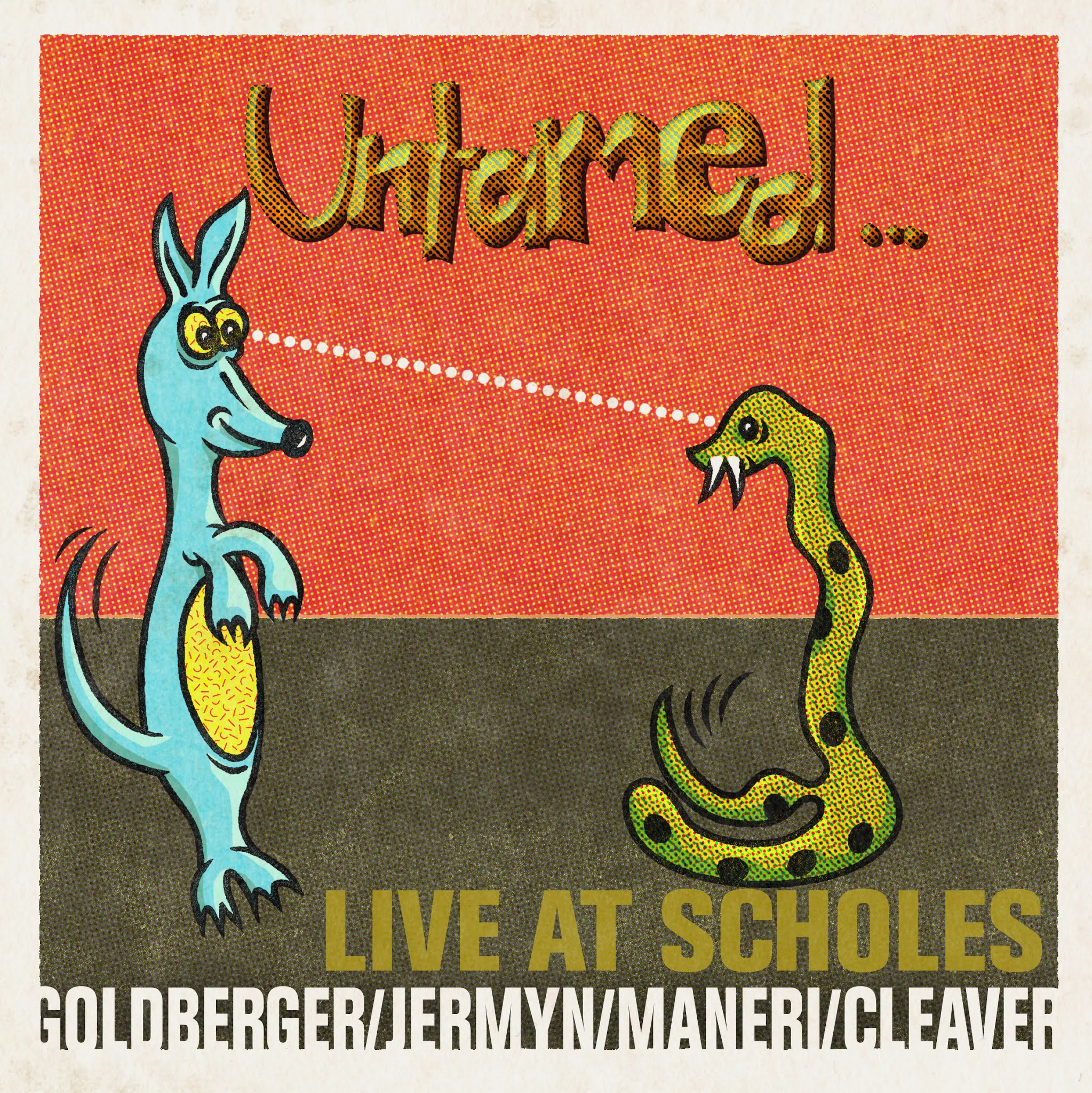
Goldberger/ Jermyn/ Maneri/Cleaver
Live at Scholes

Live at Scholes consists of a 36-minute performance by Jonathan Goldberger (guitar), Simon Jermyn (electric bass), Mat Maneri (viola) and Gerald Cleaver (drums) at the Scholes Street Studio. (An additional four-minute excerpt also came in the download.) In general, the group is just as likely to improvise for an extended period as they are to throw short composed ideas into the mix. Whether they're combining the two here isn't exactly clear, but that's part of their appeal and it speaks a great deal about how cohesively they play.

A groove gradually takes shape in the first third of the performance, which feels like it a borrows a bit from the randomness of harmolodics and the focus of prog rock. Goldberger (who has played with Adam Hopkins' projects and lead several of his own, one of the best being the Visitors album with JP Schlegelmilch and Jim Black) again proves himself to be a guitarist that more people need to hear, getting noisy and aggressive in an exciting manner. 

Eventually the groove gets a little self-conscious and slowly melts into some knob twiddling, or maybe it's just viola scraping or guitar scratch. Maneri uses effects but he also plays clean and crisp lines early on that present a candid glimpse to his technique. The only sonic setbacks come in the latter section of the track, where one of the electric instruments sound like it's playing through a broken speaker, adding an unsettling amount of buzz to certain blasts of the music. The rhythm section could have benefited from a little more body in the mix.Cleaver in particular can be heard but he isn't felt as much as he should be. Regardless, the piece keeps progressing. Just as it seems like they're winding down in a long coda, the quartet builds things back up again.


Nick Mazzarealla/ Quin Kirchner
See or Seem: Live at the Hyde Park Jazz Festival

Last September, most of us were still sitting at home, wondering if the quarantine was going to wind down any time soon. In Chicago, saxophonist Nick Mazzarella and drummer Quin Kirchner set up safely at the Hyde Park Jazz Festival and played to a small but seemingly enthusiastic crowd. The results now exist for the everyone to hear. 

If the desire for things to get back to normal and the wish to interact with a group of people could both be translated into a musical performance, it would sound like what these two played on September 27 last year. Mazzarella blows some tight melodies, partially in a spirit that recalls Ornette Coleman's early work, though he gets into something more complex on a tune like "Axiom." Kirchner drives the music, reinforcing the saxophonist's ideas and adding sparks to it, which in turns elevates Mazzarella's playing to higher levels. The recording sounds a tad lo-fi, but no matter, the power of the performance comes through clearly. Thinking in terms of tension and release that fuels music like this, the pandemic had already presented plenty of tension. Mazzarella and Kirchner deliver the release.

Friday, April 16, 2021

Jon Irabagon Quartet Live in Pittsburgh: A Recap


The Jon Irabagon Quartet breezed into Alphabet City/City of Asylum last night for a livestream performance. Booked a year ago, the quartet's tour dwindled from a two-week jaunt down to six nights of performances. Of course, any live performances anywhere are a treat these days so we should salute the band for doing what they're doing this week. And thanks to the good folks at Alphabet City for allowing this member of the press to check out the show from a safe distance in the same room.

Irabagon, who has played saxophones ranging from alto to sopranino and the rare mezzo-soprano, stuck to tenor last night. Chris Lightcap, who is also skilled on upright bass, played bass guitar (and even used a pick on a couple songs!). The group was rounded out by pianist Matt Mitchell and drummer Dan Weiss. Overall - four players who are strong leaders in their own rights, as well as top notch support players. 

The quartet played a batch of new material, which they will be recording once this tour is over. The opening "Sundance" could have been a suite of a few tunes segued together but it was actually one extended work several different parts. The opening rhythm was taut and staccato, as Irabagon sailed rapidly over the rhythm section. What originally sounded a little tense eventually became a little more slinky, as Lightcap held down the groove. Irabagon always likes to keep listeners' attention, and Weiss' delayed accents on the ride cymbal, later in the piece, helped with that. The drummer really heated things up as Irabagon started to pull things towards a conclusion.

Weiss, whose own group Starebaby reveals that he's one of the most exploratory drummers in improvised music, threw some more off-kilter fills into "Rising Sun" as if he was trying to throw Irabagon off. Naturally it didn't work but it was fun hearing the interaction. In person, Lightcap's bass overpowered the piano a bit, but it didn't seem to deter Mitchell, who got a little eerie in the freer section towards the start of the piece. There were moments when Lightcap's finger work brought to mind Hugh Hopper's work in Soft Machine, with a dexterity that make those knotty ostinatos seem easy. 


When Irabagon played in the group Mostly Other People Do the Killing, they often thumbed their noses at jazz stodginess even while embracing the music's history. So it wasn't a complete surprise to hear Irabagon play Dizzy Gillespie's "Bebop." As the saxophonist tore into that tune's rapid theme and kept the velocity at a high level, it served as a reminder of how varied and consistent his career has been so far, encompassing both noisy sopranino recitals and solid straightahead sessions.

"Mammoth" started off with another slinky bass groove that eventually morphed into a 5/4 vamp at the end. In between, Weiss played with the snares on his drum turned off, so things never got too heavy. The group wrapped up the evening with "Alliance," another knotty tune that reached a peak when Mitchell cleverly wedged a couple quotes from Thelonious Monk's "Crepuscule With Nellie" in sideways during his solo.

Hopefully it sounded just as good on computer speakers as it did in person. Looking forward to the new album. (If I heard Lightcap correctly, the group has a few more tunes they didn't get to play last night.)

Friday, March 26, 2021

CD Review: Joe Lovano/Trio Tapestry - Garden of Expression


Joe Lovano/Trio Tapestry
Garden of Expression

If a track from this album were used in a Blindfold listening test, it might be hard to figure out that Joe Lovano is the saxophonist in question. Throughout Garden of Expression, he doesn't quite come across as the muscular tenor saxophonist player for which he is known. Which is not meant as a put down. He moves through the album thoughtfully, preferring long, drawn out lines over more complex harmonic developments. Sometimes it sounds simplistic, but his focus in this music gives it the added force to lift it up. 
 
Trio Tapestry first came together on a 2019Lovano album of that brought the saxophonist together with pianist Marilyn Crispell and drummer Carmen Castaldi. Crispell might seem like an odd pairing with Lovano, considering her works that took many hints from Cecil Taylor. But the two of them crossed paths when the pianist played with Anthony Braxton, and both of them spent much time playing with the late Paul Motian. Crispell's recent, more introspective-sounding work also goes well with Lovano's searching side. Castaldi and Lovano have a history that goes back to their younger days in Cleveland, where both grew up and continue when they both attended Berklee. 

Space serves as a key element to this music, as is often the case with ECM albums. The group allows the music to breathe and reflect. That way, when "Night Creatures" modulates from its single flowing chord to a new one, the harmonic focus takes on even greater dimension. Here, and on many other tracks, Castaldi is perfectly content hold back, letting his cymbals ring, with a few accents from the toms, rather than adding louder fills. 

This type of approach works with music like this, which often flows languidly rather then working with a strict tempo. The title track, with its hesitant feel, recalls Duke Ellington's "Fleurette Africaine," which he recorded on Money Jungle. "Sacred Chant" begins feeling like a rubato Coltrane ballad, with Manfred Eicher's production creating the atmosphere of a windswept spring morning. It's surprising then, that this track - and the more angular "Dream On That" which follows it - both slip away after less than four minutes each, providing an abbreviated but vivid sketch of a song. 

"Zen Like" closes the album with a longer (read: 10 minutes) meditation that begins with Lovano tolling some exquisitely bell-like gongs. (They also show up in "Garden of Expression.") He sticks to a lot of simple, long tones here on soprano. Crispell and Castaldi contribute punctuation in the form of occasional short chords and gentle brushes on the skins. In lesser hands, this spare type of performance could create restlessness, but the presence that these three bring to music adds a sense of direction and command to the whole thing. This is gentle but very captivating music.


Tuesday, March 16, 2021

CD Review: Alan Sondheim & Azure Carter - Plaguesong


Alan Sondheim & Azure Carter
Plaguesong

"I don't know what kind of music this is, but it's a kind that suits me, and suits Azure as well," Alan Sondheim writes in Plaguesong's liner notes. "It's certainly music that goes closer to the edge than anything I've done before."

That represents a pretty major claim, considering Sondheim output began on ESP in 1967 with a series of improvisations that weren't exactly free jazz but fit comfortably next to them in the catalog. Since ESP sprung back to life in the early 21st century, Sondheim has been the one artist from the early days who has returned to the nest to release more music. (Plaguesong is his third album since that time.)

Much like those early albums, this one finds our hero picking up a plethora of instruments for each of the 25 tracks. Perhaps to avoid distraction, he intentionally left the names of his arsenal off the cover. A perusal of his previous albums (check out a review of 2018 collaboration with Stephen Dydo, Dragon and Phoenix here) offers possibilities for some of the non-Western instruments: qin, erhu, rababa, guzheng. Others are easier to identify, such as harmonica, banjo and acoustic guitar.

Sondheim and Carter created Plaguesong in one room of their Providence, Rhode Island home, as the Corona virus quarantine shut the world down. Sometimes the music sounds like a field recording, like when the street sounds spill into the harmonica-and-vocal spiritual of "As Aboves So O As Below" [sic]. Many songs have a warm natural reverb that pushes aside the anxiety that fueled the music, giving way to hope. Case in point - "Plague Hymn" might refer to something else, but this solo harmonica piece comes off like a fully-formed spiritual, rather than a spontaneous blow of the harp.

While Sondheim might not play all of his instruments in the "traditional" or "correct" way, he brings a distinct focus to each one. This occasionally results in a unique hybrid of cultures like when his performance on "Guqin" casts a bent blues vocabulary to the namesake instrument, with the results in resembling Appalachian folk music. "Musima" sounds like a guitar song with a performance that sounds like free flamenco, or something closer to what Gary Lucas played with Captain Beefheart.

Although 10 of the 25 tracks are instrumentals, the rest include Carter adding her vocal color to the array of strings and tones. Sometimes she just rambles, like in "MNO" or "Lada" whose words don't quite go beyond the titles. The vignettes "Temperature" and "Pulse" are more amusing, as she reads both of those numbers to the accompaniment of her partner's manic strumming. Her mood on "My Life" contrasts with its downer message, while closer "World" seems like a thoughtful reflection of everything that has preceded it on the album. 

At 79 minutes, Plaguesong could have benefited from a bit of editing, but as a document of two people trying to cope with a quarantine, one can't blame them for an extended program. Rarely does a track sound like the one that preceded it, and when it does, it serves as a continuation of an idea not a mere repetition. 

Sometimes the edge to which Sondheim alludes is more obvious, such as when he's flailing away on guitar and Carter floats over him. But other times, they seem to be assuring each other - and everyone who listens - that we can make it through these dark days. That makes Plaguesong another worthy entry into the ESP catalog of valuable time pieces.

Friday, March 05, 2021

CD Reviews: Scott Clark - This Darkness / Devin Gray & Gerald Cleaver - 27 Licks

Ah, the solo album, where one improvisor- or instrument as you shall see in a moment - takes center stage all by themselves. This type of recital holds a special fascination for me. It requires that a listener check their preconceptions at the door and surrender to one person's approach. What are they hearing in their mind? The same thing you hear, or their music accompanied by other musicians? 

A solo piano album might not be too much of a stretch due the amount of harmonic possibilities that the keyboard offers. A solo saxophone or trumpet album ups the ante. But a solo drum album is a whole other exercise altogether. The melodic palette doesn't really come into play here, just the rhythmic and visceral sounds it offers. 

It's not completely out of the ordinary. The great Milford Graves - who we just lost a few weeks ago - recorded at least one solo album (and probably more). He also played with other drummers like Andrew Cyrille. Papa Jo Jones and modern drummer Chris Corsano both sat alone at the kit in a recording studio. Andrew Drury recorded an album with just a floor tom and a few accoutrements, pushing the sonic limits of such a performance. (Go here for a review of it.) 

The second album in today's selection is not actually a solo record, but a duet record. However it is a duet of two drummers, therefore it felt appropriate to group it thematically with an album by a solo drummer.
Scott Clark
This Darkness

Scott Clark is a fixture on the jazz and improvised music scene in Richmond, Virginia and co-curates the Out Of Your Head imprint with Adam Hopkins. At the same time, The Darkness could almost be heard as a distant strain of ambient music. As much as the sustained percussives recall spare sections of an Art Ensemble of Chicago album, the album's determined, gentle pace evokes thoughts of Fripp & Eno albums, or post-rockers Stars of the Lid. You might want it to move faster but Clark, in a sense, is saying, "No. Just listen."

This becomes obvious as the opener "Quiet Friend," takes over the room. A sustained harmonica slowly fades in, blowing a chord that begins with the upper harmonics and reverberates down to its lower notes, languidly. (So it's not actually just a drum album.) The drone continues unaccompanied for seven minutes, with at least two harmonicas keeping it flowing without a pause for air. Around the eight-minute mark the sound of brushes on the drums enter, eventually give way to mallets. After all those sustained harp notes, the drums offer a contrast that's almost melodic since one of the skins adds a  tuned pitch as the harmonicas continue unabated. It is moves slowly and continues in this manner for 15 minutes, with Clark alternating rhythms of 4/4, 5/8 and 6/8. But once adjusted to the tranquility, it's hard to get away.

The remaining five tracks, with one exception, are significantly shorter. Each finds Clark digging into one aspect of his kit. "Who" features cymbals and other percussion that produces resonating sounds. It never gets very busy and in fact features as much open space as space filled with rings. "Be a Bell Tower" adds some cymbal scrapes to a slightly more rapid strikes to these same chimes. The repetition can try the patience but just as it seems to be too much, Clark moves back to the drum heads, getting a primal but dynamic beat going, in waves of volume. 

"And You The Bell" acts as the album's climax, to which Clark has been building for the last 40-plus minutes. It feels like a drum solo, not in the flashy sense or the type that's based on a structure, but a free flowing one that seems to incorporate everything that came before it. Considering that he recorded the one album in one continuous piece, this final passage adds a little more sense to everything that came before. 

The Rainer Maria Rilke poem "Let This Darkness Be a Bell Tower" inspired this performance, and the track titles came from its first stanza. Perhaps that might explain why the album ends almost as enigmatically as it began, not with a crashing finale but a fade. It might not be an easy listen and might be a performance best enjoyed in person, but it comes with a Zen-like clarity that lingers after it ends. 


Devin Gray & Gerald Cleaver
27 Licks

By contrast, drummer Devin Gray and Gerald Cleaver begin 27 Licks with a groove that remains constant while each of them varies their attack, playing on rims, heads, a woodblock or two and a cowbell. A ride cymbal early on depicts the sound of the street, adding an earthy quality to the sound. "F Train Ride" evokes that subway journey, beginning with percussion clatter, moving into press rolls and thunderous crashes. These are the kind of breaks that bring exciting contrast to free improvisation sessions with a band, using the dynamics to ramp up music that's already at a high level of intensity. Hearing them removed from a band, they still maintain that fire.

Drummers are often maligned for playing in a manner that prefers to lead rather than follow. Gray and Cleaver of course disprove that in their other projects, where communication between band members is paramount. Likewise, "Headed to Barbès" comes off like a conversation where one drummer throws out a roll or a movement across the kit which the other (it's hard to tell who's who) answers and expands upon. Other tracks get a little more minimal, with shakers and cymbal noise, and titles like "Love Conquers Hate," "The Long Roll Ahead" and "One for Bernie" hint at the political climate that was going on while this was recorded. 

"Headbangers" presents the entire recital in one 20-minute piece but I almost prefer the bite-sized chunks, which put each one in an independent light. While this might make the entire album seem a little slim, it shows that Gray and Cleaver know that brevity can make a percussion recital. Always leave them wanting more.

Monday, February 15, 2021

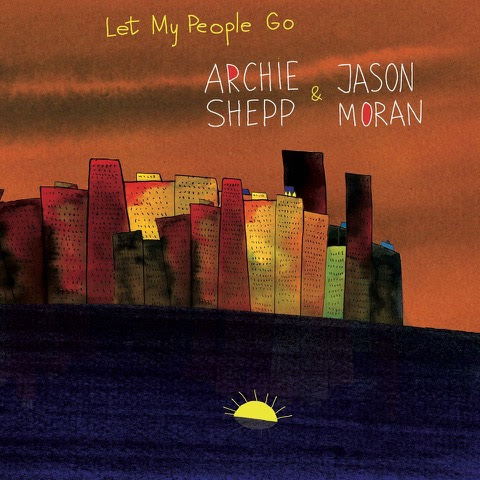
CD Review: Archie Shepp & Jason Moran - Let My People Go


Archie Shepp & Jason Moran
Let My People Go

Archie Shepp's duets with the late pianist Horace Parlan, found on albums that include Goin' Home and Trouble In Mind, arguably contain performances that rank with the tenor saxophonist's best-known early work for the Impulse! label. When recording some of the spirituals on the former album, Shepp told this writer, he was overcome with emotion. "The history, the suffering that those songs connoted was very much part of the performance itself," Shepp said in 2017. "I think we both knew and felt …it’s like two ex-slaves getting together. We didn’t have to discuss our experiences because we were deeply and profoundly aware of the implication. When [Parlan] touched the piano, I could feel history."

Let My People Go finds the 83-year old saxophonist teaming up with pianist Jason Moran for a series of live performances, some reprising the music Shepp made with Parlan, with takes on a few classics jazz compositions by John Coltrane and Thelonious Monk. 

Shepp plays soprano saxophone on three of the album's seven tracks. Although his work on the smaller horn might not be as compelling as the gruff, rugged tenor tone, his reflective approach can be felt on both horns. At the end of both "Wise One" and "Round Midnight," he replicates the soprano by flying into the altissimo register of the tenor. He moves at a more measured pace with this music, never erupting in the manner that he did in his early days. But the way he ends some phrases with dissonant passages in the high register indicates that he could breathe more fire if he felt the need. A highlight comes in "Lush Life" as he cues the in-tempo section with some low honks from the tenor. It sets up a groove that Moran runs with, going into a slightly Latin rhythm.

A few tracks feature the saxophonist adding vocals in the final chorus. His baritone voice also has an understated quality, which might come across as a little ragged. But to my ears, he adds to the music, giving the lyrics to "Sometimes I Feel Like a Motherless Child" some extra credibility. In "Lush Life" he scales the song's unique melody with ease, adding vibrato to his voice, making this contribution a key element to the whole arrangement.

Moran shows a strong rapport with the elder statesmen, playing spare when Shepp needs room to open up and adding heavy blues accents and upper register flourishes to "Motherless Child." His solo in "Wise One" - essentially the album's centerpiece at 13 minutes - relies heavily on chords rather than single line melodies and the energy is contagious. 

"Round Midnight" has been played umpteen times by umpteen jazz musicians. Shepp and Moran clearly realize that and make sure to give it their own collective stamp. A few later tracks  in the album feature audience applause from two European jazz festivals where these recordings were made. "Round Midnight" on the other hand, closes this album tightly with no room or need for the audience to respond. After all that, the applause would really be superfluous. 

Shepp and Moran seem to have a kindred connection that might be similar to what the former had with the late Horace Parlan. Things might move slowly and deliberately on this album, but sometimes deeper conversations work that way. 

Tuesday, February 09, 2021

Barbie Likes To Die...again

Sometimes I forget to toot my own horn on all forums. Two weeks ago, the first vinyl album I ever was ever part of (come to think of it, the only vinyl album I've been part of) was remastered and re-released digitally on Bandcamp - exactly 31 years to the day after its original release. 

Bone of Contention was my first band. Playing in a band was a lifelong dream, at least from the time I was about six, but it didn't happen until I was 18. The recording took a little bit longer, We recorded 48 Points of View when I was 21 and it finally came out a few months after my 22nd birthday. It was a self-released album, on Igor Records, the name coming from guitarist Lila Shaara's ornery but loveable cat. When you're in charge of releasing your own music, you can make crazy decisions like that. 

When you're in charge of your musical fate like that, you can also determine whose ears come in contact with the music. We did send copies to radio stations around the country and a few publications, who had some pretty complimentary things to say about it. Some radio stations latched onto a song called "Barbie Likes to Die," a spoken-word-and-music tale about the hapless Mattel character. The Bone - as we called ourselves - weren't a joke band, but we did swing widely between wry humor and dead serious subjects. "Barbie" did have a small but enthusiastic group of fans. I know because some of them have tracked me down through this blog, looking for a copy of the song. Now that the song - along with the other 12 from the album - are up on Bandcamp, maybe we can make a connection with them. Probably not, because that's the way the internet works (anonymity), but you never know. Here's where you can find it. 


I don't want to ramble on at length about why I think the album is wonderful. But it was the first time I had been involved in something like this (notwithstanding a made-in-the-basement 4-track cassette from two years prior). For that reason it occupies a special place in my life. The band was kind of unique too because there weren't many bands around then where everyone wrote and sang. If you need anymore thoughts on it, there are a few on the Bandcamp set. Check it out and give a listen.