Saturday, September 14, 2019

CD Review: Russ Lossing - Motian Music


Russ Lossing
Motian Music
(Sunnyside) www.sunnysiderecords.com

This album came out in the early part of the year, and I've been listening to it a lot since then, waiting for the right moment to write about it, when the music is clear enough in my head to yield some coherent thoughts. Now's the time, it seems.

I've said this many times and, for that reason, this should probably be the last time it appears in print, true as it is: Paul Motian always seemed like he could express more feeling in one tap of the ride cymbal than most drummers could say in a whole solo. His approach to the drum kit sounded so personal, like thoughts flowing from the mind of a deep thinker.

By the same token, his compositions had much of that immediacy. They sprouted from the same focus on simplistic, but fertile, ideas. In Motian Music's liner notes, pianist Russ Lossing recounts the experience of reading through the drummer's compositions at his apartment as he finished them. "I play while he alternately hovers over me and walks around the apartment listening. 'It's slooooow,' he says... After I play the bare melody, Paul asks the inevitable question: 'What chords would you put under it?' A complicated question. to be sure; so many possibilities, so many directions."

Regardless of the possibilities, this set of of Motian's tunes gives credence to the idea that players shouldn't rush through the composition to focus on improvisation. In "Asia," which opens the album, Lossing doesn't stray far beyond the written theme. Instead, bassist Masa Kamaguchi and drummer Billy Mintz open up a little, while the pianist repeats the theme with a bit more emphasis each time. It's not exactly the approach Thelonious Monk took, but his likeminded idea of keeping the melody close at hand comes through.

Mintz adds some very Motian-esque cymbal taps in "Introduction" which underscores Kamaguchi's simple pulse and Lossing's melody. A whole track of this would be enough, but they open it up into a detailed three-way conversation. "Etude" also begins gently, with Kamaguchi playing the melody, before Lossing picks it up and the trio rolls into it thoughtfully. When the song reaches a climax, the trio sounds like they're leading to a roaring finale, only to pull back and end as gently as they begin.

In addition to producing a stellar set, the trio's work also left me wondering how these tunes sounded when Motian played them, a sign of quality in any tribute album. While listening to it one night, I wrote down the original albums on which each track appears. Most of them are on ECM and are part of a six-album box set that the label released a few years ago. That list got lost in a sea of papers somewhere around here, but that just means that it's time to revisit the whole box. Or just play Motian Music again.


Wednesday, September 04, 2019

CD Review: Ben Goldberg - Good Day for Cloud Fishing


Ben Goldberg
Good Day for Cloud Fishing
(Pyroclastic) www.pyroclasticrecords.com

Ben Goldberg has incorporated poetry into his music on previous albums. His group the Tin Hat Trio drew from e. e. cummings for The Rain Is a Handsome Animal. The poetic musings of Allen Grossman, a writer and former teacher of Goldberg, were combined with music on Goldberg's expansive Orphic Machine. Good Day for Cloud Fishing takes the creative process deeper, creating a work that must be experienced physically.

The clarinetist wrote 12 pieces inspired by particular poems by Dean Young. When he recorded them with guitarist Nels Cline and trumpeter Ron Miles, Young came to the sessions and sat in an isolation booth, listening to the music. Not knowing which of his poems inspired the tunes being played, he in turn reacted to the trio by writing a new poem on the spot. The resulting 24 poems - the "entry" ones that lead to the music and the "exit" poetry that were born in the studio - are printed on cards that come in a clamshell box that houses the CD and a 16-page booklet.

The music on Good Day for Cloud Fishing can be approached from several angles. Overlook the poetic aspect of the album, and the attention zeroes in on a unique chamber group. It opens with a slow, whole note melody by Miles and Goldberg (who sounds like he overdubbed his contra-alto clarinet behind his B-flat clarinet). After the simple melody, which acts like a literal entrance, they turn the floor over to Cline, whose effects-heavy playing gives it a bit of a carnival-esque feel. All this serenity in a piece titled "Demonic Possession is 9/10s of The Law."

Throughout the set, the trio proves they could be a good accompaniment to Tom Waits ("A Rhyhtmia," "Ant-Head Sutures"), creates noirish soundtracks ("Because She Missed a Test, She Introduces Me to Her Boa"), get delicate ("Reality") and mix shrill and skronk ("Sub Club Punch Card"). Between Goldberg's contra-alto taking the role of a bassist, and Cline's rhythmic picking, it's easy to forget that the percussive feel in a track like "A Rhythmia" is not coming from a percussionist.

After exploring the music on its own, it's best to take a secondary listen with the poems in hand, understanding the way Young shaped the music, directly or indirectly. Goldberg didn't necessarily attempt to transfer a poem like "Surprised Again by Rain" into notes. But it, and the other poems, deepen the experience, in some way making the nuances in Goldberg's work more noticeable when they're discovered in tandem with the words. 


Saturday, August 31, 2019

Three Shows and a Tribute

The end of another month has come and I'm feeling deficient in blog posts. It seems like when I'm at work or in the car driving somewhere, I have plenty of inspiration for what I could write about. Thoughts on old albums. New things that I like. Shows I've been to. Even just a paragraph or two will do it. Then when I'm home, there's always something to keep me from doing it - another household project, a flurry of emails. Or more likely - the desire to sleep.

Since it's the last day of August, I figured I'd look back at some shows I checked out this month and beyond. Before I do that, though. I have to pay some homage.


My dear friend Ed Boytim passed away earlier this month. Ed was the drummer in the Minimalist Love Gods, a duo with guitarist Rob Rayshich. Prior to that, he also played in the great prog-punk (I think that's an apt description) band Special Ed and their predecessor Window Pain. We also played together in the Purple Lady Arts Ensemble, a music and dance project that he and his wife Sara put together for an arts festival in Homestead. It was essentially Bone of Contention and the MLGs plus a few other folks. Ed probably played in several other projects in between as well. 

Ed's musical knowledge was vast. If there was a prog rock band from the '70s that you were wondering about, he could give you an authoritative assessment of them. I was sort of a charter member of the Love Gods off and on, mostly playing keyboards with the band. My keyboard chops couldn't keep up with the ideas I had in my head, but I can recall times when the three of us attempted to do a Soft Machine imitation in the basement. Or the time we did a digest version of side one of Roxy Music's For Your Pleasure. 

But most significantly, Ed voiced an idea that I took and ran with. When Vivian Stanshall of the Bonzo Dog Band passed away, Ed casually suggested doing a tribute show. He was always full of good ideas, but didn't always have the time to see them through. On other hand, I would run with an idea before someone could say, "Mike, I was only half-serious." I recruited five friends who played reeds and could read music. Then I set about transcribing Bonzo Dog Band songs by ear and writing out parts for the horn players. (I still have them too.) Rob and Ed didn't read music but they knew the songs so well that it didn't matter. 

That was a big experience for me because it was really the first time I created a project and directed it, with people who trusted my lead. (I asked the horn players if they'd stand there wearing lampshades during the first song, since they didn't play. They said sure.) It took us two shows to get the whole performance done, but that's another story. I feel like I owe the growth I made at that time to Ed. There are also a lot of albums that automatically make me think of him, which was kind of heartbreaking in the days after he suddenly passed. I hope wherever he is, he has a good stack of albums and books to read while he's listening. 

If you ever see a copy of the Devolver CD seen above, grab it. Trust me. It's a wonderful set of songs, as is their cassette debut Deconstruct the Id.


The first show to mention actually took place at the end of July. Drummer Kid Millions (possibly best known for his work in the band Oneida) and saxophonist Jim Sauter (of Borbetomagus) played a raucous set at Collision, a performance space way in the nether regions between Point Breeze and Wilkinsburg. My bandmate Erik Cirelli was playing that night with Skeletonized and luckily he met me out front of the place, because if he hadn't I would probably have driven past it. It literally has some sort of canopy over the doorway with no indication of it being a performance space. Inside it's a hollowed-out warehouse of a building and thank God the heat of the previous few weeks had broken. Otherwise it would have been unbearable. 

I was never much of a fan of Borbetomagus. A Downbeat article about them piqued my interest in the '80s, but everything I heard just felt like balls-to-the-wall extreme screeching that didn't go beyond that. But it had been long enough, and I liked Kid Millions' projects, so I felt it was time to check out what Mr. Sauter was up to. Let me tell you, he hasn't started playing ballads. Along with his tenor sax, he had an array of effects pedals that he used to manipulate his horn. The sound was just as rowdy as he's always been. What wasn't lost to the echoes of the building sounded like a lot of fun. Kid Millions rolled out some powerful free drumming and smiled joyfully almost the whole time. Their solid set - which lasted somewhere around 20-30 minutes though I didn't check my watch - was a blast. It made me recall what either Sauter or his sax partner Don Dietrich said in that Downbeat article regarding the sounds they produced: "It's a scream of joy." 


My work schedule has precluded me from seeing a lot of shows over the past several months. That's likely going to change pretty soon, but last weekend, I actually worked the opening shift and had both evenings free. I was on the fence all day about going out on Saturday but when I finally got off my duff, I made it to the Thunderbird right as the Working Breed were kicking off the set for their CD release show. (Check out my article here for more info about the band.) As I was walking down the steps of the huge and newly revamped music venue, I thought I recognized the opening of the album and I was right. Maybe my timing wasn't totally spot on (there was supposed to be some opening ceremony to the set, and I missed Cello Fury), but I'm sure glad I got there when I did.

Erika Laing plays an array of instruments during one set, in addition to fronting the Working Breed. Her trombone and trumpets chops are on-the-money, but she's really carving out her own niche by incorporating the singing saw into their art rock sound (see photo above). She plays it with a bow (with her left hand rather than right) and gets some amazing vibrato and tone from it.

But that's not all...


It only appears briefly in one song, but she also plays the sheng, a Chinese polyphonic instrument. This was the one element of her artillery I didn't get to cover in the article, but apparently the instrument has reeds in it that are dipped in mercury. In China, there is a story about old men who play the sheng who kind of loose their minds as they get older, having inhaled mercury over the years. The more expensive shengs aren't like that, but the one Erika plays (which a friend brought back for her) is on the lower end. So a blow here there is.... okay, I guess.

Their whole set was pretty theatrical and high-spirited. They had an obelisk onstage that was built specifically for the show, as well as a huge "W" and "B." " We didn't steal these from Warner Brothers. They were built for us," Erika said. I had a premonition the final song from the album would bring some other visual explosion and I was right. Confetti bombs went off in the balcony at the climax of "Orange Fluff," raining down during the final chords. 

For their encore, they played Kansas' "Carry On Wayward Son." I don't like that song at all but this was no ironic, jokey take on it. The Working Breed did a tight version of it. And that song ain't simple, musically or vocally. So I was impressed.


In that same issue of Pittsburgh Current with the Working Breed in it, I also previewed the appearance by Thumbscrew, who came to City of Asylum this past Wednesday. They've come to Pittsburgh several times, so an article on them was long overdue, especially since their Pittsburgh visits have been pretty productive, yielding three CDs so far, recorded at Mr. Smalls. 

The trio - guitarist Mary Halvorson, bassist Michael Formanek, drummer Tomas Fujiwara - had actually been in town for a week and a half by the time of the show. They were working through a set of new material and some pieces by Anthony Braxton, in anticipation of a performance at the composer's 75th birthday next year. 

Maybe it was the fact that they were stoked to play brand new pieces but the whole set revealed that their writing and their musical interaction are really growing and maturing. Things moved between more straight ahead, jazzy tunes and slower mood pieces that erupted into a wonderful chaos. 

Formanek put down the upright bass few a few tunes and played bass guitar, with a pedal board that rivaled that of Mary Halvorson's. In the bassist's "Scam Likely," he started off sounding like Moog while Halvorson's effects gave her the sound of an '80s Casio synth (that's a good thing). Through the whole set, Fujiwara was stealth. One minute he was maintaining a steady tempo, the next he was switching from sticks to mallets without a break in his playing. And then he was lifting the bandstand, wailing away as Halvorson looped a wild noise and added below-the-bridge plunks. I almost screamed in enthusiasm, but thankfully I didn't. 

Saturday, August 24, 2019

CD Review: Anthony Braxton - Quartet (New Haven) 2014


Anthony Braxton
Quartet (New Haven) 2014
(Firehouse 12) www.firehouse12.com

A recent article about Anthony Braxton that appeared on Rolling Stone's website provides some good insight into the saxophonist's mindset and serves as a good primer for this four-disc set. (The interview subject and the monolithic magazine might seem totally incompatible, but writer Hank Shteamer has been taking great steps to change that.) Braxton has always been open about his wide-ranging musical tastes, my favorite one being Johnny Mathis. That topic kicks off the article, with Braxton espousing his appreciation for the work of Captain Beefheart, which impressed him so much that friends often called him "Anthony 'Beefheart Boy' Braxton." Considering his fondness for adventurous rock, it should come as no surprise that a new Braxton box set features him playing with two musicians known for their work in rock bands.

Quartet (New Haven) 2014 consists of four nearly hour long improvisations with Braxton and his long-standing bandmate Taylor Ho Bynum (trumpet) together with Nels Cline (guitar) and Greg Saunier (drums). Cline of course has a lengthy c.v. with free improvisation and jazz in addition to his tenure with the rock band Wilco. Saunier, on the other hand, is probably known best for his work with the indie rock band Deerhoof. Although the latter is more song oriented, their approach to song structure does give the impression that Saunier might be compatible in a free improv context. And he does.

The four tracks are dedicated to popular musical icons: Jimi Hendrix, Janis Joplin, James Brown and Merle Haggard. (Braxton claims to be a fan of all four.) Like some dedications, the music doesn't attempt to evoke the honoree's style, but to simply salute their spirit. Any detected quotes from the "Ball and Chain" feedback squall or the groove of "I Got You (I Feel Good)" are purely coincidental.

The rapport between these players is established almost immediately. Things seem to really catch fire around the 20th minute of each piece, when they seem to have a feel for the space in the music and they start to dig in. Things move along loosely but the group builds enough dynamics into the music that it never stays in one place for too long. Even moments when things start to fragment a little, the players still work in a forward motion.

Braxton switches saxophones regularly. As beautiful as his contrabass saxophone moments are - and he definitely produces a rich tone from the beast, capable of both low melodies or foundation-shaking noise - he only gives himself about two minutes at a time on the instrument. Then, with no transition,  he's suddenly onto the sopranino, soprano, alto and "regular" bass sax.. He also be a baritone sax in "Improvisation 3"while Cline plays some surf guitar.. One of other Cline's shining moments comes about 27 minutes into "Improvisation 2" when his guitar sounds like it's playing backward, measuring up against some of gruff alto saxophone. By the end of this one, the collective sound almost sounds a little nightmarish.

That being said, "Improvisation 3" might be the noisiest of the four tracks. Of the more abrasive moments, Bynum keeps repeating a shrill chromatic line ad nauseum around the mid-way mark. But in the grand scheme of the piece, it's a quick stop along the way. Later on he growls in tandem with some sopranino whinnies.

In "Improvisation 4"- which would likely leave Merle Haggard scratching his head, unless his musical tastes are as catholic as those of Braxton - Saunier seems to borrow Bynum's method at the start of the piece and whacks a rim shot repeatedly, almost sounding like his tinkering with some carpenter work while his friends play on. Before long, though, he spreads himself out across his whole kit. Cline seems conspicuously absent in the first quarter of this one, only adding some electronic freak out noises intermittently. But he eventually spends a good deal of the track running his guitar through an octave pedal, so it sounds like a bass which gives the whole thing a bit more of a center.

Braxton has collaborated with countless musicians throughout his career and has lead some groups that disbanded or altered lineups after just a short time. He initially planned to have this group play composed works. That might have been an equally productive session, but these four tracks offer a more involved answer for a "what if" question regarding such a diverse meeting of the minds.This might be a hard set to digest in a sitting or two but it's also one that needs to be heard.

Monday, August 12, 2019

Shane Parish & Wendy Eisenberg in Pittsburgh


Just got back from seeing Shane Parish and Wendy Eisenberg play at Acoustic Music Works, a music store in Squirrel Hill.  I've been intrigued by Wendy's playing since I first heard their albums The Machinic Unconscious and Its Shape Is In Your Touch last fall. (Read about them here.) There's a lot more that they've done before and since those two albums and I haven't had the chance to keep up with it, but that makes me all the more intrigued. So I was pretty stoked that they were coming to town on a night that I wasn't working. (Wendy breezed through town in the Flying Luttenbachers a few months ago, and the only reason I found out was when some friends posted it on Facebook.)


Shane Parish's name is new to me but clearly these two work really well together and I wish I had been able to pick up both their duet album and a solo Wendy album, but I only had a enough for the latter.

Free improv guitar can get lost in the visceral qualities of the act of playing but these two really flowed well together. Tonight there were no electric guitars in sight. The duo's tour stayed in keeping with the name of the space. The set began with Wendy playing softly, with Shane joining them after a few seconds. They kept the volume low in these opening moment, prompting one Acoustic Music Works guys to turn off the air conditioner when it came on and threatened the muffle the sound.


The dynamics got louder as they played, not in a gradual build but shifting quickly when it felt right. Shane hit a loud chord but it was a pronouncement along the way instead of a cue to go someplace else. Even when they seemed to be playing in opposite directions, their guitars still worked together, making them almost feel like sounds in nature that do their own thing independently, while creating music together at the same time. Wendy stopped playing a few times to simply caress their instrument, getting sounds from the wood. Or maybe this is a way of taking a pause. Shane didn't quite do that, but he did tap on the instrument and got a similar feeling going.

By the end of the set, the ten or so of us that were there all forgot that the air conditioner had been turned off.

Eric Weidenhoff, Jeff Weston and Jim Storch opened the evening with a free improv set on cello, bass and percussion, respectively. Equally quiet and restrained for most of it, the music got pretty spare and open at times.

Monday, August 05, 2019

When Will I Get to Play All Those Records?

Okay, maybe no one else notices but it's gotten ridiculous in terms of how long it's been since I posted here. A month?! Jiminy crap. Not a day goes by when I don't think about an album I'd like to write about or a show that I went to, or an article that I wrote about. And I just joined the Jazz Journalists Association at long last too. What kind of flake am I?

A busy flake, let's just say.

Since the last post, I finished a story on Joe Fiedler, the Pittsburgh native and Taylor Allderdice grad (who, it turns out, was there as a senior when I was a freshman) who is now a musical director on Sesame Street. Earlier this year he released an album called Open Sesame, interpreting some prime (read: from the '70s) tunes from Sesame Street in a jazz quartet/quintet. I listened to that on the way up to Winter Jazz Fest and knew I had to write something about him. I filed the piece with JazzTimes and I think it might be going in their October issue.

I also started working on a piece about flutist Nicole Mitchell who is now the head of Jazz Department at the University of Pittsburgh. Several interviews have been conducted on that subject and I have to start transcribing and getting my thinking cap on soon as to how the piece will go. That's also going in JazzTimes, in their education issue.

Throughout that time, I still wrote a couple stories for Pittsburgh Current on local folks like Weird Paul and Madame Dolores (aka Christiane D). I missed the Deutschtown Music Festival because of work, since I close at work all the time. But the crowds sounded pretty huge at that event so maybe it was just as well.

But there was another big thing that happened in July. One that I've been rather guarded about, at least at first. I bought a record collection. A fairly sizable one of quality stuff too. It's something I always wanted to do but never really had the opportunity. It belonged to a guy who was a colleague of a friend of mine. They were both lawyers and my friend was the lawyer for this guy's estate. (He passed away sometime last year, I think.) A lot of the things in the collection look like they might have been played once or twice and then shelved, especially the singles, which almost all date back the first wave of punk rock. They don't have the early British punk stuff (Pistols, Clash, Damned) but there is a lot of weird New York stuff and some other things from the Pacific Northwest that are only remarkable in my mind because they include a guy who went on to play in the SF jazz group Splatter Trio.

When I first saw the collection I didn't take the time to look through everything. There were certain things that sealed the deal for me: Impulse Records spines, some Blue Note stuff ('70s pressings), prog rock, Mosaic boxes, a single by Pittsburgh's the Five. So when I got it home, I was still making new discoveries a few days, and sometimes a week, later.

Why be so secretive about this, one might ask. It's quite the coup. The answer to that is twofold. For one thing, the paranoid part of me knows that records can make people crazy. Crazy driven by desire. The desire to want some of the action.

But the other thing is, I bought this collection with the idea of reselling a lot of that. I have been selling records off and on for over a dozen years now. The earliest posts here chronicle trips to estate sales and some of the things I picked up. I rarely posted about reselling things because I didn't want to look like a big shot and I didn't want to get on the bad side of local used store people. Or people who like to have some of the things I sold.

As a record buyer, I have mixed feelings about reselling too. I don't like the way the price of used things has skyrocketed in the last 15 years either. I don't want to be part of the problem. I'm not going to rationalize my selling by saying, it's okay because it's me, a nice guy trying to supplement my family's income, rather than some guy who travels across the country paying a dime a dozen  for records owned by widows and selling them for obscene prices.

Which leaves me........ in the middle, I guess. I am a Libra, after all. That's when the hording feeling comes in. Or wait - it's not hoarding if I think that I'm holding onto them as a reference that I might need sometime when I'm writing an article and need to hear Willem Breuker (yes, one of his albums is in the collection). And maybe I'll need to someday figure out if my CD of Cecil Taylor's Unit Structures sounds better than the '70s vinyl pressing. Same goes for Mingus Plays Piano. That reissue I bought sounds nice, but that Impulse label sure looks good. And all those Henry Cow records? Maybe I should see if I do really like them.

But what to listen to now?  Something from the collection? Maybe something I want to blog about. But what? Then the frustration sets in.

So that's why I haven't blogged in a while. Hopefully this post will get me back in gear.

Wednesday, July 03, 2019

Recap of the Pittsburgh International Jazz Festival

My dispatch from the Pittsburgh International Jazz Festival is up and readable on the Pittsburgh Current page, so please check it out.  Since there wasn't enough room to post a ton of photos on the site, here are a few good ones from the event.
Sean Jones (right) sat in with Butcher Brown, featuring Marcus Tenney

Warren Wolf gave a history of the vibes

Keyon Harrold played an emotionally-charged set. 

Captain Black Big Band, led by Orrin Evans, who's hidden, stage left at the piano

Jessica Care Moore, who started Black Women Rock

Nona Hendryx brought the house down at Black Women Rock

Charles Lloyd played flute and tenor sax, with bassist Reuben Rogers

Friday, June 28, 2019

CD Review: Nature Work


Nature Work
Nature Work
(Sunnyside) www.sunnysiderecords.com

The term "nature work" comes from bass clarinetist Jason Stein. To reach a certain point in improvisation, a musician needs to shut off the conscious mind and let the subconscious take over. By seeing the subconscious as a natural expression, therefore, playing music can be considered "nature work," according to Stein. So don't let the album cover fool you. This is not pastoral music representing all creatures great and small. This is free thinking music that still knows how to swing, born on the vibrant streets of Chicago, with some influence coming from Brooklyn, Berlin and Los Angeles.

Stein and alto saxophonist Greg Ward have worked together in numerous setting in the Windy City, most recently on a tour with Mike Reed's Flesh and Bone group. Both of them composed pieces for this quartet, with bassist Eric Revis and drummer Jim Black. The group itself came together for two performances earlier this year, with the recording session coming quickly thereafter. Maybe the group was just excited to document material that was so new, or maybe the comfort they felt with one another gave them the ease to really make it fly. Either way, Nature Work is full of fire.

Jim Black has always been a spastic drummer who's ready to utilize his entire kit - and random percussion artillery - at all times. "Zenith" centers around him in the theme, where his drums get punctuated by the horns instead of the other way around. Stein seems totally inspired by the drums, wailing in the upper register before Ward joins him in a new closing theme. Revis (a member of the Branford Marsalis Quartet and Tarbaby) feels right at home here, and in pieces like the free floating "Opter Fopter," where he straddles bow scrapes and dynamic plucking. When a tune requires him to keep it simple ("Cryptic Ripple"), Revis holds down the riff, until of course things go wild in the end.

Both reed players sound extra inspired, perhaps because of being in each other's company. In "Tah Dazzle," Ward doesn't lock in with the rhythm section, but he has some internal rhythmic ideas that he puts out that still blend right in with the bass and drums. When the pattern in blowing section shifts into a chord change, Stein leans hard into it, which adds to the excitement.

There are plenty of other examples of this on the album, blending uninhibited blowing and sly themes ("Hem the Jewels," "South Hempstead") as well as jerky themes that leap the forefront immediately ("The Shiver"). Considering the far-flung residences of the band members, it's hard to say when they'll reconvene, so listen to this often.

Tuesday, June 25, 2019

Pittsburgh International Jazz Festival - Prelude to a Recap

I'm going to write a whole report for Pittsburgh Current on the Pittsburgh International Jazz Festival, which took place last week. In the meantime, I figured I'd do a teaser with a few very Pittsburgh-centric photos from last Friday. 

Last Friday, the festival hosted a Jazz Crawl in Downtown Pittsburgh, where several venues presented local musicians during Happy Hour. The Original Oyster House - a Pittsburgh institution - hosted the Tony Campbell Quartet, with Mr. Campbell on alto saxophone, Dr. James Johnson II on piano, Tony DePaolis on bass and John Korpiel on drums. There was no better way to dig this group but to take them in while having a Famous Fish Sandwich for dinner, which is just what I did.


But there was more to the set. Fred Pugh, who is something of a catalyst around town when it comes to music events (he was the one who got me to the Crawford Grill in the early '00s and he has his own FP3 Promotions now) got up and sang "Bye Bye Blackbird" and a few others in his rich voice. It was a great way to start the weekend. After thinking about doing this for several years, I finally requested to have the whole weekend off to check out the event.

Friday, May 31, 2019

My Dinner with Roky or RIP Roky Erickson

Roky Erickson has passed away. May he rest in peace. His life seemed to be a series of steep ups and downs, but it appears that in his final years, he got to do the thing he liked best of all: play music. He might not have been a rock superstar but his music inspired a lot of people who took inspiration from him and did it themselves.

I got to meet and hang out with Roky on a few occasions when he was living in Pittsburgh with his brother Sumner. Roky was getting his life back on track and while it was far from a rock and roll experience, it gave me some things that have stuck with me ever since.

I had heard about the 13th Floor Elevators since I was a teenager. Being fascinated with all sort of '60s rock, I wanted to hear the band. When I discovered how rare their original albums were, it made them even more appealing to me. Easter Everywhere wasn't the best introduction for my ears. When I finally did hear it, on a reissue in the '80s, it felt a little too wordy to me. There weren't enough crazy guitar solos like Vanilla Fudge or Iron Butterfly (my two heavy psych references at that point). During college, when I finally heard their debut Psychedelic Sounds of... and also Bongwater's covers of "You Don't Love Me Yet" and "Splash 1," I had the background to appreciate them. The Dylanesque trip of "Slip Inside This House" left a better impression too.

Then we had dinner together.

The year was 2001, maybe 2000. Sumner lived in Pittsburgh where he was a tubaist in the Pittsburgh Symphony. Roky was living with him for a time, getting his life and his mind back in order. My friend Grant knew Sumner, who said that Roky liked to get out of the house while he practiced the tuba. Grant suggested that he, Roky and I go out for dinner together. At the time, I was on staff at InPittsburgh and I thought this would make a great story: Psychedelic Rock Originator Living in Mt. Washington! I understood that Roky might be a little fragile and not ready for a proper interview. And I certainly didn't want to write something that would come off as exploitative. But I figured it'd be good to get to know the guy. Hell, meeting him would be cool!

We made plans to pick him up at the house where the brothers lived in Mt. Washington. Sumner took us in the house and called Roky, who answered from the top of the steps in a Texas drawl. Instead of the wild and woolly guy I had seen on album covers for the past 15 years, the man who finally came down had short hair and neatly trimmed beard and mustache. Maybe not exactly like Wolfman Jack in American Graffiti, but somewhere in the vicinity.

"Good t'see y'again," he said a couple times when we were introduced. Maybe he had met Grant before but this was the first time he and I ever crossed paths. Still, when he said those words, the enthusiasm was infectious and it put me at ease. It also gave me a phrase that I've repeated since then with a few friends who are in the know.

We went to a Mexican restaurant in Oakland where Roky had become a regular. The owner greeted him at the door with, "Hey, amigo," clearly recognizing him from previous visits. He surely had no clue that this happy-go-lucky fellow was one of the originators of Psychedelic Rock, but it didn't matter. Roky just seemed happy to have friends that greeted him like that. During dinner there were periods where he would get quiet and just keep to himself, and Grant and I had our own conversations. But at one point, Roky brought up the name of Red Krayola, an Austin band that was a contemporary of the 13th Floor Elevators. Up until that point, Roky seemed like he either didn't want to talk about his past or his memory of it was a little fuzzy. When this happened, it came out of the blue and it was cool.

Roky and I had one more dinner date after that. I still felt wary of being exploitative and anyway InPittsburgh went out of business in the fall of 2001 and I never got to write the article. We never saw each other again. Sometime a year or two later there was a benefit/tribute concert for him at the Rex Theater, where he was in attendance. One friend who was there said he looked kind of uncomfortable, like the crowd was a little much for him. A few years later - my details are fuzzy on this part - he moved back to Texas.

A few documentaries were made about him, one apparently showing him in a rather radical type of therapy that helped him get his life back in order. I always wanted thought I should watch it, if nothing else to see where he was coming from. But time slipped away.

A few years prior to meeting Roky, a filmmaker came to town to screen a doc that he had made about Roky. I was enlisted by the then-editor of InPgh to put a band together that would play a few 13th Floor Elevators songs before the screening. (I wound up playing drums for that band instead of bass.) It was cool except that the filmmaker fronted the band  and his rhythm guitar was cranked up louder than anything else onstage, including the lead guitar playing of my friend Rob, who still bitches about it if the subject comes up. (Rob is an amazing guitar player, so I don't blame him.)

Then again that type of situation might be indicative of Roky's life: a little scattered but stuck in your mental draintrap all these years later.

Good t'see y'again.

Wednesday, May 29, 2019

CD Review: Samantha Boshnack's Seismic Belt - Live in Santa Monica


Samantha Boshnack's Seismic Belt
Live in Santa Monica

Trumpeter Samantha Boshnack hails from rural New York, but after studying at Bard College, she made her way to the Pacific Northwest where Seattle has been her home base for the past 15 years. She has received several commissions and residency spots, and has worked with Wayne Horvitz (himself a Northwest resident), drummer Jim Black and the late Butch Morris, to name just a few collaborators. She has also lead groups of varying sizes. B'shnorkestra is a 14-piece orchestral ensemble, while the Sam Boshnack Quintet toys with more avant-garde jazz. 

Seismic Belt represents Boshnack's attempt to combine both of these stylistic qualities in one group. Along with a piano-bass-drums rhythm section, it features the leader's trumpet in the company of a  saxophonist alternating on baritone and tenor, and two string players. The music, commissioned by the California-based 18th Street Art Center's Make a Jazz Fellowship (and sponsored by the Herb Alpert Foundation), is inspired by the Ring of Fire, a horseshoe-shaped region around the Pacific populated with most of the world's volcanoes and which experiences 90% of the world's earthquakes. 

Like the multiple layers of the earth's strata, the music has several interlocking parts. Drummer Dan Schnelle and bassist Nashir Janmohamed hold down complex ostinatos, occasionally joined by pianist Paul Cornish when he isn't moving with the rest of the group or adding another counterpoint. 

Lauren Elizabeth Baba (violin, viola) and Paris Hurley (violin) add a frequently eerie, uncertain quality to the music, which Boshnack matches with a tone that expresses the inquisitive feeling that inspired this song cycle. She favors the warm, middle range of her horn, never getting overly animated except during "Churo." Baba and Hurley take care of that, often following the trumpeter with solos that get more frantic. Saxophonist Ryan Parrish also kicks up dust on tracks like "The Summer That Never Came" where Hurley picks up further on the idea.

Although the melodies provide the main focus on the album - and Boshnack reels off solos like the one in "Subduction Zone" that feels like an elaborate thought - the rhythm section sounds comparably subdued, at least on the recording. Schnelle offers a strong solo on that same track, but too often he and Janmohamed settle into the background, offering support but not really driving the music. The approach means that the dynamics on several tracks and don't provide enough to distinguish them from one another. The closing "Submarine Volcano" makes a break, with a call and response section between Cornish and the rest of the band, followed by a strong Parrish solo on tenor. But if the group had kicked the energy up a notch earlier, it would have elevated Boshnack's writing even further. 

CD Review: Stephen Gauci's Live at the Bushwick Series, studio session with Cooper Moore


Stephen Gauci/Sandy Ewen/Adam Lane/Kevin Shea
Live at the Bushwick Series

Chris Welcome
Beyond All Things

Cooper Moore/Stephen Gauci
Studio Session Volume 1

(Gaucimusic) www.gaucimusic.com

If you happen to be in the New York area on a Monday night, get on over to the Bushwick Public House on Myrtle Street in Brooklyn. For the past two years (June marks the second anniversary), tenor saxophonist Stephen Gauci has been hosting the Bushwick Series, a weekly improvised music event. Six different bands play from 7:00 pm to 12:30 pm, each week. (While that number seems a bit crowded, the Series seems to run smoothly, with everyone getting to play a short but full set.)

In an email he sent to me earlier this year, Gauci said he envisioned the night as a hybrid between a jam session and a concert series, giving the music a proper venue, with hopes that it would become a place for musicians to hang rather than simply play and split. It seems to have met his hopes. Not just younger musicians but a handful of more established players frequently drop by each week. At a time when any series might have trouble surviving and when improvising musicians struggle to find an audience, this event should be commended and supported.

Gauci live-streams sets each week on his Facebook page so folks outside New York can see what they're missing. The entire set of over 500 video performances can be found here as well. Two of these three releases on his label document live sets. The saxophonist plays each week with his trio of bassist Adam Lane and drummer Kevin Shea. On the night their CD was recorded (no date is listed) they were joined by prepared guitarist Sandy Ewen.

The three-track disc begins with an everyone-for-themselves feeling of free blowing. Gauci begins with some upper register wails over the skittering rhythm section. But the whole set features variety in their approach. In track two (no song titles are listed on any of these discs), the tenor gets loud a few times but he generally holds it down, playing some simple melodies while his partners run wild behind and around him. Shea gets particularly spastic, clattering at times like Tony Oxley. The final 22-minute track begins with some rapid plucking from Lane and goes on to alternate between free sections and themes presented by Gauci. Ewen's prepared axe adds percussive color through most of the set, but in the final seconds, she adopts a surfy twang as she and Gauci take things out.

Guitarist Chris Welcome is involved with several groups in New York, including Hot Date (a sound collage duo) and Chaser (a harder group), which both feature bassist Shayna Dulberger, who played with him on Beyond All Things. This 28-minute continuous performance also includes Jaimie Branch (trumpet), Kirk Knuffke (Bb & Eb cornets), Anthony Ware (alto sax), Sam Weinberg (tenor sax), Ben Gerstein (trombone, percussion), Mike Pride (drums, percussion). It begins with a joyous blast of gong crashes and horn blasts, not unlike the Art Ensemble of Chicago or the opening moments of a Sun Ra Arkestra performance from more recent years. The horns eventually play a loosely structured theme, with pedal drones still resonating beneath them. The whole piece sounds cohesive and spontaneous but a few count-in directions can be heard during the performance, implying that some music was written-down or pre-determined. The recurring themes feel a little dissonant or minor compared to the initial one. Yet moments like the interactions between Gerstein and Welcome (who must be using effects that often sound like primitive synthesizers) give the music plenty of energy and keep the mood rather festive.

Mike Watt of the Minutemen used to say that records were like flyers, meaning the recordings were meant to motivate listeners to come to the next show. That's exactly what these two discs do. Both have good sound quality, capturing the natural feel of a band in a room, without any production effects added to clean it up. It can make you wish you were there.

Incidentally, on Monday, June 3, Welcome's 10:45 set serves as a CD release show, according to the schedule. Judging from the personnel listed for that evening, it celebrates Beyond All Things. If I'm wrong that means he's already put out something new, in which case, more power to him.

Studio Session Vol. 1 breaks with the Bushwick Series setting, placing Gauci's tenor in the recording studio with pianist Cooper Moore. Together they create uninhibited energy music which moves loosely but also shows their high level of communication. When Cooper Moore introduces a subtle piano figure, Gauci responds in kind, figuring out what direction the music should take, harmonically. The saxophonist's altissimo range is particularly strong and he frequently uses it less as a method of wild punctuation and more like a vehicle for peeling off some intense melodies. His partner's work includes everything from fragmented arpeggios, notes hanging alone in the air and percussive sounds that could either be pedal manipulation or ten fingers rapping on the keys. While things get a bit raucous, especially during the final 11-minute track, the energy and rapport never dissipates during the album.

Saturday, May 25, 2019

Missing Live Music But Buying Records from Jerry (a sort of grumpy rant that ends with a comedian)

I really hate missing shows. Maybe missing out on a night of music is simply a factor in growing older. Life will go on and - as our parents might tell us - there will be other shows. (I'm at that age, so I might as well say it too, though it hurts a little.)

But damn, I've missed some gooders this year. Bob Mould, earlier this year for one.Jonathan Finlayson came back and I missed him. Then this week: Sebadoh on Wednesday; Michael Formanek's new quartet AND, at another venue, local vibraphonist (and drummer and dulcimer maestro) Jeff Berman's trio; then last night New York saxophonist Brian Krock's quartet came to town with the Pittsburgh Saxophone Quartet opening up. I feel especially bad about that one because I tried to get some press for that show but only succeeded in a calendar blurb for Pittsburgh Current which I haven't seen yet because I haven't come across the recent issue and it's also not online. Maybe I shouldn't feel guilty or beholden to any publicists, but there's that part of me that treats this music writing as a crusade that I need to continue.When I drop the ball, I get mad at myself.

And the reason I missed all these shows? Work. I've been on the closing shifts at work pretty much all week. Granted I feel thankful because I requested and received Sunday off to go to a baseball game with my son. But goddamit, I would like to have it both ways, unrealistic as that is. It puts me in a quandary about what to do.

I typically work until 10:00 or 10:30, which really means that by the time I get into the car and head out of the parking lot, it's 10:15 or 10:45. And I work at least 20 minutes away from where all the shows are. Another thing that's become a little more of a trend around Pittsburgh is that shows start and end on the early side these days. Most 50-something guys would really like that, but not this one. Sometimes I can make it to a show in time to catch some of the final songs in the set. But there have been many times where I've gotten there in time for the last verse of the last song. When that happens I feel like I'm better off just skipping the show. One night (when I wasn't working but got out late due to family stuff) I got to a venue at about 10:00 and totally missed the whole thing. I'm not expecting shows to drag on until 2:00 a.m. like the good old bad days, but a happy medium would be nice. Some old guys want to rock. AND still get up on the early side the next day.

*

For the past week, local Vinyl Man himself Jerry Weber has been selling records at the Irish Center of Pittsburgh. He did this last year and a few years before too. This time he's doing it for eight whole days, today being the last. When I went last year there wasn't a whole lot in the bins that spoke to me. I ended up paying a dollar each for Dave Dudley's Truck Driving Son of a Gun and a Ray Conniff album that I had as a kid.

This year I went on a Tuesday morning when there was hardly anyone there so I had a chance to look without feeling cramped. (That was the other thing about last year - it was wall-to-wall people.) Selection was better this year, with more things in the $3-$7 range. I found a Chris Connor album on original black label Atlantic, and Lenny Bruce's What I Was Arrested For which I have on cassette somewhere but is good to have in the Lenny collection.

And just for the hell of it, I picked up an album by comedian George Gobel. I know him predominantly for his appearances on The Hollywood Squares where he did little to really distinguish himself as a comedian. I remember his knit sweaters and his flattop haircut most of all. But, like radio announcer Harry Von Zell, there's something about Mr. Gobel that just warms my heart, so I had to get the album.

Wednesday, May 15, 2019

CD Review: Dave Scott - In Search of Hipness


Dave Scott
In Search of Hipness
(SteepleChase) www.steeplechase.dk

Too often, being hip has a pejorative connotation, from the clueless protagonist in Bob Dorough and Dave Frishberg's "I'm Hip" to current-day hipsters selling their own kombucha or IPA. But trumpeter Dave Scott is taking back the word.

The hipness that Scott seeks has nothing to do with being designated as cool guy. He isn't being ironic either, in an effort to make jokes about being "hip with the kids" or anything like that. Hipness, to him, has a more zen quality. The title track, he explains in his liner notes, "speaks to the never-ending quest of enlightenment, musically or otherwise. The beauty of the creative process is that it is ongoing, and as artists we always strive to find a higher level."

Dig. Now that is heavy.

To some degree, In Search of Hipness feels like a live performance to these ears. Four of the seven songs last between 12 and 15 minutes. Not merely blowing vehicles, these pieces often include several sections. They also give the soloists chance to stretch and reveal themselves, and they aren't worried about keeping things to a certain length.

That being said, the opening track proves to be the exception. "Ludwig" is built on a rolling rubato melody inspired by Mr. Beethoven. It also serves as an introduction to the sextet's instrumentation. Along with Scott's trumpet, Sarah Bernstein's violin and Nate Radley's guitar play flowing melodies over a sinister foundation created by Jacob Sacks (piano) and Dave Ambrosio (bass). After stating the theme, this could have gone into any type of solos: free blowing or something played over a modal vamp both come to mind. Instead, "Ludwig" comes to a close after the theme, barely lasting three minutes but making a strong impact.

Scott's trumpet and Bernstein's violin make great melodic partners in "Time Dilation," a piece which changes time signatures three times during its theme.  In another bold move, Ambrosio's bass takes the first solo, going against drummer Mark Ferber's steady rhythm to really sing. Sacks' left hand descends down the piano next, moving away from the freedom in the right hand but always meeting the drums to accent the crash at the end of a phrase. When Scott enters for his solo, he sounds inquisitive at first. But like everyone who precedes him, he never lets the complex rhythm of the song constrain his melodic sense.

After a number of equally strong bits of adventure, Scott closes the set by playing "Black Hole" with a Harmon mute. The piece has harmonic freedom but the tone brings his scope full circle, showing the way that a trumpeter can take some Miles Davis inspiration and inject it with other things along the way. He says as much in the liner notes, but it's equally noticeable in the music, especially when put at the end of the album. While free improvisation and straight, chord-based music both have their values, Scott proves that they can coexist. And they can sound hip as well.

Thursday, May 02, 2019

Rediscovering Peggy Lipton


The Mod Squad was syndicated in reruns when I was in first or second grade, which seems to match up with the end of the initial broadcast. It came on in the weekday afternoons right as I was getting home from school. I was probably hooked initially by the opening theme sequence, with the punchy theme song and scene of the cast running through the underground sewer system of LA (or whatever that was). I loved a lot of theme songs (Medical Center, Sanford & Son) but often lost interest once the show started. After awhile, though, the cast of The Mod Squad really grew on me. Linc Hayes (played by Clarence Williams III, whose real name was cool in and of itself) was my favorite. 

At some point, my mom told me she didn't want me watching the show because it was too violent. In retrospect, I'm not sure if that was the reason or if had to do with the subject matter. In high school, a teacher once told my class that abortion was mentioned on The Mod Squad. This teacher wasn't very good and a bit alarmist, so I don't know how accurate she was, but between any mention of abortion and maybe pot, I can see why a mother might not want her six-year old watching the show. 

In our house - probably since my uncle was frequently a guest star on tv shows (including two episodes of The Monkees) - it was not uncommon for us to become familiar with the names of actors on a show. Thanks in part to a commercial that the local station created for the show, I knew the names of Williams, Michael Cole and Peggy Lipton. So when my mom told me she saw an album by Peggy Lipton, I had to hear it. (In retrospect, I wonder if she came across it at the 5&10 where she found the Rugbys and the Hassles.) 

Once she bought it for me, I stared at the album, pictured above, a lot, until Lipton's eyes looked a little too intense. Then I'd open up the cover, because  of course it was a gatefold with a few more pictures, including one of her squatting down barefoot on a rock, looking coyly at the camera. The other two inside shots caught her looking away from the lens. 

When I first got discovered used record stores around middle school, I tried selling a stack of albums to a couple places thinking I'd get some good money for them. I couldn't understand why they didn't want Three Dog Night's Cyan and a few other questionable things. By that time, I was over Peggy Lipton and after trying to unload it locally, I shipped it off to a used mail order store in San Francisco who gave me about $1.00 in credit for it. 

Back to the current times. There's a beer we sell at work called Lager of the Lakes, which made me think of a song on the album called "Lady of the Lake." That was a gateway to a few other memories of the album. I recalled really liking Lipton's version of Laura Nyro's "Stoney End." Plus, her version of "Natural Woman" was the first one I ever heard. A few days ago, I decided to see if it was on Spotify and to check it out again. (We recently got a family deal for Spotify so after several years, I have taken the plunge. I still only use it for research, as you'll see here, rather than as a substitute for buying music.)

Sure enough, Peggy Lipton was there in all its "Expanded Version" glory. A few things are apparent from the opening bars. The kid could sing. She could also write a decent song too. "Let Me Pass By," one of the four that Peggy wrote, ain't a bad little tune. And that message of letting her do her thing and spread her wings? Right on, sister. 

There's something else that hits you immediately: strings. This is not some attempt to cash in on Peggy's counterculture cred, surrounding her with a rock band. This is an attempt to make her palatable to Middle America. The Wrecking Crew provides the rhythm section but without even checking the credits, I recognized the gentle voicings of arranger Marty Paich. That comes in part because they sound an awful lot like the charts that he wrote for Spirit's first album, which like Peggy Lipton was also on Ode. A lot of violins, some flutes, an oboe or two. With backing vocals by a group called the Blossoms, I'm sure this album appealed to me in the same with the 5th Dimension did. Those Laura Nyro songs didn't hurt either, though even as a kid, the title of "Hands Off the Man (Flim Flam Man)" was too silly for me enjoy. 

In the bonus department, there's a version of "Just a Little Lovin' (Early In the Morning)" which was also recorded by Stony Brook People, a band that was I knew around the same time. My childhood worlds are colliding! There was also a really slow version of Donovan's "Wear Your Love Like Heaven." (Upon checking Discogs, it seems like The Complete Ode Recordings also has versions of Pet Sounds' "I Just Wasn't Made for These Times" and Bacharach's "Wanting Things.") 

After a while, it started to seem like all the songs were in the same key. That thought occurred to me while getting through the bonus tracks, which weren't meant initially to be heard in sequence, but it felt like Peggy had been in the same key for more than half the album. So maybe it fulfilled a curiosity and kept me from doing the mid-life crisis thing and plunking down some serious bucks for an original copy of the album - or the Complete set, which looks pretty expensive. 

But if the album ever turns up at a yard sale or flea market, I'll have to snatch it up.  

Wednesday, April 10, 2019

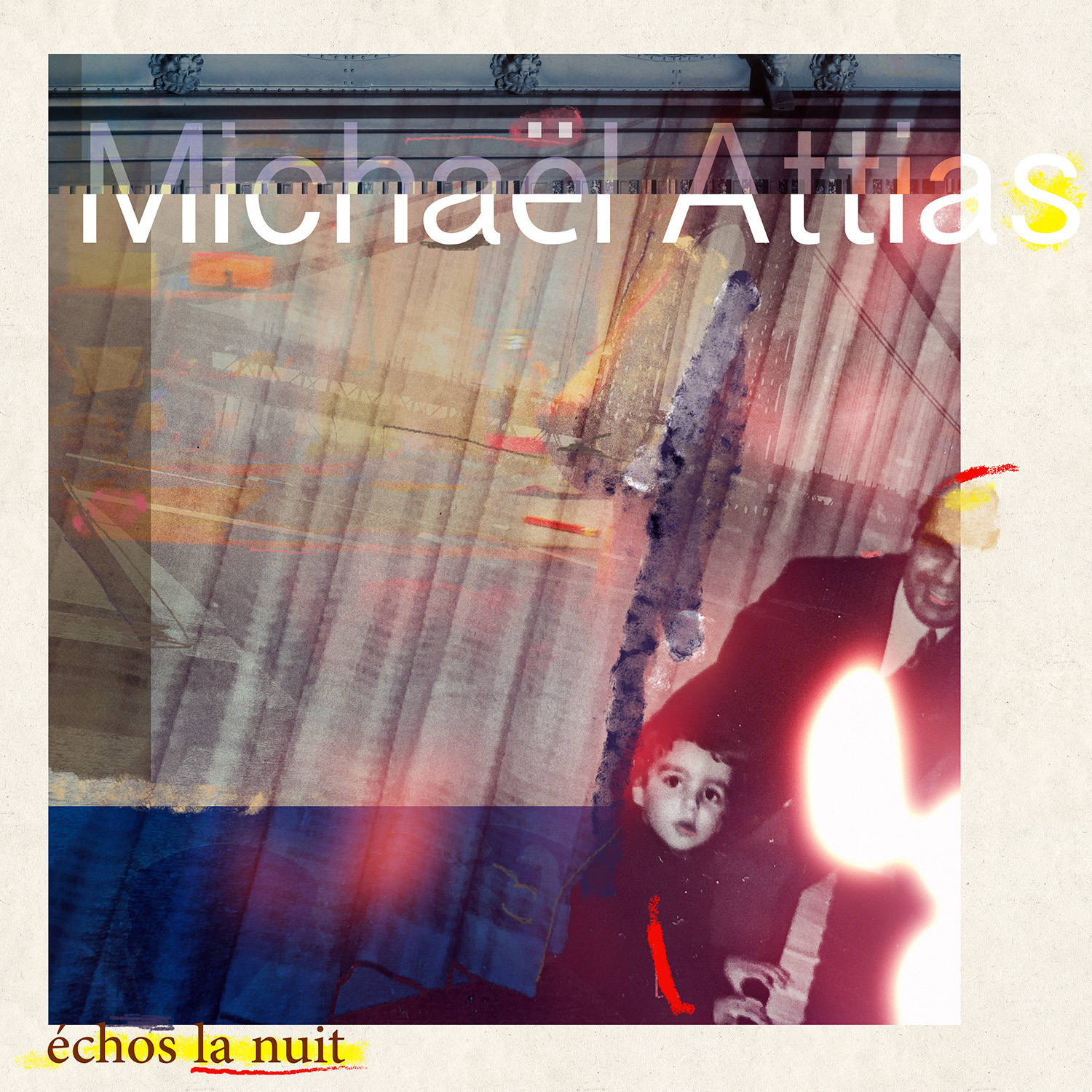
CD Review: Michaël Attias - échos la nuit/ Larry Grenadier - The Gleaners


Michaël Attias
échos la nuit
(Our Of Your Head) www.outofyourheadrecords.com

Larry Grenadier
The Gleaners
(ECM) www.ecmrecords.com

Michaël Attias and Larry Grenadier each went into the recording studio alone for these albums. The similarity between these albums really ends there, although both of them captured the qualities that can make a solo album as rewarding a listen as any session with a group.

For échos la nuit, Attias plays both alto saxophone and piano, often simultaneously. He didn't overdub in the session. His left hand played alto while his right handled the keys. In some ways, it's almost as if he took Rahsaan Roland Kirk's two- or three-horn approach and expanded upon it. The piano often acts as an accompaniment to his crisp saxophone lines, confirming them in "Echoes I Mauve" and returning to the main phrase introduced by the horn. They also move together in the angular "Trinité," clashing on an interval at the end of a phrase and sticking to their respective notes, like a left/right battle of wits. The piano strings reverberate when Attias hits a certain note in sax-only"Circles," sustaining and echoing the sound.

Attias shows dexterity and ease when playing both instruments together. If things sound rigid, the music calls for it, not for lack of ideas. Some tracks are based on snippets Attias had in his head for a dozen years but the session was largely improvised in just over an hour. So even if he forgoes the piano and gets introspective or stuck on an idea (the repetitive "Rue Oberkampf" is based on his studies of the Schillinger Technique), he adds something to the music to keep it from merely sounding like an exercise and gives it a proper payoff.

Solo bass albums can be some of the more challenging of the single instrument solo performances, due to its stark soundscape and the way frequency range where it lives. As on any album devoted to one instrument, a player can forget about songs and get lost in a display of various techniques (pizzicato/arco, low and eerie/high and shrill). But that hasn't stopped ECM from releasing numerous albums devoted to the instrument, starting with Dave Holland and Gary Peacock, leading up to last year's exemplary End to End by Barre Phillips, which I kept meaning to write about here.

Larry Grenadier could arguably called ubiquitous. His name appears frequently on albums, from his long tenure in Brad Mehldau's trio to time with Paul Motian and Pat Metheny and the cooperative trio Fly. The Gleaners comes off like a well-organized recital because each track feels like a developed composition.

"Pettiford" might be a largely improvised homage to the bebop legend, but Grenadier lays out his lines, flowing from short phrases to boppish riffs, in an extended complete work. The way he strikes his instrument, heavily but not heavy-handed, is spellbinding, and lets the wood resonate. The wood can be heard too when he uses his bow, especially when he spends time in the upper register ("Oceanic"), playing with rich clarity. One of two bagatelles composed by guitarist Wolfgang Muthspiel features Grenadier's strings gracefully harmonizing, bringing out the power of the brief track's slow melody. In the countryfied "Woebegone" he plays rhythm and accompaniment simultaneously, overdubbing a second bass track.

I've often said that solo albums give a chance to get inside the head of a musician and find out what goes on. If these two albums are any indication, Attias and Grenadier's minds are hubs of activity with constant movement and development happening.

Monday, April 08, 2019

CD Review: Anna Webber - Clockwise


Anna Webber
Clockwise
(Pi) www.pirecordings.com

Anna Webber came to Pittsburgh last fall with bassist Adam Hopkins' Crickets band, in which her tenor acted as one-third of a saxophone section that added to the free jazz-cum-indie rock style of the music. But that set offered no indication of what appears on Clockwise, Webber's tenth album under her own name.

These compositions were inspired by percussion works of 20th-century composers, among them Iannis Xenakis, Morton Feldman, John Cage, Edgard Varése and Karlheinz Stockhausen. Rather than appropriating their music, she extracted ideas from them, often creating works that begin with rigid, almost minimal movement. They're executed by a septet that moves beyond the percussive foundation of the work, while frequently maintaining a stark, unsettling quality to the writing.

Things get off to an tense start with a literal clockwise grouping of instruments in "Korē II." Cello (Christopher Hoffman), bass (Chris Tordini) and Webber's tenor overtone honk create a rhythmic cycle that skips every so often. Gradually Matt Mitchell (piano), Jeremy Viner (clarinet), Jacob Garchik (trombone) and Ches Smith (drums) flesh things out by cutting in with another segment, making it sound like the whole thing was created through editing and looping. It wasn't, as indicated by some added clarinet and cello noise, and Smith's fills. Like its bookend, "Korē I" the addition of these slight embellishments (in "I" they come when Tordini adds some passing tones) keep things from sounding stiff.

But the jerkiness of "Korē II" is no preparation for the abrasive blend of Webber and Viner's tenors that continue for the first two minutes of "Idiom II." When they finally break and Hoffman moves into a solo, it almost sounds like he's apologizing for the horns' imitation of whiny children.

Beyond that, Clockwise features a pretty compelling blend of adventurous writing and playing. It might be the instrumentation but Webber's writing sometimes evokes thoughts of Henry Threadgill. The movement of the music might not be apparent but the players move with clear direction. A piece like "Array" goes into different sections and where it lands comes as a complete surprise, one that begs for further examination.

Webber only gives herself one opportunity to show off her tenor skills, in  the 1:39 "Hologram Best." Much of the time she plays flute, alto flute or bass flute, contributing layers to this intriguing music instead of acting as an improviser. Viner takes the tenor solo in "Loper" a piece that builds up slowly for ten minutes, following the opening blast in "King of Denmark I." The other two "King" tracks on the album are short improvisations by Smith and Tordini respectively which Webber edited and reconstructed.

The methods Webber used on Clockwise - transferring percussive ideas to melodic instruments, emphasizing timbre - aren't explained in liner notes. Without any road map, listeners might be left scratching their heads at the music. Like the composers from which she took inspiration, this set comes off more like contemporary new music rather than jazz. Improvisation factors into it, but often it sounds more like something pre-composed but played with a spontaneous feeling. At the same time, much of requires repeated examination and, for the most part, the music inspires that feeling - as well as a desire to hear the nine albums that Webber released prior to Clockwise.

Saturday, April 06, 2019

CD Review: Moppa Elliott - Jazz Band/ Rock Band/ Dance Band


Moppa Elliott
Jazz Band/Rock Band/Dance Band
(Hot Cup) www.hotcuprecords.com

Moppa Elliott is not one to shy away from a big concept. The bassist, after all, took part in a note-for-note recreation of Miles Davis' Kind of Blue with the release of Blue by his band Mostly Other People Do the Killing. That band's m.o. from their earliest days was to be able to both play free and be able to a "genuinely convincing version of rhythm changes if we want to," as he told me a couple years ago. Elliott, and by extension the group which otherwise played his compositions almost exclusively, might have been a little provocative at times, and perhaps a bit ironic, but the guy knows the music inside and out. He know what he's talking about.

The scope of Jazz Band/Rock Band/ Dance Band brings forth a triumvirate of bands, each executed separately. Spread over two discs (or three records, according to the press kit) Elliott convenes three groups that live up to the album title: Advancing on a Wild Pitch, a straight ahead jazz quintet; Unspeakable Garbage, a quintet that plays instrumental rock; and Acceleration Due to Gravity, a nine-piece group that might not exactly be a dance band in a modern or traditional sense, but nevertheless produces a strong set.

Jazz Band features Sam Kulik's trombone and Charles Evans' baritone sax in front of a rhythm section consisting of Elliott, pianist Danny Fox and drummer Christian Coleman. This album features compositions from the MOPDtK book taken in a largely straightforward direction. ("Slab" is the only new composition.) The blend of the two lower horns gives the session a particularly rich sound.

While the arrangements of the slow waltz "Can't Tell Shipp from Shohola" approximates the version that appeared on Slippery Rock, hearing it without Kevin Shea's gargantuan press rolls allows it to become more like a ballad. "Herminie," dedicated to pianist Sonny Clark, settles more into the Horace Silver-esque bass line (think of "Que Pasa"), and, like a number of these tracks, creates music that would have sounded right at home on a '60s Blue Note album. Note - that's much different that an album that tries to sound like or recreates the feeling of an album like that. Furthermore, Moppa the band leader, Moppa the record label owner and Moppa the bassist have been recognized. This disc pays special attention to Moppa the composer.

Rock Band was inspired by a love of '80s rock music by members of the group that play on this session. Although they appear with era-appropriate pseudonyms on the cover, it consists of Elliott, saxophonist Jon Irabagon, drummer Dan Monaghan, keyboardist Ron Stabinsky and guitarist Nick Millevoi. On first examination, this set evokes one clear thought to someone who grew up in the not-always-awesome decade that it evokes: television theme songs. In the previous decade, funk made its way into living rooms via Sanford & Son and Barney Miller. In the '80s, the studios were merging big band charts  - and strings - with distorted guitars in a crossover attempt, much as the network brass was trying to lure viewers.. Catchy melodies were still there, but Magnum P.I.  and the sax-heavy opening to Cagney & Lacey added some steroids to the sound.

It's not hard to imagine a freeze frame on a smiling supporting cast member while listening to the anthemic "Stone Hill." "Big Rock," the final track, even moves with the farewell of a closing theme, as the credits role. During the themes of these cuts, Irabagon could very well be Tom Scott, belting away as if he's afraid of being drown out by the amplifiers.

But....

Listen a few more times and you realize Scott would never unleash a torrent of altissimo wails and make a complete statement with them like Irabagon does in "Rocks, MD." (James Carter might, but that's another story.) Scott would also never get into a battle of noisy wits with a Farfisa organ as it happens in the punchy "Punxsutawney." Once the culture shock wears off, the charm sets in. This is no novelty. Elliott means it. Or if he doesn't, I'm still watching. Um... listening.

Dance Band features the bassist along with Ava Mendoza (guitar), Bryan Murray (soprano, tenor and his own balto! saxophone), Matt Murray (alto, soprano), Kyle Saunier (baritone), Nate Wooley (trumpet), Dave Taylor (trombone),  George Burton (piano) and Mike Pride (drums). It also has some of the wildest performances of the whole set.

This set features the one non-Elliott piece in the form of Kanye West's "Power." The arrangement will most likely leave its author scratching his head. In addition to regular interjections for King Crimson's "21st Century Schizoid Man," it includes a pungent alto solo by Murray, followed by an absolutely searing trumpet solo from Wooley, a harmonized soprano duet that could have been lifted from the last track and a final statement from Mendoza. The rest of the set is equally dense, coming off sometimes as heavy but also highly layered.

It all makes you wonder how Moppa Elliott can follow a magnum opus like this.