Wednesday, February 28, 2024

CD Review: Angelica Sanchez Nonet - Nighttime Creatures

Angelica Sanchez Nonet
Nighttime Creatures
(Pyroclastic) 

Angelica Sanchez says she composed the music on Nighttime Creatures for the eight musicians that join her on the album and it definitely sounds that way. There are many tracks where the musicians seem to play their personalities. In the multi-part "Astral Lights of Alarid," everyone is used for distinct voicings in the theme, after they create a series of diminished chords with Sanchez's piano. The title track begins with a series of crescendos where half the horns answer the other half as the melody connects. Michaël Attias (alto saxophone), Ben Goldberg (contra alto clarinet) and Chris Speed (tenor saxophone, clarinet) stand out distinctly in one channel while Thomas Heberer (quarter-tone trumpet) and Kenny Warren (cornet) respond in the other channel. If anything is hard to discern, it might be the difference between the two brass instruments.

Even if Sanchez issn't exactly pulling a Duke Ellington, building her parts around specific musicians, the scope of her writing still has unique ebbs and flows to it. "Wrong Door For Rocket Fuel" begins with a three-way melody from Attias, Goldberg and either Heberer or Warren. The way they layer on each other still provides plenty of space to keep their parts distinct. "Land Here" starts free, with everyone waking up to the sound of Sanchez's jaunty playing. This continues for over three and a half minutes until a tight theme takes shape. Once again, they trade off, half of them playing sustained notes to shorter ones from the other half. 

Throughout the album Goldberg and Attias get a big cut of the solo space. Highlights include the former weaving around Sanchez's chords in the title track, and the latter engaging drummer Sam Ospovat in a duet during "Ringleader." Guitarist Oscar Tamez straddles incisive comp parts and quick solo space. Bassist John Hébert gets some room for double stops during a reworked version of "Tristeza," a piece by Chilean composer Armando Carvajal.

With Sanchez's skill at writing for specific players, it comes as a surprise that her interpretation of Duke Ellington's "Lady of the Lavendar Mist" comes up a bit short. While nothing feels wrong about it, and she again scores it well, the tune, which dates back to Duke's late '40s era, feels a little tranquil compared to the rest of the album. 

Nevertheless, Nighttime Creatures presents a strong evidence of how Sanchez's writing skills are creating a unique body of work.

Monday, February 19, 2024

CD Review: Jeremy Udden - Wishing Flower


Jeremy Udden
Wishing Flower

Saxophonist Jeremy Udden's albums, with groups like Plainville, seem to might have taken inspiration from both jazz and post-rock. The alto saxophonist clearly brings the melodic and improvisational perspective to his work from the former category. From there, he has often rendered his ideas in spare, very deliberate songs, which recall the slow-core bands of the past two decades. Space is often left wide-open in the rhythm section and even in Udden's own alto work; sometimes his minimal choice of notes and use of middle and lower range of his horn might make it hard to tell if he plays alto or tenor. 

The simplicity of the arrangements have frequently created some enchanting music. Much of the Plainville catalog could double as soundtracks for films of travels down long Americana highways. Udden skillfully imples that the destination plays second fiddle to the actual journey. 

Wishing Flower continues in that vein, although the inspiration to this album is decidedly urban. The music was inspired by walks with his daughters through their neighborhood of Brooklyn, taking in site of dandelions growing through sidewalk cracks, earning them the designation of "wishing flowers." While Plainville included guitarist/banjoist Brandon Seabrook and keyboardist Pete Rende, this album features a different quartet of longtime friends: Ben Monder (guitar), Ziv Ravitz (drums) and Jorge Roeder (bass).  

The production of Wishing Flower is very dry, with no echo or sustain. This benefits the band in most cases. Ben Monder never needs excessive volume to state his case. In "Pendulum," he sets fire from his corner of the room, as the rest of the band interacts in a vamp that might have gotten lost in a heavier production. The gentle "Lullaby" feels like a Paul Motian piece, moving gently in a free time.  

In addition to his alto, Udden switches to Lyricon for a few tracks. This 1970s electronic wind instrument is associated with recordings by Steely Dan, Michael Jackson and Weather Report, which should give an idea of how it sounds: sometimes intriguing (it frequently takes a moment to realize it's not an effects-heavy guitar), a little dated and something of a novelty. It fits in the funky lilt of "1971" in which Udden pulls a weird solo out of it. In "Car Radio" the instrument plays into the song's laidback feel perhaps a bit too much. Here, the production hampers the delivery a little; Ravitz seems to be laying down a groove by bashing away but the overall hit doesn't quite come across.

To close the album, Udden picks a tune far removed from his genre, though not from his mood: "Fade Into You," the 1993 dreamy, psych-folk hit by Mazzy Star. Already a slow song, Roeder plays the four-chord vamp at tempo that's barely awake. His bandmates take liberties around him, so Mazzy Star fans might only recognize the tune through close scrutiny. Udden plays the melody on Lyricon. Monder starts out sounding like cars hissing past on a highway and ends up stealing the show by the second verse. Eventually, the Lyricon transforms into something like an ornery clavinet, rising up without exactly disturbing the languid core of the tune. It's a successful and rather bold interpretation, though it can leave you wondering what might have happened had Udden switched over to alto at some point. 

Although some tracks on Wishing Flower could have benefited from a little more spring in the step, Jeremy Udden continues to create sonic landscapes that can motivate listeners to stop and appreciate things in the cracks like the dandelions. Why he hasn't been pulled into the world of film soundtracks is anyone's guess.

Monday, January 29, 2024

LP Review: Joseph Branciforte & Theo Bleckmann - LP2


Joseph Branciforte & Theo Bleckmann
LP 2
(Greyfade) www.greyfade.com

The cover of LP2 recalls the stark artwork on records from Factory, the UK label whose heyday occurred around the late '70s/early '80s with bands like Joy Division or A Certain Ratio. A band of one-inch lines in various colors runs the length of the cover, towards the left; the catalog number and release date appear on the front in the lower right corner, next to what looks like a UPC code but is actually a set of bars with Greyfade website beneath it. The album title appears sideways, opposite the bands of color.

The label might share a sense of independence with Factory, but Greyfade is no post-punk imprint. It specializes in "processed-based music, electronic & acoustic minimalism, alternate tuning systems and algorithmic composition." Vocalist Theo Bleckmann has become known in jazz circles with  performances that can be either soothing or unsettling as a leader and collaborator (with groups like the brass quartet Westerlies, drummer John Hollenbeck and composer Meredith Monk among others). Joseph Branciforte has worked as an engineer and producer for numerous musicians (Tim Berne, Ben Monder, Steve Lehman) in addition to recording his own music. LP2 is the second effort by this duo, following LP1 (2019). 

While their previous collaboration was purely spontaneous, the duo took liberties in the studio this time, utilizing "prompts" to guide the music, and overdubbing more instruments. The preparation serves to blur lines between improvisation and composition, which gets further extended by the works themselves when heard in analogue form. The record is pressed on clear vinyl, making it hard to discern the breaks between tracks. All eight have numerical titles ("1.13," "10.11.5") with no time durations listed for any of them. The point, seemingly: forget typical conventions and just listen.

Branciforte and Bleckmann immediately create a rich sound on "1.13" with vocals that feel awash in subterranean reverberations, like an angel singing at the far end of a subway platform. While this happens, the sounds of the city (actually Branciforte) provide a soothing backdrop to the voice. At other times, Branciforte's modular keyboards fold in so well with Bleckmann's voice that distinguishing one from the other can be a challenge. The ten-minute "11.15" unfolds like a dream soundtrack with several voices, high and low, adding to the non-verbal conversation while the toll of an electronic bell sets a gentle tempo.

The second side of the album brings to mind some David Bowie-Brian Eno collaborations, specifically the second half of the "Heroes" album, in which the music unfolds slowly, setting a scene. Different textures pop up, with voices coming and going. It can also feel like Bleckmann's different parts have all been part of the soundscape the entire time, and just coming into clarity at various moments. Therein lies the depth of this music. 

Along with the longer tracks, the album includes a few pieces that last just over a minute, offering quick bites of static, choirs of voices or percussive clatter. A few even add what amounts to surface noise, in case the pristine vinyl might need it. The brevity of these pieces doesn't give the music time to get too abrasive; it acts more like an interlude between the bigger works. 


Thursday, January 25, 2024

LP Review: The Human Hearts - Viable

Another album I've been meaning to write about for a few months.


The Human Hearts
Viable

Nothing Painted Blue's Emotional Discipline (Scat, 1997) could be considered as the indie rock equivalent of  Buzzcocks' Singles Going Steady. Like the British band's collection of eight 7" releases, the Upland, CA group compiled singles that appeared on a variety of different labels, profiling a group that could deliver graduate school-level post-punk lyrics while rocking out at the same time. With more music on it than the Buzzcocks' release, the tidal wave of hits keep coming for about an hour. Why that album isn't recognized in tandem with all the other oft-lauded albums from that period is beyond me. 

Now Franklin Bruno, the voice and wit from ∅PB, has undertaken a similar effort with his current band, the Human Hearts. Viable commits previously released material to vinyl, some for the first time, with a handful of singles, a digital EP and a few solo songs that were available through a Kickstarter campaign; all 14 tracks came out between 2011 and 2015. In addition to proving that Bruno is still a songwriter with a skill at great couplets, the seemingly random assortment of tracks reveal the wide range of his writing skills.

Songs like the darkly humorous "Flag Pin" and driving "Art Books" play to his skillful rock tendencies. At the same time, "Last Words of Her Lover," with lyrics taken from a poem by Helen Adam and sung by Bruno's wife Bree Benton, wouldn't sound out of place in a current musical or pithy supper club setting. Accompanied by some lonely piano chords and melancholy violas, Bruno himself sings "Nick Cave" with a certain in-the-spotlight pathos usually reserved for the theater (which, naturally, he counters with the song's wry tale of fan worship aimed at the subject). 

Among the rotating group of  bandmates, Bruno's longtime friend Jenny Toomey (Tsunami, Simple Machines Records) handles the vocals on a couple songs. The tradition continues in covering a song by a peer, in this case the band Wckr Spgt's odd and somewhat unsettling "Terrible Criminal" gets the Bruno treatment. "June Is As Cold As December" originally done by the Everly Brothers, also gets a faithful rendition, complete with some harmonies from longtime Human Hearts drummer Matt Houser.

Last summer, Bruno suffered a heart attack while vacationing in France. Thanks largely to the health care system in that country, the singer/guitarist was able to receive immediate treatment and was performing again before the year was out. As a fan and something of an acquaintance of Mr. B, it was scary to imagine someone so gifted being taken from us like that. I'm glad that he's better and hope that the new Human Hearts album will be in our hands before too long. 

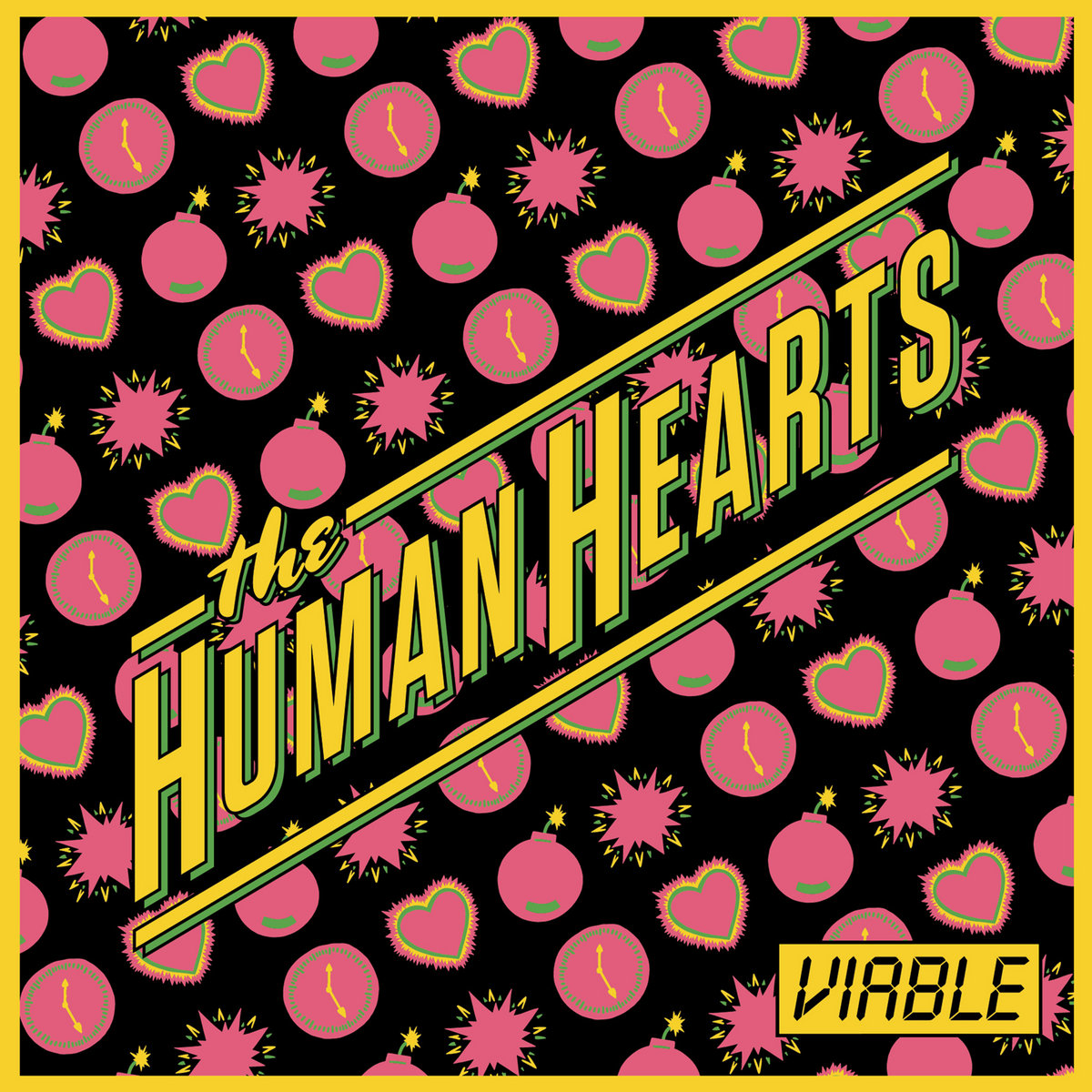
Finally, the cover of Viable presents another homage - a hat tip to the new wave-era colors and cover art that were prevalent around 1980, specifically Epic Records' Nu-Disk series. 


Friday, January 19, 2024

You Won't Enjoy Fugazi On As Many Levels As I Do

Back during my college days, when the WPTS-FM office was my second home, I went to a party at an apartment where I used to live with a few guys from the station. At one point, a bunch of dudes standing around the keg starting hollering along with the song that was blasting from the stereo: "It's the End of the World As We Know It." These guys weren't bros in the way we think of "bros" in 2024. They were just some guys who had had a few beers and were trying to keep up with the rapid-fire lyrics of the song. (And I believe they did pretty well.)

I had already jumped off the REM bandwagon a few years earlier, in part because their more recent stuff had bored and in part because their audience soured me on them after the crowd booed Camper Van Beethoven when they opened for the Athens guys. I was at that age where things like that meant too much to me. 

Deep down, I knew "It's the End of the World" was a good song. (These days hits me heart in a special place, in fact.) But back then it was NOT THE KIND OF THING YOU SING DRUNKENLY WHILE YOU'RE STANDING AROUND A BEER KEG. That's not how you appreciate a song like this. You just.... you just... stop. Just stop, dammit. Do you even really appreciate the song, dudes?! I said that in my head, not out loud. I just rolled my eyes.

I thought of this scene recently and laughed at myself for being such a tight ass, recalling Professor Frink in that episode of The Simpsons when he scientifically explains the way a kindergarten toy works. One of the tykes asks if she can play with it. "No, you can't play with it," he snaps. "You won't enjoy it on as many levels as I do." 

There was no reason to get so bugged. After all, they were just having a good time. No, they weren't listening to Big Dipper but they weren't treating "We Didn't Start the Fire" or "I'll Be Lovin' You (Forever)" with the same enthusiasm either. Let the dudes have their fun, my current self thinks.

The reason I was taken back to this time (aside from a memory for things like this) has to do with a video I saw on Instagram earlier this week. It was a 45-second clip of kids from the Cleveland School of Rock performing live. Specifically, it was a group of teenagers, mostly young women, singing the Fugazi song "Waiting Room." These weren't serious looking straight edge kids either. These were all American looking girls in sundresses with spaghetti straps jumping all over the stage. In other words, not the types of kids you'd expect to be singing Fugazi. 

But they sounded really good. The music was tight, with the right amount of staccato buzz in the guitars. (Not sure if the kid on the cowbell was really necessary but why leave anyone out?) The singers were barking out the words with the same kind of urgency that you'd expect from Ian MacKaye. They did their homework.

But go the comments, and people were NOT happy. "Punk is dead." Random comments about suburban kids having the gall to sing Fugazi songs. There were probably more about the group of predominantly young ladies performing the song and how wrong that is. (Even though the bassist was playing a Rickenbacker! Salute!) 

I realize people love going on social media and pissing on the parade. When 20 people have talked about how much they like an album, there's got to be one schlub who say it sucks. Even though EVERYBODY ALREADY KNOW IT, it's important to remind readers how awful Morrissey's politics are. Or how John Lydon supports Donald Trmpf (which I still have trouble believing, seriously.) 

Social media allows us to legitimize these ornery positions too. Which classic songs do you hate? What music do you intentionally ignore? The latter category - which, granted is rare - is one that gets under my skin and gets to the heart of this situation. "I've heard it done before - and much better." Why are these things always a competition? Why does one song/band/version have to be evaluated next to another one? I used to hear this from musicians. "We can play it better than the original." In a lot of situations, that wasn't the case, having been the person doing the singing (and hearing live recordings on which me and the correct pitch were across the room from each other.) Just because a group of musicians has more chops than, say, the Adverts, does that mean their version of "Gary Gilmore's Eyes" will sound better? If Toto played "God Save the Queen" how would it sound? It's not a competition.

A lot of times a band that is accused of trying to "rip off" some predecessor isn't doing that either. Maybe I'm naive, but it seems like homage or inspiration is at work more than "oh, they're just trying to sound like [pick a band]." There are only 12 notes in the Western scale. If a band is banging an E chord than a G chord, maybe there's a good chance their trying to rewrite the Stooges' "1970" but maybe they just stumbled upon an easy, raunchy sounding progression on their own. Listen to how they play, and how they might look as they're playing it. Does they seemed charged up? That's what matters. Those Cleveland kids were ripping into "Waiting Room" like they had just seen Fugazi. They weren't ripping them off. Maybe they weren't as dead serious as Ian and Guy and the band was, but let them have their fun. Maybe they will change the world for the better, if not with music with their actions.

In doing further investigation, I found out that clip is several years old and has passed around IG a few times. (Chances are, someone has already written this exact post about it.) The posted version that caught my eye earlier this week, with all the grouchy comments, can't be found. If the one I just found is the same post, all but a few comments have been taken down, including one I made. I paraphrased a song by MacKaye's previous band, Minor Threat. "At least they're trying... what the f*** have you done?!"

Years after rolling my eyes at my college brethen for singing REM, I had two chances to play that song live. One came at a Halloween-time show where I played in a pick-up group doing REM tunes. The other one I ended up missing because I was sidelined with COVID: the band at the Unitarian-Universalist Church that I attend played it as part of a sermon. (They found a fill-in.)

Yeah, the 22-year old me would have said the latter one was cheesy, but he needs to shut up.  


Wednesday, January 17, 2024

Playing Catch Up: Jason Adasiewicz Returned in 2023 With Two Unique Albums


The first blog post of the year finally comes down the pike, more than halfway into the month. In the past, this month has been a time of renewed excitement, with the look back at the previous year all being done in the first couple days of the new year.

There are a wealth of new releases coming out too but there are also too many things that I didn't get to expound upon before 2023 wrapped up. I couldn't get it together then, but I can now. So I'll try to be quick and concise and tell you what I liked that you might have missed.

Jason Adasiewicz 
Roy's World

Jason Adasiewicz
Roscoe Village - The Music of Roscoe Mitchell

Jason Adasiewicz's approach to the vibraphone has always possessed a magical quality, taking an instrument with a very distinct personality and using it in ways that blow any pre-determined ideas about it out of the window. There are precedents for what he does, like Bobby Hutcherson's performance on Eric Dolphy's Out to Lunch. But it's hard to imagine Hutcherson blending with the late Peter Brötzmann, and nurturing a more delicate performance with the burly saxophonist. Adasiewicz did that one year at Winter Jazz Fest. On top of that, and a role as one-third or Rob Mazurek's Starlicker trio, there were three albums by Adasiewicz's Sun Rooms trio, where his sustain pedal stayed in constant use, and he created flowing lines, accompanied by bass and drums.

Then he disappeared. Or at least, he fell off my radar. No new sessions, no side gigs, nothing. Maybe I wasn't looking in the right places but I worried a little. Maybe he dropped out of music, frustrated that only bloggers were talking about him all the time. Maybe family stuff took precedence. Or maybe COVID knocked him down. (Hence the worry.) I tried asking around to people who seemed like they would know but the only responses were the equivalent of shoulder shrugs.

Then last fall, somehow I stumbled across an Instagram post by the Corbett Vs. Dempsey label, talking about the second (!) Adasiewicz album they released in 2023. Suddenly my prayers have been answered. Or I was finally looking in the right place. (Those few months with no real writing gig took its toll.) The Bandcamp listing for Roscoe Village even explains his absence. He took a five-year sabbatical, became a carpenter and built himself a recording studio/practice space. 

Which brings us to my favorite album of 2023....

The tracks on Roy's World were composed as a soundtrack for the film Roy's World: Barry Gifford's Chicago, based on a Gifford's collection of short stories. However, the music was made before there was film on which to set it. With Josh Berman (cornet), Jonathan Doyle (saxophones), Joshua Abrams (bass) and Hamid Drake (drums), Adasiewicz composed eight pieces that all evoke some cinematic moods, working strongly as a soundtrack but ultimately stand solidly on their own as an album of concise music. 

The instrumentation recalls the late '60s Blue Note era when players like Andrew Hill or Grachan Moncur III were pushing against staid musical structures without completely sacrificing them. "River Blindness (Full)" opens the album with a slinky blues structure, with cornet and tenor playing in unison with the vibes. It has edge and it has a solid bottom. Like in many tracks, solos are limited to just a few choruses. Sometimes one of the horns only plays on the theme. 

On "Do More," things flow freely with cymbals crashes and rolls, while Doyle, this time on alto, plays pointed spare notes that would leave room for narration in the final cut. By contrast he switches to baritone in "Sand" and doubles Abrams part, while Adasiewicz gets a chance to play some lines, utilizing the sustain pedal. Berman lights up the scene anytime he blows and his bent, conversational work in "Walking to Clinton" presents some of the highlights.  The leader switches to balafon on "Blue People" adding to the already rhythmical groove of the song, with horns lines that evoke an African melody. 

With an A-list group like this and a sound that brings together the ideal blend of adventure and structure, it's puzzling why this album didn't get more love upon its release last summer. Now's the time to catch up.


A solo vibraphone album can be a bit of a challenge, regardless of who's holding the mallets. Combine that setting with the compositions of Roscoe Mitchell, where space, atmosphere and extended technique can all factor into a piece, and the level of intrigue increases tenfold.

Adasiewicz transcribed eight Mitchell pieces for the album, along with a one written by Roscoe Mitchell, Sr. and one by R&B singer Otis Blackwell. While his approach to his instrument has been a bit aggressive at times (on some of his other records, it sounds like he's hitting so hard that the vibes bleed through one of the other studio microphones), he plays with a delicate attack on many of these tracks, slowly teasing melodies up through the vibrato of the instrument. It might be the first time a set of Mitchell's work could be considered lyrical, and that doesn't mean the music has been simplified by any means. 

Album opener "The Waltz" (an early Art Ensemble of Chicago piece) creates an aural version of entering a dimly light room: the setting might be hard to make out initially but as time passes, it starts to make sense. From there, it's easy to get caught up in the sound of instrument. "Toro," another AEC piece from the Paris days, maintains the groove of the original, even with just one instrument playing it. 

Throughout Roscoe Village, the selection of music and the pacing assures that the tracks never start to sound the same or run together. The elder Mitchell's "Walking In the Moonlight" is built on a bluesy foundation, which Adasiewicz toys with as he goes. At the same time, the groove of Blackwell's "Daddy Rollin' Stone" (one of Mitchell's favorite songs) can be felt throughout his playing. Both those tracks present some contrast, as does "The Cartoon March," which has never been recorded before. True to its name (and perhaps, some thoughts of Carl Stalling) the mood changes shape frequently, with stops, starts and dynamic drops, but it never meanders. 

Like any good Roscoe Mitchell album, repeated listens will yield more understanding of what's happening in the music. A whole recital on vibes feel like the gateway to deeper exploration anyway.

Jason, if you're reading this - glad to hear you playing again.

Tuesday, December 26, 2023

Me

After I write a post, I often check the tally to see how many posts I've written in total for the year, and compare it to where I was 12 months ago.  Most of the time, those numbers are relatively close. Sometimes, I catch up or figure I will within a months time, or before the year is out. 

But I really fell hard off the wagon in November, writing one piece and then disappearing from this spot. This month, as you can see below, I finally posted my lost article on Steve Tintweiss. Beyond that, nothing. 

Part of the reason for no blog content is related to some good news. I started freelancing for New York City Jazz Record. My debut had me hit the ground running: I was assigned to write three reviews for the December issue, each one on two albums, with a pretty quick turnaround. (I don't know how other scribes do it, but I'm used to giving an album several listens, and scribbling some notes before I start on a review. Call me crazy.) There was a bit of scrambling going on in preparation (mostly internally) but I got it done. And I even went back and wrote a few things for the January issue of NYCJR too.

November was also a big music month for me. On Friday the 10th, I made it to Brillobox in time to catch Creedmoors, who released one side of a split single on Igor Records (my label) earlier this year. This was the band's third show since their debut at the release party earlier this year and on this night, they really sounded like A BAND. What I mean by that was that they were all working in unison, playing songs in which they had worked on parts that took the song's concept and elevated it, as opposed to being four people on stage playing the singer's songs, adding their thing to it and just having a good time. Not that I have anything against the latter approach, which can be a blast as well. But virtually every song in Creedmoors' set felt like it could be on album - a good album. 


Unfortunately, the timer was set on my phone camera and in the pic above, bassist Mike Athey and guitarist Tammy Wallace both look like they were under a sun lamp too long. But this was a good group action shot. Gato Gateau and the Hi-Frequencies both played that night also, but since I was coming from my work, I missed all but the last minute of the Hi-Freq's set. 


The next day I drove to Philadelphia (stopping in King of Prussia before and after, hanging with my brother) for only the second time in my life. The first trip occurred back in 2004 when I went to see Mission of Burma. This time, the reason was once again musical - to see my dear friend Barbara Manning open for Codeine. 

The last time I saw Barbara perform was in the last century, at a show where my band at the time got to open for her. She was great then but the turnout was embarrassingly low, for which I felt really bad. Especially since I knew deep down that my band was on its last legs, though I tried to put on a good face. 

Barbara took several years off from recording and performing, going back to school and becoming a teacher, and getting married along the way. It almost seemed like she was retired from music, which is understandable, considering how she released several albums for a high profile independent label and didn't seem to get beyond categories like "critic's darling" or "cult figure" or things like that. But now she's playing a few shows here and there, and dadgum, she sounds great. Her voice is still really powerful, her onstage patter is great and engaging. And... I'm planning to release a single on Igor Records by her in the coming year. This will follow the recently released CD Charm of Yesterday...Convenience of Tomorrow. 

Below is a picture of me and Barbara, at the end of the night at Underground Arts, where she and Codeine played last month.


A week later, the Harry Von Zells, my current band, finally played another show since the record release, which we did with Creedmoors. We have a firm new lineup, with my former workmate Erik Worth joining us on Moog. He really adds some extra energy, not to mention sonic wildness, to what we do and it was really great to actually have people cheering and whooping for us. 

I don't have any pictures of the HVZs but here are shots of the other bands on the bill, Frazé-Frazénko & the Happy Lovers, who combined stark, brittle post-punk with an adventurous jazz rhythm section.


Following them, Bat Radar delivered a solid set that reminded me a bit of the Feelies, with an extra dash of raw power, and - dare I say it - Television, due to the way guitarists Will Simmons and Paul Labrise delivered some dual leads. 


I took out an ad in the long-standing magazine The Big Takeover and they also found someone to review the Harry Von Zells album in the same issue. That arrived in the mail at the beginning of December. The review really blew me away because it's not often that someone seems to have really listened to my songs, or at least given them a cursory listen while checking out the lyric sheet to see what I'm talking about, and critiquing what they hear. The writer compared my voice to Stan Ridgeway (Wall of Vooddoo) and Keith Morris (Circle Jerks) - which I think is pretty on the money. I'll take it!

After all that, one might think I'd be inspired to do more blogging, digging into this pile of music that surrounds me and - while not thinking that I can get ahead of it - just simply getting thoughts out about a few things. But it's been hard. Not simply to find the time but to find the focus to do it. Especially after the demise of that other jazz magazine where I freelanced for over two decades, my confidence is a little shaky. As I came up with the reviews for  NYCJR, I was worried that my style or thoughts might not fit in with their other writers. (My reviews all ended up running with little or no changes to them, so perhaps I was overthinking it.) 

Blogging always feels like something I should be doing only after all the real important things are out of the way, like laundry and the dishes and vacuuming. Sometimes I feel like I have ADD while writing because I get lured away from the keyboard by the least little things, and it can often take a whole afternoon to get a post together.

But, looking back at a post from almost this exact week last year, I was lamenting in almost the same way about all this stuff, and that time, the feeling wasn't part of a longer post that started with a tale of musical journeys like this one did. So perhaps I need to just remind myself that I got through this slow period once before, so just do it again. And I should quit writing about not being able to write. There are better subject to cover. 

Saturday, December 16, 2023

My Lost Article on Steve Tintweiss


Now that JazzTimes has come back again, this Overdue Ovation on Steve Tintweiss can be found on the magazine's website. If you viewed it in the space before, please check out the link, as the original text has been editorially tweaked and updated. Thanks. 

More info on Inky DoT Media releases can be found here

Friday, November 03, 2023

The Pitt Jazz Seminar and Concert - Still Kicking in Year 53

The last time the University of Pittsburgh's Music Department presented the Pitt Jazz Seminar and Concert in the tradition established by the late Dr. Nathan Davis,  the world was pre-pandemic and people flocked to the Carnegie Music Hall in Oakland without fear of becoming ill. That was November 2, 2019. Nicole Mitchell was spending her first school year as the new head of Jazz Studies at the university. The one-time president of Chicago's heralded Association for the Advancement of Creative Musicians (AACM), Mitchell had told this writer a few months earlier during an interview that the concert would "shake things up" this year.

That description turned out to be a bit of an understatement, as my post from a few days later would indicate. The avant-garde had finally found an academic home in Oakland, and the locals were not happy. Suffice to say, jazz can be like that. 

The pandemic threw a monkey wrench into the annual event after that, though last year featured a series of talks and a concert honoring pianist Dave Burrell, which simultaneously served as a farewell to Nicole Mitchell, who had left the city for the University of Virginia. 

But after a few years of suspense - and rumbles that we might not ever see a big concert event like it again - the Pitt Jazz Concert is back for its 53rd year, with an all star lineup of veteran players and newer, equally cutting edge players sharing the stage. The show takes place Saturday, November 4. The venue has changed this time, apparently due to construction happening at the Carnegie Music Hall. The music is moving Downtown to the Point Park University's Pittsburgh Playhouse, 350 Forbes Avenue. Things kick off at 8 p.m.  Like years past, there are also free seminars on the afternoon of the show, which I'll get to in a minute.

First the lineup.

Dr. A. J. Johnson (trombone) has been the interim head of Jazz Studies at Pitt since Mitchell left and in addition to his work at the school, he has also been active on the local jazz scene, crossing a line that previous leaders didn't do as often as they could have. Among other things, Johnson staged four separate recitals of Charles Mingus compositions at Alphabet City. The lineup he has assembled for the Pitt Jazz Concert includes some exciting players, some of whom might be widely known, others who might be under the radar, waiting to bring listeners to their feet. 


Drummer Lenny White might be one of the most visible members of this year's lineup. At the young age of 20, he made an auspicious debut as one of the drummers of Miles Davis' Bitches Brew, playing on the title track. That album ushered in the blend of jazz and rock that became known as fusion, and White became one of the foremost drummers in that style. 

Most significantly, he held the drum seat in Return To Forever, one of the most successful groups in that style, if not overall during the '70s. White has since gone on to have a successful solo career, in addition to sideman work with artists ranging from Geri Allen to Ron Carter and Andrew Hill.  The drummer has also worked with bassist Buster Williams - a prolific artist and sideman in his own right, who also appears in the Pitt Jazz concert this weekend.


There always seems to be one guest at the Pitt Jazz concert who can make an attendee stop in their tracks, put aside any second thoughts about going and proclaim, "I'm there." My selection this year is trumpeter Charles Tolliver. He might not be well-known to the casual jazz listener but over the last half-century, he has made great strides for the both the music and the artists playing it. As a performer, he first showed up on albums like It's Time and Action by saxophonist Jackie McLean. The fire power in his playing paired perfectly with the leader's tart alto tone. Tolliver contributed some strong composition on those albums too.  

The trumpet player started a group in the early '70s with pianist Stanley Cowell, but the duo also launched the independent label Strata-East together. It might not have been the first label launched by jazz musicians, but it quickly garnered a reputation that continues to this day with listeners and collectors. Among the releases, the label had a hit with Gil Scott-Heron's "The Bottle."

Tolliver continues to play and record. In the '00s, Blue Note released With Love, a live big band album which revealed that time had not mellowed his musical outlook. When Gary Bartz performed his entire Another Earth album at the 2019 Winter Jazz Fest,  Tolliver joined him onstage, blowing in a manner that rivaled the late Pharoah Sanders, who was onstage that night as well. Connect, Tolliver's most recent album (2020) was a small group setting that also featured strong writing and playing. 

The concert's lineup also includes Keyon Harrold (trumpet), who came to town in 2019 during the Pittsburgh International Jazz Festival, playing an emotionally-charged set Downtown on Liberty Avenue. In addition to his own work, Harrold played the trumpet parts in the Miles Davis film Miles Ahead and has worked with a number of pop and hip-hop artists ranging from Beyoncé to Mac Miller. Once called a "mugician" by filmmaker Don Cheadle, ("musician" + "magician") during the filming of Miles Ahead, Harrold considers Tolliver a mentor, so the combination of the two should set off some sparks.

Pianist Victor Gould, saxophonist/vocalist Camille Thurman as well as host Dr. Johnson complete the lineup.

As part of the weekend's events, three free seminars will take place on Saturday at the Frick Fine Arts building in Oakland. Nicole Mitchell will return to speak at 1 pm, followed by Gould at 2 p.m., and Harrold at 3 p.m. Thurman will host a seminar at the Afro American Music Institute (7131 Hamilton Avenue) at 2 p.m. 

For those who read this article in a timely manner, pianist Benito Gonzalez will perform a solo concert at Bellefield Auditorium in Oakland (315 S. Bellefield Avenue). 

Information and tickets to Saturday night's concert can be found at https://www.jazz.pitt.edu/jazzseminar.


Tuesday, October 24, 2023

Catching Up With ESP-Disk' - Albums by Painted Faces and Allen Lowe

A few new releases from ESP-Disk' arrived in the mail recently. Before I get to them, I want to do some quick takes on a few things that the long-standing label released a little while ago. 

Painted Faces
Normal Street

Painted Faces is the performing and recording moniker used by David Drucker. Though he hails from Florida, he has no connection to THE Painted Faces, a short-lived '60s garage band who coincidentally hailed from the same state. Drucker has been a resident of New York for over a decade now as well.

Normal Street not only continues ESP's crusade to keep rock weird, it continues in the spirit of everyone from the label's early sound pioneers like Cromagnon to artists like Jandek, who turn on the tape and let things flow naturally. Whatever happens becomes the end piece, with extra trimmings added on top as they go. If the players are still warming up (the guitar and guest harmonica in "Paranoid Dollhouse") so be it. "An American Werewolf in Ridgewood" begins with a wall of guitars that recall Eno's "Here Come the Warm Jets." The vocals sound like J. Mascis wandered in, though it also feels like we might be listening on a radio that will collapse into static if the antenna is moved just a few inches. (Anyone who grew up listening to low-watt radio knows what I mean.)
 
No two tracks are alike. In fact, the first half of one track might be completely different from what happens at the end. "Xea" almost feels like an epic, starting with distorted piano and vocals with delay effects before other voices (protesters?) overpower the song, eventually ending up with droning bass. The electronics that hum in many tracks also recall early Throbbing Gristle.

It's unclear whether underground or college radio still functions with the same purpose of previous decades, which motivates DJs to play the strange and unusual releases, hoping to both unnerve and blow minds of listeners. Normal Street (named for an actual street near a DIY space in Worcester, Mass.) belongs in that category of albums. Maybe this isn't casual listening but the sounds on this record can reel you in, wondering who the hell this is, leading you to keep listening to answer that question and to find out what will happen next. Take this record and play it. For everyone


Allen Lowe
America: The Rough Cut

In The Dark

A composer, author, guitarist and saxophonist, Allen Lowe know a lot about a lot. He's not afraid to let you know either. And if your perspective doesn't jibe with his, watch out. A quick look at his Facebook feed indicates that "cantankerous" might be an understatement when it comes to his opinions on certain topics. I once felt compelled to reach through the screen and backhand him after he went after some friends of mine - who he hadn't met - when they opined on the subject of Art Pepper's salacious memoir. (To his credit, Allen later apologized.)

This is not to say that Lowe thinks everyone is wrong and that his is the final word. He's just very passionate about what he does and thinks. Even if you get rankled by his rants ("No mention of Jo Jones in the recent Max Roach documentary?! What's wrong with people!"), anyone with a lick of sense can walk away saying, "Well, the man has a point."

Lowe is also the type of composer who doesn't let things like major surgery or insomnia get in the way of his muse. In fact, it virtually opened the door to a wealth of productivity in the past couple years. Along with throat cancer surgery, he had a cancerous tumor removed from his sinus, which left it hard for him to sleep. (In another example of not holding anything back, a thumbnail picture of his post-surgery face appears on America: The Rough Cut and it ain't pretty, bless his heart.) But in the move that should motivate all of us to pursue our visions, he penned four discs worth of music that ESP released this year.

America: The Rough Cut, Lowe explains in the liner notes "is my statement not only on American music and American song, but also my commentary on the way American musicians of all styles handle that old time music and those old song forms." Most of it features the leader on tenor or alto saxophone, along with guitarist Ray Suhy (who also plays banjo), bassist Alex Tremblay and drummer Kresten Osgood. 

Although he doesn't attempt to chart the entire history of American music, Lowe cooks up 13 tracks that follow a trail blazed by all manner of blues, country and jazz forefathers, blowing with a gritty, vast line of tenor ideas, bolstered by Suhy's often vicious, fiery fretwork ("Blues In Shreds," Metallic Taste"), making the latter a player who should be heard more often. In "Cold Was the Night, Dark Was the Ground," Lowe picks up the axe himself but although he references Blind Willie Johnson in the liners, his vocalizing sounds more a bad Tom-Waits-on-a-bender voice. (That's probably going to draw some Lowe wrath.) The album closes with "At A Baptist Meeting," a 2014 live recording of a band with a five-piece horn section including alto saxophonist Darius Jones and the late trombonist Roswell Rudd, who leaves us some beautiful growls. The sound (band and recording) makes a dramatic shift with this finale but the piece is worth it.

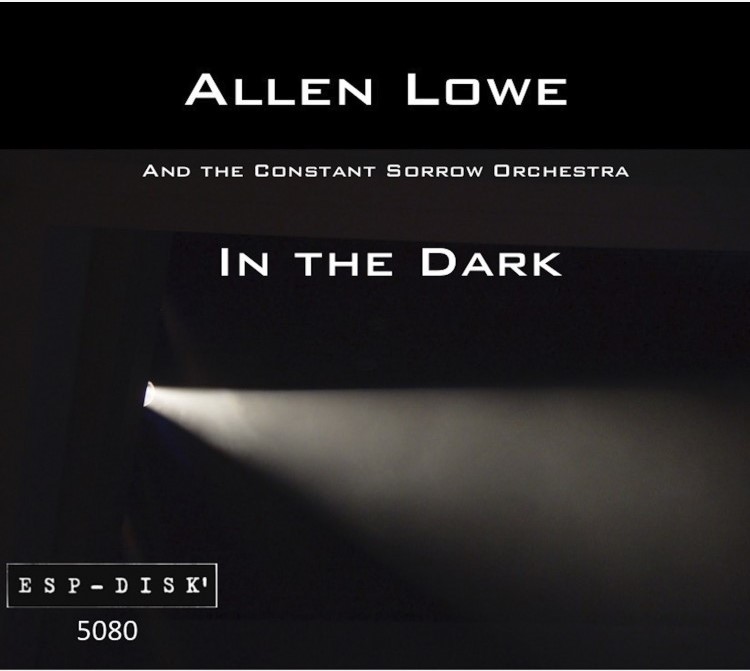
In The Dark is textbook Lowe: three discs of music with his sprawling tenor lines in company with some strong fellow horn players: Aaron Johnson (alto, clarinet), Ken Peplowski (clarinet), Lisa Parrott (baritone), Brian Simontacchi (trombone), Kellin Hannas (trumpet). Lest anyone forget, Lowe was voted 2021 Artist of the Year in JazzTimes (the same month in which the magazine ran my feature on him) and this album offers plenty of evidence why he deserved such that recognition. His writing is heavy on detail with unexpected turns in melody, and he knows how to score his works for a larger group. (Not all of the horns play one each of the 30 tracks; each disc sort of divides different sections up, with at least a few of them joining the leader each time.) 

At times, I can't help thinking of Mingus Ah Um or Blues and Roots while spinning In the Dark. Not that Lowe is trying to be Mingus, but like the bassist, he's drawing on familiar forms and using them as a springboard for new ideas. Playing in a more straightahead style is not a crime, unless a player thinks that by playing in that way, it alone will carry them. Lowe understands that it's crucial to make it count - in other words, to bring something new to the table besides reverences. Of course, if a wild label like ESP is the label releasing the music, one can't expect a staid set of swing either.

Part of his approach involves irreverence, with titles like "Out To Brunch," "Innuendo In Blue" and "Do You Know What It Means To Leave New Orleans," but that's only the start. For every clever title, he also has ones like "Goodbye Barry Harris" and "Memories of Jaki," which get reflective in the best way. He and Johnson work so well together that it's sometimes easy to miss one passing the solo baton to the other. At other times, it's quite obvious, like when Johnson incorporates some Dolphy-esque bite into his playing, which includes at least one moment when he throws in the Classic Dolphy Alto Line (anyone who's listened to even a small portion of the late multi-instrumentalist's work should know the mangled melody). 

As good as both of these Lowe albums are, listeners would be well-advised to snatch up his forthcoming epic, called  A Love Supine. I discussed the album at length in my JT piece, as it features an especially strong set of original material played by a powerful band (many of whom show up here). But its release was back-burnered in favor of these two. Supposedly, it's still in the ESP hopper, with a album number and all, so hopefully it will appear sometime soon. 

In the meantime, there is plenty to explore here, with all three of these albums presenting both ends of the ESP-Disk' musical spectrum

Wednesday, October 18, 2023

CD/LP Review: James Brandon Lewis/Red Lily Quintet - For Mahalia, With Love


James Brandon Lewis/ Red Lily Quintet
For Mahalia, With Love

It's the time of year when the in-box is flooded with email requests to keep albums "for your consideration" when nominating albums for Grammys. I'm not, nor have I ever been, on any committee that had the (dis)pleasure of picking nominees for such things, but those folks hoping for a nomination don't want to leave any stone unturned, so the missives keep coming.

Among the pleasant surprises in the emails were requests to remember James Brandon Lewis' Eye of I, which came out earlier this year on the not-exactly-jazz imprint Anti-. That album, with its groove-based tunes from the tenor saxophonist and a guest appearance by ex-Fugazi members now in the Messthetics, is truly a worthy contender. But as good as that album is, Lewis has returned to the New Release bins with his Red Lily Quintet for an even deeper release, paying homage to the First Woman of Gospel, Mahalia Jackson.

Most of the album consists of traditional gospel songs connected to Jackson. But "Sparrow" opens the album boldly with a Lewis original ("Even the Sparrow") combined with the traditional "His Eye Is On the Sparrow."  The rubato opening sets the bar high for the rest of the set, introducing the way Lewis' tenor combines with Kirk Knuffke's cornet, with a solid foundation from William Parker (bass), Chad Taylor (drums) and Chris Hoffman (cello). 

The group stretches out on most of the tracks, taking classics "Swing Low," "Go Down Moses" and "Wade In the Water" for journeys that last close to nine or ten minutes each. Although they have the prowess to turn this material into fire music, this is not merely a set of gospel themes that cue free blowing once the head has been played. "Calvary" with a steady drone from the strings, seems to fuse the gospel with Ornette Coleman's "Lonely Woman." The interaction among the quintet during this track in particular fully establishes their reputation as one of the strongest groups around.

Lewis' utilizes his throaty tone, with occasional wails, but he also digs into the music for rich melodies. In the opening to "Swing Low," he virtually offers his own accompaniment, adding quick low register notes to the theme, almost like a congregant expressing approval during a sermon. In "Go Down Moses," Parker takes a solo that begins with the melody out of tempo while Taylor plays a bit of boogaloo. Before thing are done, Parker has hit a vamp that drives things home. Throughout the session, he and Hoffman work skillfully with each other, never muddling the sound; Hoffman splits his time acting as a third horn too.

The first pressing of For Mahalia, With Love, both on CD and LP, also includes "These Are Soulful Days," a six-part piece that features Lewis together with the Lutosławski Quartet. The group hails from Poland, where the commissioned piece was recorded in 2021, at the Jazztopad Festival. The majesty of the writing comes across immediately during "Prologue - Humility" when the saxophonist's warm tone blends with the lush sound of the strings, who use a simple melody to rise up around him. At least one of Mahalia Jackson's pieces from the previous album reappears here as well.

While jazz composers sometimes use strings for harsh, visceral clashes of tone, Lewis finds a good balance between ostinatos (creating interesting stereo effects with pizzicato during one movement), rich jazz voicings and the sonic power of a chamber quartet. Of course they aren't above some wild tangents either, as the nearly 12-minute second movement indicates. Just when things seem to be laid back, Lewis really jolts the ears with the brusk "Epilogue - Resilience" which features rapid bowing over his tense blowing. It's presents a strong compliment to the previous disc.

Whether or not there is a Grammy in his future, the performances on this album, like Eye of I, proves that it should be a part of everyone's 2023 purchases.

Sunday, October 08, 2023

CD Review: Steve Lehman & Orchestre National de Jazz - Ex Machina


Steve Lehman & Orchestre National de Jazz
Ex Machina
(Pi) www.pirecordings.com

Any Steve Lehman recording always make some sort of sonic advances in the world of alto saxophone. His astounding technique (where speed and clarity are represented equally) and original approach toward composition yield fascinating results, whether he's sitting in a car blowing solo (the COVID-era EP Xenakis & the Valedictorian) or working with a  trio, octet or the international rap/improv group Sélébéyone.

But in all of his releases, bigger seems to work better with Lehman. As strong as his trio work is, for instance, the work that's grabbed me the most has been on albums like Travail, Transformation, and Flow and Mise en Abime. With these larger groups, he expands on his ideas of tonalities and soundscapes a little more, creating a wild backdrop for the solos by him and bandmates like trumpeter Jonathan Finlayson. This pattern continues with Ex Machina, a collaboration with France's Orchestre National de Jazz and its artistic director Frédéric Maurin. The 14-piece ensemble joins Lehman, Finlayson and Chris Dingman for three pieces by Maurin and six by the saxophonist.

The ONJ incorporates interactive software in the music along with live instruments, so that the soloists draw reactions from the electronic sounds, ultimately adding to the performance and blurring the sonic lines between the players and software. For every moment where a tuba cuts through the fray or the reeds create a bizarre upper register harmony that sounds like a real-time version of what Frank Zappa once did with speed manipulation ("Jeux d'Anches"), there is a passage that could either be Lehman revisiting some of the sounds he conjured on the Xenakis disc, or a computer-manipulated version of him (the intro to "Ode to AkLaff," which goes on to salute drummer Pheeroan akLaff).

"Los Angeles Imaginary" sets up the relationship between players and electronics early on. Pianist Bruno Ruder plays an ostinato that changes shape slightly every fourth time, while drummer Rafaël Koerner maintains a metronomic beat that meets Ruder every few passages. After this gets established, an otherworldly chord drops into the fray, sounding exotic and eerie, and hard to trace in origin. Finlayson, Lehman and tenor saxophonist Julien Soro get involved in some rapid fire exchanges, not only working together with the multiple layers behind them but virtually playing double-time on top. Everything fits together, like clockwork and sounds very lifelike.

After Lehman's multi-hued tracks, the two pieces penned by Maurin which appear at the end of the album lack some of the drive of the previous pieces. Maurin's "39" opens the album with some exciting dark textures that Lehman and bassist Sarah Murcia dig into. Later the two-part "Speed-Freeze" begins strong with some gruff clarinet from Catherine Delaunay but slips into an atmospheric mood where it stays for nearly nine minutes, punctuated by little more than a recurring line.  The second half, which comes in a separate, eight-minute band, kicks in a little more, but it feels like there could have been more orchestral low end to anchor Fabien Debellefontaine's baritone saxophone.

"Le Seull" which also comes in two parts, features a lot of crescendos mixed with sustained notes, low in volume and pitch. Things coalesce a little more in the second part, Maurin using the entire ensemble to create a rich layer of sound. Even if it doesn't have the impact of the previous tracks, it still feels like Lehman and Maurin have made some serious leaps in the world of orchestral jazz improvisation.


Friday, October 06, 2023

CD Review: SLUGish Ensemble - In Solitude


SLUGish Ensemble
In Solitude

The term "sluggish" should not be confused with "plodding." The latter term can refer to music that moves at a slow pace with no sense of direction or deliberation along the way. The former term, which in this case drops a letter from the spelling as it defines this group, indicates an approach that slows things down to a point where minor details suddenly become major. 

Steven Lugerner (bass clarinet, baritone saxophone, alto flute) leads the SLUGish Ensemble, who have released two other albums prior to In Solitude. The six piece band includes two keyboardists (Javier Santiago on piano and Steve Blum on synthesizer), guitar (Justin Rock), bass (Giulio Xavier Cetto) and drums (Michael Mitchell). Lugerner, 35, serves as Faculty Director of the Stanford Jazz Workshop and has performed with a long list of jazz heavyweights, from Albert "Tootie" Heath to Myra Melford. His other ensemble, Jacknife, plays the music of Jackie McLean.

With a list of jazz bonafides like that, Lugerner heads down a completely different avenue with SLUGish Ensemble, creating music built on a sparse sound more closer to indie rock than jazz. The approach recalls some work by Jeremy Udden's Plainville group, who also got a lot out of simple settings. But while Udden's work often felt like a soundtrack to scenes of Middle American landscapes, Lugerner's approach is more urban. The seven tracks, in fact, were inspired by walks through his San Francisco neighborhood during the pandemic. 

Cetto and Mitchell set up a groove in "Del Sur" and they barely deviate from it. In fact, five minutes go by before the bass lines gets some variation. Everyone gets some solo space, always returning to the bass clarinet melody. "Portola" is also built on riffs, with everyone layering on top of it for variety. Lugerner swtiches to baritone here, sounding more like a tenor initially because of the range and economical batch of notes he chooses. 

By "Moraga" the repetitive quality seems like it might be wearing thin, until guitarist Rock steps in. His clean sound is the foundation for some sharp rhythmic lines and movement across the range of the fretboard. It keeps things lively while also making the band sound like a strange collision of the CTI and Matador labels - creating ambience and basic grooves. 

"No Justice No Peace," which is dedicated to George Floyd, Breonna Taylor and Ahmaud Arbury, creates tension first with Lugerner's aggressive bass clarinet and then Santiago's feverish piano. What's interesting is the way both soloists pull this off without disrupting the flow of the rhythm section. Similarly, towards the end of "La Bica" the baritone sax and some background noise seem to conjure a busy street scene. When the music ends and the sound of sirens are all that remains, it's clear that sound collage wasn't imagined.

In Solitude is yet another album brought to us by the lockdown of the pandemic. But the loneliness many felt during that time is something Lugerner reshapes into a feeling of solitude, "the acceptance of being on your own and being at peace with it." In that peace he has found a way to appreciate his surroundings and use them as inspiration.

Monday, October 02, 2023

Sam Rivers Centennial Concert in Pittsburgh

Monday, September 25 marked the 100th birthday of the late great saxophonist/ flutist/ pianist/ composer/ loft activist Sam Rivers. Many articles appeared about his legacy in the days leading up to it, from the New York Times on down, and a few concerts and events happened in different cities over the weekend prior to the big day. But Pittsburgh appears to have been the only place to stage a centennial salute and performance to Rivers on the actual day of his birth. 

With the Sam Rivers Archive now being processed at the University of Pittsburgh, bassist Dylan Zeh and saxophonist Derek Bendel (full disclosure - a good friend of mine) have started putting together a set of Rivers music, with a recording project coming soon. The two of them have a regular trio with drummer Ross Antonich; last Monday they were joined by flutist Trē Abalos, because you should have a flute when playing Sam Rivers music, since he often switched to that instrument, mid-performance, from tenor saxophone.

Before the Rivers set started, Matt Aelmore and Vicky Davide opened the evening with a set of free improvisations. Aelmore started out on trumpet while Davide played flute. The combination of the two started off sounding spare and gentle and built up. At first it was purely acoustic, but after awhile Davide looped a few flute lines which gave the music a little texture and shape. She also used some extended technique like just blowing air through the instrument without hitting pitches. It added an earthy almost sensual feeling to the sound, and avoided turning it into an avant hat trick. 


The duo switched it up a bit too, when Aelmore picked up his bass guitar (which he plays with Emily Rodgers Band, among others) and Davide switched to what looked like a penny whistle or a wooden flute. When they were done playing, it felt like they had just warmed up and could've gone on another 15 minutes or so. Maybe next time.


A big question looms at a performance like this - What Sam Rivers tunes will the group play? Will there be discernable compositions or quick ideas, following by unique free blowing? Dare the group try to pull off one continuous piece for a set, like Sam did on album like Streams in the '70s?  Well, I was pondering these questions.

Zeh explained during the set that he grew up in Orlando, Florida, where Rivers lived out the last fruitful years of his life, leading bands of various sizes and writing prolifically. This, after many years of living in New York where his RivBea loft was a flagship locale during the loft jazz scene of the '70s and music happened almost non-stop. 

Three of the group's pieces came from Rivers' debut, Fuchsia Swing Song. They launched into the set with "Cyclic Episode" which has a strong, forward-pulling melody line. Without a piano to guide with chords (Rivers had Jaki Byard on his recording) the Zeh group was liberated a bit but still kept to the changes. Throughout the set, the blend of Bendel's tenor and Abalos' flute created an otherworldly sound, nearly making the latter instrument sound more like a set of vibes. 


Although most of the set featured compositions, Zeh and Bendel played a tenor/bass duet that was built on/inspired by "Cascades" from a 1976 album by Rivers and Dave Holland on IAI Records. (They did at least two for that label, and both had tracks with water-based titles.) Like the rest of the set, the duet proved that these guys have been working on this material in earnest. It didn't go off into rabid free territory, instead carving their own ideas from what Sam and Dave once did. Nor did it drag on. Everything had a sense of economy to it. 


But everyone still had plenty of room to stretch out. Abalos, who Zeh told me later does not usually play jazz or improvised music, seemed a natural at it. Antonich played with a laid back swing that still has plenty of drive; I'm pretty sure it was "Sprung," one of Rivers' later compositions recorded with his Orlando trio, in which he really kicked it hard. Zeh also got plenty of solo space, balancing sharp thoughts and groove. Bendel was in the hot seat, since he was playing the role of Rivers, in a way. But his performance delivered a good balance of brawn and twisted melodies. 

I could've gone for a second set. In fact I was hoping they might play a little more. Aside from that, the only distraction came from a photographer who took pictures throught the whole set. With a flash. I don't expect a photographer to be like Teenie Harris, taking one shot and being done. But jeez, oh pete, that flash was a bit much during the 60-minute (at least) set.

Thursday, September 28, 2023

Thinking About the Birthday Party and the "Mutiny In Heaven" Documentary


It occurred to me, in the days leading up to seeing Mutiny In Heaven, that the Birthday Party broke up 40 years ago. I'm not sure which came first, hearing that the band had broken up or the release of the Mutiny EP. But I associate both of them with the fall of 1993, when I was in 11th grade, which is easy for me to track because my son, who is basically 40 years younger than me, is now a junior in high school. 

Since it's been so long, and having heard so many wide-ranging Nick Cave & the Bad Seeds album since then, and finally seeing the man himself live a few years ago, I had forgotten how much the Birthday Party's visceral sound was such a big part of my life during those high school years. I tend to look back and think about how the Minutemen and Hüsker Dü were the bands that inspired the music I played because they were active at that time. But those bands were around when I finally started making music seriously. The Birthday Party were gone by then and besides, there was no way I could come close to approximating that sound and feeling, especially when playing with high school kids who routinely thought I was nuts when I went off a little in the music. But few bands rivaled them in my book at that time.

Mutiny In Heaven starts off with a warning about flashing lights appearing in the film. They should have included a warning about thick Australian accents being part of it too. Of course I might be too used to running the subtitles on the screen when I'm watching movies at home, to ensure I don't miss anything. The sound on our home tv really varies with sudden drops and increases at times. 

The film screened at the Harris Theater downtown, so there was no chance of getting subtitles, but after awhile, I got used to the accents and leaned in harder to hear the parts that were playing overtime of performances. The only problem was the voiceovers weren't introduced at the start and Mick Harvey, Phill Calvert (the band's original drummer) and Nick Cave and, to some degree Rowland S. Howard were hard to distinguish in the early sequences. As the movie proceeded, Howard was often onscreen in interviews when speaking, so that made it a little easier. 

Director Ian White did an impressive job of digging up ancient footage of the band from their late teenage years when the group was known as the Boys Next Door.  It's kind of charming to see a very young Nick Cave looking closer to a fresh-faced new wave kid than to the demonic performer that he would become. (For a good example of the former, and one that doesn't appear in the film, click here.) 

When making a documentary like this, the director runs the risk of relying on a bunch of talking heads  to tell the story, with breaks for live footage, hopefully. Several documentaries (Beware Mr. Baker, Chasing Trane) use animated sequences to break things up. In the case of Mutiny In Heaven, several pen and ink animations creep up throughout the film, depicting Cave's introduction to Howard (I think it was Rowland), heroin use, and bassist Tracy Pew's car theft that landed him in jail briefly while the band was still together. These segments don't exactly camp it up but it came a little close.

The real payoff comes with all the live footage, even if it was often synced up with the studio recordings. (I've heard them enough to know the subtle mixes of a lot of them.) The use of the two didn't detract from the intended effect, however. It kind of plays up how manic - and dangerous - the group could be live. Granted, every band likes to describe themselves as dangerous when they get onstage, but watching the footage of the band - Howard stalking the stage as he made his guitar scream, Cave bopping up and down while singing frantically, Pew grinding his body, eventually laying down in one scene, still gyrating - goes a long way towards proving that a Birthday Party gig could actually be dangerous, for the band and audience.

Despite all of that, the band never comes off as assholes. I'm sure there were people around that time who can probably say otherwise, but unlike the Butthole Surfers, for instance, a band that definitely put their audience at risk and were rather abusive in general, the Birthday Party still seems rather charming. Maybe it's because they seemed a little smarter than most punks. Several times people remember Pew as the kind of guy who could be seen reading both porn magazines and Plato. After the band broke up, he eventually went to college to study literature and philosophy. He died in 1986 of a brain hemorrhage. 

It's not a spoiler to mention that the film doesn't attempt to wrap everything up nice and neat in the end, after the band breaks up. In fact, I felt like it left a few details out, such as the name of the drummer who replaced Mick Harvey on the final tour (Des Hefner) and whether or not Blixa Bargeld's appearance on the Mutiny EP served to fill in for a departed Rowland Howard (still not sure). Regardless, it ends without anyone feeling the need to give an overview of the mess the band left behind. Or how crushed we young yanks were when it was over. 

Mutiny always felt like an anti-climatic ending to me. Of course nothing could top the insanity of The Bad Seed, the EP that came out earlier that year. Right as that record came out, my 10th grade English teacher Mrs. Kogut had explained what catharsis was. I knew exactly what she was talking about because that's what I felt every time I cued up that record and "Sonny's Burning" came on. 

The band had been upping the ante with each release prior to that. When Cave screamed for 14 seconds straight in "Blast Off" (the B-side to "Release the Bats"), he knocked me against the wall. The live version of "King Ink" on Drunk On the Pope's Blood takes it further; he sounds like he's being crucified. (I loved it then but these days I might have preferred he calmed down a little.) After that lung-shredding scream in "Big Jesus Trash Can" where could he go? Everything about "Sonny's Burning" put me on edge, the relentless snare beats, the guitar (even if it sounded a tad like metal), and the way it nearly fell apart after each verse. I wanted to break shit each time it came on. That summer I worked in a record store and when I copy of The Bad Seed came in, you can bet I played it, in hopes of scaring the hell out of the squares who were in the shop at that time. 

That being said, Mutiny felt like a retread. "Jennifer's Veil" felt like a simpler "Wild World" with more primitive drumming. Swampland" felt half-baked and even though Howard's "Say A Spell" was a cool, slinky thing, it seemed to leave listeners hanging. Is that it? "Mutiny In Heaven" was great but it closed off the first side.

Turns out, running order can change everything. When both EPs were released together, the Mutiny sessions added two more tunes, the murky "Pleasure Avalanche" and the dirty "Six Strings that Drew Blood" (the latter I knew from a few live tapes), adding a little more bite to that was absent on the four-song record. The disc also flips the original sequence on its head, putting "Say A Spell" after "Jennifer's Veil." "Mutiny In Heaven" comes last, which makes a lot more sense. Instead of the casual swagger exit to stage left, Nick and the boys set the building on fire and walk out through the one open doorway, leaving it to collapse in their wake. 

When that song plays during the closing credits (don't call it a spoiler because you saw it coming) I almost got choked up. Not for sentimental reasons but for cathartic reasons.

Incidentally, I listened to "Sonny's Burning" on the way to the theater and it STILL makes me want to break shit.

This entry is dedicated to the memory of Lee Connelly, who was the biggest Birthday Party fanatic in Pittsburgh back in the day.