Tuesday, May 31, 2022

CD Review: Tomas Fujiwara's Triple Double - March / Brandon Seabrook - In The Swarm


Tomas Fujiwara's Triple Double
March

It's no exaggeration to say that Tomas Fujiwara wrote the book on two guitar/two brass/two drums music. But that's directly related to the fact that there wasn't such a book written prior to Triple Double's self-titled debut in 2017. The group charted territory that explored the possible combinations of players in duos and trios with an array of sonic results.

Since that release, the band (Fujiwara and Gerald Cleaver on drums; Mary Halvorson and Brandon Seabrook on guitar; Ralph Alessi on trumpet and Taylor Ho Bynum on cornet) has grown from a first-time blend of like minds to a group that, through Fujiwara's writing, has figured out the best ways to bring those voices to together. 

The music on March seems to be based as much on the written work as much as the very distinct improvisations that all the musicians will produce. "Wave Shake and Angle Bounce," to offer a good example, lets everyone cut loose at the start. Seabrook is up front, though that perspective could be all relative. The theme does sound like a march, with Halvorson bending notes while the brass blows passages behind her. Eventually the lines are again blurred between who is actually soloing or whether it's a group improvisation. Then the guitars revert to a rhythmic role, so as not to get in anyone's way.  

On their debut, each guitar/horn/drum trio was split between the two channels, making it a little easier to tell who was doing what. Not so this time. Of course, it's easy to tell Halvorson's hollowbody tone and bent pitches from Seabrook's quasi-psychedelic wailing, which starts to sound like Sun Ra's electric keyboard in reverse ("The March of the Storm Before the Quiet of the Dance"). Bynum and Alessi can sometimes be more of a challenge. though Bynum is likely the gruff one of the two. 

Cleaver and Fujiwara occasionally get into a friendly tussle but they also avoid excessive clatter and instead feel like one large trap kit, powering the music. While "Docile Fury Ballad" does not live up to its name until the final minutes of echo-heavy guitars, "Silhouettes In Smoke" does feel docile, with Fujiwara moving to vibes that work beautifully with layers of melody from the trumpet and cornet.

The only let down of March comes with "For Alan, Part II." Like its forerunner on the debut, the track features Fujiwara and Cleaver in a duet that pays tribute to Alan Dawson, who had been the former's teacher. Part one included audio excerpts of Dawson giving pointers to young Tomas, but Part Two is all drums. And it goes on for 17 minutes. Interesting layers of traps appear in the piece, such as when a steady pulse exerts itself and doesn't seem to be the work of either drummer. When the duo reaches a lull around the seven-minute mark, it feels like that might have been a good time to stop because the remainder lacks a strong dynamic push. "For Alan, Part II" comes at the end of the album so it doesn't disrupt the flow of a strong album.


Brandon Seabrook
In The Swarm
(Astral Spirits) astralseabrooktrio.bandcamp.com/album/in-the-swarm

Oddly enough, the last time Triple Double was reviewed on this blog, it was paired with another album that included Brandon Seabrook. This time, Album Number Two features 2/6 of Triple Double: the guitar slinger - and banjo slinger on a few tracks - and Cleaver. The album might be credited to Seabrook but Cooper-Moore and Cleaver contribute just as much to the session, and could just as easily equal top billing.

Throughout the album Cooper-Moore, who handles low end bass parts on his hand-crafted Diddley Bow, and Cleaver, on drums, function in a unique way as a rhythm section. While Seabrook plays freely on his own, the other two sound simultaneously like they're in step with each other and splitting apart at the same time. The effect creates an interesting pulse to the music that is built on flexibility. 

All the music was created spontaneously by the trio, but Seabrook edited them into "songs." Cleaver also added some electronics. The post-production work adds a level of intrigue to the flow, such as a section in the title track when two additional banjo tracks - one in each channel - compliment the strings flailing away in the center. 

Throughout the album, the mood shifts from ambient to free skronk to no wave. The latter style is felt in "Seething Ecitations," in which the opening rumbles could actually be distorted voices or drop-tuned, trashy guitars. "Subliminal Gaucheries" begins and concludes with some terrestrial drones, abetted by sustained notes courtesy of a bowed banjo. As things unfold, it sounds like a couple different songs are spilling onto one another, but the feeling has a sound not typically associated with Seabrook - beauty. 

But it wouldn't be a Seabrook album without some serious mayhem, and the feral banjo strumming in "Adrenaline Charters" delivers plenty of that. In between, the trio creates some free psych-funk ("Vibrancy Yourself") and closes the album with 69 seconds that captures them rocking out in their own way ("Of The Swarm").As a final statement, the track seems to imply, "Tune in next time. There's more where that came from."

Sunday, May 22, 2022

Remembering Judy Henske


Most people who check out this blog probably already got wind of my latest entry for the curated blog The Gullible Ear. For those who didn't, let me explain.

My dear friend Will Simmons (one of the catalysts behind The Eagleburger Band, a lively marching band) enlisted a bunch of friends to each contribute to a blog in which each week is devoted to one song. Not everyone limits it to a single song, and I've been a bit guilty of that myself. But it's a fun read by a bunch of folks who love to share music.

When Judy Henske died last month, I didn't take to this blog right away to pay homage because I think other deadlines were looming. A little more time passed and I thought this woman with the fabulous voice would be a perfect subject for my next GE post. 


PS If you did just stumble upon the link to the Judy tribute for the first time, please leave a message to let me know. 

Friday, May 20, 2022

CD Review: Nat "King" Cole - Capitol Rarities (Vol. 1)

Before we launch into the review, a story....

Don't skip ahead even if you think you know where this story is going.

When I first got wind of Nat King Cole's Capitol Rarities (Vol. 1), I wondered if it might include selections from the massive Cole boxset that Mosaic released in the early '90s. That was arguably the biggest set that the mail-order label had released, aside from the three-volume collection of everything on the Commodore label. The Cole set featured everything his trio recorded for Capitol on 18 CDs or 27 records. If I remember correctly, the purchase could be spread over three monthly credit card installments for a total of $270, before shipping. That was a lot of dough in 1991. 

Of course it sounded like a beautiful package but even then I thought, that's a helluva a lot of music in one box. I had yet to get a CD player when it came out so the thought of playing 27 records seemed like an impossibility, even if I hadn't been a crazy college student. 

Over the years, as I started acquiring more Mosaic boxes - some bought, some as review copies - the Nat set still seemed out of reach, in both cost and scope. Maybe when I retire, I'll have the time for it. In getting an answer to my question - Capitol Rarities does not dip into the Mosaic set - it was mentioned that all that music is now available for streaming online. It's a nice thought, but it's kind of like having a cassette dub: all the great music, sure, but none of the details that you come to expect and relish from a Mosaic set. I'll still have to wait.

Then last month, after I posted my review of Mosaic's Lennie Tristano set, a friend mentioned online that one of the Exchange shops had some used Mosaic boxes for sale. Of course I had to check it out, so I went in, expecting to see huge price tags on things I already have. But there was the Art Blakey set of the 1960 Jazz Messengers. More sets were on the shelves in the back of the shop, I was told. So I went back and saw this..... 


I almost regret having the guy in the shop remove the price sticker because that $270 set of 18 CDs, which still goes for that much and more online.......... was a mere (relatively speaking) $125. Typically, price is not something I crow about when I get a good deal, but that was unbelievable.

And just to give some idea of how massive a box it is. here's another view. Remember, it's about 12X12, if not 13X13.


I considered doing a blog post a day for each disc in the set but that seemed unrealistic. It also might get old after awhile. Besides, how many different things can I say about five versions of "She's My Buddy's Chick" without just lifting from the liner notes? 

So far, I've listened to eight discs. 

Now onto our new release.
 
Nat King Cole
Capitol Rarities (Vol. 1)

Nat Cole recorded a huge amount of music during his lifetime, so a large portion of it could be considered "rare," unless you're actively digging through crates of old Capitol 78s. In that way, the title of this collection refers to the fact that these 14 tracks that have been previously released but are hard to find, anywhere other than the original pieces of plastic (or shellac) that first contained them. Five of them are available for streaming for the first time. 

Capitol Rarities (Vol. 1) culls material from different periods of Cole's career, rather than attempting to be the first set in a chronological series. This overview points to another aspect of the singer/pianist's output - not everything he produced had the thrilling precision of the King Cole Trio. He recorded a lot of hokum too. It's not all that appears on this set, but that is a fairly good way to describe "Tunnel of Love," a tale of the efforts he has to take to woo his sweetheart, complete with the Ray Charles Singers (no connection to the singer/pianist who would start out emulating Cole), serving as a Greek Chorus that plays up the corny couplets that rhyme "custard" and "mustard," as well as "coaster" and "toaster."

Three tracks feature Cole's wife Maria in duets with him. "Get Out and Get Under the Moon" casts the couple in close harmony in front of a later version of the Trio and Pete Rugolo's swinging chart. Future collections should include more of this. The other two tracks with Maria are novelty numbers. "Hey Not Now! (I'll Tell You When)" uses the title as a stop-time punchline in yet another song about Nat's failed attempts to make a move on his sweetie. "It's the Man Every Time" plays on the men-like-to-cheat/women-like-to-spend-money stereotypes with lesser results. 

Some of the more interesting moments of the set come with songs that contain an undercurrent of social commentary. In the dramatic "My Brother," Nat could be singing about the easygoing ways of his siblings Freddie or Eddie. But the surprise ending finds Cole saying that "a guy who likes to see his neighbors get along with one another... is the kind of Joe I'm mighty proud to know/ for you're the one I call my brother." For 1950, when it was recorded, it's a powerful message and the smooth Cole delivery hasn't lost any edge.

"The Magic Tree," one of the tracks available digitally for the first time, and "Early American" both mix metaphors about budding relationships with, in the latter, the optimism that must have been brewing this country following the war. The mention of "the first Thanksgiving" might ring hollow in these modern times, but the lyrics are involved enough that it can overlooked. Cole might have been hoping to latch onto another major holiday when he co-wrote "Easter Sunday Morning" but it lacks the narrative that he immortalized in "The Christmas Song." 

While the use of strings is often considered synonymous with music that's more flaccid and lightweight, it's important to remember that Cole took to them adroitly. Thanks to arrangers like Rugolo and Nelson Riddle, the warm Cole pipes made the backgrounds lush rather than mush. Tracks like "The Day Isn't Long Enough" and "My First and Last Love" come off like ballads with weight. "Roses and Wine" might not be the strongest song, but Cole's spoken intro creates a captivating aura that opens the album and lifts the proceedings.

The vocal choruses provide more of a challenge. But even at their most cloying, at least the Alyce King Vokettes (helmed by one of the King Sisters) never gets as bad as, say, Nat's Wild Is Love concept album. That one should remain rare. 

Overall, Capitol Rarities (Vol. 1) shows how a consummate artist can make even so-so material sound strong. Maybe there will be a new life for some of these songs. 

Monday, May 16, 2022

CD Review: Stephan Crump - Rocket Love, Michael Bisio - Inimitable, Michael Bisio & Matthew Shipp - Flow of Everything

Ain't no solo recital like a bass solo recital. It can be a sprawling mass of noodly lines or it can be a sumptuous soundfest, alternating between arco and pizzicato sounds. For that reason, here are two solo bass albums by two consistently strong bassists in modern jazz, each forging an individual path on the instrument which nevertheless keep the roots of that path in their playing. Following them is an album where the bassist and his partner in arms get into several deep discussions.

Stephan Crump
Rocket Love


Bassist Stephan Crump's c.v. could fill this entire space; some of the more significant parts include the Vijay Iyer Trio and Sextet, his Rosetta Trio and the Borderlands Trio with Kris Davis and Eric McPherson. In person, he's a physical player, becoming one with his instrument as the music develops. Anyone who has seen him in action, seemingly electrified by the sounds he produces, would expect that a solo bass album will be a pretty active experience.

Rocket Love didn't start out as yet another pandemic byproduct, though the quarantine did contribute to it. Crump had already planned to launch a subscription series of solo recordings in February 2020 that would produce a monthly release of one original and one standard. Within a month, he had plenty of time to devote to the project.

The album begins and ends - a coda notwithstanding - with "Lament (Part I)" and "Lament (Part II)" the only tracks that feature overdubbed bass parts. While slow and heavy, the bowed instruments create a rich sound that might be lamenting but which still sounds beautiful in the process. 

Four of the eleven tracks are covers. The title track comes from Stevie Wonder, one of Crump's first musical loves. While it's naturally stripped down in this setting (the original was a little overdressed with slick strings), Crump maintains the song's catchiness, singing along and emphasizing the off-beats of the groove.

The presences of off-beat hooks continues in some of the originals. "Groove for Stacey Abrams" goes beyond a simple riff with a funky melody that does indeed sound groovy. "Enough" alternates between rhythmic tapping on the bass's bridge and a slinky melody. A bowed quarter-note rhythm takes root halfway through "Whoof" that feels infectious in its simplicity and rich delivery.

Crump takes some interesting liberties with a few of the other non-originals. Duke Ellington and Billy Strayhorn's "Isfahan," originally slow and deliberate, feels brisk in his hands while Thelonious Monk's "Pannonica" gets stretched out and slowed down a bit. "It Never Entered My Mind" is taken pretty naturally, to ensure the lyrical quality of the ballad comes through.


Michael Bisio
Inimitable 

Unlike Crump, Michael Bisio dipped his toe into the solo bass setting with Travel Music, a 2010 performance released in 2020. As a long-standing member of Matthew Shipp's trio, Bisio's performances with the pianist take off immediately, adding a framework to the array of chords and lines, with the occasional whacks at open strings adding some enthusiastic punctuation to the sounds. The moments during a set where Shipp takes a break are just as exciting as the duo or trio moments, because it puts Bisio's strong tone and blend of delicate and heavy playing in the foreground.

Inimitable begins boldly with "Quintessence," a 15-minute manifesto of sorts that blooms from a simple line into an elaborate oratory that keeps flowing the entire time. Some of the tracks focus on specific techniques of the instrument but they don't simply lapse into technical displays. "New One" features some arco work, beginning with harmonic scrapes and moving rapidly through the whole range of the instrument. "Small Things Interrupted" gets a lot of mileage by simply hammering on the neck of the bass like it's a percussion instrument, while "Henry's Theme" is plucked, with a line that sounds like an extended soliloquy due to the way it uses the space between phrases to emphasize its bends and twists. "Renew One" features both an exquisite bowed melody to begin and some plucked lines with sustained vibrato.

The album includes two non-originals. John Coltrane's "Wise One" was originally a pensive ballad of sorts, but Bisio avoids a ponderous mood here, moving forward at a steady pace, with a brief double stop section that could be a tribute to Trane's longtime bassist Jimmy Garrison. "I Fall In Love Too Easily" comes as the biggest surprise, a set-closing standard which posits that, for all of his work playing free and wild, Bisio knows how to dust off an old standard and make it personal. 

While the sound of one instrument can be spare, it never limits the opportunity to unfurl some beautiful melodies, and both of these albums offer strong proof.


Michael Bisio & Matthew Shipp
Flow of Everything
(Fundacja Słuchaj) www.fsrecords.net

Matthew Shipp has a new piano trio album coming out next month on ESP. But before the ears get caught up in that album, it felt like a good time - and this, a good spot - to check out Flow of Everything, a series of duets with his right hand man, Mr. Bisio. 

Hearing opener "Flow" in close proximity with Inimitable, it's tempting to wonder if Shipp is taking on the role of accompanist to the bassist. Naturally, that's overthinking it. All writing credits on the album are given to both players, presuming that everything was created on the spot. But Shipp begins with some heavy chords, while Bisio leaps around behind him, in contrast, proving that the focus can shift between the two instrumentalists. 

Last year, Shipp's Codebreaker album found the pianist moving in a more meditative direction than his past work, and that feeling continues here, where Bisio moves along with him. "Go-Flow" contains one the best examples, and a new high mark in the duo's work: Shipp thoughtfully picks out a chord sequence, thinking about a ballad. Meanwhile Bisio's bass sings harmonies in the background. The brief "Everything" is a more compact version of this concept, but "Go-Flow" is the one that must be heard, arguably the most delicate thing they've recorded so far.

"Of Everything" presents another new wrinkle for the duo: their take on a hard bop blues, complete with a funky piano line, some walking bass and some Monk-like trills, that latter which repeats itself a tad too often, though. (A quick one of these Monk-isms popped up earlier in "Flow," disappearing before it had a chance to wear out.) While the format might have been implied at the outset, it's not clear how close the duo sticks to it. But the melodies they explore maintain the sense of fun they seem to be having, so structure be damned. 

Hearing this reminds me of how much I miss seeing these guys in person. Hopefully that long hiatus will come to an end soon. 


Thursday, May 12, 2022

The Nu Band Comes Back to Pittsburgh

The Nu Band hasn't come to Pittsburgh since 2004. At that time, trumpeter Roy Campbell, Jr. and alto saxophonist Mark Whitecage were in the band, along with drummer Lou Grassi and bassist Joe Fonda. (Campbell passed away in 2014. Whitecage died last year.) That evening got off to a rocky start because the building on the Pitt campus that was supposed to house the show was already in use. Some scrambling happened but another stage was found pretty quickly. (While all that was going on, I was interviewing Grassi for a JazzTimes profile, about my second or third assignment for the magazine.) 

This past Monday, May 9, a new Nu Band (to us at least) made its way to Pittsburgh. Technically, they were across the Mon River in Millvale, but that's close enough. Grassi and Fonda (the latter a visitor to the city in other musical projects in more recent years) were back, along with trumpeter Thomas Heberer and guitarist Kenny Wessel. The restaurant Sprezzatura served as a great setting for the music (note the backdrop in the photos) with great acoustics for the group.

The Nu Band is a cooperative group where all four of the musicians bring in compositions and no one serves as a leader, de facto or otherwise. The four of them exude a great sense of camaraderie as they're playing, quipping to each other between songs, revealing how genuinely pleased they seem to be with each others' company in addition to what they create together. During "Numerants," the final song of the set, after Wessel and Heberer had soloed, Fonda started digging into his bass. But first he looked over at Grassi and said, "Oh yeah, we'll do a little duet." This type of thing probably happens onstage frequently with improvisors, with the idea being expressed non-verbally. The fact that Fonda said it out loud, for all of us to hear, speaks the joie de vivre the band created onstage.  


It was hard to get a good photo of Wessel because he kept bobbing back and forth while he was playing, swaying to the sound of the music. The guitarist had played with Ornette Coleman back in 1992 when Prime Time came to the Carnegie Music Hall. (He also appeared on the Tone Dialing album.) My memory of that evening was a guitar tone that sounded heavy on chorus, like it was coming through a Roland Jazz amp. This week, Wessel played with a sound that combined a richer, dreamy tone (somewhat like Bill Frisell) with the occasional dip into a high lonesome kind of twang, all of it coming with a vocabulary of bent notes and great twisted fragments of melody.

The contrast between Wessel and Heberer gave the music some of its most fascinating moments. They dug into some colorful dialogue together, blending the rounded sound of the guitar with the anything-goes tone of the trumpet. Heberer (also a member of ICP Orchestra, to name but one group that brought him to town before) played all over the horn, including the sub-bottom range, where he growled like a trombone. He squeezed notes until they were reduced to static. At one point, the static kept coming even after he removed his lips from the mouthpiece. (I never figured out how he did it, though he might have been using his voice and tricking us the whole time.) 


Seeing the band again brought back memories of what made them compelling 18 years ago. Their free improv is always exciting, lifting off the ground with enthusiasm, but it's also surrounded by strong writing that can move from freewheeling into a vamp that swings with the slyness of a Mingus piece. Or it can go through several sections, in which Fonda starts off on flute (as he did at the top of the second set), through passages where all four seem to be playing the melody without ever sounding rigid and Grassi quickly shifts from mallets to brushes before there's time to really notice. 


Grassi's flexibility played a big part in what slayed me on Monday too. As someone who has spent time playing Dixieland as much as he's played free music, his approach to his kit really incorporates that wide scope into what he plays. When he played more straightahead, there was a serious amount of drive to it, when he was free, it felt electric. I only wish I could have gotten a shot of him cradling his crash cymbal after he repeatedly struck and muffled it during a solo.  

Fonda, the ever-effusive MC at various points during the two sets, frequently thanked the audience for their enthusiasm. I was going to say the pleasure was all ours but the four musicians seemed to be have as much fun as the small but devoted crowd did. 

Friday, April 29, 2022

Jason Stein, Damon Smith, Adam Shead and Friends at Alphabet City

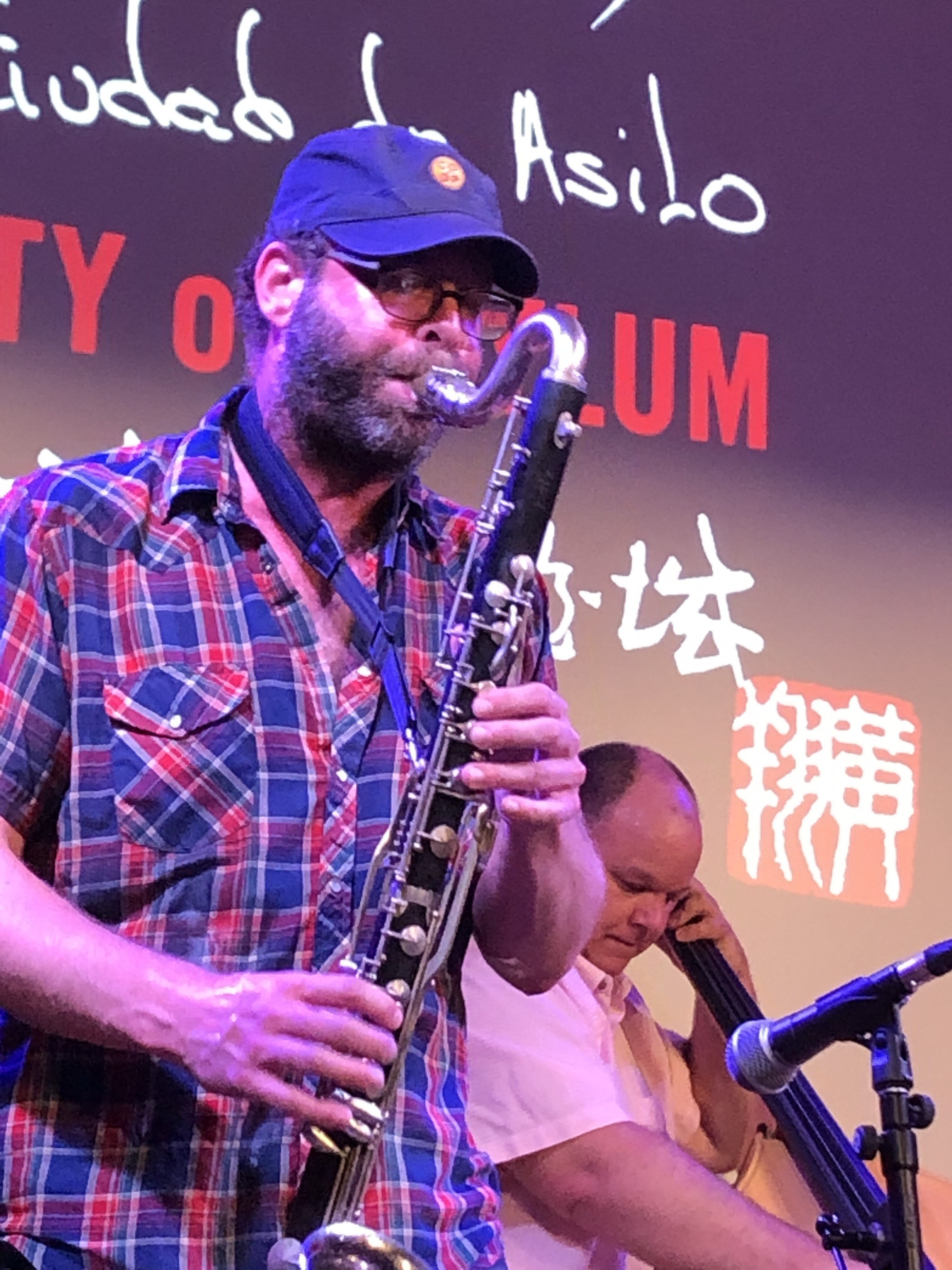
From the moment that Jason Stein, Damon Smith and Adam Shead started playing this past Monday at Alphabet City, they were engaged in a rollicking three-way conversation. Bass clarinet, bass and drums, respectively, hit the opening note like they were playing a composition but what followed was built on pure improvisation. 

Stein has come to Pittsburgh several times, including several visits with keyboardist Paul Giallorenzo. The trio with Smith and Shead felt like the most exciting performance so far, bringing out some of his most inspired playing. He mixed rapid clips of melodies with growls and slap-tongued moments that could have gone on all night. 

Behind him, Smith attacked his bass, sometimes literally. After playing with knuckles on the neck and plucking rapidly with his right thumb, he had a whole arsenal of bows which he jammed under the strings when he wasn't doing any arco work.  He also weaved a stick, Sonic Youth-style, among the strings, detuned his low E-string and rattled a plastic chain on the instrument. There are physical players out there, and people like William Parker often brandish two bows, but Smith really seems like the most visceral bassist of them all. Again, despite the spontaneous nature of the music, he displayed a drive that knew exactly what he wanted to accomplish. 


Then there was drummer Adam Shead. The Buster Keaton of the group. Well, that's not really true because he didn't do any physical comedy during the set. But Shead maintained a deadpan expression throughout the set while he walked offstage with ringing bells in his hands, placed electric toothbrushes on his drum heads for a sustained tone and blew into his snare drum (see above). He also sat down at the house piano for some prepared piano work. He and his bandmates eventually moved into what felt like some free bop, with Stein showing no shortage of sonic options from his instrument.

When the trio paused after playing for about 30 minutes, they brought up three additional musicians. Bassist Eli Namay used to live in Chicago, where he knew Shead. He now lives in Pittsburgh and plays with pianist Mark Michelli and vocalist Mai Khoi, who also joined them onstage. 


The sound, naturally, took on a completely different shape. Michelli did some prepared piano techniques in addition to clean playing, which made the music more expansive. The addition of a second bassist didn't muddle the sound at all, since both players were listening closely to one another and complementing the sound. 

Personally, I'm very particular about vocals in free improvisation (one might say "fussy"), even when they take on the role of an additional instrument. Khoi did a lot of drawn out, low growling but she worked in tandem with the rest of the group rather than floating over them. A friend seated more in the center of the room, which  picked up more of Khoi's voice through the p.a., really liked it. So perhaps my seat on stage left cut me off from the sound. While I was partial to the trio's opening set, the sextet's part had a lot of energy, inspiring Shead to gradually dismantle his trap kit, putting various drums in different places in the performance space, many with the electric toothbrushes vibrating in them. 

In addition to the performance itself, it pointed to the fact that there seems to be a new batch of players around town who are into free improvisation. Namay mentioned weekend sessions at Kingfly Spirits and a couple other gatherings. When you're not out very all the time, it can be hard to keep up with this.(Thanks, day job.) Hopefully it continues, with even some crossover to some of the most established free-thinking players around town. 

Tuesday, April 26, 2022

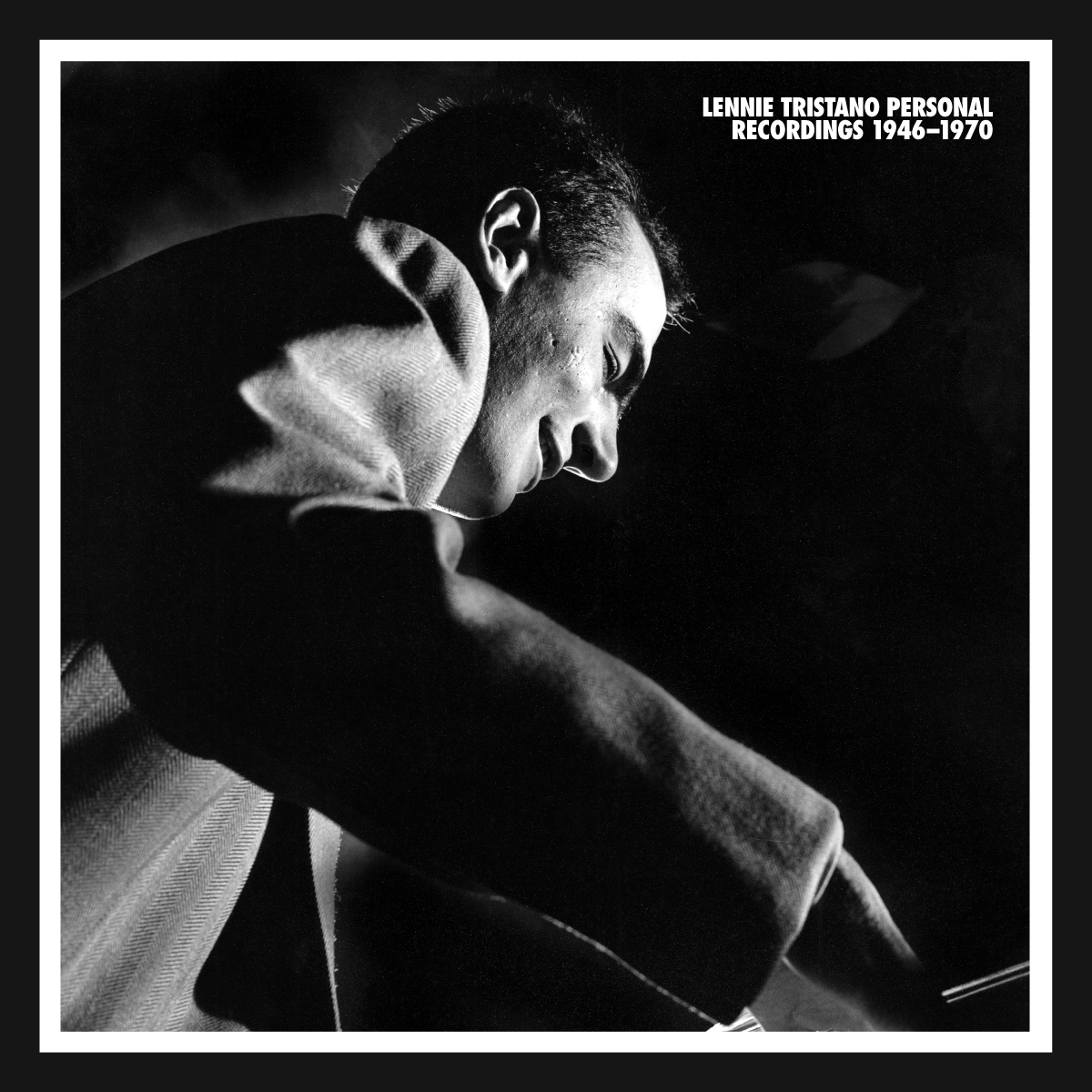
CD Box Review: Lennie Tristano - Personal Recordings 1946-1970

Lennie Tristano
Personal Recordings 1946-1970

Not long ago I was listening to another Mosaic set, their massive collection of Charlie Parker recordings made by Bird fanatic Dean Benedetti. For anyone who doesn't recall, that box consists of nothing but Parker alto solos - in other words, incomplete songs - recorded in clubs with extremely lo-fi means, paper recorders and record cutters. Some of it sounds awful, some of it sounds not bad. 

One definitely has to be in the right frame of mind of enjoy the set. (The late Phil Schaap's detailed notes helps fire up the obsessive minds by setting the scene, musically and historically.) But what got my ears that day was to imagine what it might have sounded like right in the room when Parker was playing, thinking past the limited recording to imagine witnessing those revolutionary lines emanating from his horn. Even without the whole performance, you come away with an appreciation for how great Bird was.

Charlie Parker loved Lennie Tristano and the feeling was mutual. They understood each other. While the pianist's career was markedly different from his saxophone colleague, a similar feeling of history can be felt with Personal Recordings 1946-1970. The music on these six discs was never intended to be released. The varying sound quality and the similarity between tracks in some sessions bear this out. They were merely recorded to document performances, maybe to offer reference or personal critiques during playback. Though he played in very conventional jazz situations (relatively speaking), a greater appreciation of Tristano's technique comes with deep listens rather than casual ones. Once inside the music, things get pretty fascinating.

On the subject of "conventional," Tristano preferred rhythm sections that kept strict time, rather than swinging hard. In some ways it made perfect sense, giving the pianist the chance to lift off in whatever rhythmic grouping that struck him. Bassists like Arnold Fishkin, Peter Ind and Sonny Dallas (Pittsburgh's own!) hold the tempo down with some steady walking, often without the help of a drummer. 

Disc One features a series of live recordings with guitarist Billy Bauer. Fishkin appears on many of them, though the bassist is unknown on several tracks. The performances, at least some of them coming from wire recordings, vary widely in sound quality. Many have a lot of hiss, and several are marked by distracting quick fades that fade back up seconds later. Regardless, we're dropped in immediately into the creative mind of a pianist who seems like he could spin endless variations on some familiar chord sequences. "Surrender" finds Tristano getting a little exotic. "Three for Tea" (there are many title variations on classics, with changes under the surface offering hints) finds Butler on equal ground with the pianist. 

Disc two presents the pianist on his own, mostly in his home studio. The exception is the all-too-brief "Spectrum" recorded with overdubs by Rudy Van Gelder. Here, upper register lines cascade over a melody, with ideas that were pretty advanced for 1952. Several of the other tracks sound rather similar on the surface, with Tristano in the same key (probably C) walking at various paces in the left hand. His right hand gets pretty rich melodically and each track has a lot going for it. "Studio Time Melody" breaks away from this standard, adding an almost classical touch while maintaining plenty of jazz edge. These recordings incorporate the span of time listed in the album title, including the few tracks made as late as 1970. 

Disc three returns to the live setting from 1949 and 1950. Tristano and Bauer are joined by Lee Konitz (alto saxophone), Warne Marsh (tenor saxophone), Jeff Morton (drums) and either Fishkin or Joe Shulman (bass). This was a fertile period for everyone involved, coming right around the time that Konitz recorded several tracks for Prestige, many of which appear here: "Ice Cream Konitz," "Sound-Lee," "Fishin' Around" among them. It also includes a two-minute track titled "Live Free" in which the sextet does actually play freely before eventually shifting into a chordless tempo. (Around this time, Tristano also recorded "Intuition" and "Digression," the first document of jazz musicians playing free.) Aside from what sounds like varying pitch on "Ice Cream Konitz" and the multiple fades that make "Band Excerpt" a little frustrating, this is arguably the strongest music in the set. Over the steady rhythms, the horns, piano and guitar spin a steady web of melodic lines that are fascinating. 

Disc four features trios with Ind and either Tom Wayburn or Al Levitt on drums in recordings from the mid ''50s. While the sonic contrasts of the horns is missed after the last disc, this session benefits from the improved sound quality of Tristano's recording in his 32nd Street studio. In this setting, Ind gets some time to solo in addition to the leader, with "Oceans Deep" and "You Go To My Head" proving him to be an economical soloist who makes it count. Dallas also does a lot of walking on Disc five, but he gets a few opportunities to stretch out as well. "You Got To My Head" was clearly a favorite vehicle for Tristano, as this set features its third appearance.

Disc six begins with a session from Tristano's Hollis, New York home with Konitz, Bauer and Marsh. Recorded in 1948, it features seven tracks of free playing. Although things definitely sound loose and unstructured, each of the brief pieces (only two last more than three minutes) sound as if a tonal center is established, making them nothing like the adventures that Cecil Taylor or Ornette Coleman would take in the following decades. Sometimes things sound more like examples of musical counterpoint as the group stays fairly neat, never stepping on any toes and ending neatly. But each player clearly relishes the freedom, knowing exactly what direction they'd like to take, and balancing those choices with the contributions of everyone else.

The second half of the final disc takes it back to the clubs for a few songs with Dallas and drummer Nick Stabulas. The energy that Tristano puts forth in "Smiling Groove" almost seems like it has been brewing throughout the entire box set, reaching a climax. He thunders on his keys, feeling even more inspired to add some dynamics range that aren't always there in earlier tracks. The set closes 10-minute reading of "How Deep Is the Ocean" that brings Konitz back, along with tenor saxophonist Zoot Sims, for a solid send-off. Konitz's tone really approximates Bird, but the way he utilizes pauses during his solo proves how he took Tristano's lessons to heart to find his own voice.

Tristano - and Konitz as well - improvises in a way that's often been called "cerebral," which ruffles the feathers of the pianist's followers. Taken as an insult, it's interpreted to mean that Tristano's approach to the piano is more about technique than feeling. I've always felt that "cerebral" implies deep thought, which results in engrossing solos, which is exactly what comes across on this set. The tapes might have been rolling, but the pianist wasn't concerned with recording history. He was simply working things out, or playing for the people. It was swung but it had a lot of depth, so calling it "cerebral" isn't a crime.

Lenny Popkin's liner notes go a long way towards saluting the pianist. While he is justified in the work, as Tristano is misunderstood to this day,  he sometimes goes pretty far on the defensive side, with continual references to the "Intuition" and "Digression" sessions, and how they predated all the other free jazz recordings.  He also emphatically states that Konitz and Marsh were not disciples of Tristano. "In fact, they are two distinct originals," he says. That's true, but the difference seems to be a more about semantics than cold hard facts.

Popkin, who played tenor with Tristano, also derides critics who have reviewed Tristano albums in the past, saying they follow a particular formula that says very little about the music. Hopefully this review doesn't include the same oversight but, as one of my teachers once told me, you can't write everything. 

The truly unique artists are often misunderstood. Like the Benedetti box  - with much better sound -  Personal Recordings definitely offers greater insight into this player who fell victim to that. Time for new discoveries.

Saturday, April 23, 2022

To The Bop Stop to See Ballister and Vandermark/Wooley/Lytton

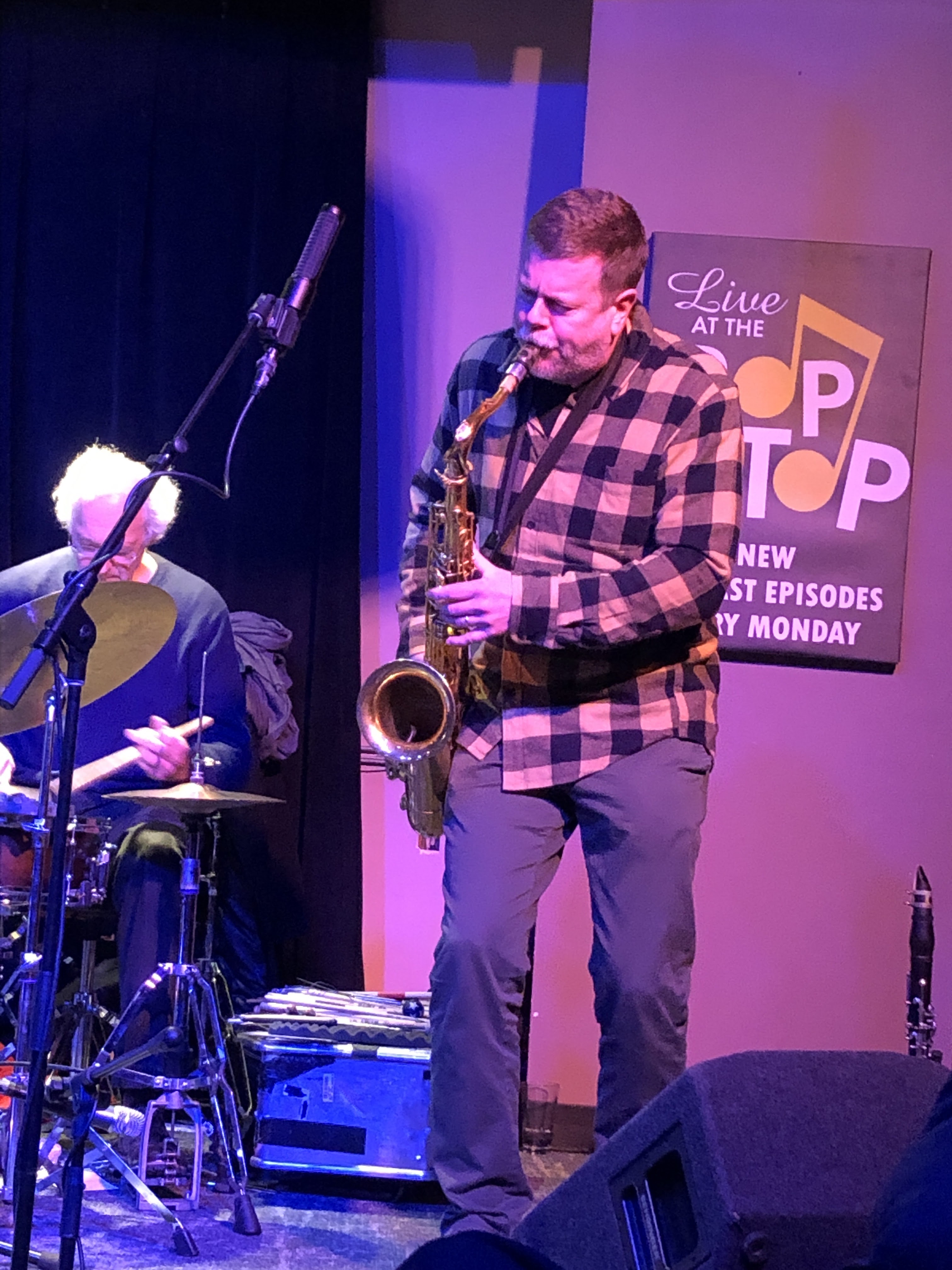
This past Tuesday (April 19), it was time for a road trip to Cleveland. The Bop Stop was presenting Ballister, the trio of Dave Rempis (saxophones), Fred Lonberg-Holm (cello) and Paal Nilssen-Love (drums). I was already mentally committed to the trip, having gotten way into Rempis last year after hearing several of his albums. Then at some point, the trio of Ken Vandermark (reeds), Nate Wooley (trumpet) and Paul Lytton were added to the bill. Talk about a double-whammy! Vandermark & Wooley were slated to come to Pittsburgh in March of 2020 and I had even written a preview about it, one of my last pieces for Pittsburgh Current. But it was one of the first shows to be cancelled. I wasn't going to miss them this time.

It was encouraging to see that the Bop Stop's small parking lot was filled up when I arrived, about 10 minutes from the start of the show. This was the first time I've been to the venue and seen it pretty crowded. Glad to know that Cleveland's free jazz crowd still goes out to dig the music. Of course, things were starting at 6 pm, so no one would be out too late either. 


Vandermark, Wooley & Lytton's began with the drummer clattering on his snare. Throughout the set, he pulled a number of accessories out, placing them on the drum. In fact, his floor tom served more like a table for tiny cymbals, chains of what looked like paper clips and sticks as thin as pipe-cleaners. It was fascinating how much sound he produced by manipulating these items on the snare head. Early on Wooley began droning with his horn, producing a phase shifting sound - approximating a flanger pedal - just with his mouth. Vandermark's tenor sax was trembling in his hands and he wrenched some growls out of it, building in intensity. 


The music was totally free and may or may have been completely spontaneous. I add that qualifier because there were several pieces that ended with Vandermark and Wooley landing on a unison pitch or melody together. It could say simply be evidence of the rapport between these two or a bit of composition. Regardess, the blend of free moving sounds and a gentle conclusions kept things exciting.


For the second piece, Vandermark switched to clarinet and Wooley began by holding a piece of metal to the side of his bell, producing extra vibrations. He also used the piece as a mute, which created more jarring sounds. This part of the set in particular felt like a real three-way conversation. Lytton's approach to the drums felt less like a percussive role and closer to something melodic that fit in with what his bandmates were playing. By the end of the set, now that the floor tom was clear, he was swinging all over the kit.


Ballister started their set sounding slow and tense. Rempis had all three saxophones ready but began with tenor. Thing were free but as they proceeded, they opened up until they sounded like a rock trio. Maybe that had a lot to do with Lonberg-Holm's effects pedals, which were out of my sight-line as he sat sideways on stage, but that added to the mystery of the set. While I scribbled several pages of notes for the previous set, I spent most of Ballister's set just watching in fascination.


There were several peaks and valleys in the music. Rempis blew some lines that felt like the notes were melting as they left the tenor, Then he switched to baritone during a transition. Lonberg-Holm turned off the effects and bowed a clean sound, making things meditative. Nilssen-Love picked up a few shakers, using them when it felt right, pumping the kick pedal for accents, and eventually getting his own solo space, with dual floor toms on either side of him.

The band played continuously for about 25 before stopping to catch their breath. When they resumed, Rempis was on alto, which I could have listened to all night, with or without the rest of the group. He told me later that alto was his first saxophone, so that might have something to do with it.) But his melodic imagination was on full display, in a duet with Lonberg-Holm that again drew on clean sound and advanced lines rather than the visceral aspects. They were equally skilled at both ends of the sound spectrum. 

Before long, they were rocking out again though. It seems like a crazy comparison but their energy reminded my ears of the Stooges, not just their wile "L.A. Blues," either. By that point, loose hairs could be seen hanging from Lonberg-Holm's bow and Rempis was blowng some repetitive altissimo lines, while Nilssen-Love was windmilling with his shakers.

There were hints that both groups might play together for an encore, but that was dashed when the sound tech was removing microphones and the drummers were taking their kits apart. Not too much of a disappointment though, as this scribe needed to find some dinner and hit the road. Sometimes the drive home can feel tedious, but I left the Bop Stop feeling pretty refreshed ready to hit the road. 


Thursday, April 21, 2022

Recap of Vanessa Rubin & Her All-Star Octet (From April 9)

One night after the mssv show (see entry below), Vanessa Rubin and her All-Star Octet performed at the New Hazlett Theater. Like previous shows presented by the Kente Arts Alliance (The Cookers, Charles McPherson), everyone had to present their vaccination card to gain entry to the theater. We also had to keep our masks on during the show. 

Perhaps knowing that the show would not be completely sold out, the staff closed off the balconies on stage right and stage left at the Hazlett, which was the perfect place for patrons like me, who arrived just as things were starting. I wound up squeezing into a seat in front of center stage, next to some friends who had an empty seat between them and another patron. I appreciated the offer but it meant I felt too self-conscious about moving around during the performance, trying to work both my phone and scoop pad (which I use to take notes). Hence, I wasn't able to sneak a photo or two. My notes were scribbled in the dark but at least some were legible.

I'm rather particular about jazz singers. Fussy, one might say. I prefer instrumentalists when it comes to jazz. But I was piqued both by Vanessa Rubin's set - a tribute to composer/bandleader Tadd Dameron - and the group backing her up. The octet lived up to its name, with a saxophone section alone that consisted of Antonio Hart (alto, flute), Patience Riggins (tenor, flute) and Alex Harding (baritone). (The latter player has visited Pittsburgh in several different groups, from Oliver Lake's big band to Kahil ElZabar's trio.) 

The horn section was rounded out by Eddie Allen (trumpet) and Dion Tucker (trombone). The rhythm section consisted featured Brandon McCune (piano), Kenny Davis (bass) and Carl Allen (drums). The group was under the direction of veteran bandleader/trumpeter Cecil Bridgewater, who conducted them. After a brief but rich medley of Dameron tunes, Ms. Rubin joined them onstage.

There are many musicians in jazz who could be considered forgotten or whose work is overlooked.  Pianist Tadd Dameron ranks pretty high on the list. Many people might not know his name, but hum a few bars of  that bebop classic "Hot House" and the lightbulb will go off above people's heads. (I did that very thing to someone a few hours before the concert.) He wrote several other songs that were really popular with his peers during the bebop era ("Good Bait," "Lady Bird") and the period soon after. He also wrote and arranged in a way that could make a small group come alive like a big band.

All of that happened on April 9 with Rubin's set. "Lady Bird" came to life with strong solos by trumpeter Allen and pianist McCune before Rubin went off on a scat solo that swung as hard as her bandmates' work. She also added some scatting to "Kitchenette Across the Hall," a deeper Dameron cut, that included some baritone shouts from Harding. The weight of Dameron's voicing skills was in full effect during "If You Could See Me Now." 

There were also moments where things got a little lush but the music never lost any of its impact. "You're a Joy" featured flute work from the sax section, which added a dreamy quality to the sound. Both Higgins and Hart doubled on flute at different times during the night and both of them blew with power. 

The stage layout included a table with flowers near where Rubin was standing. It seemed like it might have been there to help set a scene for some of the lyrics, giving them some more drama. But in the end, Rubin didn't go for such anything forced because she was too caught up in the music itself. Her ballads were tender without being flashy. She didn't need to over emphasize any of the lyrics because her sense of swing gave her an air of authority. Really, her performance proved she was just as much a musician as everyone else onstage.

Saturday, April 16, 2022

Thoughts On Seeing mssv (Watt, Baggetta, Hodges) Live

This article contains corrections since it was originally posted. 

It's always good to be around people again, especially at a show and in particular when the show involves Mike Watt. My timing proved to be really on last Friday (April 8), as I arrived at Spirit right as mssv ("Main Steam Stop Valve") was getting onstage. My tardiness came because I had been in the studio overseeing the recording of keyboard parts for an upcoming album. I probably should have done a few blog posts about the previous recording sessions for it. In particular there was a day in February when I had none other than Wendy Eisenberg add a total stun guitar solo to one song and banjo parts to a couple other tracks. But those details will all come later. 

Back to Watt....

It should be said that mssv features Watt on bass, but it's led by guitarist Mike Baggetta, who writes most of the material. Drummer Stephen Hodges might be better known as Stephen Taylor Arvizu Hodges to anyone who owns Tom Waits' Swordfishtrombones album. He's also played with Mavis Staples and with Watt on his Contemplating The Engine Room album. Baggetta has been called a "guitar poet" by Nels Cline and like that axe-slinger, he seems equally adept at improvisation and blasts of punk rock.


About a month ago, veteran music writer Jeff Tamarkin posted a comment on Facebook expressing his distaste for ongoing memes and comments that say certain bands and people of a certain age should hang it up because they're too old to rock. Getting old is a natural process, he said and "if you feel an artist should hang it up and stop performing, maybe the problem is with you, not them."

I thought about this as mssv tore into "The Mystery Of" because it was some of the heaviest stuff I've heard in a while, with Watt's thundering bass line complemented by the drums, with some mutant twang guitar overtop of it. If my online source is correct, Baggetta is in his early 40s, but Watt is 64 and Hodges is 70. And the sound they were churning up could leave people half their age in the dust. Not only that, they're playing 48 gigs in 48 days and traveling by van - at a time when it's still not exactly safe to be doing such a thing. (See below.) 


Looking at Watt and Hodges, with their thick glasses, I also remembered a friend telling me about seeing the late trombonist Jimmy Knepper perform once and how his non-descript features gave him more the look of a math teacher than a guy who played with Mingus. He defied that look and these guys did too. It was also wild to see Hodges playing what looked like a ramshackle kit, with a tom that wasn't connected to the kick drum and a towel over it. Sometimes it sounded like he needed new heads, but then on closer listening, the crack he produced from them seemed perfect for the music. 

Not being familiar with mssv's work, the whole set was a surprise to these ears. Three songs in, they went into "June 16th," a Minutemen instrumental from Double Nickels on the Dime. Their version was a tad slower than the original and much more deliberate: one section got extremely quiet and gentle, as if to consciously make it different from the original. This kind of dynamic shift showed up in a few of the songs (much of the set was instrumental) and it pushed the music feel a little more technical than visceral at times. 

But for every moment like that, they sprung back with rock. The rhythm section held things down while Baggetta toyed with his effects to twist the sound. They encored with a version of the Stooges' "Little Doll" that contained a stretched out, rubato version of Ornette Coleman's "Lonely Woman" and Pharoah Sanders' "Upper and Lower Egypt." I didn't quite detect the jazz tunes but since this post originally appeared, Baggetta messaged me and clarified that not only were they all in there, but the Sanders song was the source of Dave Alexander's bassline for "Little Doll." (How's that for worlds colliding?) Ben Opie, who played with openers Weekend Pants, posted a brief video on FB of the "Lonely Woman" portion that made it clear too. After they finished, Tauhid, the Sanders album with "Upper and Lower Egypt" played through the p.a.

Watt seemed a little more frail than usual, with a softer speaking voice than his usual gruff bark between songs. His walk seemed a little more labored too. We can't fault him for doing what he wants to do. I just hope he's not pushing himself too hard.

Which leads me to the PSA portion of this post. Within a few days of the show, a few friends posted online in the days following the show that they had COVID. They were all there, and to honest, none of us were wearing masks. Sure, it was a bar and you can't have a drink while you're wearing a mask, but we all should have been more careful. Last fall, Bob Mould pissed off a lot of his fans by insisting that everyone at his show needed to be masked. Of course, that was a different time and numbers have gone down since then. But this week, the numbers in Allegheny County went up again by about 50%. We should have been more careful. 

I was lucky. By getting there late, and not talking to anyone for more than a few minutes at a time, I somehow managed to avoid getting sick. (I've taken two tests this week.) We aren't out of the woods yet, even when Watt is involved. Be safe and smart, people. I want to do this again with you. 

Watt often ended shows in the past by saying, "Start your own band." Last week, my personal takeaway was, "Start playing again."  
 

Thursday, March 31, 2022

CD Review: Melissa Aldana - 12 Stars


Melissa Aldana
12 Stars
(Blue Note) bluenote.com 

Some tenor saxophonists have a drive that pushes them to higher plains, never allowing them to stop and revel in the latest accomplishments. John Coltrane practiced obsessively, shaking the foundation as he went and looking ahead to create another seismic wave. Sonny Rollins also practiced a great deal and told this writer in 2000 that he was "still some distance from realizing my musical ideal." 

Melissa Aldana might not be in the leagues of those giants yet, but a similar drive seems to have taken hold of her. The 33-year old saxophonist is profiled in the April 2022 issue of downbeat. Early in the story she laments the way she feels after a performance, going from a beautiful experience of playing to a feeling of emptiness once the horn has been packed up. Presumably, Aldana would rather keep going, playing and exploring at length. One can imagine Coltrane might have felt the same way too. 

12 Stars, her debut for Blue Note and sixth album as a leader, came into being during the pandemic, a time when Aldana, like many people, felt paralyzed with fear. She explains in the liner notes that, during this time, she began studying tarot and how it related to numerology. The title refers to what appears in the crown worn by The Empress, who symbolizes concepts of creation, motherhood, nature and the universe. While it's not a concept album per se, these theme shape mood of the music.

For the album, guitarist Lage Lund came on as producer, band member and co-writer on all the tracks, save an interlude. Pablo Menares, who has played with Aldana since their days in Chile, returns on bass. Sullivan Fortner (acoustic piano and Rhodes) and Kush Abadey (drums) complete the lineup. 

As much as the album seems fueled by exploration and search, it doesn't always have an underlying feeling of tension and release to it. Lund smooths out some of the edges, production-wise. In particular Abadey's performance seems to be softened a bit, even when it sounds like he's trying to push the group. 

But this is not to say that the album is too subdued. It just requires a deeper listen to see where Aldana is going. Her solo in "Intuition" includes a section where she runs up and down the middle register of her horn, figuring out exactly where she wants to land. She shows a similar scrutiny in "Falling," running through a series of low notes to examine which one will take her forward. It leads to an upper register cry. Though throughout the album, Aldana uses the upper notes in unique ways, by both shaping the direction of a melody and as a way to cap off a solo without merely using it as an exclamation point.

12 Stars includes a lot of hidden qualities that take some time to reveal themselves. "Los Ojos de Chile," written as a tribute to demonstrators in Aldana's home country who were shot in the face with rubber bullets at protests, doesn't rest easily on a steady time signature. It has an extended, rather complex line and some sonic tricks from Lund that sneak up during solos. Similar sounds appear in "Falling," while "The Bluest Eye" uses some wild backwards guitar noise in its coda. The gentle "Emilia," inspired by a dream about a daughter that Aldana does not have (at least not yet), climaxes with a recording of Lund's daughter singing, adding to the dreamy quality of an already alluring piece. Here, Fortner switches to Rhodes, gently adding color to the soundscape, though he could have been brought up in the mix a bit. 

Melissa Aldana continues to grow with each album she makes and 12 Stars is no exception. What will be interesting to see is how this music sounds in the live setting. (A date to appear at the Pittsburgh International Jazz Festival is already on her website.) It feels very much like a studio project that could generate sparks onstage. Being on Blue Note could also offer her to flexibility to stretch out and take more risks on future projects. Hopefully in light of all that, she's feeling less empty after a performance these days.

Sunday, March 27, 2022

CD Review: Cook/ Coursil/ Gale/ Robinson/ Tintweiss - Ave B Free Jam


Cook/Coursil/Gale/ Robinson/Tintweiss
Ave B Free Jam

It appears that Steve Tintweiss might be sitting on a treasure trove of historical free jazz recordings from the late 1960s. The bassist, who appeared on albums by ESP-Disk' artists Patty Waters, Burton Greene and Frank Wright, has started releasing some of these tapes on his Inky Dot imprint  which began with a live performance of his group Purple Why, from two 1968 concerts. Now he has unearthed a 79-minute free blowing session recorded in a Lower East Side apartment. One can only imagine what the neighbors thought of this uninhibited wailing that emanated from the room.

The group assembled on that day included Tintweiss, drummer Lawrence Cook (also a Purple Why member), trumpeters Jacques Coursil (who played with Sunny Murray and Bill Dixon) and Warren Gale (fresh from an ESP session with Zitro, later to do a 360 and join Stan Kenton) and clarinetist Perry Robinson, the latter playing bass clarinet rather than his usual B-flat licorice stick. 

The music is banded into 21 untitled tracks, with breaks coming somewhat arbitrarily at sonic shifts, which was done for the convenience for radio or playlist construction. During track 10, the sound cuts off, presumably at the moment when the tape on Tintweiss' Tandberg deck ran out, and a similar break comes towards the end of the program. But for the most part, the album features a continuous performance. 

Fans of New York Eye & Ear Control, the film soundtrack of free blowing recorded the Albert Ayler Quartet and a few friends in 1964, might find some similarities with Ave B Free Jam. Like that session, ideas flow freely and themes are eschewed in favor of constant group improvisation. But unlike that ESP release, this album features much better sound quality. Granted Tintweiss gets a little buried in the left channel and Robinson's bass clarinet is no match for the trumpets. But things sound extremely crisp for a home recording. 

While NYE&EC feels pretty chaotic, the five musicians on this disc still play together rather than simply playing at the same time, even at its wildest. They don't really give each other breakout points, although the sixth track does feature one of the trumpeters alone, laying down some fast, inventive lines. Both Coursil and Gale stick to a melodic context rather than fast peels of notes that go for quick energy. A few moments occur when the group feels a little more subdued or - after the break in the recording - they explore something akin to counterpoint. Robinson sounds as if he's still getting acquainted with the new instrument, wailing and growling behind the brass. 

The session could be faulted for a lack of tension and release. (Right before that tape cut-off, drummer Cook is working towards a climax with some machine gun snare fills). At the same time, this music wasn't being recorded for release. It simply captures a group of friends interacting and discovering the possibilities of where this kind of music could go. That is the best way to appreciate it all these years later. 


Tuesday, March 22, 2022

Recapping Shows by Charles McPherson and Michael Formanek Drome Trio

Without even taking the pandemic into consideration, I've missed too many live shows due to work schedule conflicts or lack of planning or the inability to escape the gravity force of home. Last week was NOT going to be one of those weeks. On Thursday night, I made it down to Kingfly Spirits and caught nearly all of the music from Jeff Berman's BLINK project. Then on the weekend, I hightailed it out of work to a show each night. Saturday night, alto saxophonist Charles McPherson played at the New Hazlett Theater. On Sunday night, Michael Formanek's Drome Trio breezed into Alphabet City.   

Here are their stories.

While rushing from the parking garage to the Hazlett, I left my phone in the car. At first I figured it was just as well because I didn't need to keep checking it during the show. It wasn't until I sat down that I realized there'd be no pictures either. Hopefully the following words will make up for that. 

One of the things I like about going to a show presented by Kente Arts Alliance - aside from the music itself - is the welcome the audience always gets from either Gail Austin or Mensah Wali, the organization's directors. This time, it was Mensah's turn to get everyone excited with a few choice words. "In the beginning, there was the Word," he said. "And the word was Bird." Alto saxophonist Charles McPherson, he explained, was someone who studied that word. In fact, in the film Bird (like it or not), McPherson provided the alto parts for the film's protagonist. Not to mention those 14 years he spent with Charles Mingus.

At 82, McPherson is still blowing with plenty of power. While soloing, he stood very still, letting his fingers do all the work. When he and  his quintet played "Just Friends" it was no overplayed standard. He tore into some double-time lines, winding up at the top of the horn's register, evoking Eric Dolphy in a way, in terms of rapid ideas and adventures with harmonic choices. 

Throughout the two sets, McPherson pulled out some bebop classics, including "Cherokee," "Embraceable You" and "Old Folks," the latter title not describing any of the players onstage, especially him. Everyone played as if they knew they had to add something new to songs we've all heard many times. Their arrangement of "Nature Boy" was taken in tempo, with a piano vamp from Jeb Patton that gave it a hard-bop-meets-bossa-nova feel. 

But the music wasn't merely familiar works either. They opened with "Seventh Dimension," a McPherson original that drew a little bit from "The Sidewinder" (in the opening vamp) and "Well You Needn't" (in the melody). They also played "Delight" from Jazz Dance Suites, a 2019 album that came through a collaboration with his daughter, a dancer in the San Diego Ballet. 

The frontline was shared with trumpeter Terell Stafford, whose volume almost overshadowed the boss. He often took the lead on the themes, with McPherson adding counterpoint, and his solos were on fire throughout the evening. McPherson's son Chuck was the drummer, and bassist Nathan Pence rounded out the group. There were a few moments where the rhythm section didn't seem like they were completely in sync with the horns, which could very well have been a sound/mixing issue. But it didn't detract from the set, overall.


The next night, I knew I'd miss a bit of Michael Formanek's Drome Trio since the show was beginning right as I was clocking out of work, but I knew whatever I saw would outweigh the late arrival. And if the length of the track on their new CD is any indication (27:00), I still got there during the first tune of the set, "Tattarrattat." Drummer Vinnie Sperrazza (above) was in the middle of a solo that evoked the song's title, a James Joyce term for a loud knocking on the door. (It's also a palindrome, a theme that ran through the set.)


The next piece featured Formanek playing a solo that sounded both funky and angular at the same time. Chet Doxas (on tenor for this one) started off playing smoky long tones that later turned into fast runs up and down the horn. Sperrazza, at one point playing with only one hand and still filling out the sound perfectly, toyed with playing a 4/4 beat but changed back to something a bit more open. So much happened that it was hard to tell if they were playing sections of a bigger piece or playing solos over a structure. Regardless, it flowed beautifully and I was feeling glad that I didn't miss this night.


Another highpoint of the set was "Gone Home," which was written in homage to people who have passed on in recent times. Formanek played a beautiful chord - or was it a double or triple stop - across the neck while Doxas, on soprano, helped the piece sound like a free spiritual. Sperrazza, who often looked as excited by his bandmates' performances as the audience did, played a few passages just on cymbals, which fit perfectly to create the mood for the song, something that reminded this writer of Paul Motian, a guy who did as much with a ride cymbal as some drummers do with a whole kit.  

Both those shows required patrons to wear masks and it seemed like everyone complied. If we can keep be sensible, maybe we'll be able to leave the masks at home before too long. In the meantime, be safe, be smart and come on out to shows. We miss you.

PS The Formanek Trio's album is Were We Where We Were on Circular File Records